


High school sports coverage is proudly supported by Maine State Credit Union.
At the start of every season, Cheverus girls basketball coach Bill Goodman figures out the answer to one question: Who will be the players running the floor and handling the ball?
“Every year, it starts with who’s my point guard, who’s the backup point guard, and then I spend from summer throughout the year developing the backup backup point guard,” he said. “It’s the most important thing.
“That’s the most important position, for a lot of reasons. Handling pressure, handling full-court pressure, it starts there.”
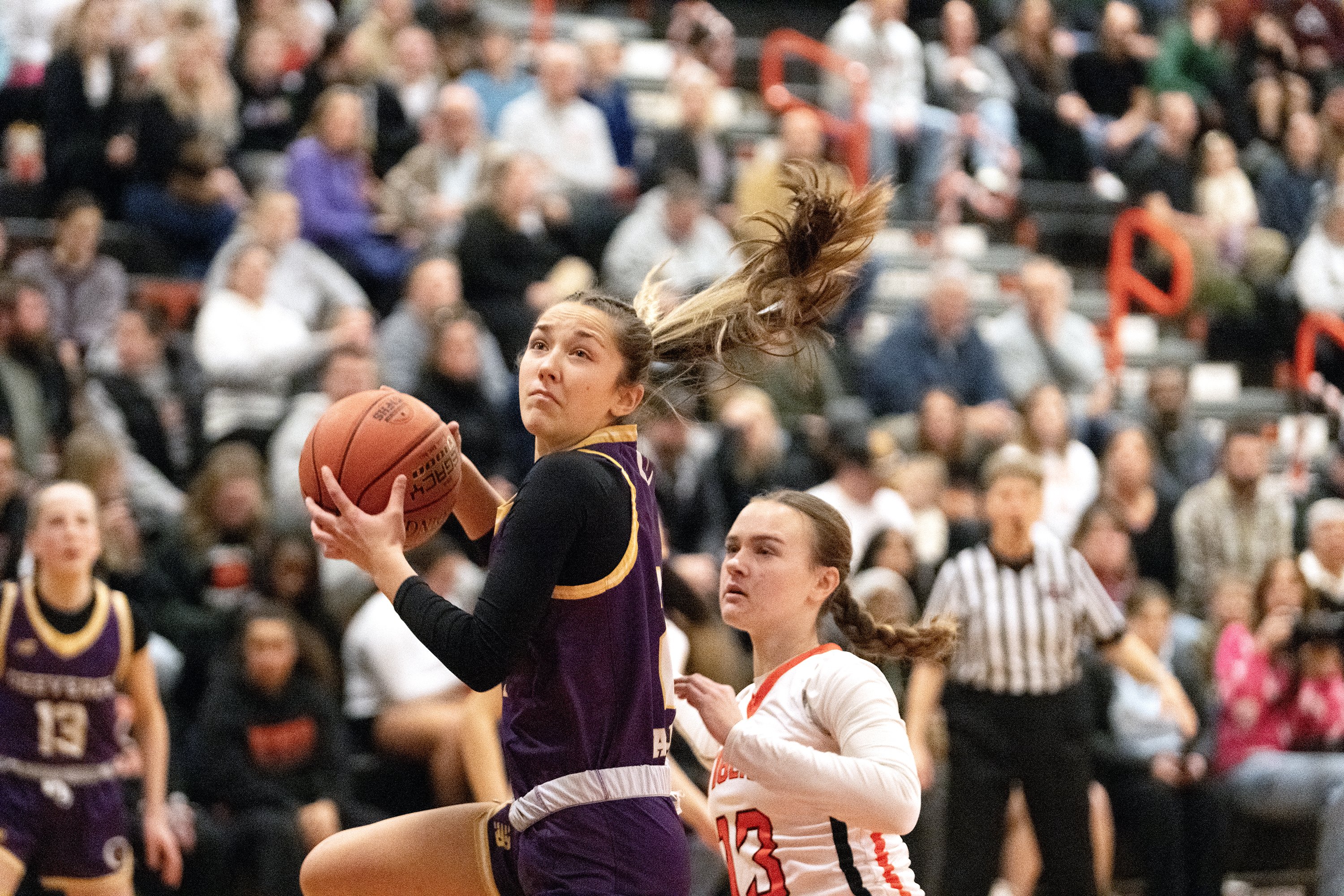
They are the players who can steer teams to championships. Point guards run the show, finding teammates for good scoring looks, breaking down defenses and navigating through pressure and chaos on the floor. Their significance only grows as the games get bigger, and a good one can be the difference between an early stumble and a Gold Ball.
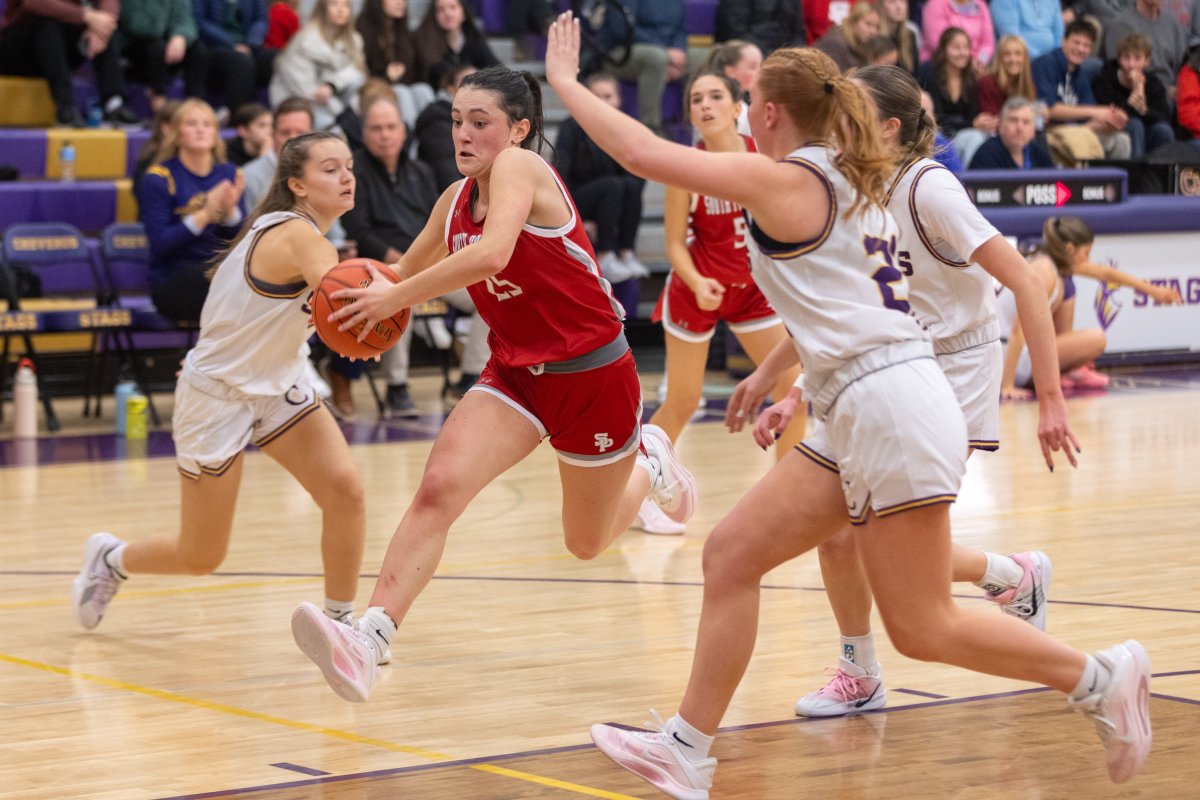
Going into the girls state tournaments this year, there are some good ones. Maddie Provost at Lawrence. Kylie Lamson and Kristin King at Cheverus. Annie Whitmore at South Portland. Jordyn Crump at Biddeford. Thea Laukka and Leah Jones at Camden Hills. Jenna Jensen at Mt. Ararat. Hope Fontaine at Edward Little. And there are more.
“There’s a lot. It’s been a long time since there were that many point guards out there you had to worry about,” Brunswick coach Sam Farrell said. “You have some kids that are true, true point guards, who are changing how basketball is played, at least on the girls’ side, in Maine.”
And they’re players who in February can end up holding their team’s fate in their hands each trip down the court. They have to be comfortable with it.
“They are the floor general, and I think somebody being confident with the ball in their hands the majority of the time is just so crucial,” Mt. Ararat coach Julie Petrie said. “It’s a lot. It takes a special kid to play that position.”
An evolving position
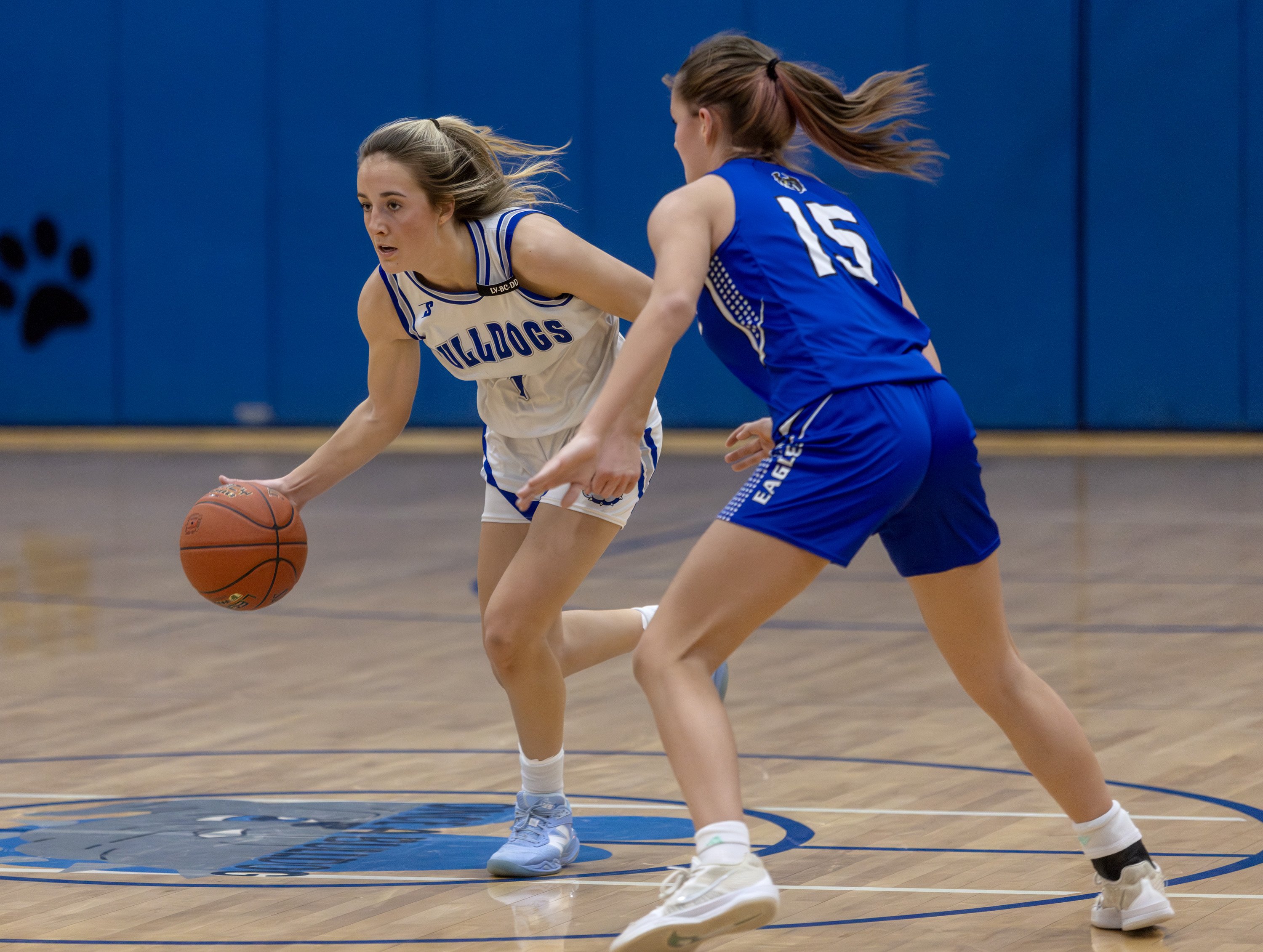
It’s an important position, and it can fit different molds. Some, like Lamson and Provost, are elite shooters and scorers. Some, like Laukka and Crump, are creative passers and push the pace in transition. Some, like Whitmore, are lockdown defenders. Others are pass-first players who facilitate better than they score.
“Your point guard position is based on what makes you the best that you can be,” Maranacook coach Karen Magnusson said. “In some cases, my point guards change. I might have a point guard by committee, because that’s what’s best for our team. In other years, I might have a single person that’s my point guard because then that makes us more successful.”
It’s become a dynamic position. It didn’t use to be that way.
“Thirty years ago, most people thought your point guard’s the one that brings it up under pressure and gets you into your offense,” said Magnusson, who as Karen Sirois played point at Cony for Paul Vachon from 2000-03. “(Then) they started to realize the point guard can also be a scorer. That’s when they became a lot more dynamic, and a lot harder to defend.”
Camden Hills coach Samantha Bragg said the process for selecting a point guard has changed as the game has evolved. Teams used to look for someone with dribbling and passing skills. Now, with more players showing that ability, it’s more about finding the right mental makeup.
“In this time, where everyone goes to a trainer and can handle a ball, sometimes it’s not even about the ball handling,” she said. “It’s about the confidence in themselves, and kind of who you are and being willing to take that on.”
In that respect, the essential skill of the position hasn’t changed. Passing is nice, defense is great, scoring is a plus. But ability and confidence to handle the ball and avoid mistakes against mounting pressure is the key requirement. It always has been.
“You have to have someone who can manage the ball 70 feet, and enter it. (They) have a high IQ of understanding matchups and floor spacing,” Bragg said. “Can they handle the ball against pressure? Can they mentally handle that pressure, if they turn it over once or twice, and get back at it?”
Coaches will say they want their point guard to be another coach on the floor, and communicate the plays from the sideline to their teammates or even call the plays themselves.
“Your decision-making is so crucial,” Petrie said. “Some kids aren’t comfortable in that position, because maybe they don’t want the ball in their hands at crucial times. It definitely makes your life a little bit easier when you have a reliable person.”
The intangibles side
When leading the break at Biddeford, Jordyn Crump can sling the ball up the court with ease, and find open players with passes crossing the width of the floor.
But she knows her job goes beyond that.
“A point guard is a lot more than just someone that brings the ball up,” she said. “I think (they’re) someone that the team looks to when things are rough, (and) also when things are going good. I think a point guard is very important in the role of leadership, knowing what to do when the game is fast-paced or slow-paced, and reading the game really well.”
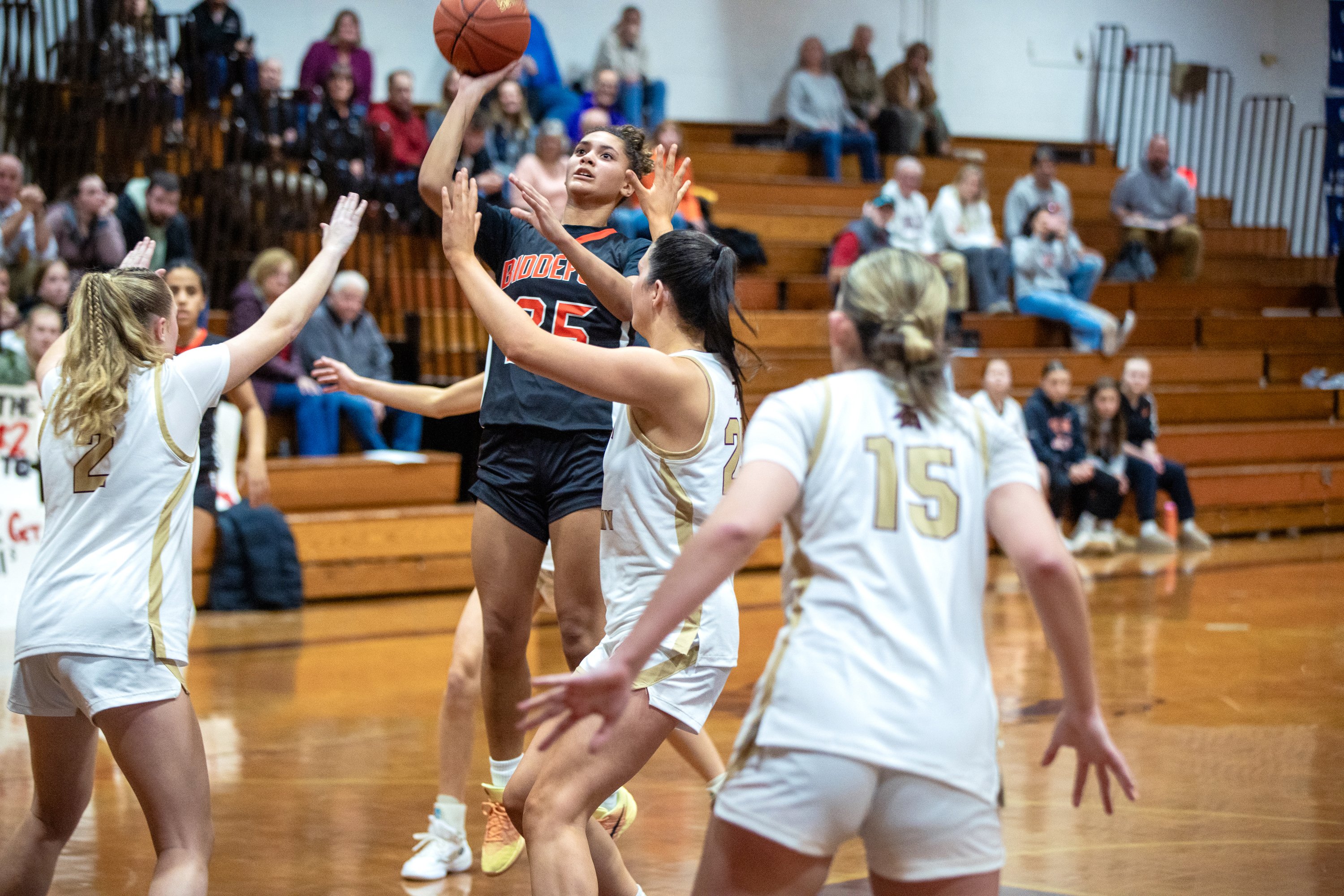
The ones who play the position know there’s a set of intangibles required to play it well. Dribbling out of traps and making the right pass are vital, but so is keeping the team inspired and focused.
“Just a simple high-five can uplift someone,” said Lawrence’s Provost, a semifinalist for the Miss Maine Basketball award. “I feel like it’s on me to kind of make sure everyone feels uplifted and confident.”
Players need to be wired for the job. The point guard has to want the ball, even when it isn’t easy. Even when a 10-point lead is down to two, momentum has flipped, and the crowd is screaming.
“I’m a pretty confident player,” Provost said. “But it’s definitely a tough position when you’re in the fourth quarter and you know that you’re the one everyone’s counting on.”
The point guard has to be the best at not making mistakes in those spots — and the best at staying composed if they happen.
“Not worrying about what happened in the past (is important),” South Portland’s Whitmore said. “If you have turnovers, you just try to forget about them. Learn from your mistakes, but don’t stay focused on the one thing you did wrong.
“They trust me to have the ball in my hands. For teams that don’t really have a person like that, it’s really hard for them to get wins.”

We invite you to add your comments. We encourage a thoughtful exchange of ideas and information on this website. By joining the conversation, you are agreeing to our commenting policy and terms of use. More information is found on our FAQs. You can update your screen name on the member's center.
Comments are managed by our staff during regular business hours Monday through Friday as well as limited hours on Saturday and Sunday. Comments held for moderation outside of those hours may take longer to approve.
Join the Conversation
Please sign into your CentralMaine.com account to participate in conversations below. If you do not have an account, you can register or subscribe. Questions? Please see our FAQs.