
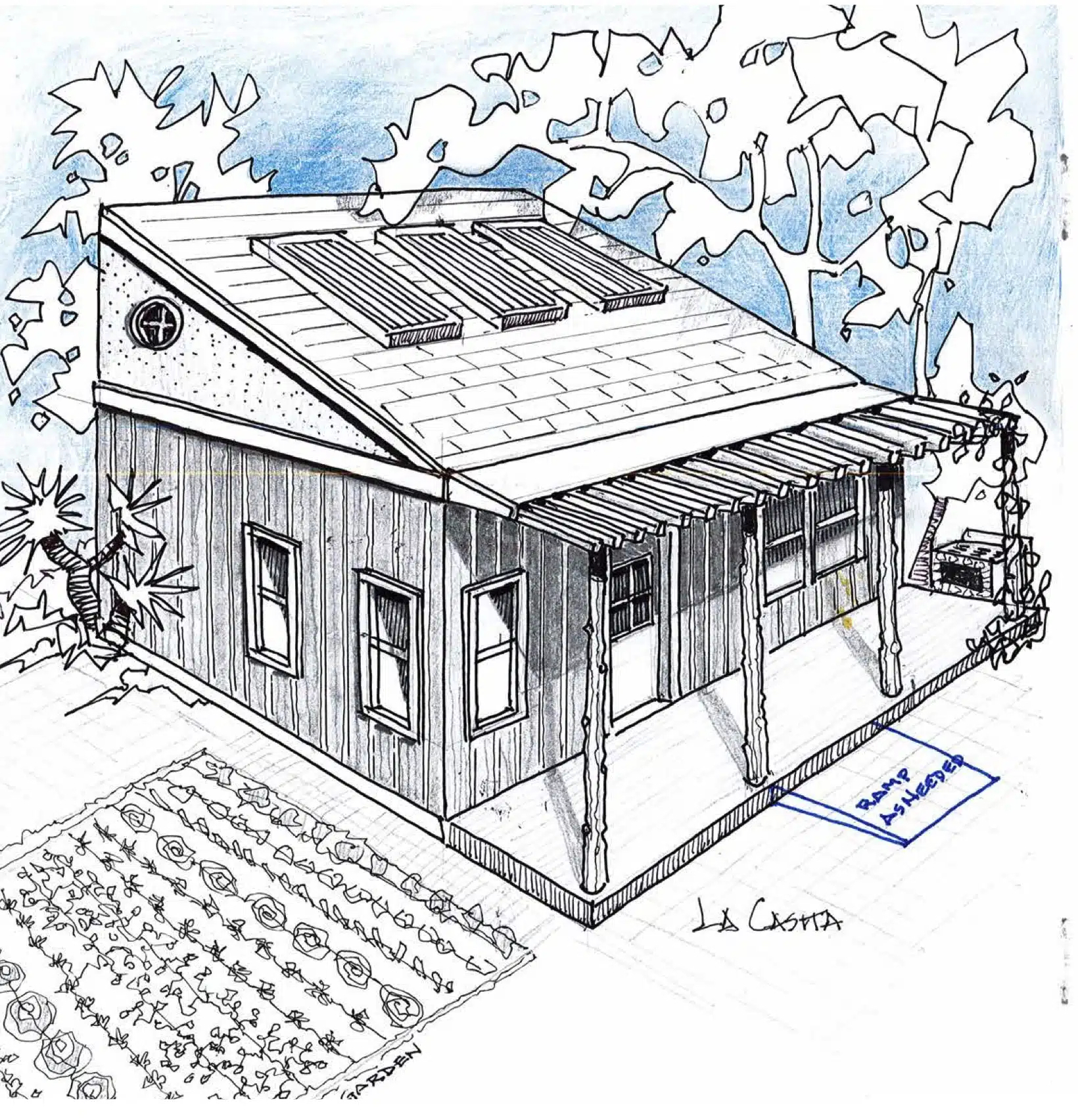

A few years ago, Maine lawmakers passed one of the most meaningful housing laws in the state’s history. LD 2003 was a statewide housing bill that changed local zoning rules and made it easier for home-owners to build Accessory Dwelling Units (ADUs) – small, secondary homes on existing lots. Sometimes they’re back-yard cottages. Sometimes they’re apartments over a garage. Sometimes they’re a finished basement or in-law suite.
The goal was simple: give regular Mainers the ability to be part of the housing solution.
Instead of waiting for large developments or new sub-divisions, LD 2003 opened the door for homeowners to add one modest unit at a time. The result? More places for aging parents, young renters, returning college grads, or year-round workers to live in the communities they already call home.
Now that there’s a clear path to building your own housing is established, the next step is figuring out what your town allows.
Start with your local rules
Even with statewide permission, ADUs are still bound by local regulations. That means lot size, setbacks, parking and design standards can vary from town to town. If you plan to lease out the unit, pay particular attention to occupancy and rental rules. Some communities allow long-term rentals but restrict or prohibit short-term rentals like Airbnb.
A helpful starting point is the independent site Backyard ADUs (backyardadus.com), which summarizes Maine town regulations in plain English and even assigns each community a simple “friendliness score” to give you a sense of how smooth or complicated the process might be on your property.
It’s not official guidance, but it’s a great first pass before you dive into municipal code.
Check with your town about incentives
Beyond simply allowing ADUs, a few Maine communities are experimenting with ways to make them more affordable to build.
The cities of Auburn and Kittery both offered financial incentives to develop ADUs in the past few years, and while those are no longer active, the cities of Bath, Brunswick and Rockland have partnered up with Bangor Savings Bank to offer up to a $10,000 grant, plus project management help, called the ADU Boost Pilot Program.
Other towns are offering expedited planning approvals, and providing checklists on their town websites so you don’t have to wade through pages of rules and regulations. Policies and grant funds often have rolling deadlines or funding rounds, so as you begin planning it’s always worth asking your code office or housing department if anything like this exists in your town.
Now, look at your specific lot…
Once you know the local rules, the next question is practical: Will this actually fit on my property? A surprisingly useful tool lives at maineaduguide.org called the ADU Wizard, which was built by a company called FutureLot.
Enter your address and this A.I.-powered tool gives you a quick gut-check on whether your lot is suitable for an attached or detached ADU. It’s not meant to replace your town’s review, but it helps you understand feasibility before spending money on plans.
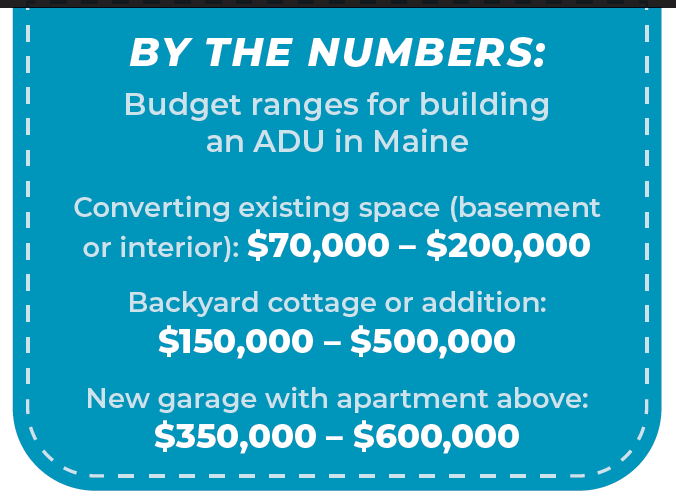
Within this site, you can visualize your lot and lot lines, and even drag and drop different footprints, from tiny 360-square foot ADUs to 1,500-square foot, house-sized designs to see what might fit. The tool even helps you draft an introductory email to your town officials and offers rough cost ranges to set expectations (see graphic above).
They aren’t small budget numbers, as they reflect today’s reality of material and labor costs, but building an ADU is often less expensive than buying or building a separate home.
A quick word on financing
If you’re doing back-of-the-napkin math, many homeowners find it helpful to have 10–20% of project costs in cash before starting. That cushion covers deposits, design work and surprises.
Beyond that, several Maine lenders now offer ADU-friendly loan products that don’t require refinancing your primary mortgage. These may be worth exploring if you’re sitting on a low interest rate.
Ready to get to work? Talk to the local experts
Whether you’re ready to build this year or just curious about your property’s future potential, there’s a growing community of Maine-based homeowners, builders, planners and lenders sharing what works.
On May 15 at USM-Portland, the Maine ADU Housing Expo will bring these groups together with property owners for an afternoon of practical guidance and one-on-one conversations. The day concludes with a Maine Voices Live event in Hannaford Hall with special guests – the cast of the Maine Cabin Masters, who will be interviewed live on stage by METLN Executive Editor Carolyn Fox and answer audience questions.
Whether you’re sketching ideas or ready to break ground, this event is designed to help you move from concept to construction. Visit pressherald.com/adu to learn more.
The state law opened the door, local towns are putting the rules into practice, and now it’s up to Maine property owners to break new ground. One small house at a time, Maine residents can be a part of the state’s housing solution and give more people the chance to experience the way life should be.

Comments are not available on this story. Read more about why we allow commenting on some stories and not on others.
We believe it's important to offer commenting on certain stories as a benefit to our readers. At its best, our comments sections can be a productive platform for readers to engage with our journalism, offer thoughts on coverage and issues, and drive conversation in a respectful, solutions-based way. It's a form of open discourse that can be useful to our community, public officials, journalists and others.
We do not enable comments on everything — exceptions include most crime stories, and coverage involving personal tragedy or sensitive issues that invite personal attacks instead of thoughtful discussion.
You can read more here about our commenting policy and terms of use. More information is also found on our FAQs.
Show less