

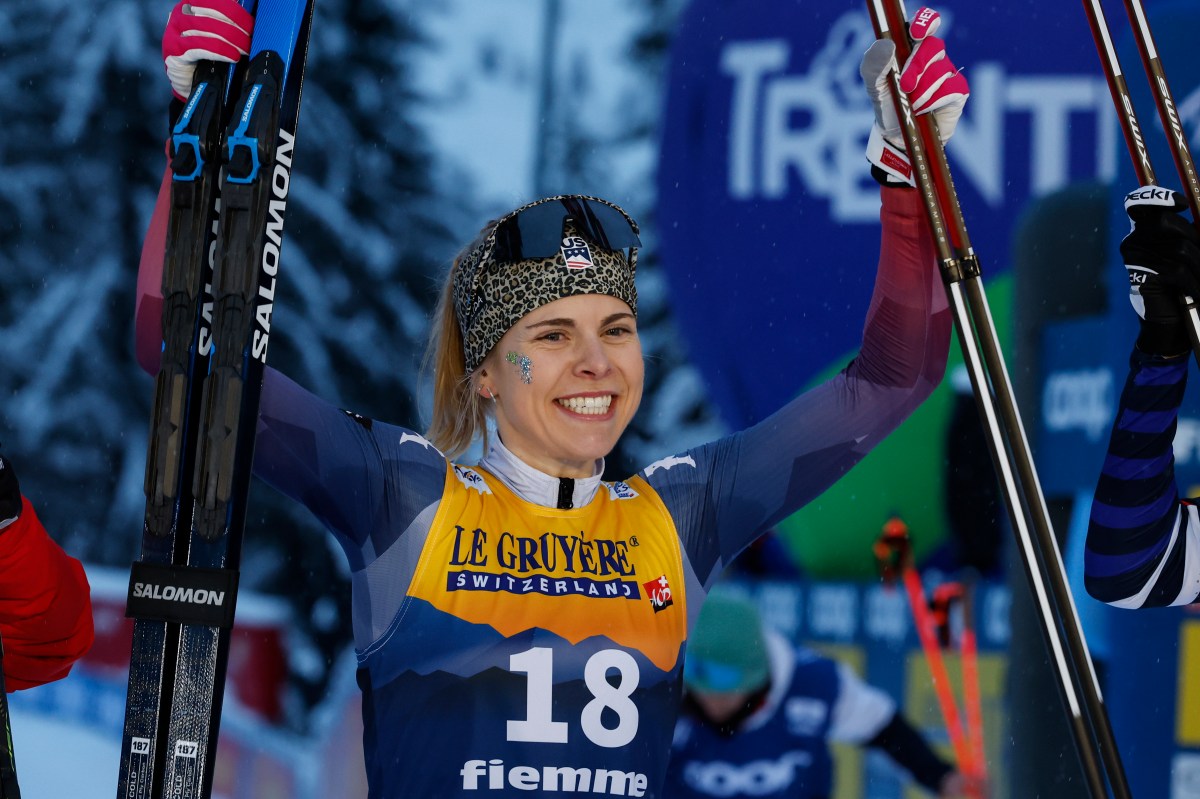
There’s less than a week left in the Winter Olympics. Less than a week before a four-year hibernation, when many athletes start dreaming of the French Alps, the site of the 2030 Games.
Sophia Laukli knows she could have been in Milan Cortina these last few weeks, competing in Nordic skiing events for Team USA. The Yarmouth native also knows she made the right decision in December when she stepped away from competition to focus on her health.
Knowing you made the right decision doesn’t make that decision any easier. Having competed at the 2022 Olympics in Beijing didn’t help, either.
“I did myself the disservice of taking the Olympics for granted and not even questioning that I would be going. That made it more of an abrupt slap in the face when I finally understood that I wasn’t going to go,” Laukli, 25, said in a recent phone interview from her home in Norway, not far from Lillehammer, which hosted the 1994 Winter Olympics.
“Luckily, I see my career lasting many, many more years. I made that decision to ensure I was going to be a skier for many more years,” she said. “Otherwise, I think my career would end relatively soon if I just kept pushing.”
The human body can do remarkable things, until it’s pushed too far. In December, Laukli knew she was dangerously close to that breaking point. For years, she toggled from one sport to the next without giving herself enough time to rest and recover. When you’re young, you feel invincible. Skiing through the rigorous World Cup Nordic circuit, then jumping onto the grind of a professional trail running series in the summer worked for a while, but eventually it eroded her invincibility.
For a while, she tried to ignore it. Laukli likened her training the last few years to putting out fires. Exhaustion? I’ll get over it. She’d take short breaks, a week or so, feel a little better, and dive back in. But she couldn’t push through it this time.
That’s when the link between the physical and mental aspects of training became too frayed for Laukli to continue.
She was at the starting line of a World Cup 20-kilometer freestyle race in Ruka, Finland, on Nov. 30, and Laukli’s heart rate was already as high as it would be in the middle of the race.
“That course starts on a downhill, and I remember just being already out of breath and energy on that downhill out of the start,” she said.
In hindsight, Laukli knows her decision to step away should’ve come earlier. But having the Olympics on the horizon blotted out the sun and made the obvious hard to see. Doctors ruled out any serious underlying causes for Laukli’s fatigue. Her body needed a break, a real break. They stressed to her that the only thing that would work is rest, both physical and mental. Don’t race for a while.
“It wasn’t out of the blue. It was the final straw. Racing is not fun when I’m not performing as well as I can be. It wasn’t the first time I felt like I wasn’t at my best,” Laukli said. “I’m going to take a step back so that I can return to where I’m performing at my full ability, but also enjoying it.”
Her family, teammates and coaches have been supportive, Laukli said. Team USA prides itself on the grind of training. The pain is part of it, but if you can get your skis to the starting line, you race. In that regard, Laukli said her decision was a shock to some. She routinely races against women well into their 30s in World Cup events. Laukli knew if she wants to achieve the goal of being one of them, she needed a break now, even if that meant passing up the 2026 Olympics.
She skis recreationally, recapturing the fun of it. She tries not to push it.
“My body right now is really fragile. If I just do the smallest thing, ski a little bit too hard or a little bit too long … it ruins my recovery,” Laukli said.
Laukli has been told she’ll start to feel better, but it can take time. There will be a day when she feels good and is ready to resume the intense training necessary to succeed in both her sports. She has to be patient.
When she went to the 2022 Olympics, it was a chance to soak in the experience. How much more fun would it be, Laukli said, to go with the goal and knowledge that you can expect to perform well? That’s something to look forward to. That’s what keeps her focused on recovery.
“My body has been unhappy and fighting me for a very long time,” Laukli said. “I want to do it until I finally reach my full potential, which means I’m skiing into my 30s. Which is cool, because that means how much better I can get.
“I will be back one day.”

We invite you to add your comments. We encourage a thoughtful exchange of ideas and information on this website. By joining the conversation, you are agreeing to our commenting policy and terms of use. More information is found on our FAQs. You can modify your screen name here.
Comments are managed by our staff during regular business hours Monday through Friday as well as limited hours on Saturday and Sunday. Comments held for moderation outside of those hours may take longer to approve.
Join the Conversation
Please sign into your CentralMaine.com account to participate in conversations below. If you do not have an account, you can register or subscribe. Questions? Please see our FAQs.