

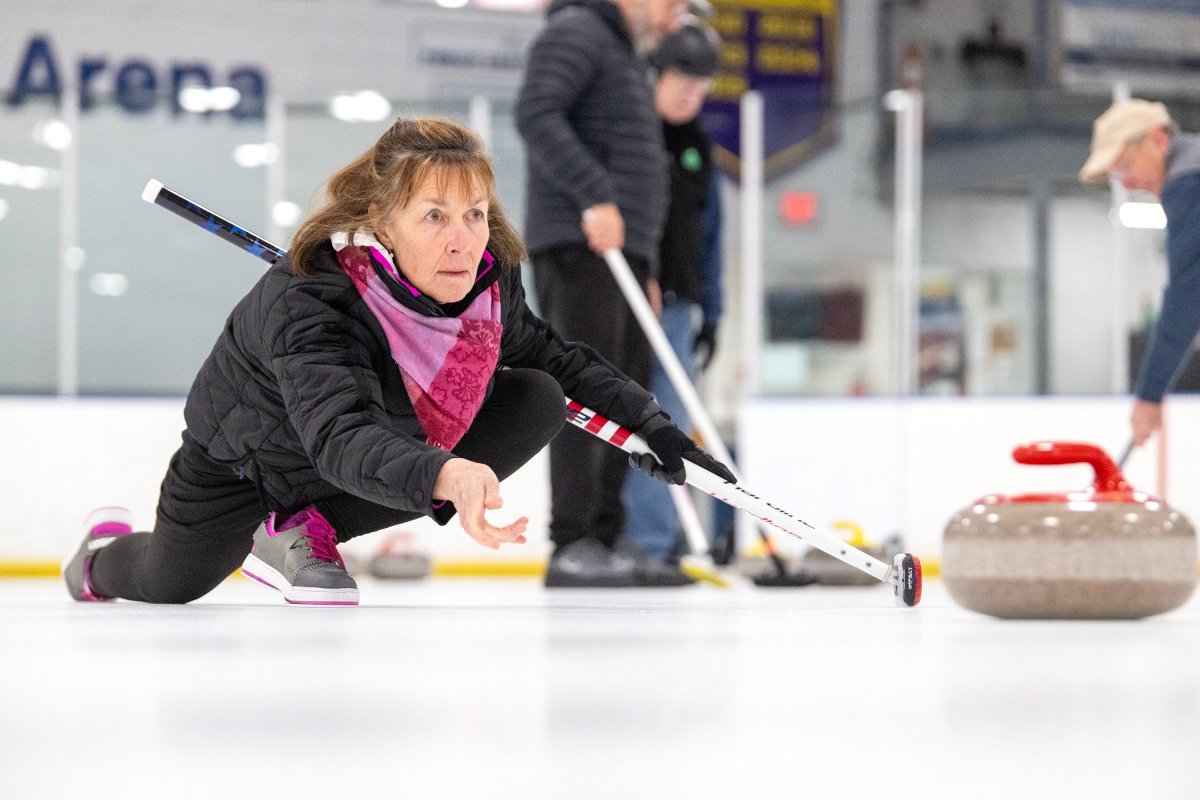
PORTLAND — In 2006, Dianne Ballon was watching the Winter Olympics on TV when one event piqued her interest — curling.
Ballon immediately turned to the Belfast Curling Club, the only rink in Maine dedicated to the sport. It was a 100-mile roundtrip from Gardiner, where she lived at the time, but she had to try it.
“They had learn-to-curl the next day,” said Ballon, who is 72 and now lives in Portland.
Twenty years later, Ballon is still sliding, at Portland’s William B. Troubh Ice Arena in the Tuesday morning league run by the Pine Tree Curling Club.
Interest in curling sweeps Maine and the world during the Winter Olympics. The state’s two public curling clubs see a spike in inquiries and interview requests. Organizers and members said they try to capitalize on the moment, hoping to turn once-every-four-years fans into lifelong players.
This year has been particularly exciting for the United States, as Korey Dropkin and Cory Thiesse just won a silver medal in the mixed doubles event.
“My phone is blowing up with people who are asking me questions about curling,” said Craig Gray, a wheelchair curler who lives in Scarborough.
MAINE’S CURLING CLUBS
Sierra Dietz grew up at the Belfast Curling Club. Her parents were members and they often brought Dietz and her brother along for the evening instead of hiring a babysitter.
She didn’t play, though, preferring to socialize with the other kids waiting off the ice.
“I thought curling was for old people,” Dietz, now 50, said with a laugh.
When she moved back to the area as an adult, her thinking had evolved. In search of new friends and a way to pass the dark winter nights, she and her husband joined the curling club.
Twenty-five years later, Dietz is the president.
Curling, which originated in Scotland, debuted at the 1924 Games and was occasionally demonstrated over decades at the Olympics. It was added to the official Olympic program in 1998.
The Belfast Curling Club opened in 1959 on a site that had previously been flooded and frozen for outdoor play. Today, the facility has a rink with three sheets — the name for playing areas, roughly 150 feet long — and a warm room for events.
Important to a true curling club, regulars said, is the bar, where the winners traditionally buy a round for the losers.
The club now has more than 300 members, including many who drive an hour or more to play in Belfast.
“We have curlers that are as young as 10 all the way up to people in their 80s,” Dietz said.
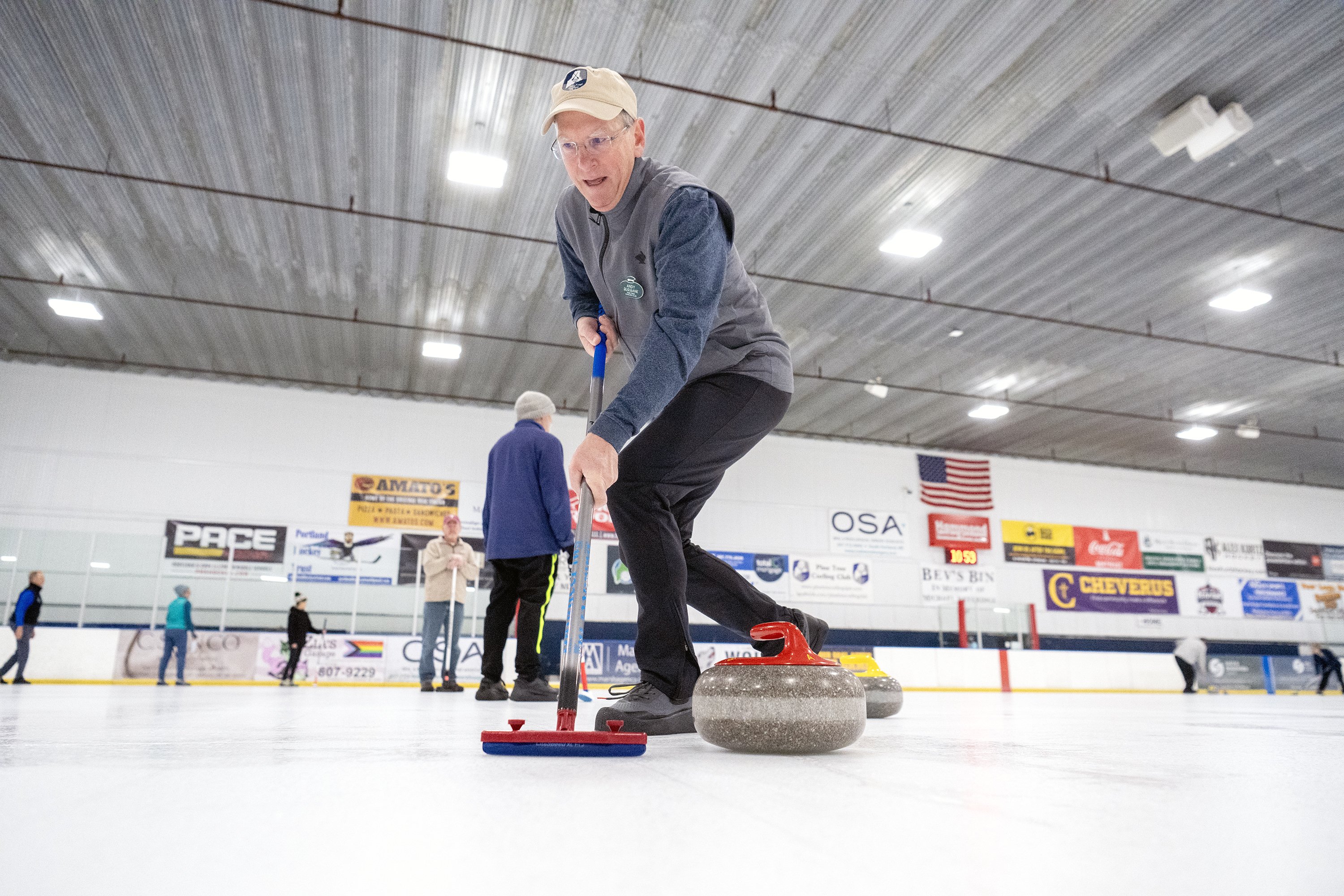
In Portland, the Pine Tree Curling Club started in 2015 and now has more than 70 members. For years, the club has talked about building a dedicated curling facility in southern Maine.
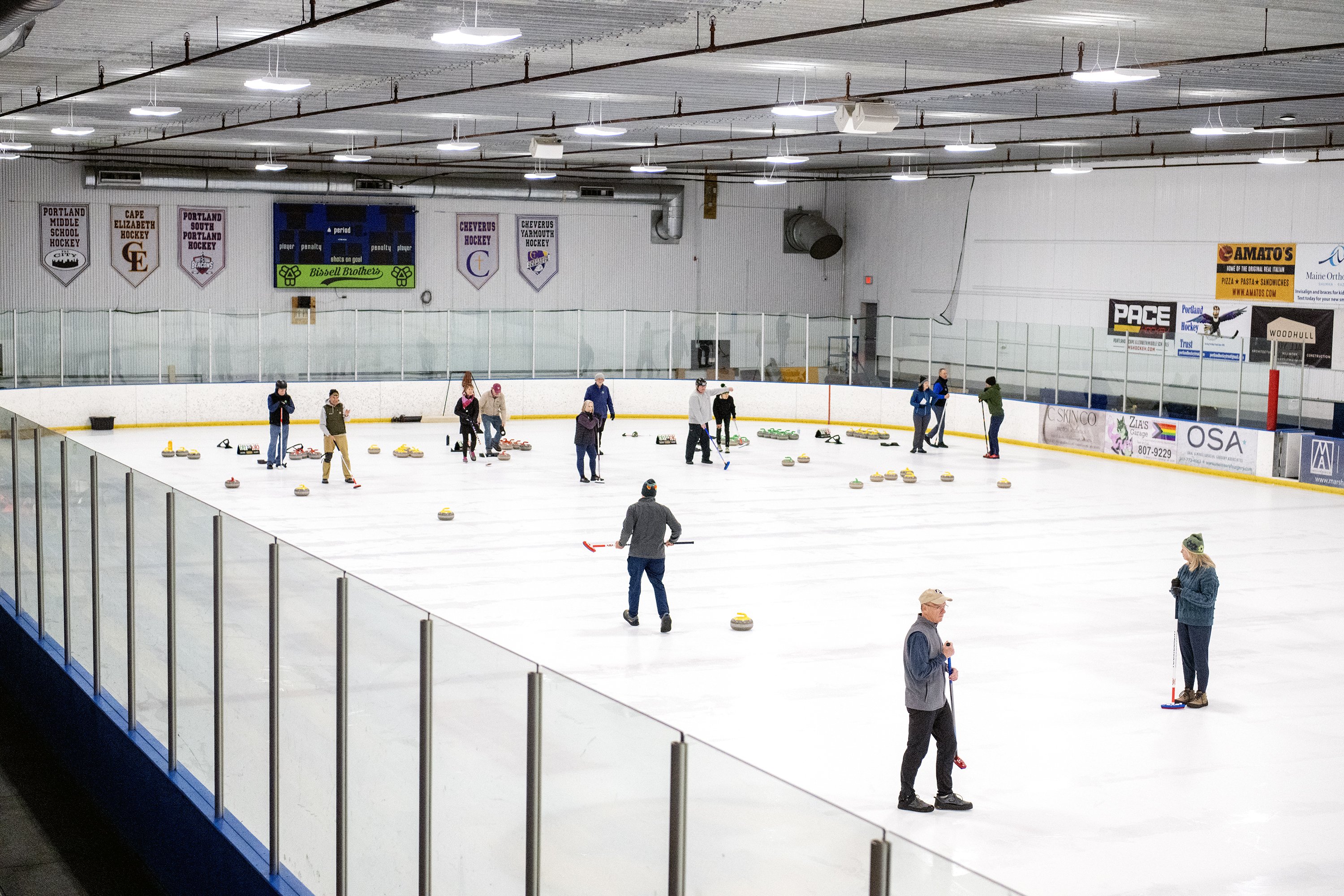
President Andrew Burbank speaks highly of those who run the city-owned Troubh Ice Arena, but said sharing the rink with skaters isn’t ideal. The club has to spend time before every session on a technique called pebbling, or spraying water droplets that freeze, creating a bumpy surface that reduces friction so the stone will slide across the ice.
Burbank said he would like to see membership grow to at least 100 to support the construction of a new club. He’s been adding more information to the club’s website and trying to make the sport accessible to new players so they will continue curling long after the closing ceremonies in Italy.
The Tuesday league, for example, is geared toward beginners.
“It does build interest,” Burbank said of the Olympics, “but not always in a way that’s sticky.”
‘THE ROARING GAME’
One thing to know about curling: it’s harder than the pros make it look on TV.
“It is hard, and you’re not going to do it at the same level as the Olympians are doing it, but it is something anybody can try,” Dietz said. “It feels different to me than any of the other sports. I’m never going to do a ski jump. How many places would you go to try out luge?”
On a recent Tuesday morning, two dozen curlers slipped grippy booties over their shoes so they could walk on the ice at the Portland arena. Soon, the rink was full of the sound that gives the sport its nickname: “the roaring game.”
Graduate student John Henkelman drives up from Sanford to play with this league. Before he takes any trip, he researches area curling clubs and packs his shoes. Curling shoes are specialized, with one smooth sole for gliding on the ice.
“My goal is to put a sheet of ice in our backyard,” Henkelman said with a laugh. “So I can practice my slide.”
Jennifer Sutherland is originally from Canada and always wanted to learn to curl. She lived in Texas for years and didn’t have the opportunity to try it until she moved to Maine. This winter, she started playing with the Portland group.
On her turn, Sutherland launched a solid shot that landed her stone in the house, the circle where players aim to score points.
“You’re getting the release,” Henkelman said.
Sutherland beamed.
“I’m watching the Olympics,” she said.
‘GOOD CURLING’
Players say they get their heart rates up as they sweep for a good cardio workout, and they likened the mental strategy to chess. Some go to curling competitions, called bonspiels, while others play more casually. But over and over, they said their favorite part is the community that has grown at the local clubs.
Every game begins and ends the same way — with handshakes and wishes for “good curling.”
There are rarely officials on the ice, so players discuss rules and resolve disputes together.
“You could call it a genteel kind of sport,” said David Florig, who retired to Maine 10 years ago and took up curling as a winter hobby. “There’s no trash talking or taunting or any of that.”
Florig started playing in Portland and now plays there and with the club in Belfast. When he decided to write a novel during the pandemic, his wife gave him simple advice: “Write what you know, and write what you love.”
“I had fallen in love with curling,” Florig said.
He has written two novels about the sport: “The Stones of Ailsa Craig,” set in part on the Scottish island that is the source of the granite in every curling stone in the Olympics, and “The Shattered Curling Stone,” about a 19th-century woman who wants to play what was then primarily a men’s game.
Gray, the curler from Scarborough, competed in cross-country skiing in the 1998 Paralympics in Japan. Wheelchair curling wasn’t added until the 2006 Games in Turin, Italy, and he didn’t start playing until three years ago. Any player who uses a wheelchair or doesn’t want to lunge on the ice can use a special stick to throw the stones.
“It’s a very inclusive sport,” Gray said. “Everyone can play. Of course, they’re not going to play the shots that Korey Dropkin and Cory Thiesse are making right now in the Olympic gold medal match but, you know, if you can get it into the house on your own sheet, that’s a pretty good feat.”
Now, if curling and skiing were on TV at the same time, Gray knows which one he would watch.
“Curling,” he said. “No doubt about it.”
CURLING EVENTS
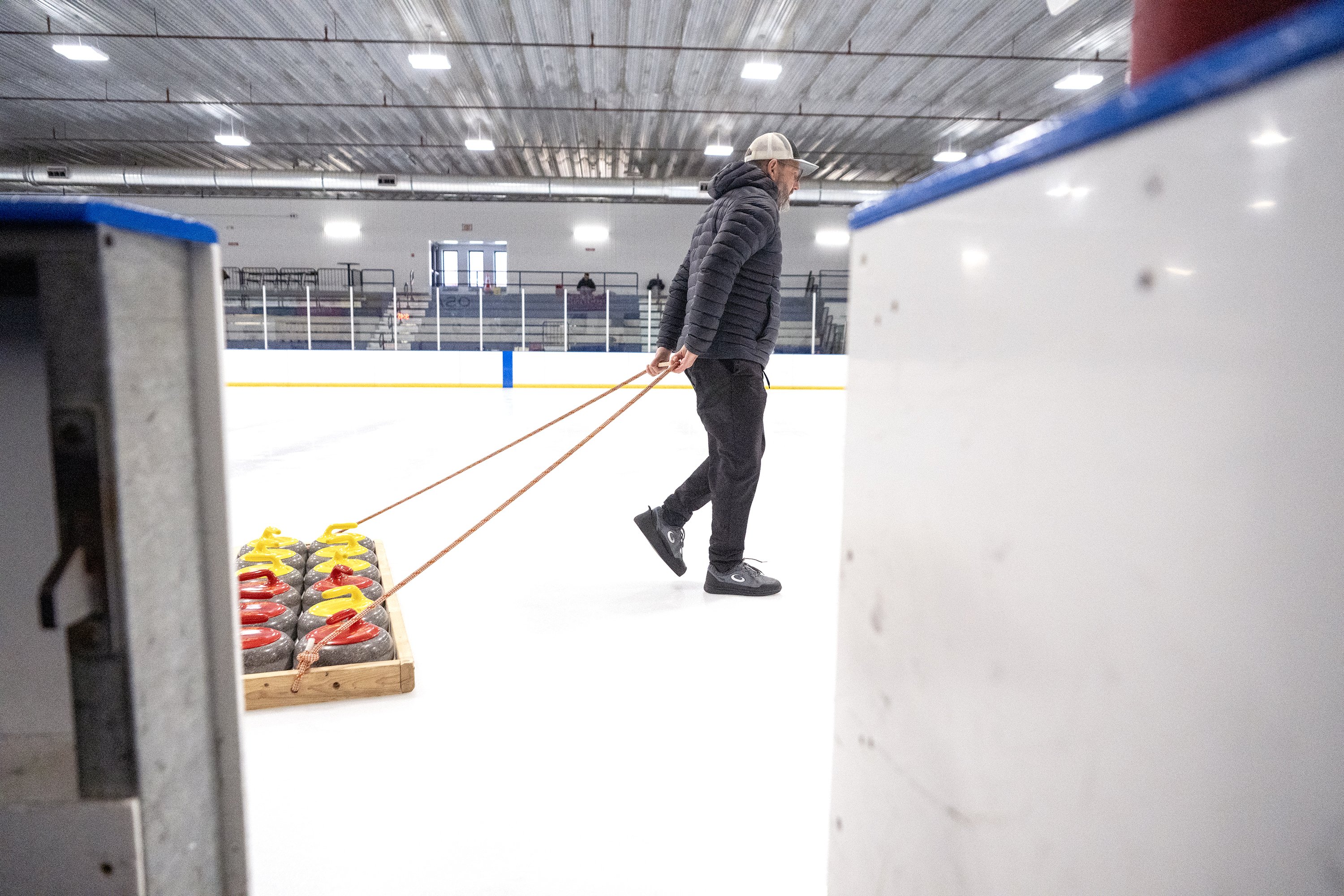
For those who want to try their hand with the broom, both the Pine Tree Curling Club in Portland and the Belfast Curling Club offer occasional lessons for the public.
Burbank said the upcoming dates in Portland are currently sold out, but to watch the website for future sessions.
The Pine Tree Curling Club will host watch parties for upcoming Olympic games Thursday at Maine Beer Company in Freeport, and on Wednesday and Friday at the Allagash Bungalow in Scarborough.
The club will also launch another Tuesday morning league for six weeks starting Feb. 24. All levels are welcome, and sessions include instruction for beginners. Information about how to sign up is on their website, pinetreecurlingclub.com.
The Belfast Curling Club will host an open house on March 14 that is specifically designed for people who use wheelchairs. No prior experience is required and Gray will teach a lesson before participants play a few ends, the name for rounds in curling.
The event will coincide with the Paralympic matches, which will be broadcast in the club. Participation is free, but registration is required and limited to 16 participants. Details are posted at belfastcurlingclub.org.

We invite you to add your comments. We encourage a thoughtful exchange of ideas and information on this website. By joining the conversation, you are agreeing to our commenting policy and terms of use. More information is found on our FAQs. You can update your screen name on the member's center.
Comments are managed by our staff during regular business hours Monday through Friday as well as limited hours on Saturday and Sunday. Comments held for moderation outside of those hours may take longer to approve.
Join the Conversation
Please sign into your CentralMaine.com account to participate in conversations below. If you do not have an account, you can register or subscribe. Questions? Please see our FAQs.