

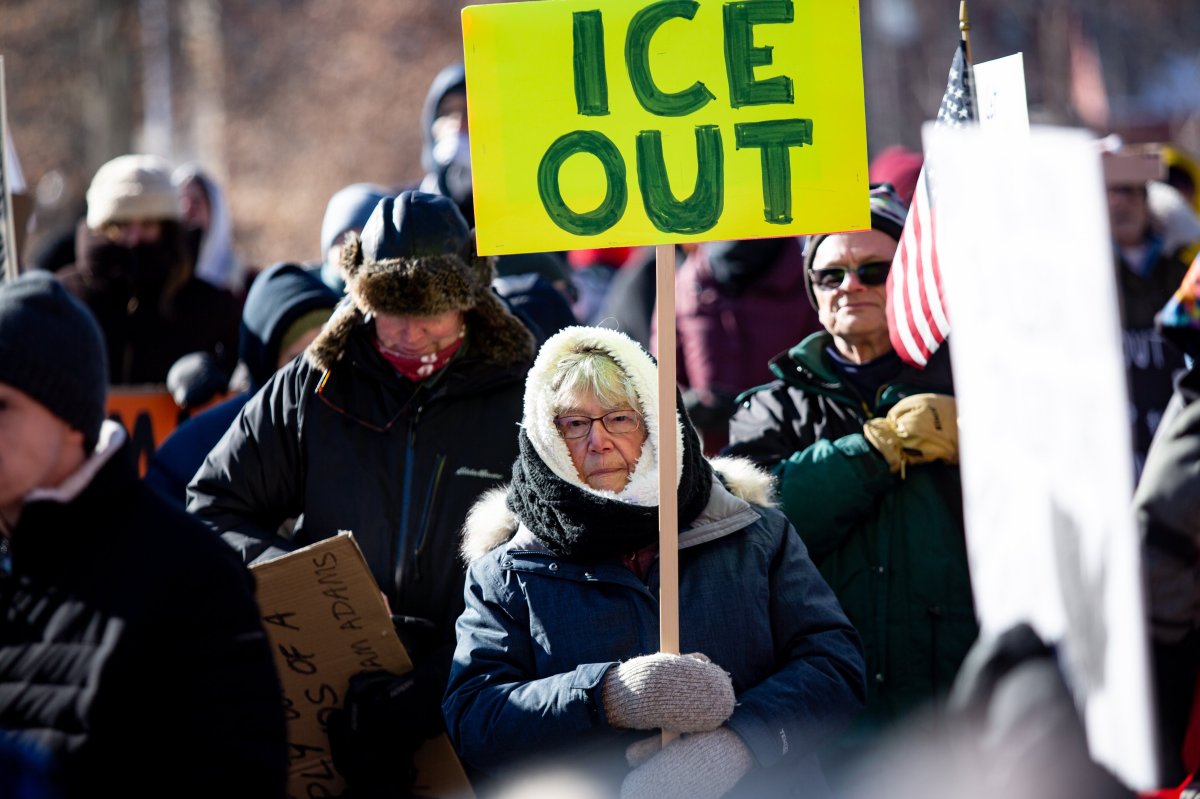
LEWISTON — City councilors passed an emergency ordinance Tuesday evening preventing city police and other city employees from using city resources to aid federal civil immigration enforcement.
The ordinance mirrors language from LD 1971, a state law enacted in December that limits cooperation between state, county and local law enforcement and federal immigration authorities.
The bill, which became law without Gov. Janet Mills’ signature in January, will not take effect until 90 days after the legislative session ends.
Council President David Chittim explained that the ordinance fills the time gap between the law’s enactment and when it will go into effect in about 60 days. The city ordinance will expire once the state law takes effect.
Chittim said ordinance language was crafted with input from police Chief Carley Conley, who acknowledged that current policy already prevents officers and leadership from enforcing federal immigration law.
The department reiterated that policy in a Jan. 23 Facebook post, stating it does not coordinate with U.S. Immigration and Customs Enforcement’s operations and that ICE does not provide the department with target lists or areas of focus.
Maine State Police officials said in January a directive was issued in December mirroring the law.
Several members of the public voiced their support and opposition to the city’s efforts to implement the ordinance before the new law goes into effect. Some speakers vocalized their support for ICE and its handling of immigration law as well as other Department of Homeland Security actions.
Former councilor Tim Gallant said the council needs to be thinking about providing public safety for the entire city rather than spending time and money on an ordinance that a state law will soon cover.
“How many gunshot incidents have we had since ICE came to town? How about zero,” Gallant said. “There’s something coming down the pike, (so) we can wait three months or four months. … No value added.”
Gubernatorial candidate David Jones, a Falmouth Republican, also shared his discontent with the council, claiming some councilors are opposing law enforcement entirely.
“You really have to stop,” Jones said. “The reason people are afraid is because of the actions you’ve taken.”
Others claimed the city’s actions will improve trust in the community, citing a general lack of trust in federal authorities and how ICE has been handling immigration law in Maine and across the country.
Senate District 21 Democratic candidates Shanna Cox and Mana Abdi shared their support of the council’s measure.
“There are people who are here legally … and have been taken and later released. That is a fear based in reality and it is impacting day to day life for our community, our businesses, our schools, our teachers. And that impact is not small,” Cox said. “I think this ordinance takes a step in the right direction.”
“Public trust is foundational to effective policing,” Abdi said, adding that local police already struggle with maintaining trust in the community. “Clarity matters. When residents understand that local law enforcement is focused on local public safety priorities … cooperation improves, victims report, witnesses come forward and the community relationship remains intact. … When fear grows, trust erodes.”
Ward 7 Councilor Bret Martel said he could not see the emergency the ordinance addresses and was concerned that approving the ordinance sets a bad precedent.
The ordinance passed on a 5-2 vote, with Martel and Ward 2 Councilor Susan Longchamps voting against.
Chittim said the council will review a possible permanent ordinance in the future.
