

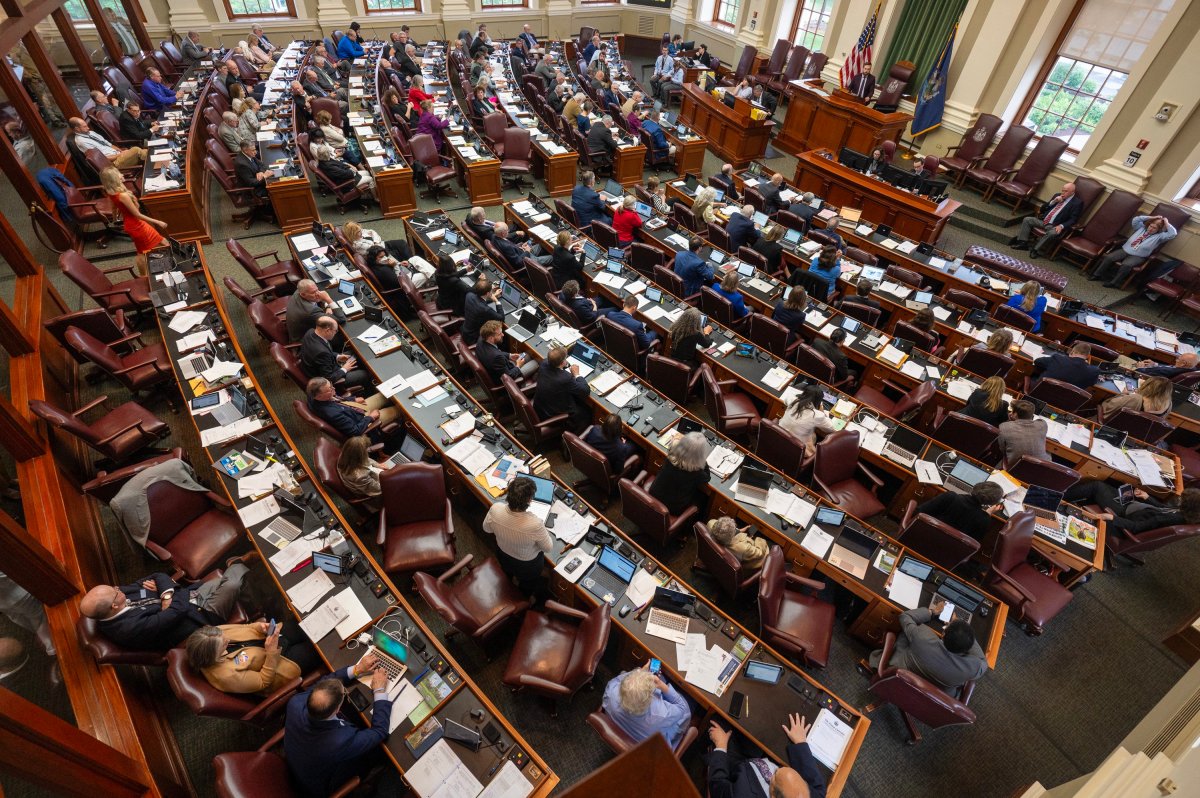
In dozens of races that will determine Maine’s future, Democrats and Republicans are scrambling to make the most important strategic decision they’ll make all cycle — finding the right candidate.
The races for Maine House and Senate — a total of 186 contests — are being overshadowed by high-profile races for U.S. Senate, Maine’s 2nd Congressional District and governor. But their importance cannot be overstated. Control of the Legislature will determine what does — or does not — get accomplished over the next two years.
Partisan control in Augusta hangs on a knife’s edge. Democrats have a five-seat majority in the House, including three independents who usually vote with Democrats. Twenty-two seats — 10 held by Democrats, two by Democrat-leaning independents and 10 by Republicans — will be open because of term limits. Other seats could open if an incumbent doesn’t seek reelection.
Sean Smith, campaign director for the Maine House Democratic Campaign Committee, said about 60 votes across three House districts determined the majority two years ago. He expects control of the chamber will come down to a handful of races again this year.
“Strong candidates are more important than ever,” Smith said. “It is increasingly tough for down-ballot candidates to break through the noise, money and partisanship that dictates much of our elections now, and so the parties’ ability to recruit strong candidates who can resonate with voters of all backgrounds in their communities is the single most critical factor in determining the outcome of these legislative races.”
Zach Lingley, the Republican legislative campaign director, said he’s working with GOP legislative leaders Sen. Trey Stewart of Presque Isle and Rep. Billy Bob Faulkingham of Winter Harbor to find candidates with the name recognition, community ties and free time to serve in office.
As of Thursday morning, Democrats had no registered candidates in 51 House races. Republicans had no registered candidates in 50 House contests. Another 19 House races had no registered candidate.
In the Senate, Democrats had no candidates in four races; Republicans in 14.
Two House seats are vacant, including one in Lewiston, which will be filled in a special election on Tuesday. The race to replace Democrat Kristen Cloutier has drawn the attention of national Democrats eager to show momentum heading into the midterms.
Democrats have controlled the 151-seat House since at least 1992, except for 2011 and 2012. But Republicans have been eating away at the Democratic majority in the House in recent years.
In 2018, the Democratic majority swelled to 89 seats, not including independents, while Republicans held 57 seats. Democrats currently control 75 seats, not including independents, while Republicans hold 73.
Lingley believes that down-ballot Republicans will benefit from having Republican U.S. Sen. Susan Collins on the ballot. Despite low approval ratings, Collins has proven popular enough with a coalition of moderate and Republican Mainers to hold office for going on 30 years.
“They’re the pros,” Lingley said. “They lift up the whole team.”
The 35-seat Senate has been more volatile. Democrats have held that chamber for a total of 10 years since 2010, while Republicans have held it for six.
Democrats currently hold 20 seats, while Republicans have 14, now that Sen. Rick Bennett of Oxford has unenrolled from the party and is running for governor as an independent.
Six seats are open because of term limits, including four currently held by Republicans. Three incumbents are not seeking reelection because they’re seeking higher office: Bennett and Republican James Libby of Standish are running for governor, while Democrat Joe Baldacci of Bangor is running for Maine’s 2nd Congressional District seat.
Will Parmacek, campaign manager for the Maine Senate Democratic Campaign Committee, said that about 15 seats could be in play this cycle.
“This is the most competitive Maine Senate map in decades, with a historic number of open seats,” Parmacek said. “Turnout will be unusually high for a midterm, but these races will be decided the way they always are in Maine — on kitchen-table issues and the strength of candidates in their communities.”

We invite you to add your comments. We encourage a thoughtful exchange of ideas and information on this website. By joining the conversation, you are agreeing to our commenting policy and terms of use. More information is found on our FAQs. You can update your screen name on the member's center.
Comments are managed by our staff during regular business hours Monday through Friday as well as limited hours on Saturday and Sunday. Comments held for moderation outside of those hours may take longer to approve.
Join the Conversation
Please sign into your CentralMaine.com account to participate in conversations below. If you do not have an account, you can register or subscribe. Questions? Please see our FAQs.