

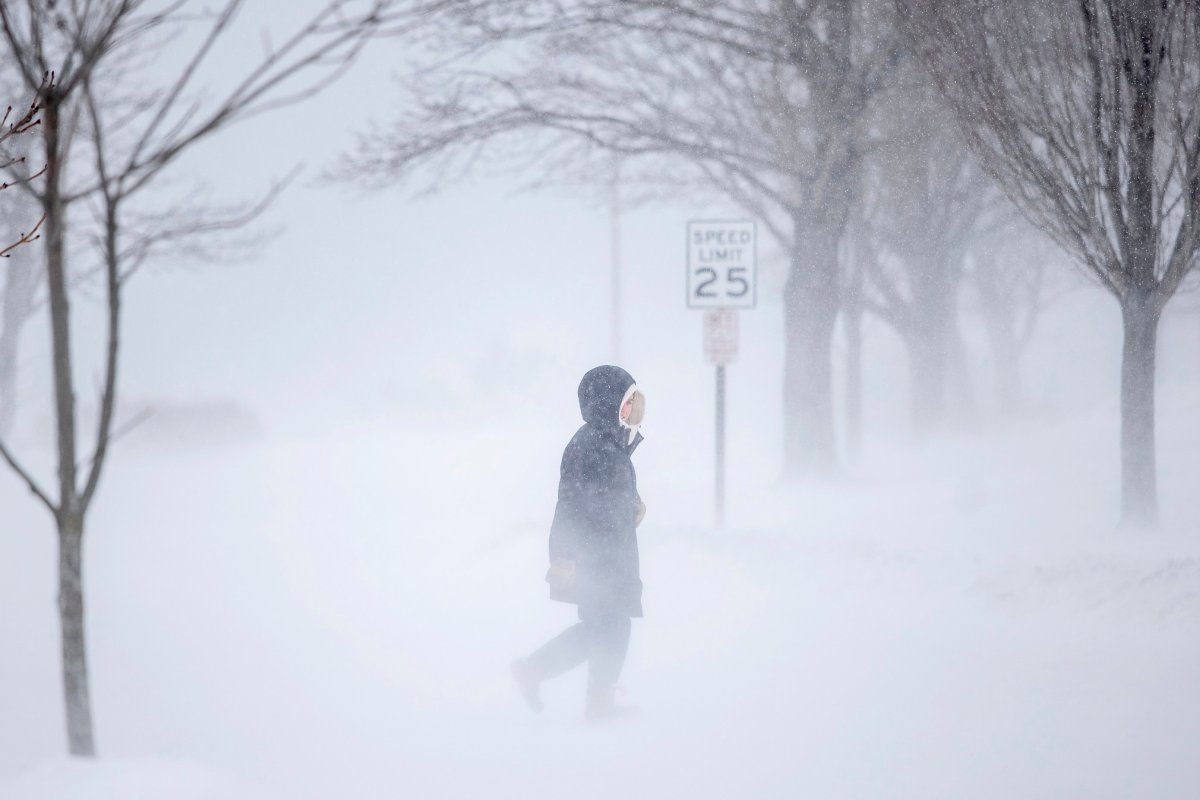
As blizzard conditions descended Monday on much of the Northeast, school districts across Maine made the familiar decision to close down schools.
But whether that involved a traditional snow day or a switch to remote learning varied by district as public schools look for ways to balance instructional requirements and inclement weather.
Classic snow days — where students aren’t expected to do any school work, and teachers have the day off — have fallen out of fashion somewhat since the pandemic ushered in an era of remote learning. Over the last couple of years, many districts have adopted policies that combine traditional snow days and learning from home.
Unlike traditional snow days, which have to be made up at the end of the school year, remote learning counts as a school day as long as there are at least three hours of instruction, and the district provides lunch, which they can send home with students, deliver or distribute at school sites.
“Our preference is always to have students learning in person because that’s how they learn best,” said Sarah Warren, director of strategy for Portland Public Schools. The district scheduled three traditional snow days before switching to remote learning. “It’s a balancing, really, between all of the factors.”
But not every school district feels that way. Lewiston, for example, does not employ any remote learning, opting instead to make up all of its snow days in June.
REMOTE DAYS
Like Portland, other districts such as Falmouth and Auburn allow for three full snow days before moving to remote learning.
For some, Monday was the fourth winter storm day of the year, and the first test of that policy following a mild winter last year.
Portland uses a two-tiered system for remote instruction. For students in pre-K through fifth grade, schools send home a packet of materials to be completed and returned the next day. Students in grades eight through 12 (who already have school-issued laptops) attend their regular course schedule remotely and complete classwork through Google Classroom.

Warren said Monday’s remote learning day went smoothly, even though it came directly after the weeklong February break. The district sent home hard copy materials for younger students several weeks ago.
“We didn’t want to get caught off guard in a situation like this,” she said.
Per state requirements, Portland prepared to distribute lunches at nine schools across the district, although Warren said that no families actually came to pick up meals in blizzard conditions. After seeing that, she said, the district will be having follow-up conversations internally and with the state about their approach for future snow days.
Portland will make up its full snow days on June 16, 17 and 18. Warren said part of the motivation to switch to remote learning after three days was hearing from staff and parents about not extending the school year past the Juneteenth holiday.
Waterville Public Schools also built in three snow days, but has used only two so far, Superintendent Peter Hallen said.
The district tries to avoid using remote days because not everyone has access to the same technology, and Hallen said school officials feel it is important that everyone is able to participate — and have access to two meals a day that are served in schools.
Other districts strike a different balance of full snow days and remote learning. Maine School Administrative District 51, which covers Cumberland and North Yarmouth, allowed for just two snow days before switching to remote learning. Yarmouth will use no more than four; South Portland, Gorham and Brunswick will all consider remote learning after the fifth closure.
Schools in MSAD 15 (Gray/New Gloucester) default to remote learning days immediately and only fully cancel school in the event of significant power outage in the area. That happened for the first time on Monday, Superintendent Chanda Turner said.
SNOW DAYS REMAIN
In Lewiston, the state’s second largest district, the traditional snow day is still the solution of choice during bad weather.
Superintendent Jake Langlais said he does not believe remote learning days are effective for teaching students across all grades, which is why his district does not use them at all. He said preparing school work in advance to send home with students, or teaching them online, are added complications of remote learning.
“Other implications can include lost documents, no device, no internet, the requirement to provide lunch if students request it in advance, and others,” he said. “These are challenging logistics for a system our size and level of need.”
Langlais said he’s also concerned about remote learning days not meeting taxpayer expectations for the instructional experience.
“Remote days are difficult to monitor,” he said, “It leaves our team unable to ensure remote days are productive learning windows that our community and subsidy pay for.”
He said Lewiston has gotten feedback from families that they appreciate the traditional snow days. However, Langlais also acknowledged that any instruction days the district does cancel must be made up in June, when the school buildings get warm in the summer heat.
Every Maine district is required to maintain a school calendar of at least 180 days, 175 of which must be used for instruction. If a school cancels an instructional day, because of weather or another issue, they’re obligated to reschedule it by adding that day to the end of year, taking it away from a vacation, having class on a weekend or some other method.
If they exhaust all of those options and are unable to reschedule an instructional day, the state does offer a waiver that allows districts to request an exemption from the minimum instructional requirements. The Maine Department of Education reviews those waivers on a case-by-case basis.
So far this year, the state has received four applications, two of which were approved, one which will be reviewed later this week, and one which was not applicable, a spokesperson for the department said.
Staff Writers Emily Duggan, Rory Sweeting, Amy Calder, Sophie Burchell, Dana Richie and Katie Langley contributed reporting.

We invite you to add your comments. We encourage a thoughtful exchange of ideas and information on this website. By joining the conversation, you are agreeing to our commenting policy and terms of use. More information is found on our FAQs. You can update your screen name on the member's center.
Comments are managed by our staff during regular business hours Monday through Friday as well as limited hours on Saturday and Sunday. Comments held for moderation outside of those hours may take longer to approve.
Join the Conversation
Please sign into your CentralMaine.com account to participate in conversations below. If you do not have an account, you can register or subscribe. Questions? Please see our FAQs.