


“Honestly, I haven’t used that road in decades,” said Gwen Littlefield, a lifelong resident of the small Waldo County town of Freedom. “I haven’t needed to.”
“Now, I have more of a desire to go up there and do what-the-hell-ever I want to do,” she said, “just because it is a public easement, it is public access and it is my right to do so.”
Littlefield was talking about Beaver Ridge Road, a part-gravel, part-dirt path that bisects Freedom’s backwoods, used for generations as a walking path and through-way for snowmobilers. Its legal status was called into question in 2024, when several abutting property owners sued the town to claim a 1.5-mile section of the road was their private property.
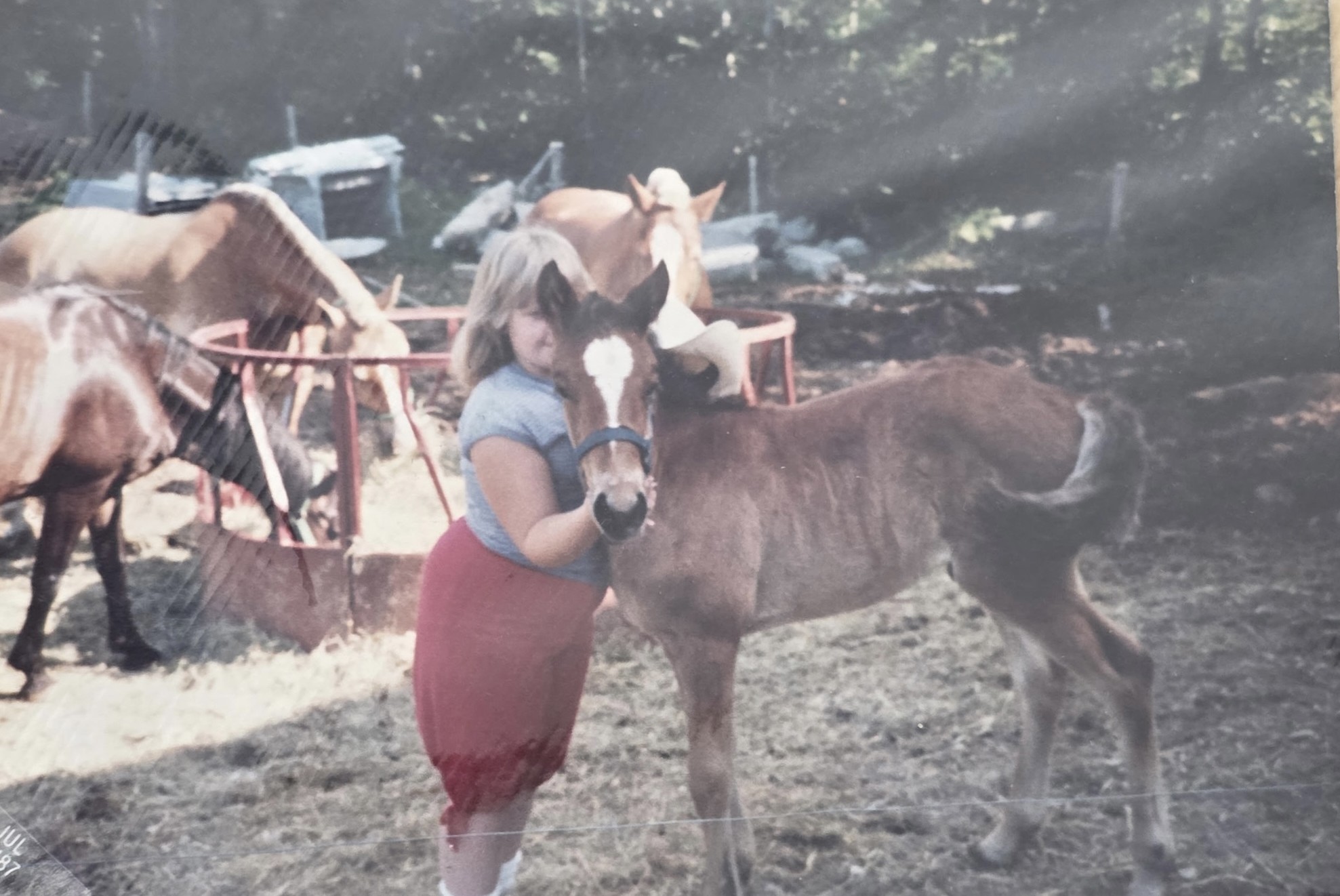
The lawsuit has cost Freedom, a town of 700, more than $45,000 in legal fees, according to Select Board Chairperson Laura Greeley. It’s also galvanized residents like Littlefield, who rode horses on Beaver Ridge Road as a young girl, to fight for their access.
But elected officials will vote on a proposal next week that could put an end to the legal battle. The consent decree, which would overrule all historical rulings, proposes to keep the road open to the public but restrict certain activities, like snowmobiling. Residents say they are caught between precedent and a desire to end the costly fight over Beaver Ridge Road for good.
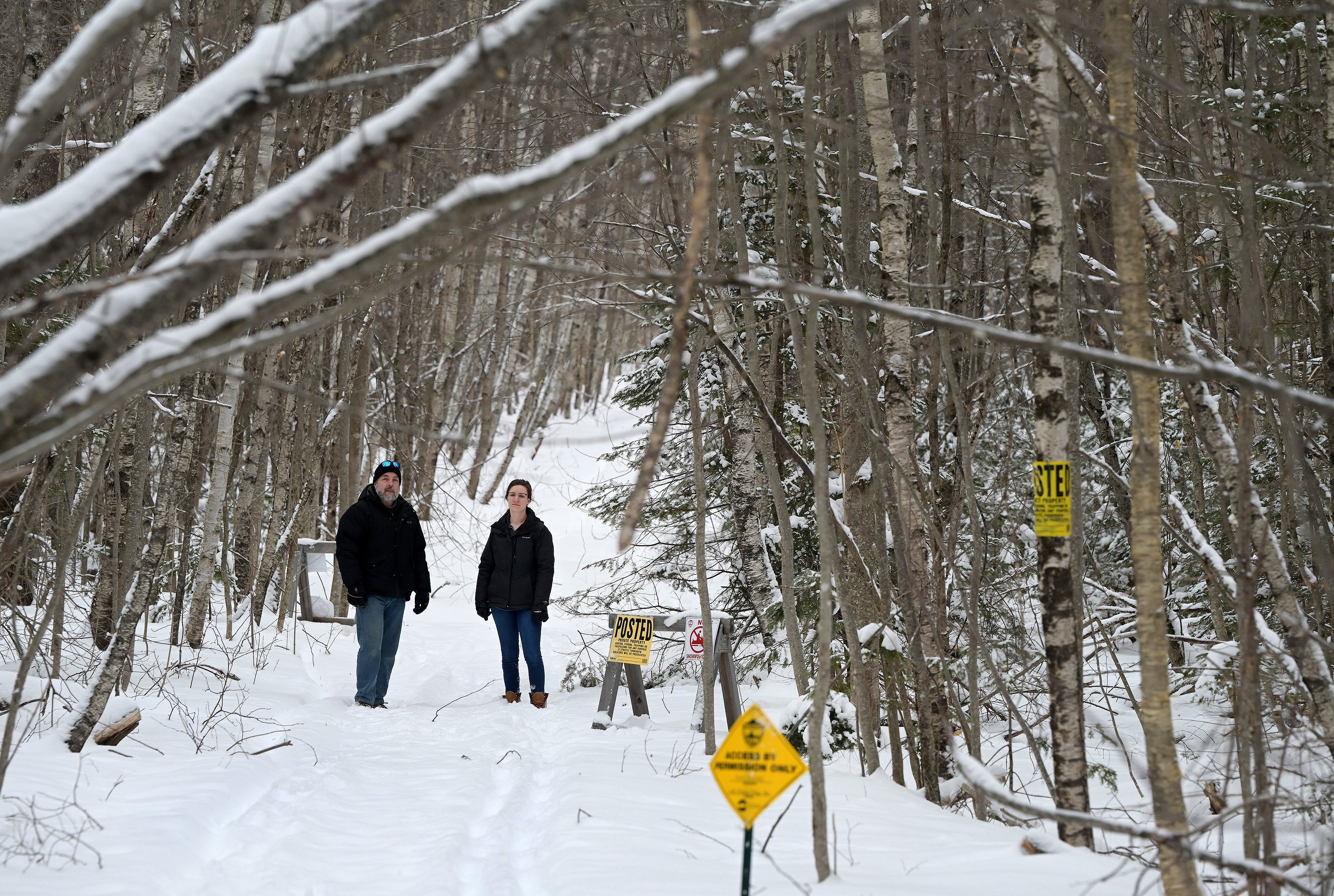
Roberta Manter, commissioner on the Maine Abandoned and Discontinued Roads Commission, said signing the decree would be the most painless path toward resolution.
“What usually happens is neither party wants to go the expense of taking it to court, because that can cost tens of thousands of dollars, $80,000 and upwards,” Manter said.
“If they can each give a little bit and come to an agreement, then you can come out with something like this consent decree,” she said, “which gives each party something that they want without giving everything away when you go to court.”
IN GOOD FAITH?
Abandoned roads are a common cause for disputes in Maine. Manter has consulted on hundreds of battles between landowners who maintain their own roads and members of the public who use them for free, causing uncompensated wear and tear. Some end in for sale signs. Most go unresolved.
Freedom’s consent decree, she says, is rare. A mediator worked on it with the three-person Select Board, represented by town attorney Bill Kelly, and Tyler Hadyniak, an attorney who represents himself and four members of his family, all of whom live on Beaver Ridge Road.
The board will vote on the decree at a public meeting Saturday at 10 a.m. at Mt. View Elementary School. If it’s signed by both parties, it would go to a judge for final approval.
The proposal attempts to marry the Hadyniak’s position, which says the disputed portion of the road is the private property of abutting landowners, and the town’s position, which claims the plaintiffs are obstructing a public easement, a road that is not maintained by public funds but can allow foot or motor vehicle traffic.
The consent decree maintains a public easement over Beaver Ridge Road, but with conditions: no snowmobiles or loud electronic sounds. Recreation must happen during day hours. Violators of the agreement have 30 days to correct their actions before anything goes to court. Unreasonably seeking a no-trespass order would result in fines from the town.
Horseback riders must remove “manure and feces from the travelled path.”
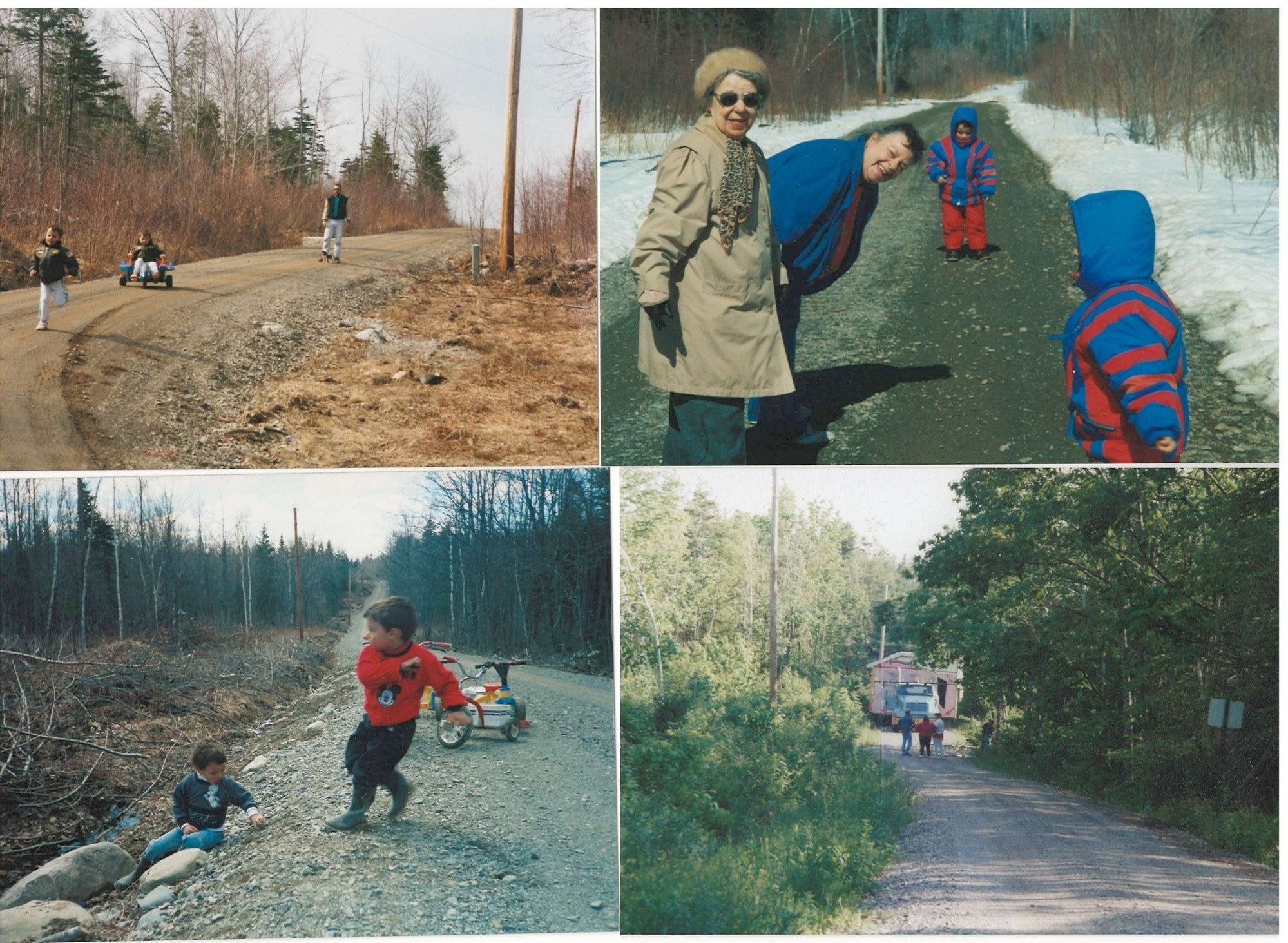
Hadyniak said his family earned their solitude. Before moving to Freedom from New Jersey in the 1990s, his grandparents said a town official told them part of Beaver Ridge Road had been discontinued for maintenance by a 1956 town vote. Discontinuance cedes property rights to abutters under Maine law, unless a public easement is maintained.
“We think we did our due diligence, when my parents and grandparents bought their property and asked: ‘What exactly is the legal status of this road?'” Hadyniak said.
Then, in 2024, Beaver Ridge Road became a topic of discussion at town meetings. A resident rode an ATV over the family’s wooden barricades, Hadyniak said, and their private property sign was vandalized to say “town road open to public.” The family filed a police report and sued the town to prove ownership of the road.
Greeley said she plans to vote against the consent decree if the plaintiffs do not agree to remove a sentence requiring the town’s sign-on that the plaintiffs “acted reasonably and in good faith” when they posted private property signs and forbade others to access the road.
She says there’s nothing innocent about the way the plaintiffs have filed motion after motion, wasting taxpayer dollars.
“It is not right,” Greeley said. “I will forever be the voice that continues to point that out. It is not right.”
CHANGING THE RULES
Some residents have pointed out that the plaintiffs won’t live on Beaver Ridge Road forever. The decree could instate permanent access rules; townspeople argue they should be malleable, a reflection of what Freedom needs from generation to generation. Properties will change hands, elected boards will turn over and abandoned road laws in Maine can always change.
Manter hopes they do. She’s worked with the commission on several bills that would allow a middle ground of maintenance on public easements, so towns don’t have to fully maintain or abandon them. Landowners maintaining public easements also wouldn’t be held liable for potholes and other hazards.
Until the bills take effect, she said the consent decree is a win for people who want to use the road respectfully.
Hadyniak said allowing public access was a “big concession” for his family.
“I do want to underscore that it’s a compromise,” Hadyniak said. “Not anyone is getting what they want in its entirety, but it’s the way to move this entire 35-year conversation behind the town, once and for all.”
Littlefield disagrees. Beaver Ridge Road isn’t the only abandoned road in Freedom, and she’s concerned about the precedent the decree sets.
“I am fighting this tooth and nail,” Littlefield said. “Not because I have any skin in the game, so to speak, but because allowing this to happen, or to have them have a say in what happens on that land, is just going to open the town up for legal issues with other roads in the same situation.”
Even if it costs taxpayers, she wants the town to keep fighting for Beaver Ridge Road. She wants future generations to have the access she had as a child, riding horses with her sisters on either end of the road, only turning around when the brush got too thick. She knew she could always keep going.
There was no one to stop her.

Comments are not available on this story. Read more about why we allow commenting on some stories and not on others.
We believe it's important to offer commenting on certain stories as a benefit to our readers. At its best, our comments sections can be a productive platform for readers to engage with our journalism, offer thoughts on coverage and issues, and drive conversation in a respectful, solutions-based way. It's a form of open discourse that can be useful to our community, public officials, journalists and others.
We do not enable comments on everything — exceptions include most crime stories, and coverage involving personal tragedy or sensitive issues that invite personal attacks instead of thoughtful discussion.
You can read more here about our commenting policy and terms of use. More information is also found on our FAQs.
Show less