
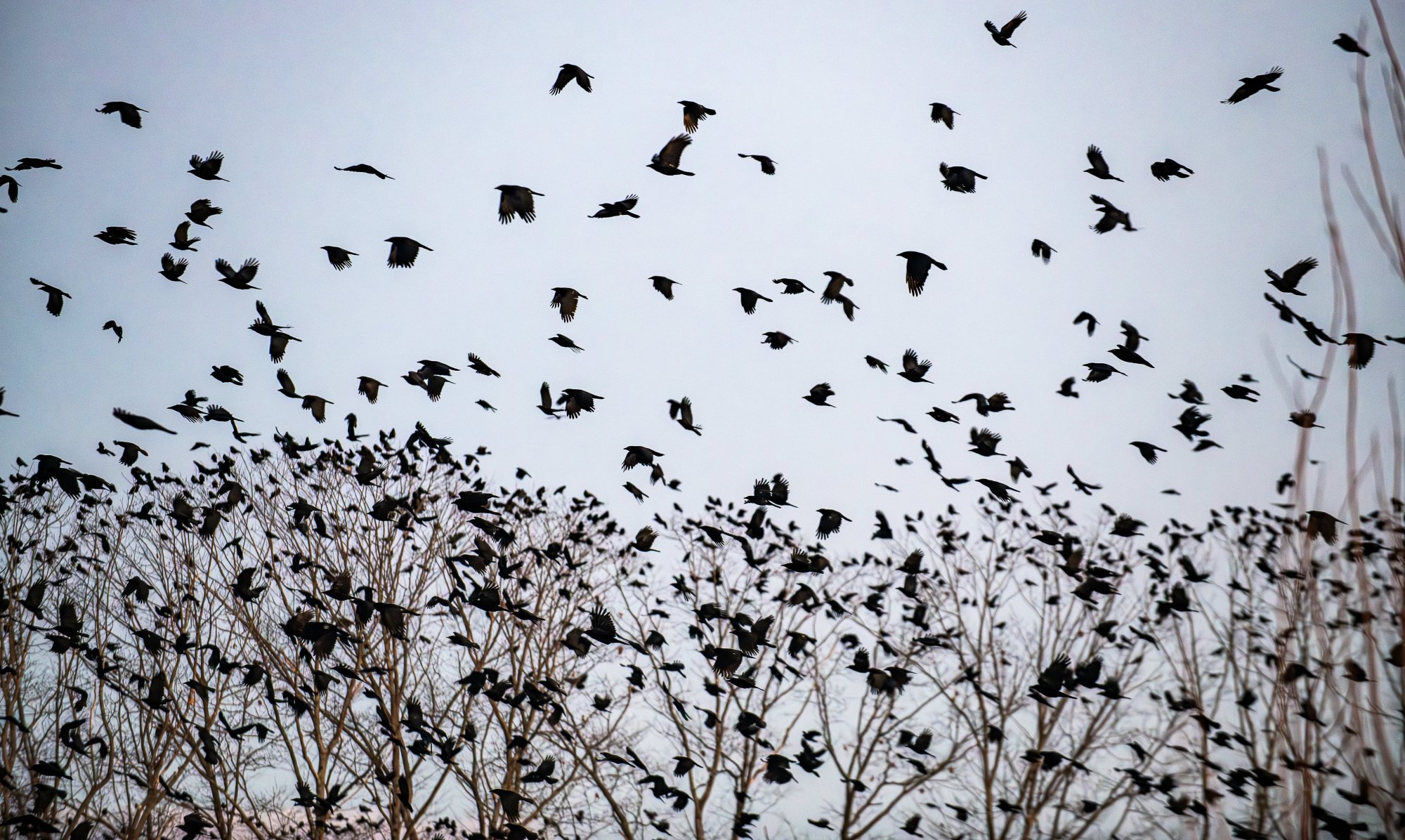
LISBON — “Property protected by well-trained crows” read the sign in the window of Jennifer Yates’ home.
An innocuous door-to-door salesman, preparing to deliver his pitch about solar panels, headed toward the door.
“I’m not really interested right now,” Yates said.
Out of the corner of her eyes, she instantly noticed three crows swoop down from the sky, one landing on top of the house, another on the barn and a third on a tree perpendicular to the house, unseen to the oblivious salesman.
“So where are these crows?” he asked, looking at the sign.
“Actually, there’s one right up there,” Yates said, pointing to the barn. Her mob friends, as she calls them, watching out for her.

To some, the ubiquitous crow is a noisy nuisance. To others, it’s a bad omen, a sign of death. But to many Mainers, crows are friends.
Across the state, people like Yates have spent years — and a lot of food — building friendships with crows. Especially in the winter, when crows gather in large roosts, photos and stories inundate some social media groups.
For Yates, crows are the last gift she received from her grandfather.
When he passed away in 2022, Yates began putting out peanuts for the bluejays around her house, because they reminded her of him.
After a while, Yates caught the attention of a group of crows.
So Yates decided to feed the crows too, first starting with Cheetos, then trying out different foods to see what the crows like: hardboiled eggs, peanuts, raw chicken eggs. The crows like to play with the eggs and roll them down the driveway, and Yates said she felt guilty buying eggs just for the crows during the egg shortage.
She even buys them Temptations cat treats — the kind that are crunchy on the outside and soft on the inside — and she has a monthly Chewy order for the birds.
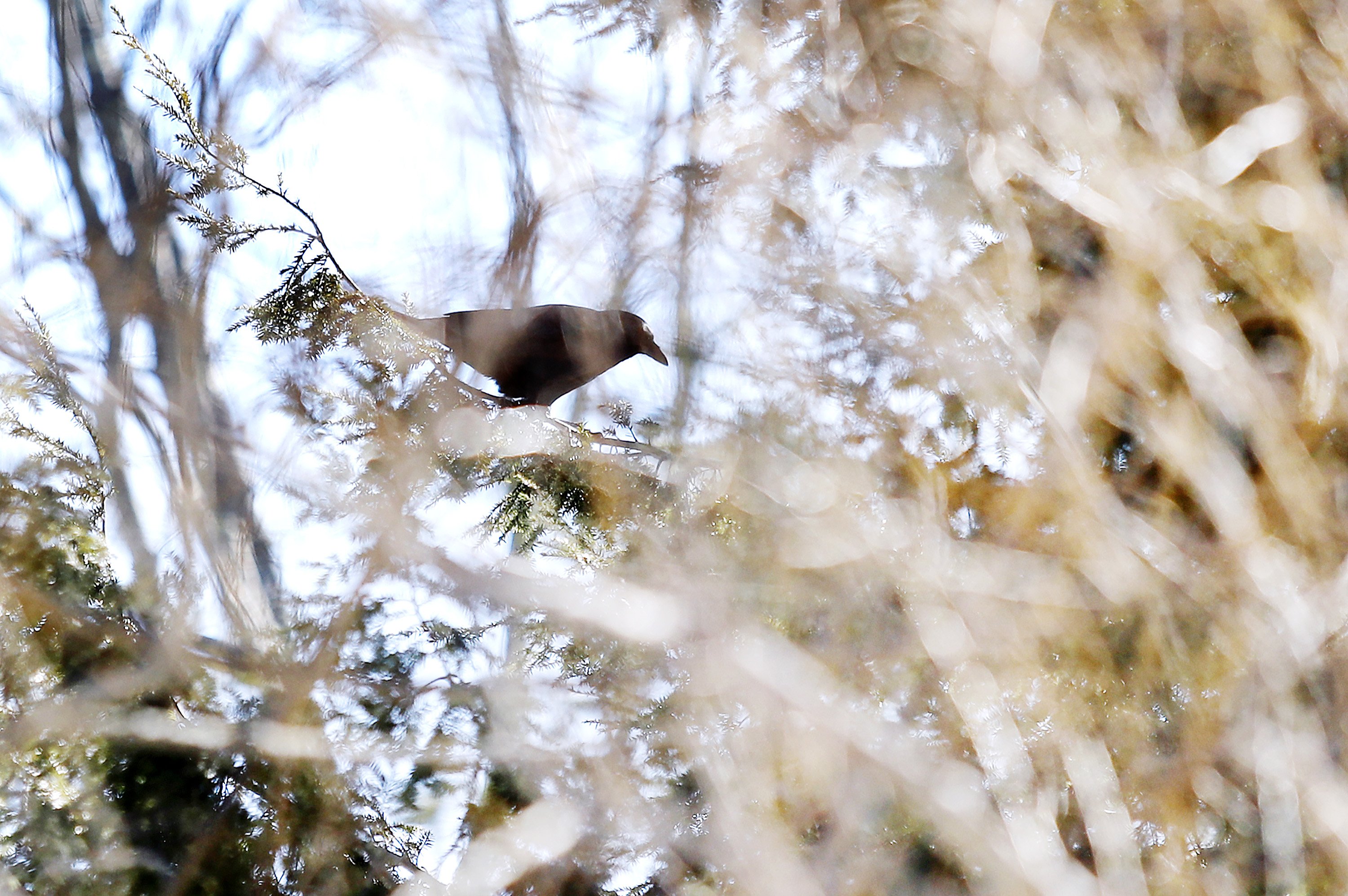
It took many months for her to assuage the crows’ suspicion and distrust. But now, they remember her face and voice, and they sometimes even follow her when she goes to the grocery store.
Yates’ daughter calls her the crazy crow lady.
“Put that on my headstone,” Yates said.
MURDERS OF CROWS GATHER IN THE WINTER
When thousands of crows darken the sky as the last remaining daylight fades and the cacophony of caws pierces the peaceful silence of dusk, it is hard not to look up with awe and maybe a shiver of trepidation.
This spectacle occurs in the winter, when crows gather in large murders. After foraging all day in all directions, they come together at dusk to spend the night. Sleeping together helps protect them from frigid temperatures and predators like hawks. And although it has yet to be proven, some documentation also shows that crows may also communicate with each other in their roosts.
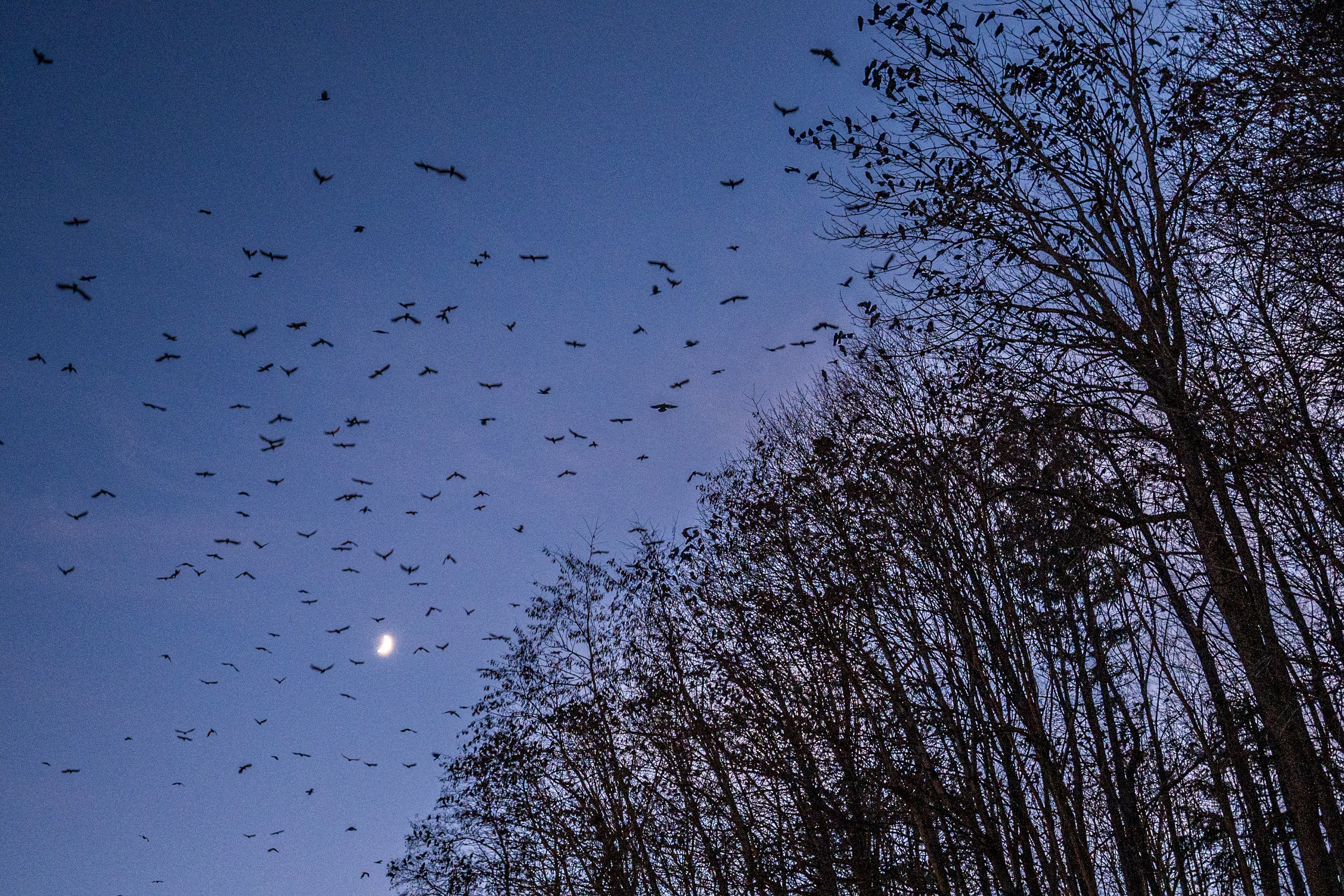
The roost in Greater Portland, comprised of around 4,000 crows, used to be in Deering Oaks. In the past few years, it has moved near the Maine Mall, said Doug Hitchcox, staff naturalist at Maine Audubon. He said the organization has received numerous emails from curious residents wondering why there are a few thousand crows by the Target parking lot in South Portland.
One of the largest roosts in New England is in Lewiston, where 12,000 crows gather together, he said.
Some people take crows for granted or snub them because of the noise, Hitchcox said, but crow roosts are one of the few times people can see animals by the thousands.
“It’s one of the great gatherings of birds that we can still see,” he said.
Compared to a snowy owl or other birds, crows might lack a certain charisma, he said, but when light reflects off their black plumage just right, they can become iridescent.
MAINERS BEFRIEND CROWS
Kaitlyn Tepper, a vet tech and photographer, feeds her the crows by her house in Hampden in the morning around 8 a.m. She started in the fall and they have already come to expect peanuts every day. She came back from a morning walk one day and heard them cawing at her because they hadn’t received their breakfast yet.
“I am just giddy that I have crows that come to my house everyday for peanuts,” Tepper said. “I’ve probably spent a small fortune on raw peanuts at this point.”
In Farmingdale, Mary Darling found a way to befriend the crows without food — she just talks to them.
She often sees a group of five crows, and the largest of the five seems to be the leader. She calls him King Tut because of how he struts.
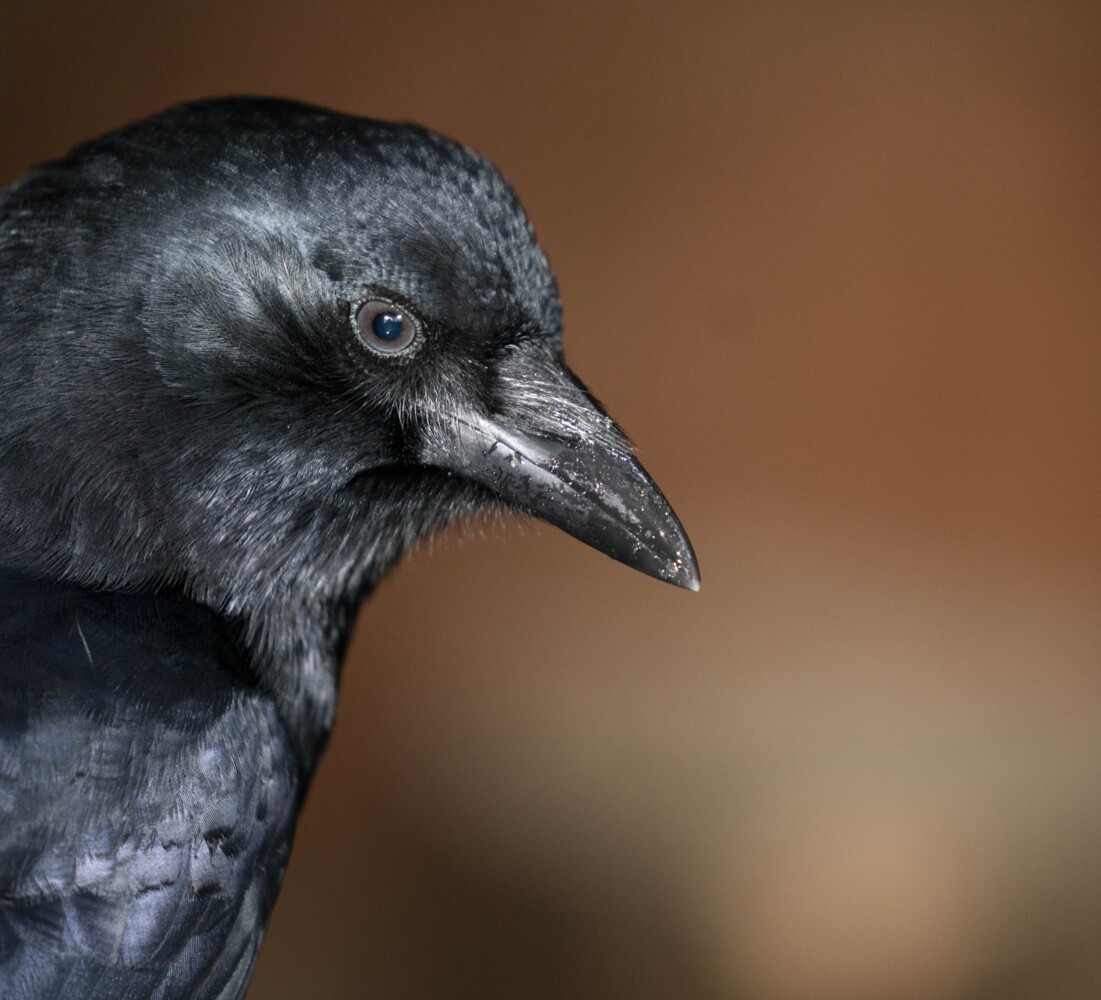
“King Tut, what are you up to? Where are you off to now?” Darling asks him.
In response, he will walk in her direction with a little more strut in his step.
Darling loves that crows have such distinct personalities and they stay together as a family.
Last summer, she saw an injured crow that had fallen to the ground. Two others were in the tree right above it, cawing loudly. Darling said she thinks they were alerting a human to get help and calling out to the injured crow to let it know they were there.
She likes seeing a group go after an eagle to attack it. She says they’re standing up for themselves.
“Go get ‘em!” she shouts, egging them on.
Because crows do not hesitate to defend themselves against eagles, hawks and other birds, befriending the neighborhood crows was a strategic decision for Scott McNeff, a biologist, master falconer and bird bander in Kennebunk. He has homing pigeons and some chickens on his property, so the crows warn them to take shelter when a hawk is in the area.
The crows recognize McNeff’s trained hawk and don’t alarm the pigeons and chickens when they see it.
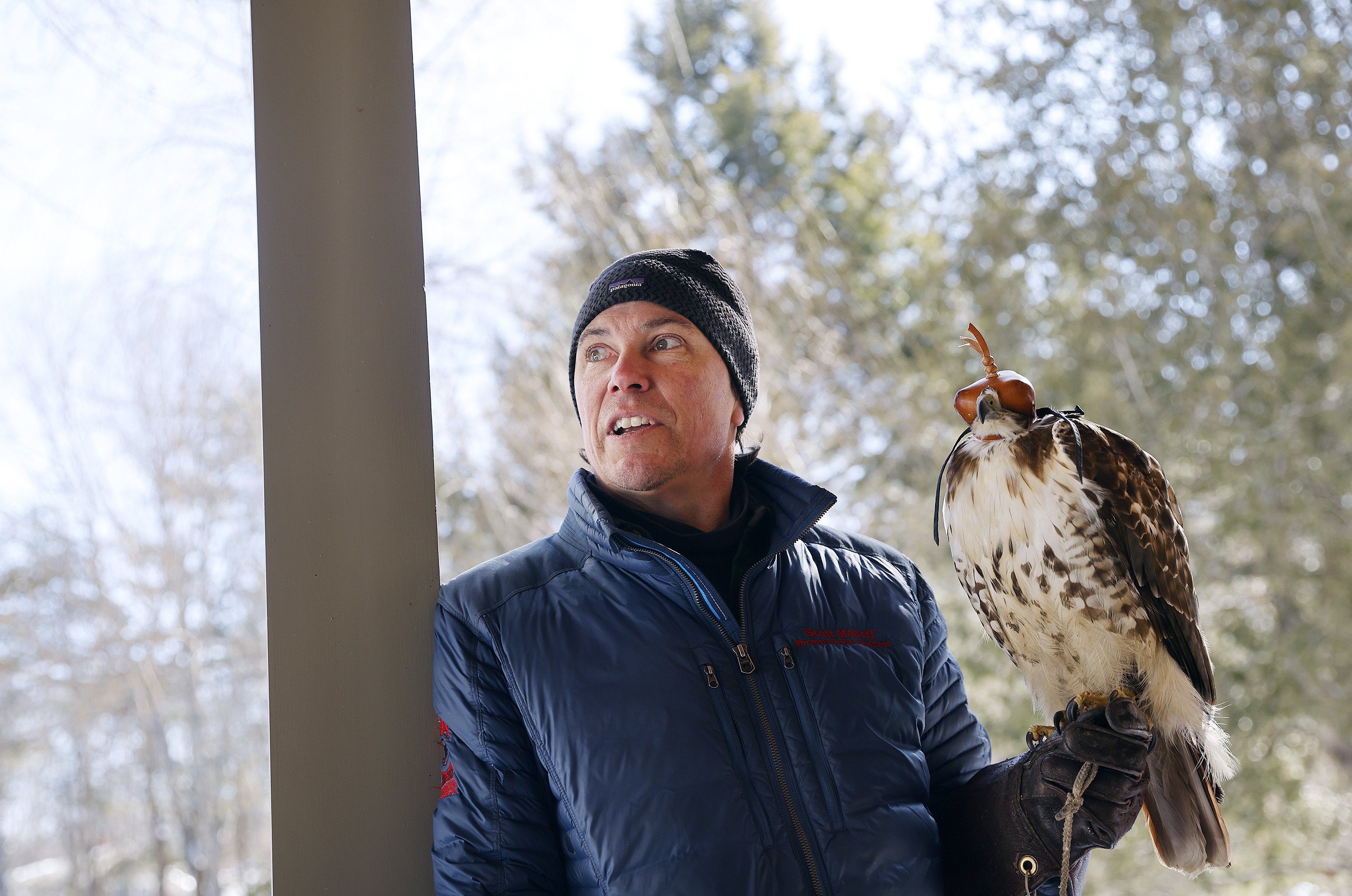
McNeff feeds the crows peanuts, pigeon eggs, scraps from the kitchen and even squirrels when his hawk catches one. But if there’s a stranger by the house or an extra car in the driveway, the crows stay away.
McNeff threw some peanuts and a chunk of squirrel in his snow-covered yard. He cawed twice and waited, looking up at the sky.
After a while, he heard cawing in the distance. A shadow flicked across the snow — a crow flew by to inspect the food but didn’t stop. There were strangers on the porch.
Sitting in McNeff’s neighbors’ trees, the crows sat high enough to be out of sight but low enough so they could see the people’s bodies on the porch. Only when McNeff was alone did they come down and eat every bit of the food he left for them.
If reincarnation is real, McNeff said, he hopes he comes back as a crow.
