

John Bear Mitchell thinks Indigenous people have too long been treated like props in American films and TV shows.
He’s been trying to change that by working with producers and directors on issues of Indigenous – and particularly Wabanaki – culture and history. Mitchell has a pretty powerful platform for doing that right now, as a consultant on the HBO horror series “IT: Welcome to Derry.” Based on a 1986 Stephen King novel, it’s set in a Maine town and features local Indigenous people as significant characters.
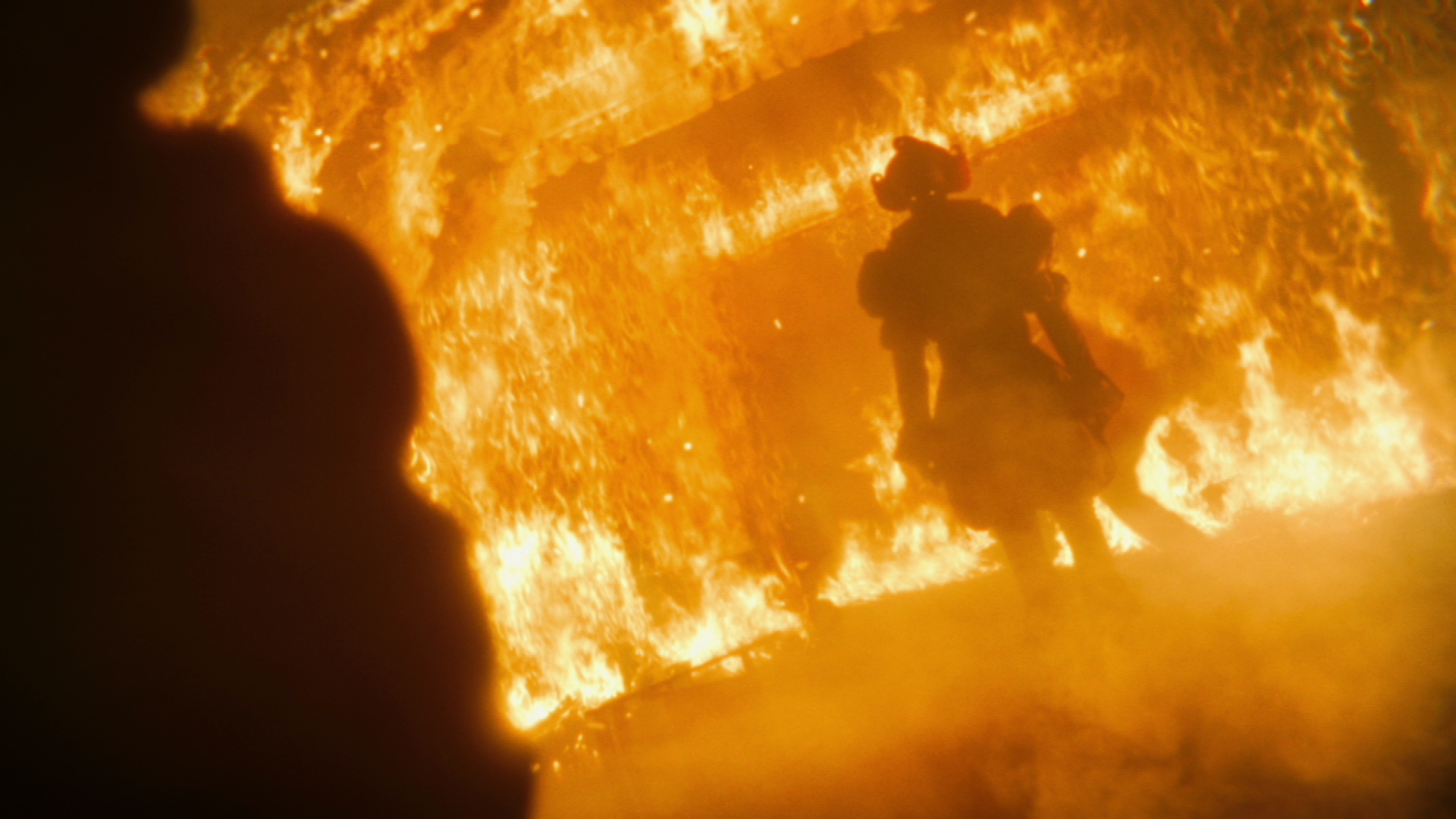
The Indigenous characters are seen as protectors of the land who manage the resident evil, famously represented by Pennywise the clown. Mitchell is proud the show avoids stereotypes about cursed burial grounds and about Indigenous people being only passive victims or angry antagonists. He’s worked with actors on avoiding phony-sounding accents, and with the producers on portraying the Wabanaki as compassionate rather than hostile. He’s worked with the costume, hair and makeup departments to get historic physical depictions right.
“When native people are in movies, we tend to be used as props,” said Mitchell, 58, a citizen of the Penobscot Nation who lectures on Wabanaki Studies at the University of Maine in Orono. “I wanted the native people in there to be active protectors, for people to know they were managing the evil with ancestral knowledge.”
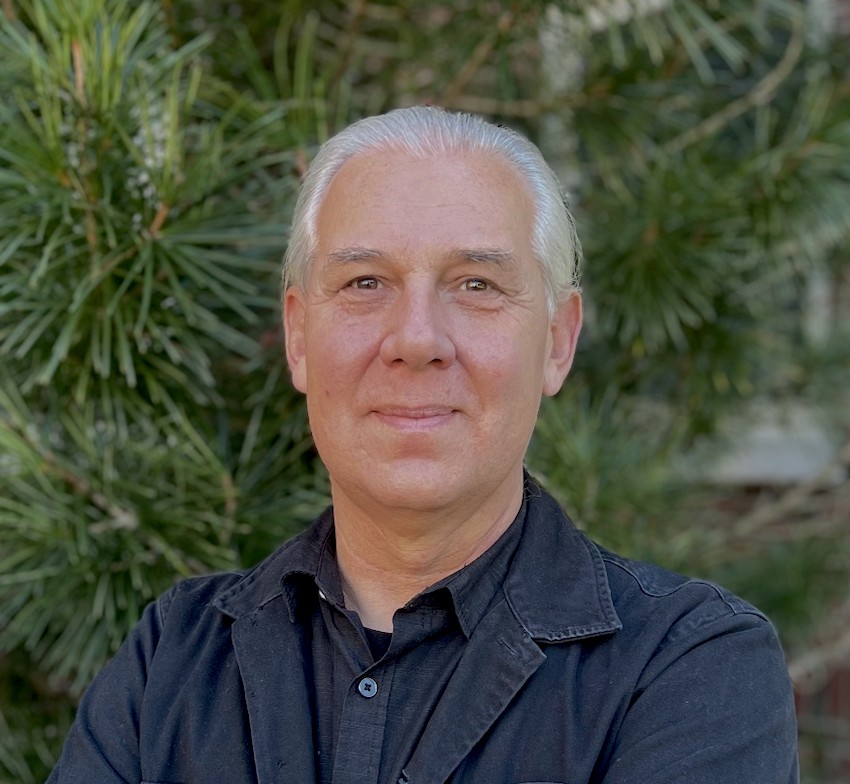
Mitchell, who lives in Old Town, has been working with TV and film productions for more than 20 years. His first was the 2004 PBS series “Colonial House,” a history reality show filmed in the Machias area, featuring people living in conditions mimicking the 1620s. Mitchell taught the show’s crew to plant corn in traditional Wabanaki ways, planting in a circle in dirt mounds, and advised the show on how trading between Indigenous people and early settlers happened. Since then he’s worked on several TV and film projects, including Maine and elsewhere, including director Gus Van Sant’s 2015 TV mini series “The Devil You Know.”
King grew up in Maine, went to the University of Maine at Orono and has lived much of his life in Bangor, which serves as a basis for the fictional town of Derry. He has known Penobscot Nation citizens and the local Indegenous people in his book are based on Wabanaki people. King said he’s glad the show’s producers embraced that, and took the time and to find and hire Mitchell, to make sure they accurately portrayed details of culture and history.
“I loved that they got someone from the Penobscot Nation to help with realism,” said King in an email. “I thought (series co-creator Andy Muschietti) did a great job of incorporating tribal lore into the story. The clothes are particularly good, and realistic for the period.”
Before this series, King’s book had spawned two hit horror movies, “IT” in 2017 and the sequel “IT: Chapter Two” in 2019. Both were directed by Muschietti and in both, residents of Derry have to contend with an evil presence. The Indigenous people’s storyline is minimal.
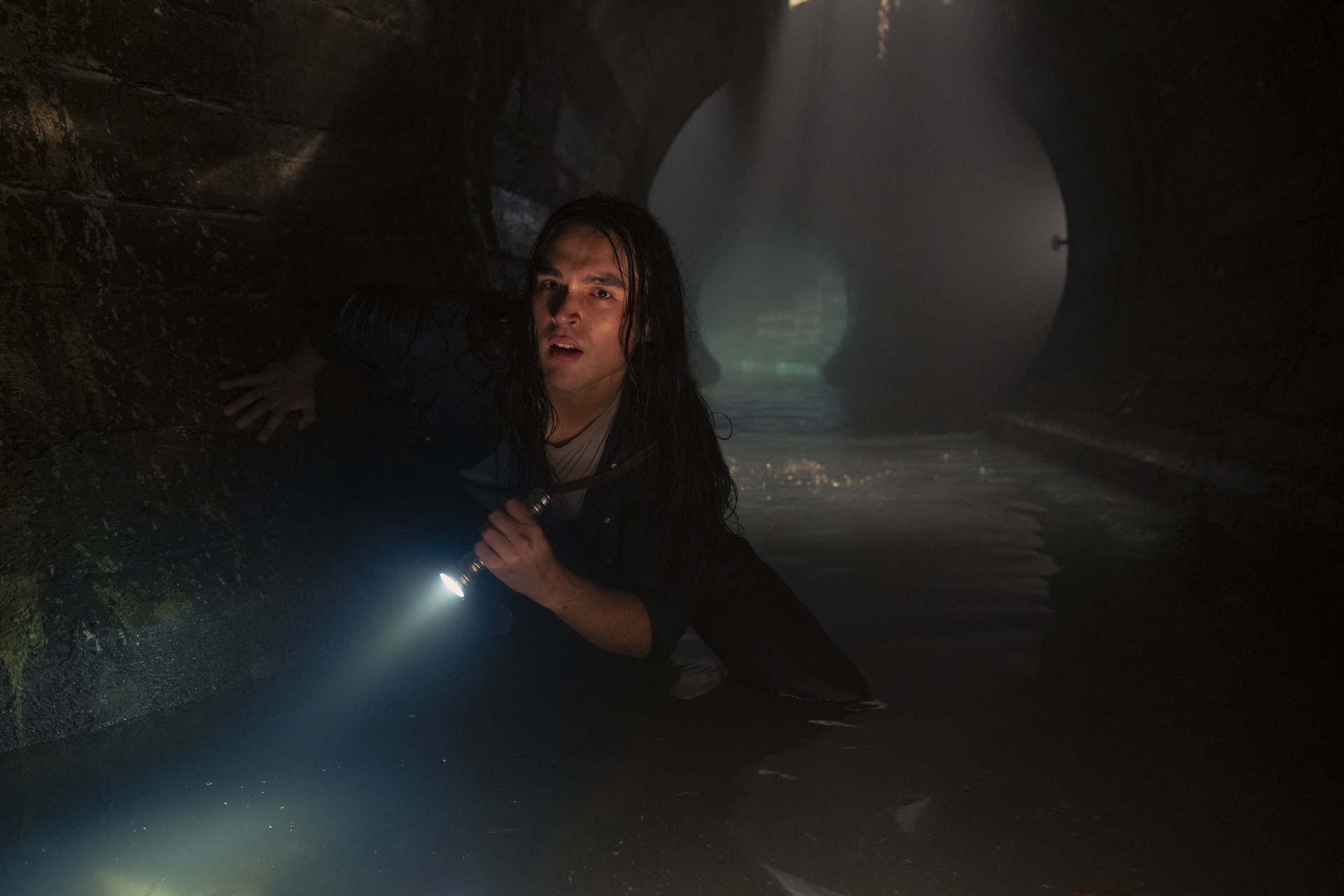
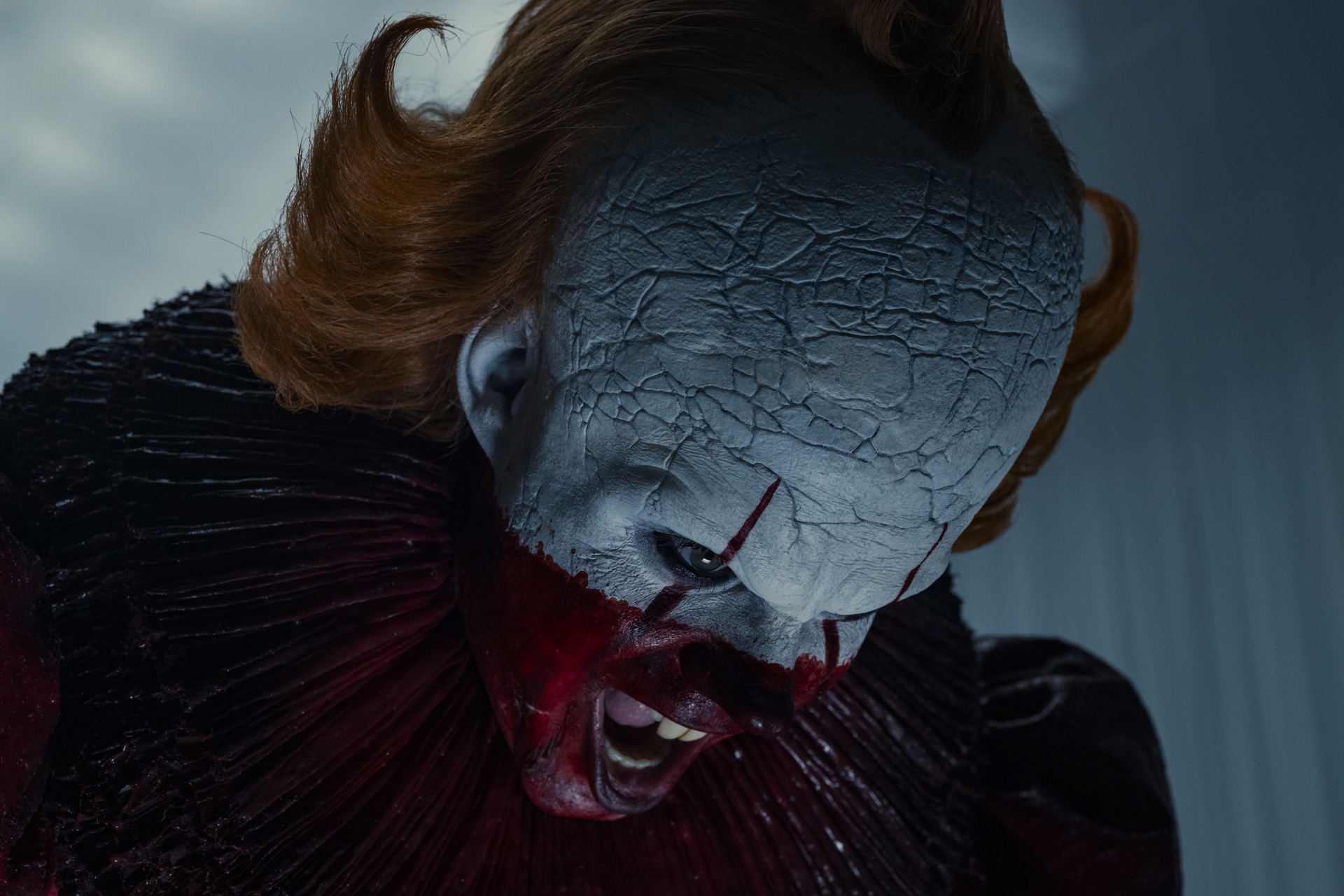
“IT: Welcome to Derry” premiered in October and is streaming on HBO Max. Most of the series is set in the fictional town of Derry, Maine in 1962 and stars Bill Skarsgard as Pennywise, along with Jovan Adepo, Taylour Paige and Stephen Rider. The plot includes an Air Force officer and his family arriving in Derry, a disappearance and lots of bad, weird things happening against the backdrop of the Civil Rights Movement and 1960s America.
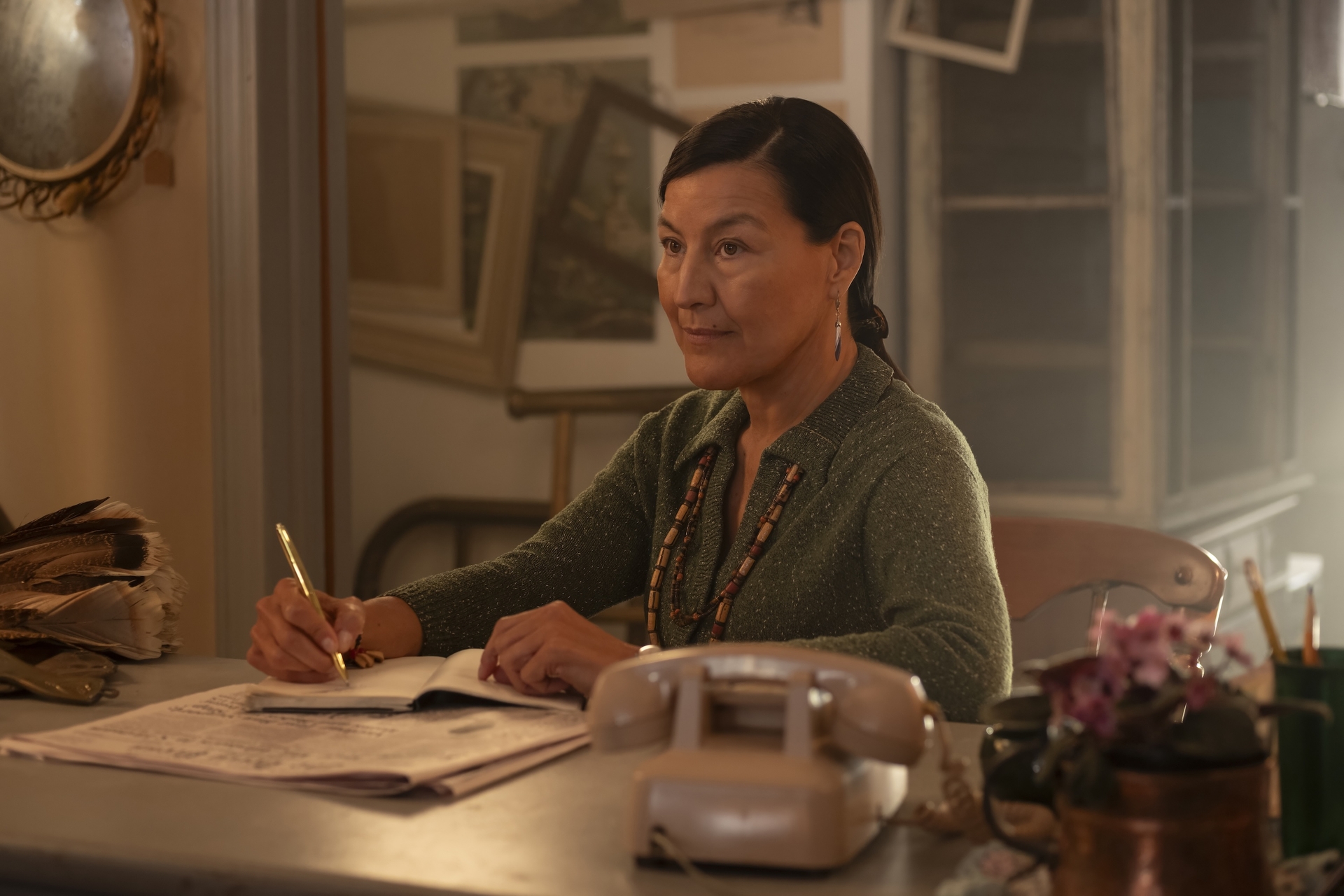
The series features several Indigenous actors – though none from Maine – playing the Indigenous characters. Most prominent is Kimberly Guerrero as Rose, a shopkeeper in town who has a connection to Derry’s Indigenous mythology. Guerrero is an enrolled member of the Confederated Tribes of the Colville Reservation in Washington and of Salish-Kootenai descent. She had a recurring role in the FX comedy drama hit “Reservation Dogs,” set in an Indigenous community in Oklahoma.
“It’s an honor and a responsibility,” Guerrero told Parade in October, for an article about the series. “To bring Indigenous lore, real history, real people … to show that they were there, that they loved and lost … that’s powerful.”
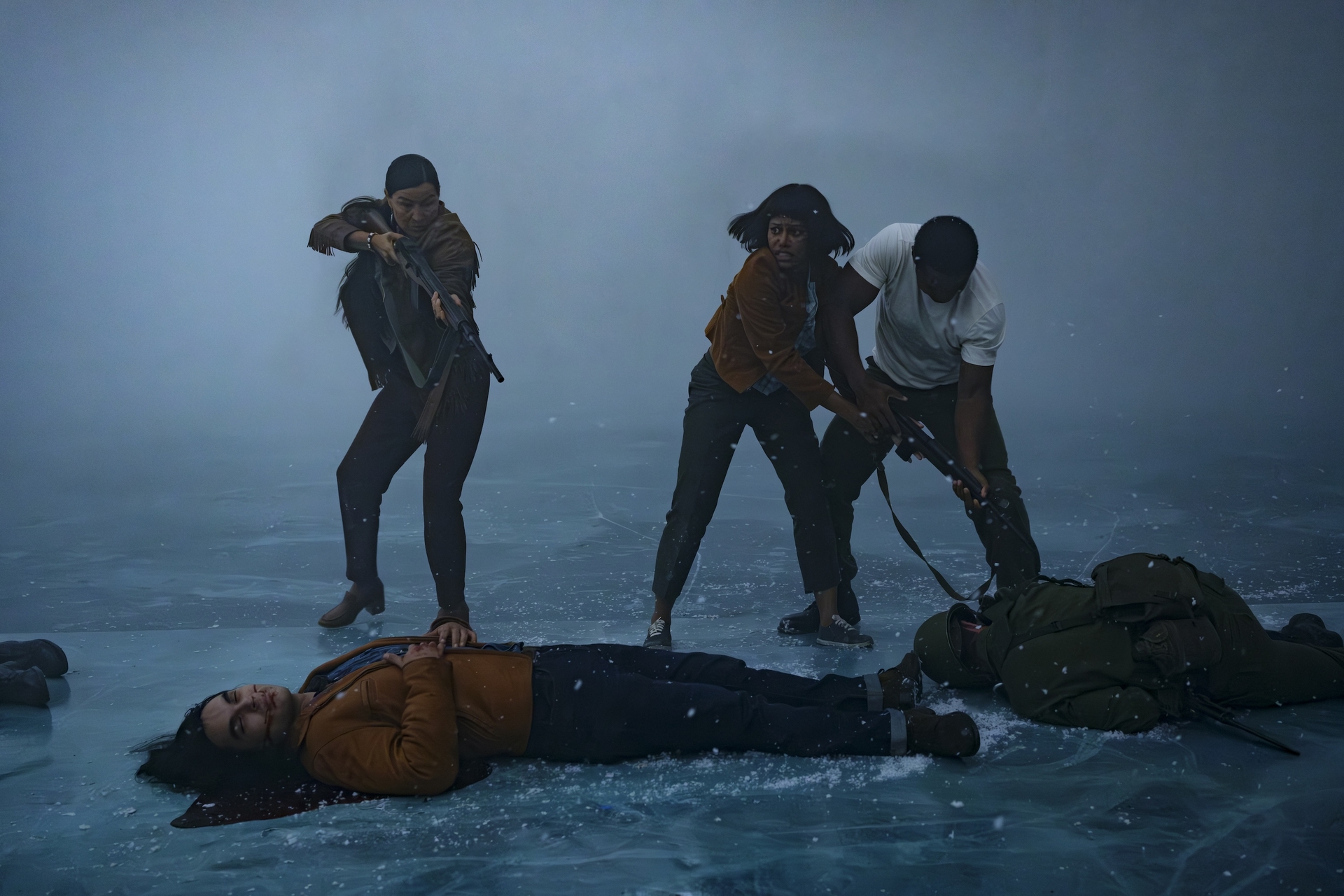
When working with Guerrero and other Indigenous actors, Mitchell encouraged them to avoid accents, especially Maine ones. He said that Indigenous people raised in different parts of the state have different dialects, as do those raised in other parts of the United States, so it would be more realistic for Indigenous actors to speak as they normally do.
“When I hear a Maine accent in a Stephen King movie, it doesn’t sound right, so I had to convince the showrunners that that was probably something we didn’t want to put in there,” Mitchell said. “The (Indigenous actors) all grew up on tribal lands, so I wanted them to bring their own personal abilities into it.”
Mitchell tried to bring a Wabanaki perspective to the show’s plotline about Indigenous people protecting the land or keeping people away from certain areas. He said Wabanaki people historically have had certain places they would not go for various reasons, maybe because a major battle or a massacre took place there. In the case of “IT,” the reason is a supernatural evil presence.
“The Wabanaki knew the horrors of certain pieces of land and it was only when settlers began to challenge our ancestral knowledge did our stewardship begin to be undone,” said Mitchell.
Mitchell joined in on many Zoom meetings during the early days of the show’s production and then spent six weeks on location with the cast and crew during filming in Ontario, Canada. Most of it was shot in and around the town of Port Hope, which stands in for Derry. Canada attracts many movies because of the substantial financial incentives offered to film and TV companies. Maine offers smaller incentives compared to Canada or neighboring states like Massachusetts and New York, and rarely attracts big-budget productions.
Mitchell works as the University of Maine System Office Native American Waiver and Educational Program Coordinator, where he oversees programs that reduce fees for Indigenous students, among other things, besides lecturing in Wabanaki Studies at the university.
Mitchell said he’s already signed on to work on a second season of “IT,” though no filming or run dates have been announced yet. He says one of his main goals on the series, and on any film project he works with, is to make sure Wabanaki and Indigenous people are portrayed as compassionate and understanding, and stay away from stereotypes about hostility, anger and being subservient.
“The Indigenous perspective is something that’s missing and needs to be considered,” said Mitchell. “So I wanted to take that and address historical trauma and the horrors of Colonialism and tie that in with a lot of real things, that we were real people.”

We invite you to add your comments. We encourage a thoughtful exchange of ideas and information on this website. By joining the conversation, you are agreeing to our commenting policy and terms of use. More information is found on our FAQs. You can update your screen name on the member's center.
Comments are managed by our staff during regular business hours Monday through Friday as well as limited hours on Saturday and Sunday. Comments held for moderation outside of those hours may take longer to approve.
Join the Conversation
Please sign into your CentralMaine.com account to participate in conversations below. If you do not have an account, you can register or subscribe. Questions? Please see our FAQs.