

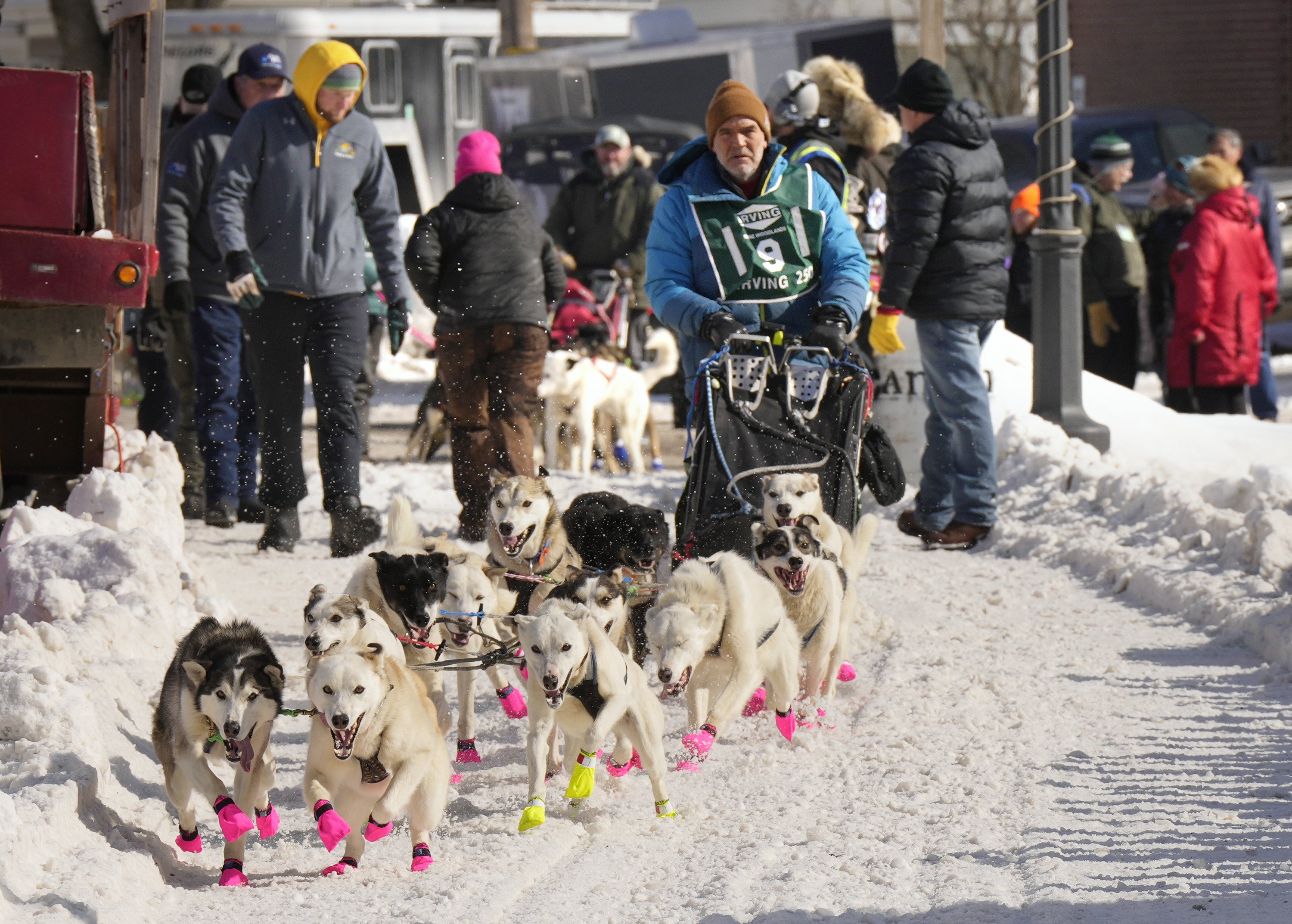
FORT KENT — Andre Longchamps pulled on a beanie and took his place on the sled.
Over yips from the dogs and cheers from the crowd, the announcer counted down the last 10 seconds before the Québécois musher set out to race 250 miles through the woods of Aroostook County.
“Bonne chance, Andre,” came the shout from the microphone, “and bonne course!”
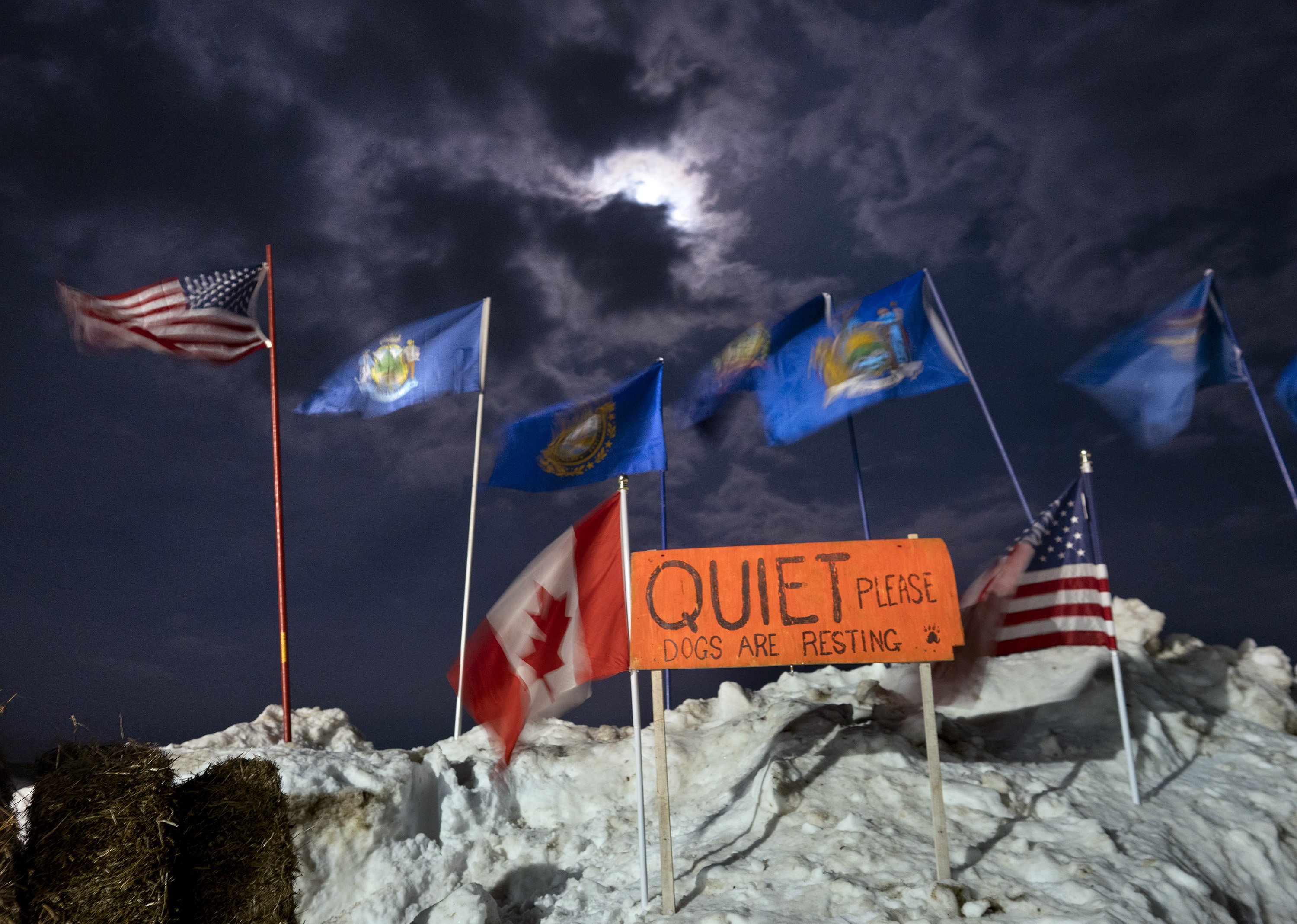
The starting line of the Can-Am Crown International Sled Dog Races on Saturday felt far from the political and economic tensions that have grown between Canada and the U.S.
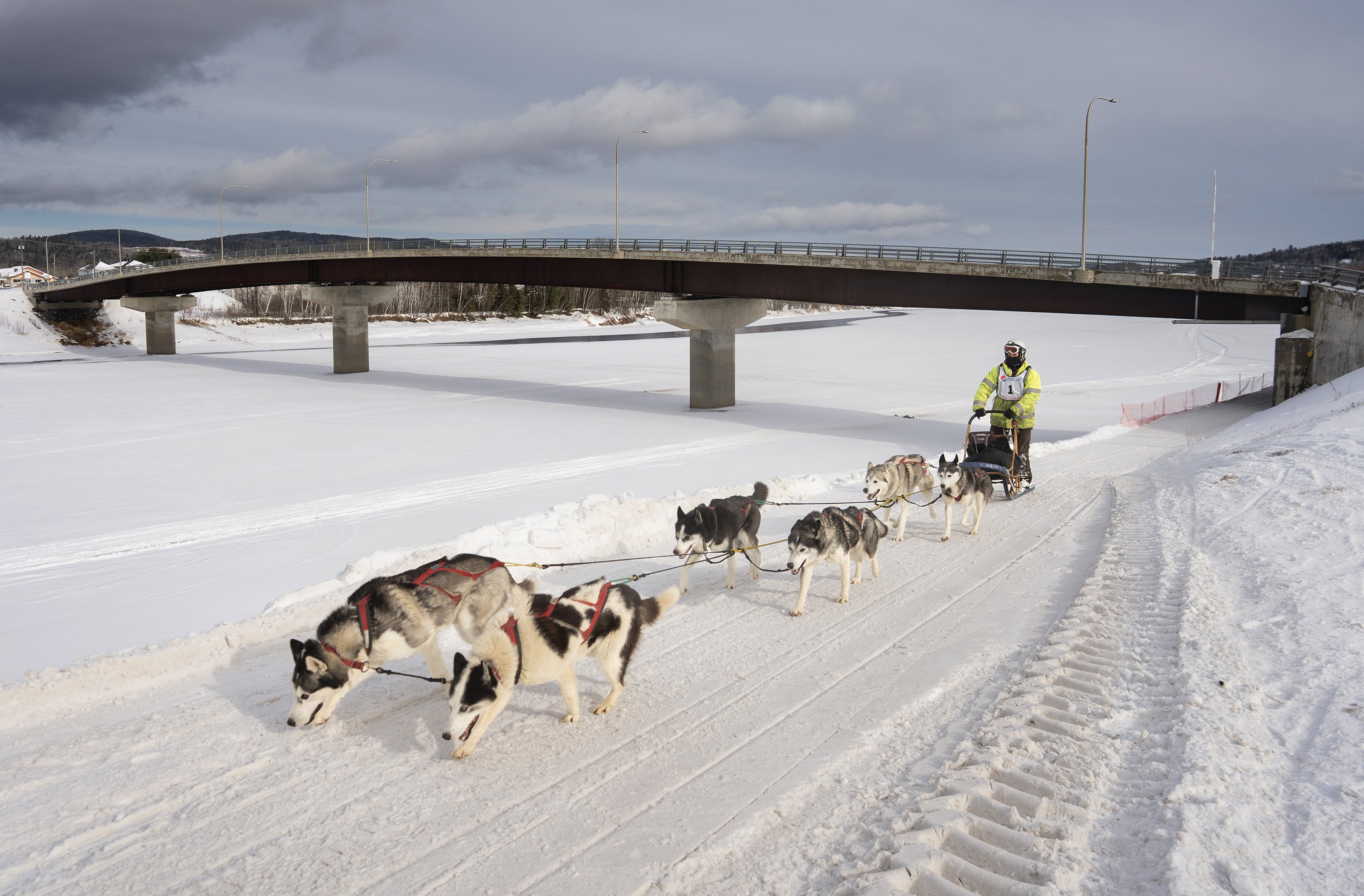
Mushers from both sides of the border have been coming here for more than three decades. The Canadian maple leaf flies next to the American Stars and Stripes. The course starts alongside the St. John River, which divides the two nations and passes underneath the bridge that connects them.
This year’s competitors said they felt a spirit of international camaraderie in their sport, despite increasing strain between their governments.
“I don’t feel that there are boundaries between the mushers,” said Rémy Leduc, who lives in New Brunswick and has been sled dog racing in Maine for years.
The annual event is a campaign stop and an important economic driver in a region that has been anxious about the impact of tariffs on Canadian imports, a decline in the number of people crossing the border and increasingly fickle winter conditions.
Locals were reluctant to talk politics and quick to speak highly of their Canadian neighbors. Many have family and friends across the border.
“It’s completely independent of the politics,” Beth Marin, executive director of the Greater Fort Kent Area Chamber of Commerce, said of the Can-Am. “We really are neighborly. It’s just another town across the river.”
‘WE WANT TO RUN’
Mushers said regulatory and financial challenges are more likely to deter travel than the political rhetoric.
“We all have opinions, but we have to push them to the side because we want to run,” Katherine Langlais of New Brunswick said. “Dogs don’t live long enough to be able to wait.”
Langlais and Leduc are partners and Can-Am regulars — Langlais was the first woman to win the 250-miler in 2023 — and planned to compete in the longest distance again this year. Both had to pull out of the race hours before the start but visited checkpoints and cheered on friends throughout the weekend.
They said skipping a race over politics could hurt their fellow athletes.
“It would be detrimental,” Leduc said. “We could cause a crash in the sport if we stop attending, because there’s so few of us.”
In 2025, the number of travelers crossing the border into Maine dropped 25%, but that trend didn’t carry over into race registrations. Twenty-three Canadian teams signed up for the three distances at the Can-Am this year, accounting for roughly half of the mushers. That number is consistent with the past decade.
“If we don’t have Canadian mushers, we don’t have a race,” said Sarah Brooks, the Can-Am vice president.
Many mushers go to the same races, including the UP 200 in Michigan. Mari Vaydik, board secretary for the UP 200, said international participation fluctuates but seemed a little low this year. She said the decline is likely attributed to multiple factors, such as a poorer exchange rate for Canadians and the lingering effects of the COVID-19 pandemic on international travel.
“We are, as a board, very invested in doing anything we can to make it as easy as possible for those Canadian mushers to participate in our race,” Vaydik said. “It’s a way to build bridges.”
Philippe Dugas, who finished seventh in the Can-Am 100-miler, started his own race called La Chic-Chocs near his home in Quebec a few years ago. He advertises it as an international race because he wants to attract mushers from both countries.
“I don’t think any American musher will not come to the race in Quebec or in Canada because of this,” he said. “Same thing on the other side. When we go there, we don’t talk politics.”
‘OUR FRIEND AND NEIGHBOR’
The town also becomes a stumping ground for politicians and candidates during the weekend.
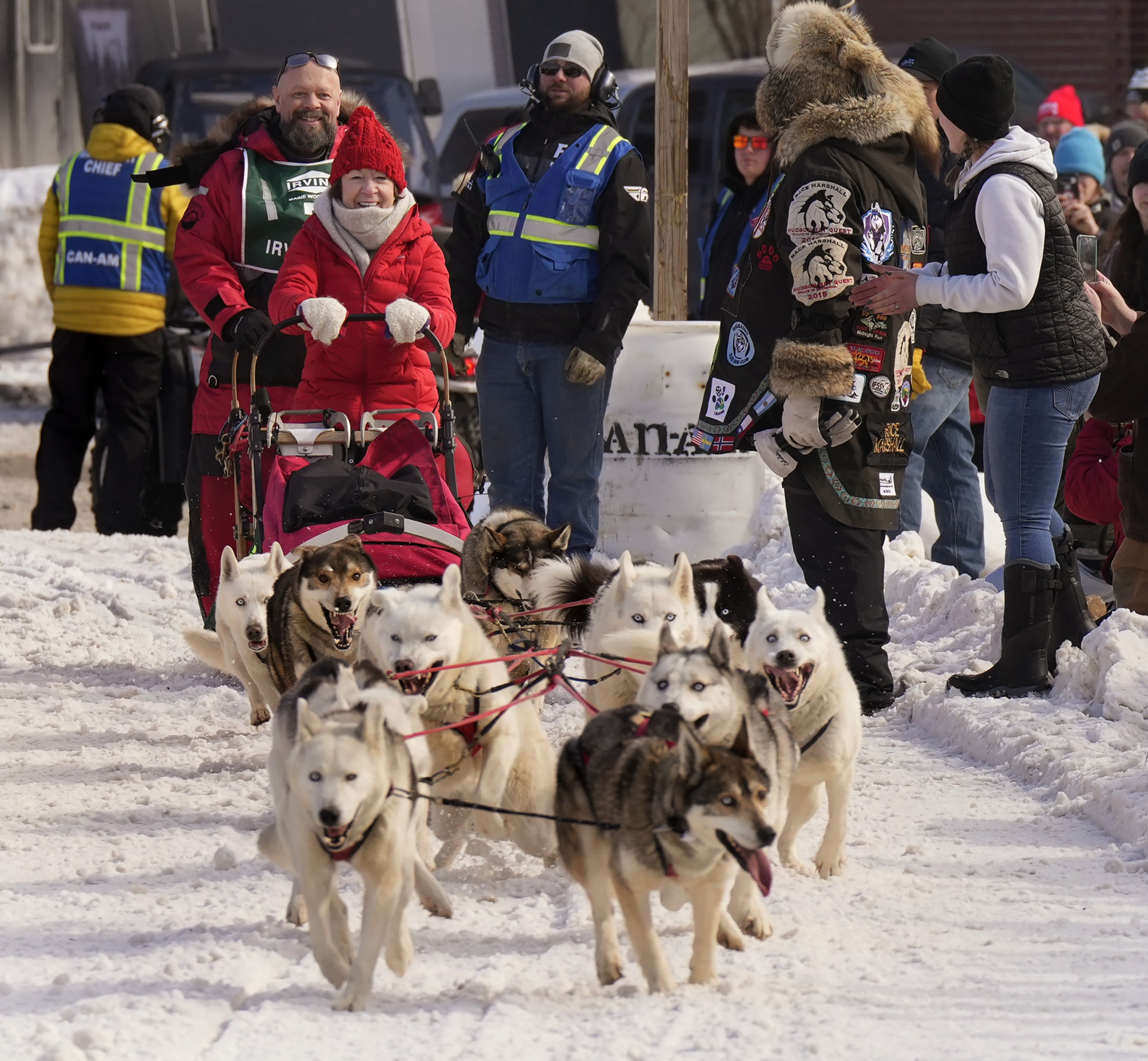
The major candidates running in Maine’s hotly contested U.S. Senate race were there: Gov. Janet Mills met with mushers the day before the race; Graham Platner shook hands on Main Street; and incumbent Sen. Susan Collins, originally from Caribou, briefly addressed the crowd before riding a sled out of the starting chute.
All three have spoken against the tariffs President Donald Trump imposed on Canada.
“Our ties extend far beyond trade — our regions are deeply intertwined when it comes to our electric grids, our tourism economy, our emergency response, and our educational institutions too,” Mills said in a written statement Tuesday. “However, Trump’s tariff war is putting that relationship at risk.”
Platner’s campaign did not respond to questions about the event.
In an interview Tuesday, Collins said the Can-Am is an example of the close relationship between Maine and its northern neighbor.
“It’s called the Can-Am for a reason,” Collins said. “It reflects the fact that we view Canada as our friend and our neighbor.”
TIGHT-KNIT COMMUNITY
On Saturday, volunteers waited on the edge of Portage Lake for mushers to emerge from the woods. This spot is the first checkpoint for the 250-mile race.
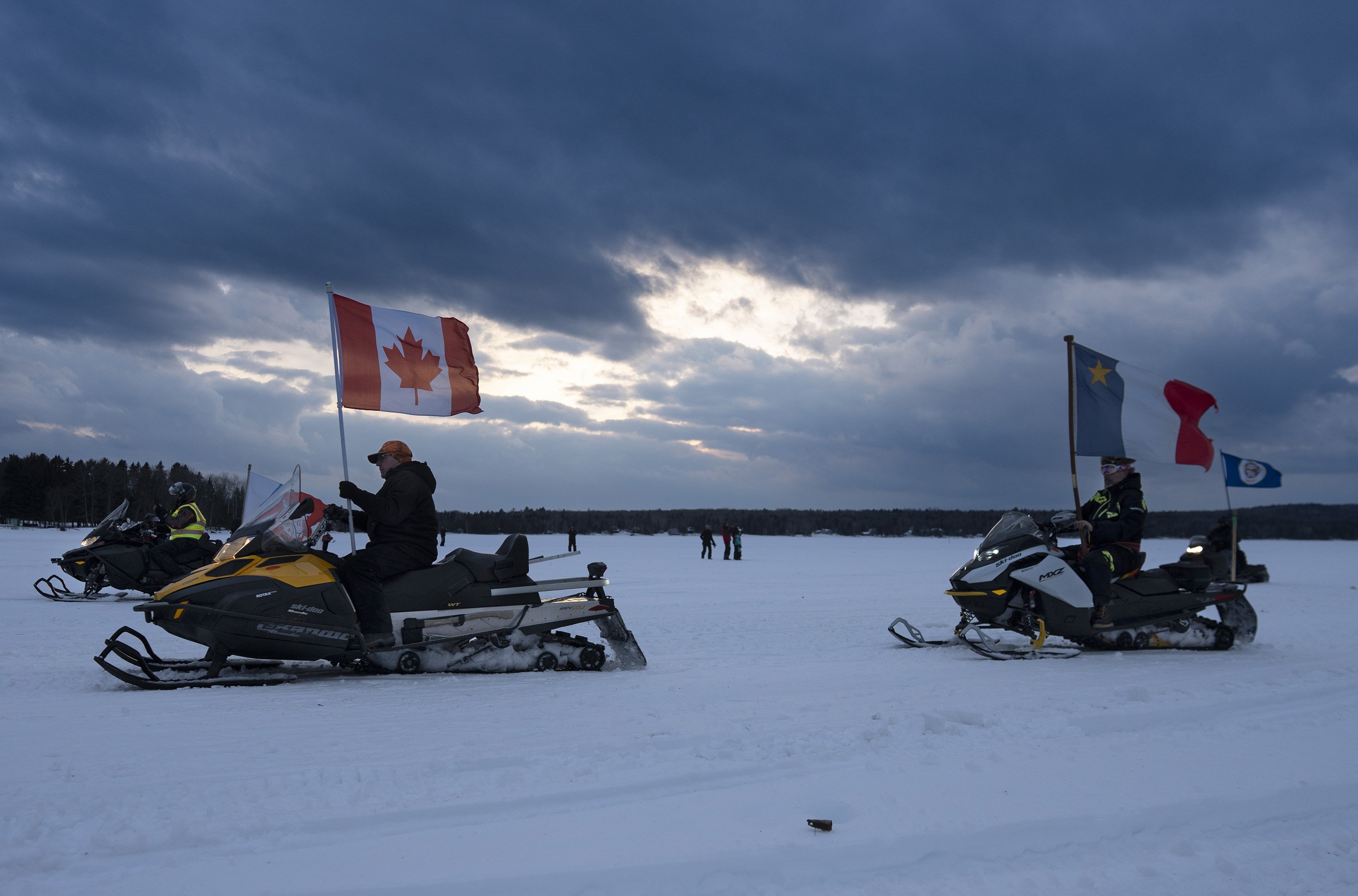
As dusk fell, a fleet of snowmobiles appeared on the horizon, leading the first musher across 4 miles of ice. Each driver carried a flag to represent the countries, states and provinces the mushers call home. One was the Acadian banner — blue, white and red with a gold star — a nod to the deep cultural heritage of this region.
This escort is a longtime tradition and a point of pride for race organizers.
Brooks, who runs the Portage Lake checkpoint, said that moment “gives you goosebumps.”
Mushers are a tight-knit community. Friendships grow at races in both countries and on social media, mushers buy dogs from each other and they support each others’ wins.
Few people understand the sport — or the sacrifices it requires.
“Here’s someone I can talk about my dogs’ poops to, and he’s not gonna feel weird about it,” Leduc said.
Dugas has been working with sled dogs for almost 30 years. Not until he came to the Can-Am as a spectator in 2020 did he decide to get into racing. He said it feels like the entire town of Fort Kent comes out in support of the mushers.
“They’re fully committed to the race,” Dugas said. “That’s what makes the Can-Am so special. It’s not just a race, but it’s a big event.”
That sense of welcome extends into homes and businesses. Some mushers stay at hotels or sleep in their dog trailers, while others board with local families during their trip to Fort Kent.
Lea Allen, who lives in New Brunswick and teaches at the University of Maine at Presque Isle, finished fifth in the 30-miler. At the Sunday awards breakfast, she used her time at the microphone to recognize new friends.
“The host family is really wonderful and great to get to know,” Allen said to a round of applause.
On Monday evening, Andrea and Corey Rioux were working on a puzzle and watching Facebook for updates about a musher they hosted this year. He finished his 250 miles at 9:59 p.m., when Andrea Rioux had a plate of pasta and homemade sauce waiting for him.
For at least a decade, the Rioux family hosted another Québécois musher who has since retired. They still keep in touch, and he stayed at their potato farm in Fort Kent again this year when he came to watch the race start.
Like many in Aroostook County, the couple speak both French and English. They enjoy catching a glimpse into the life of a musher.
“You grow a connection with them,” Andrea Rioux said.

We invite you to add your comments. We encourage a thoughtful exchange of ideas and information on this website. By joining the conversation, you are agreeing to our commenting policy and terms of use. More information is found on our FAQs. You can update your screen name on the member's center.
Comments are managed by our staff during regular business hours Monday through Friday as well as limited hours on Saturday and Sunday. Comments held for moderation outside of those hours may take longer to approve.
Join the Conversation
Please sign into your CentralMaine.com account to participate in conversations below. If you do not have an account, you can register or subscribe. Questions? Please see our FAQs.