

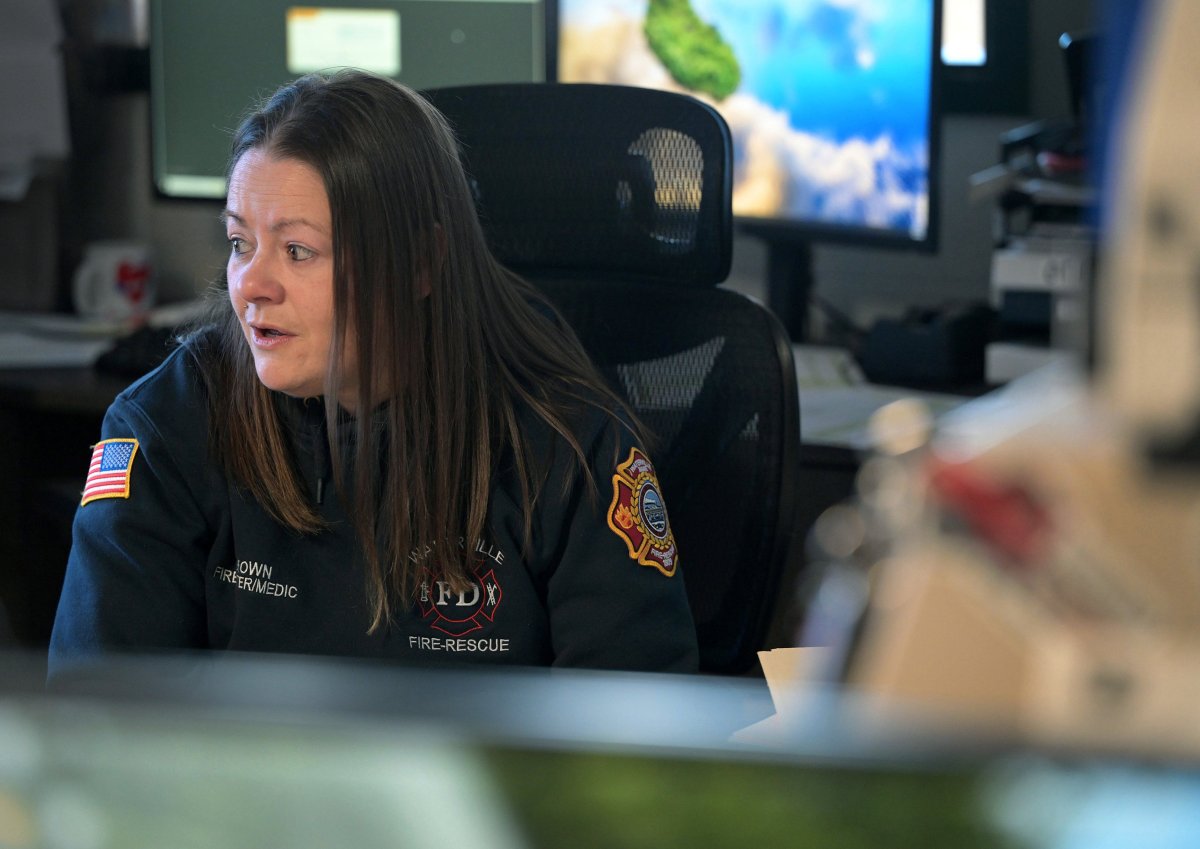
Maine legislators are discussing a bill that would pay providers to treat patients at emergency scenes, in their homes and outside of hospitals.
MaineCare, Maine’s Medicaid program, already reimburses for ambulance services, but only if that ambulance transports a patient to the hospital. The bill, LD 2119, would expand its scope, reimbursing for emergency treatment that does not result in a hospital transport, and for transport to places that aren’t hospitals.
It would also cover community paramedicine, an innovative health field that sends paramedics to homes to provide preventative care.
The changes would lift a burden off Maine’s hospitals, especially amid workforce shortages and financial struggles. By keeping patients who have called 911 in their homes or at clinical facilities like urgent care centers, primary care practices, behavioral health crisis centers or substance use treatment facilities, hospitals could prioritize emergency department resources for the patients who need it most.
Rep. Flavia DeBrito, D-Waterville, who presented the bill, said those services “save money, they reduce unnecessary hospital utilization and, most importantly, they improve patient outcomes.”
“Yet today, many of these services are either under-reimbursed or not reimbursed at all,” she said, “forcing municipalities and taxpayers to absorb the cost or rely on unstable grant funding to keep programs alive.”
Local EMS departments have been bearing the brunt of those costs. Many municipalities respond to emergency scenes but lack the ambulances or license to transport patients to the hospital, instead relying on medical transport agencies like Delta Ambulance, which covers more than a dozen communities in central Maine.
Fairfield and Benton, which run a joint around-the-clock EMS service paid for by taxes, are planning to apply for a transport license in an attempt to make up the money lost on staffing, vehicle maintenance, fuel and any supplies used at emergency scenes. If LD 2119 is approved, they might not have to.
Amy Madden, who testified in support of the bill on behalf of the Maine Medical Association, said “this legislation would ensure that EMS is paid for the work they do, even when a patient does not require ED transport.”
COMMUNITY PARAMEDICINE
Community paramedicine visits, which can include blood draws, wellness checks, pill organizers and other nonemergent support, are proven to keep patients from calling 911. The bill would require MaineCare to cover those services.
Most of Maine’s 17 community paramedicine programs are funded by grants, including one that was temporarily frozen by the U.S. Department of Health and Human Services last March.
The state recently standardized its community paramedicine training and licenses. Soliana Harnish, Maine EMS community paramedicine coordinator, said the changes make it easier for insurance companies to pursue reimbursement.
“They’re not going to reimburse for things that they don’t know what they’re reimbursing for,” Harnish said. “So by having that licensing process and a regulation process in place, they’re more likely to move forward with their process.”
When Northern Light Inland Hospital in Waterville closed in 2025, it cost hundreds of patients their primary and specialty doctors. Everett Flannery, EMS deputy chief of the Waterville Fire Department, said local EMS and emergency departments were hit hard.
It would have been even worse, he said, if Waterville’s community paramedics hadn’t stepped up to check vitals, ensure medication access and coordinate prescription refills until patients could reestablish care.
“These were simple interventions with profound consequences,” he said. “They prevented ER visits, hospital admissions, and serious medical events.”

We invite you to add your comments. We encourage a thoughtful exchange of ideas and information on this website. By joining the conversation, you are agreeing to our commenting policy and terms of use. More information is found on our FAQs. You can update your screen name on the member's center.
Comments are managed by our staff during regular business hours Monday through Friday as well as limited hours on Saturday and Sunday. Comments held for moderation outside of those hours may take longer to approve.
Join the Conversation
Please sign into your CentralMaine.com account to participate in conversations below. If you do not have an account, you can register or subscribe. Questions? Please see our FAQs.