


School leaders from across Maine agree: a bill to reform Maine’s public education funding formula would be a good first step in improving equity for districts and students.
“It’s fair to say that over the last several years, the Essential Programs and Services school funding formula … has not been working well for the majority of Maine school districts,” Rep. Kelly Murphy, D-Scarborough, said Monday while introducing the bill before the Legislature’s Education and Cultural Affairs Committee.
More than 30 superintendents, school board chairs and municipal and education leaders testified during a three-hour public hearing that the current formula is woefully outdated, and isn’t working for Maine students, or taxpayers. But many also said reforms beyond those laid out in this bill, which was drafted from recommendations made by a nonpartisan research group, might be necessary.
The proposed changes — which include factoring the local poverty rate into a district’s ability to pay, and updating regional adjustments to be linked to cost-of-living models — are intended to make distribution of funding more equitable.
“LD 2226 does not solve everything … but it inches us toward something in a formula that has needed fixing for a very long time,” said Matt Nelson, who leads the Sanford School Department, one of the state’s largest and most economically disadvantaged districts with a student poverty rate of nearly 60%. “Pass this bill and let’s commit to continuing the work.”
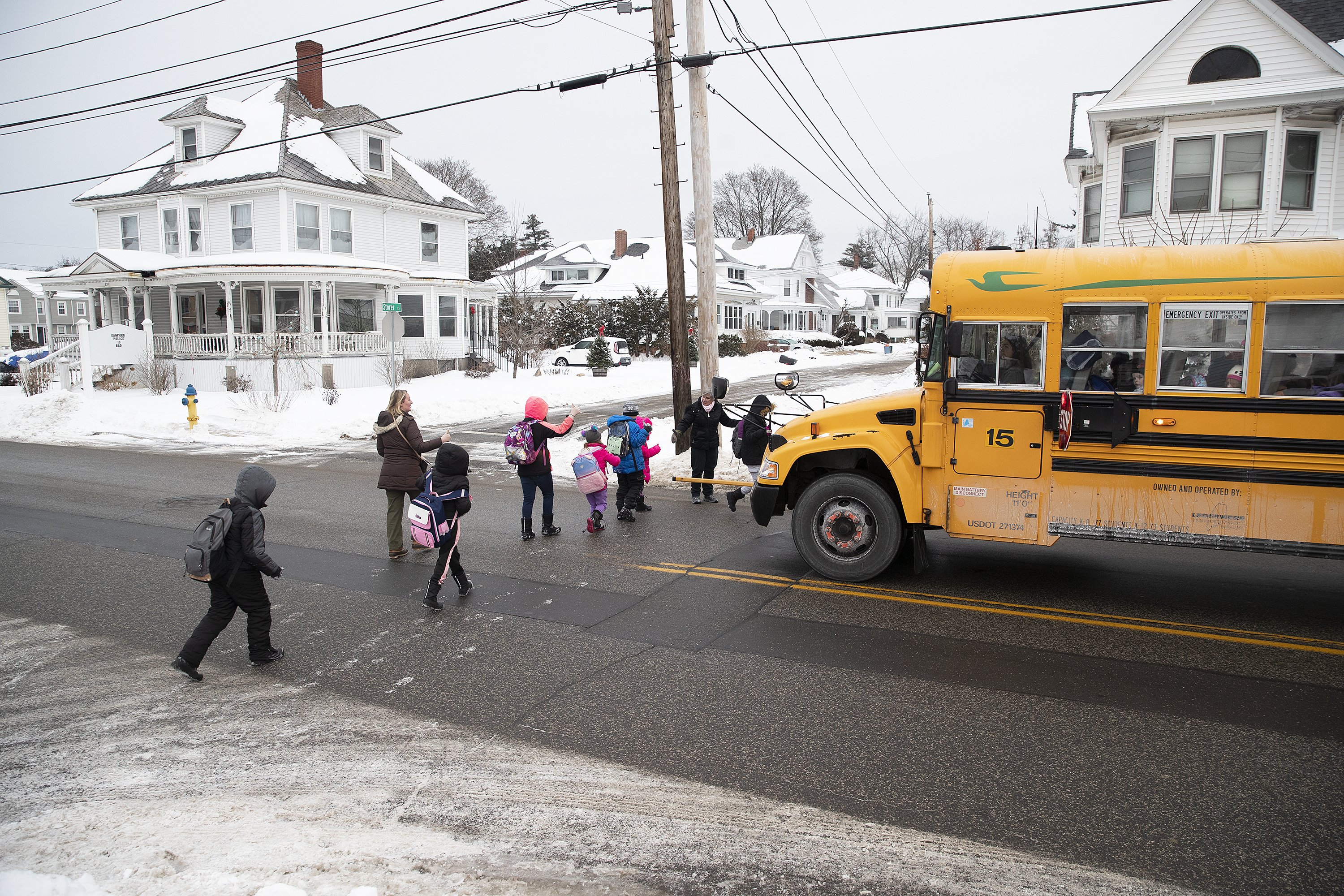
The current model, rolled out two decades ago, calculates a district’s ability to pay for its educational expenses based on property tax valuations. One major proposal in the bill would add the rate of economically disadvantaged students (a number based on eligibility for free school meals) into the assessment.
That provision would be a boon for districts like AOS 96, which serves 11 rural towns in the Machias Bay area. Superintendent Nicole Case said those Down East towns have high valuations on paper because of coastal property and seasonal residents, but that doesn’t accurately capture the economic standing of year-round residents, who often have modest incomes and experience financial hardship.
“For our school districts, the funding formula overestimates the fiscal capacity of rural communities, placing additional strain on local taxpayers,” Case testified. “LD 2226 provides an opportunity to ensure that Maine’s school funding formula better reflects the cost of providing education in rural communities.”
Leaders of districts with high student poverty rates, including Portland, Biddeford, Oxford Hills and Sanford, said accounting for that rate in the formula will correct a critical oversight in the current model.
“What this bill does is direct Maine’s limited educational dollars, slightly more towards children who have the least, and the most to gain,” said Jeremy Ray, superintendent of the Biddeford school district. “Action is what the children in poverty across the state need.”
The Maine Educational Policy Research Institute, which studied the formula for the Legislature and provided the recommendations that became LD 2226, modeled how the adjustments would affect the funding each district receives from the state.
According to that modeling, while the majority of districts would get more state funding under the changes, 34 districts would see a reduction, including 12 that would see a drop of more than $100,000.
Some speakers, including Eileen King, director of the Maine School Superintendents Association, called for a “hold harmless” clause for those districts so they won’t have to contend with a huge single-year drop in state subsidy.
“This is the first time in my time as the director at MSSA where we have come in in support of a bill that has winners and losers,” King said. She said change to the formula is necessary, but she doesn’t want to see major negative repercussions for those who will receive smaller subsidies.
Scarborough would lose the most under the proposal, more than $1 million, and leaders from that district were the only ones to speak against the bill. They testified that student economic status doesn’t necessarily reflect the overall wealth of every community, and called on the committee to include property tax relief measures (something researchers have suggested as a piece of the school funding puzzle) directly into the legislation.
An official with the Maine Department of Education recommended that any changes in the bill be written to begin with the 2028 school year. The measure will now be taken up by the education committee for a work session and vote before moving on to votes by the full Legislature.

We invite you to add your comments. We encourage a thoughtful exchange of ideas and information on this website. By joining the conversation, you are agreeing to our commenting policy and terms of use. More information is found on our FAQs. You can update your screen name on the member's center.
Comments are managed by our staff during regular business hours Monday through Friday as well as limited hours on Saturday and Sunday. Comments held for moderation outside of those hours may take longer to approve.
Join the Conversation
Please sign into your CentralMaine.com account to participate in conversations below. If you do not have an account, you can register or subscribe. Questions? Please see our FAQs.