

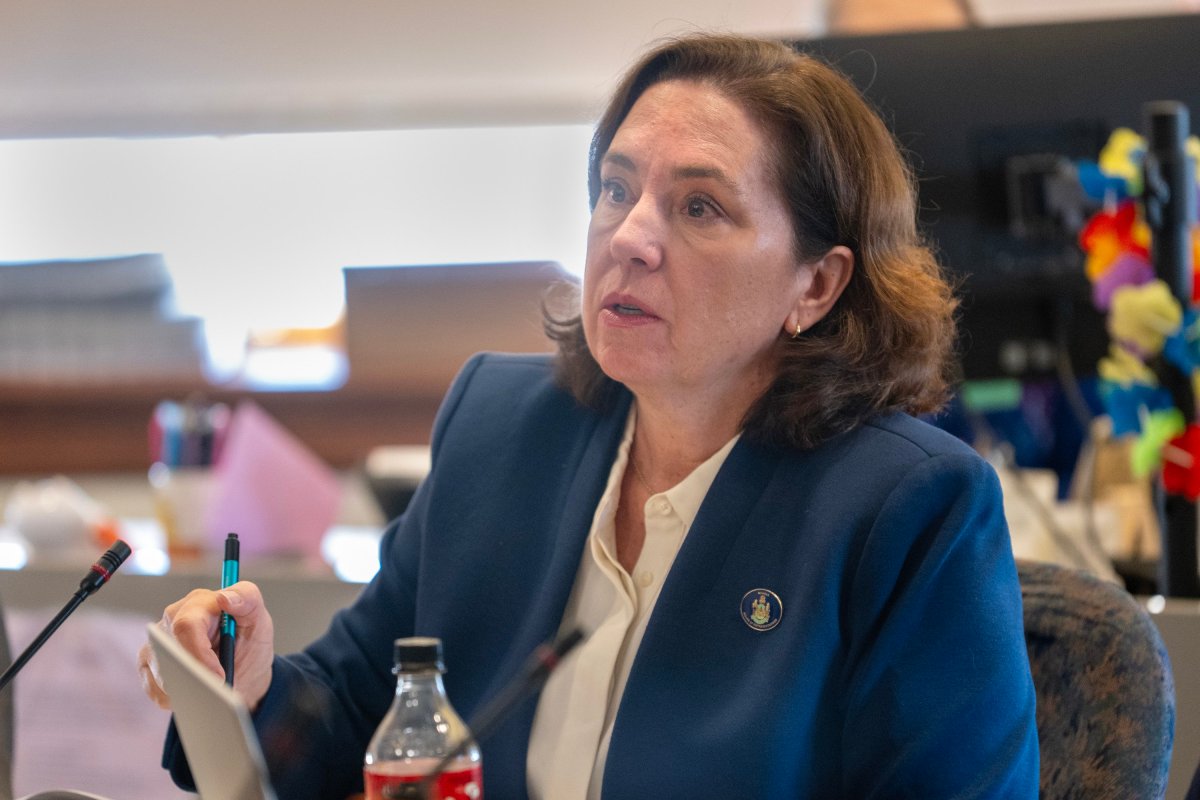
AUGUSTA — House Democrats advanced a bill on Tuesday that would require groups to disclose when they use videos or images altered by artificial intelligence in political advertisements.
The bill, sponsored by Rep. Amy Kuhn, D-Falmouth, was advanced to the Senate in a 73-65 vote that fell mostly along partisan lines.
If enacted, Maine would be the 27th state to regulate the use of artificial intelligence in political ads.
Supporters said the bill, LD 517, is needed to maintain voter trust in political communications, while opponents argued that ambiguous definitions — and steep fines — would chill political speech.
“If deepfake political ads spread without transparency, voters may begin to doubt everything they see or hear during elections, even real content,” Kuhn said. “This creates a dangerous environment where truth itself becomes questionable.”
The bill is one of several measures lawmakers are proposing to handle the explosion of artificial intelligence.
A recent poll from Pan Atlantic Research showed widespread concern about AI, with 66% of the 810 Mainers surveyed saying they’re mostly concerned about the potential problems of AI, while 25% were mostly optimistic.
Kuhn said the bill would only apply to communications that are public under state election laws, that are already subject to disclosure under campaign finance laws and that contain “synthetic media” designed to deceive viewers.
“This bill is very narrow,” Kuhn said. “It will not address all of the fake content that we are seeing circulating online, but I do think it will make a difference.”
Republicans worried that vague definitions and the threat of fines — up to 500% of the cost of the expenditure — could stifle political communication. Satire and parody are protected under the bill, but it’s not clear how examples of each would be determined, they said.
Rep. David Boyer, R-Poland, said he couldn’t get answers to simple questions about what constituted synthetic media when his committee reviewed the bill. One unanswered question, he said, was whether a clown nose on a picture of a state representative would require disclosure under the bill.
Boyer said he’s worried that the measure will lead to selective enforcement since it relies on what “a reasonable person” would think.
“This day and age in politics, there’s not much reason going on,” Boyer said. “One side could think something’s perfectly reasonable and the other side thinks it’s absolutely crazy.”

We invite you to add your comments. We encourage a thoughtful exchange of ideas and information on this website. By joining the conversation, you are agreeing to our commenting policy and terms of use. More information is found on our FAQs. You can update your screen name on the member's center.
Comments are managed by our staff during regular business hours Monday through Friday as well as limited hours on Saturday and Sunday. Comments held for moderation outside of those hours may take longer to approve.
Join the Conversation
Please sign into your CentralMaine.com account to participate in conversations below. If you do not have an account, you can register or subscribe. Questions? Please see our FAQs.