

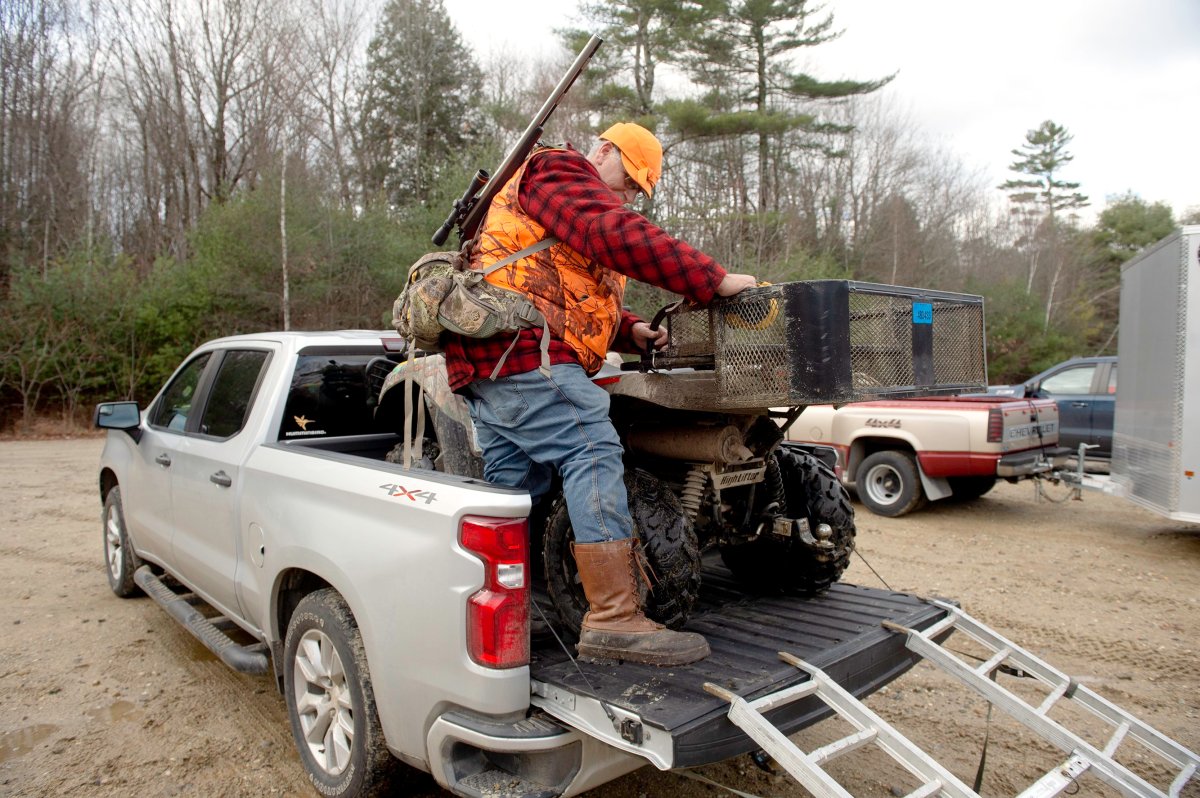
Lawmakers will soon decide whether Maine hunters will be allowed to register deer online.
Every state in the Northeast offers that option, officials said, but Maine only has self-registration for turkeys. Hunters have to present their deer in person at the first open tagging station, usually within 18 hours of harvest.
This week, a legislative committee advanced a bill that would introduce electronic registration for deer in 2027. The members were divided on the proposal, which next will go to the full Legislature for consideration.
Once wary, officials from the Department of Inland Fisheries and Wildlife voiced support for the proposal in a work session on Wednesday.
“We’ve evolved over time with our feelings on this,” Commissioner Judy Camuso testified. “But I think we’re at a point in time where we have the tools to address the concerns that we had. We can move forward and provide a good service for our hunting community.”
In 2024, the state reported that more than 42,000 deer were harvested.
Supporters of the proposed bill said online registration would give hunters more choices, especially if they harvest a deer late in the day or far from a tagging station. Instead, they could register from a phone or computer. Camuso said she has heard positive feedback from other states that have adopted similar systems.
Opponents told the committee they are concerned that electronic tagging would make it harder to gather critical biological data from harvested deer and easier for people to skip the required registration altogether. They are also worried about a loss of camaraderie at the state’s 200-plus registration stations, where hunters show off their prizes and locals come to see the numbers on the scale.
“People like to go there, to show off what they’ve shot,” said Rep. Rick Mason, of Lisbon, who voted against the bill in committee. “I guess I’m old school.”
A FEE CHANGE
Last year, the Legislature passed a resolve that directed the Department of Inland Fisheries and Wildlife to study and establish a plan for implementation of electronic tagging of deer. That conversation grew into LD 2217.
In addition to introducing online registration, an amended version of the bill that advanced this week would also change the fees for hunting and tagging large game.
Department officials said requiring payment information online could deter a hunter from registering deer. To eliminate that barrier, the bill would get rid of the $5 fee to register large game online or in person. The change would also apply to bears and moose, but hunters would still be required to register those in person.
Instead, the state would increase the fees for big-game hunting licenses by $2 for residents and $4 for nonresidents. A basic annual license now costs $26 for Maine adults and $115 for nonresidents, with higher costs for packages that include fishing or archery.
Nate Webb, the department’s wildlife division director, said increasing the license fee would offset the loss of revenue from individual large-game registrations.
He estimated that expanding the electronic tagging program to deer would cost at least $40,000 to increase tech support and gather biological data from hunters who register deer online. The state gathers data from 10% to 15% of harvested deer by visiting tagging stations, homes and meat processors.
Webb said the staff would likely need to do more door-to-door collection if electronic registration is implemented.
“We feel like we’re at a point where Maine hunters are expecting us to provide this option, and we’re willing to do so,” Webb said. “But we just need to ensure that it’s set up in a way that works for us administratively and allows us to get the data we need, allows the warden service to enforce the laws and makes us whole financially.”
The amended bill also includes a stiff penalty: Anyone who fails to register a deer or provides false information could lose their license for a year.
“This really is a tremendous service and value to our customers and something that anybody who hunts in another state is already experiencing,” Camuso said.
Members of the Committee on Inland Fisheries and Wildlife were divided on the proposal on Wednesday — four voted in favor, and five against. Five were absent from the work session and had 48 hours to cast their votes.
MIXED OPINIONS
The state started testing electronic tagging for turkeys in 2018 and officially implemented that system in 2023. Webb said 70% of wild turkeys in Maine are now registered electronically. Registering turkeys is free online and costs $2 in person.
He predicted that percentage would be lower for deer, as some hunters would still want to put their name on the wall at their tagging station.
“Hunters want to get their animal weighed,” Webb told the committee. “They want to go and savor the moment, and part of the way they do that is at a tagging station. We do suspect that tradition would continue, although we also suspect a significant number of deer would be registered (online).”
The department website currently lists 229 sites across Maine that act as tagging stations for deer, bear or turkeys. Those stations keep $2 of the $5 registration fee for every deer; the amended bill directs the state to continue paying that $2 to registration stations for deer registered in person.
Greg Provost at Sabattus Deer Processing said in an interview that he tagged as many as 900 deer for hunters last year. He worries that some would enter incorrect information by accident if they had an electronic option, and that others wouldn’t do it at all.
“Now your biologists don’t have the right information,” he said.
Dave Lorenz, owner of the Old Town Trading Post, said in an interview that he knows people have mixed opinions. Hunters from other states travel to Maine to seek out a particular experience that is unique, he said, and the atmosphere in the store in November is like no other time of the year.
“It is an important heritage,” he said. “It’s something we all grew up with, and I would hate to see it go away. I don’t want to be stuck in the ’60s or ’70s, either.”
John LaMarca, a Registered Maine Guide, told the committee that electronic tagging would mean he could shoot a deer on his own property and butcher it without the delay of in-person registration.
“I still love going to my local tagging station, but it’s a lot easier for me with three kids,” he said.
David Trahan, executive director of the Sportsman’s Alliance of Maine, said in an interview that he sees the merits of electronic tagging and would likely support the program. He recalled an outing last year, when his uncle spent hours driving on slick roads at night in order to register a deer in person.
“In my uncle’s case, he would have used electronic tagging for the convenience,” Trahan said. “Me personally, I like taking it to the tagging station. I would continue to do that.”

Comments are not available on this story. Read more about why we allow commenting on some stories and not on others.
We believe it's important to offer commenting on certain stories as a benefit to our readers. At its best, our comments sections can be a productive platform for readers to engage with our journalism, offer thoughts on coverage and issues, and drive conversation in a respectful, solutions-based way. It's a form of open discourse that can be useful to our community, public officials, journalists and others.
We do not enable comments on everything — exceptions include most crime stories, and coverage involving personal tragedy or sensitive issues that invite personal attacks instead of thoughtful discussion.
You can read more here about our commenting policy and terms of use. More information is also found on our FAQs.
Show less