

The race for Maine governor just got a little less crowded.
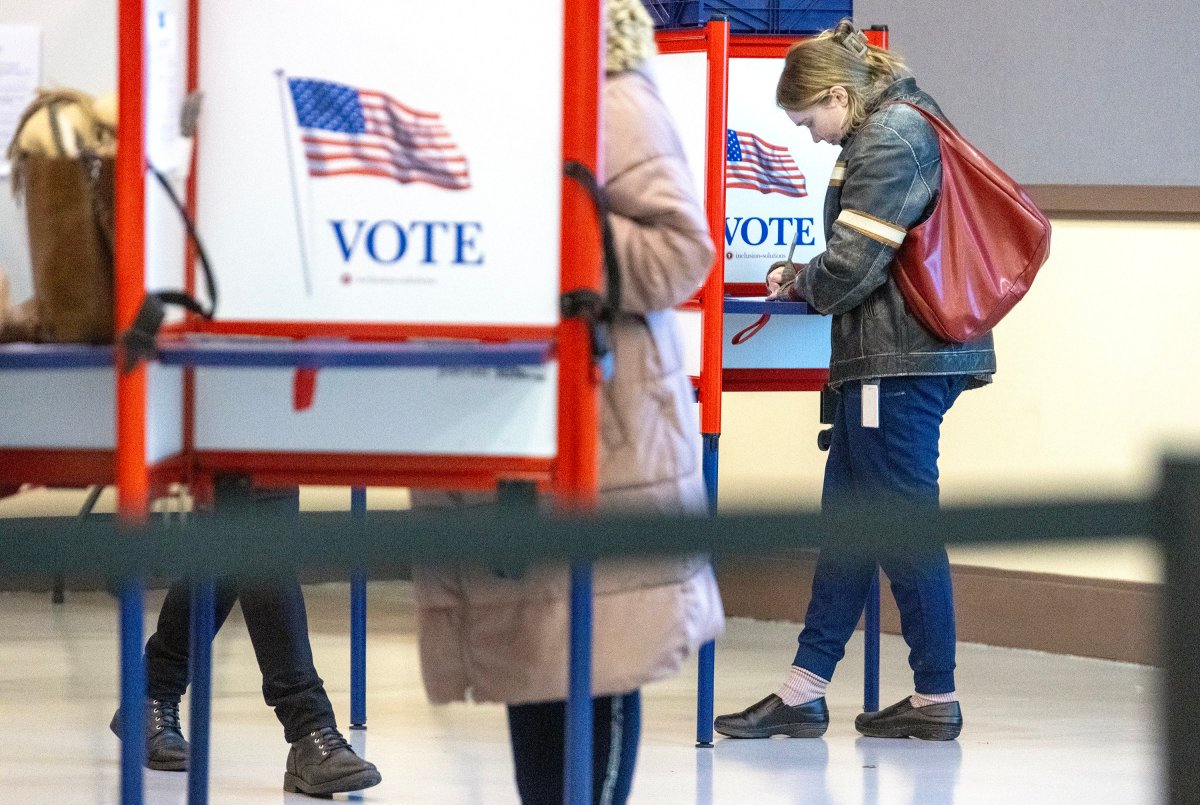
Voters will see the names of five Democrats and eight Republicans on their June 9 primary ballots, according to the most up-to-date list of qualifying candidates released Monday by the Maine Department of the Secretary of State.
Monday was the deadline for party candidates in both state and federal races to hand in enough signatures to get on the ballot.
With Gov. Janet Mills term-limited and running for U.S. Senate, the race for governor is wide open and initially attracted close to two dozen candidates. That number is down to 18 after three Republicans failed to qualify and one Democrat dropped out. Independent candidates have until June 1 to hand in qualifying signatures for the November ballot − and there are five running.
Maine’s Democratic primary for U.S. Senate will feature Mills, veteran and oyster farmer Graham Platner and David Costello, who has held various positions in state and federal government. U.S. Sen. Susan Collins is the only Republican to qualify in the race.
WHO’S RUNNING IN GOVERNOR’S RACE?
Democrats who qualified for the primary ballot in the governor’s race are: Shenna Bellows, Maine’s secretary of state; Troy Jackson, former Maine Senate president; Angus King III, a renewable energy entrepreneur and the son of U.S. Sen. Angus King; Hannah Pingree, former speaker of the Maine House and daughter of U.S. Rep. Chellie Pingree; and Nirav Shah, former director of the Maine Center for Disease Control and Prevention.
Republicans are: Jonathan Bush, a businessman and cousin of former President George W. Bush; Bobby Charles, a former U.S. assistant secretary of state; David Jones, a real estate broker; Jim Libby, a state senator and Thomas College professor; Garrett Mason, former Maine Senate majority leader; Owen McCarthy, a medical technology entrepreneur; Ben Midgley, a former fitness franchise executive; and Robert Wessels, a retail manager from the town of Paris.
Three long-shot Republicans who had filed campaign finance paperwork with the state did not end up making the ballot: Ken Capron, David Foster and Randy Lee Wilcox.
The size of the field is similar to that of Maine’s last open governor’s race, in 2018. There were four Republicans on the ballot that year, and seven Democrats, including Mills. Shawn Moody won the Republican primary outright, with 57% of the vote, while Mills won with 54% in the nation’s first use of a ranked-choice runoff to determine a statewide race.
PINGREE WON’T FACE PRIMARY CHALLENGE AFTER ALL
In Maine’s 1st Congressional District, U.S. Rep. Chellie Pingree will not face a Democratic primary challenge from state Rep. Tiffany Roberts, D-South Berwick, who previously announced she would be seeking Pingree’s seat.
Roberts, who is in her fourth term in the Maine House, was running on a platform of bringing generational change and a fresh perspective to the seat that Pingree has held since 2008. Pingree has not faced a primary challenger in any of her reelection bids.
Roberts posted on social media Sunday that she anticipated her campaign would fall short of the required number of signatures.
“The appetite for change I heard from voters across this district was very different from what I encountered from the political institution,” she said.
Roberts did not respond to a voicemail message or email seeking an interview.
Republicans Josh Pietrowicz, a former Toyota sales and leasing consultant from New Gloucester, and Ron Russell, a retired U.S. Army veteran and consultant, will face off in the Republican primary to take on Pingree. Russell was the GOP’s candidate for the seat in 2024.
In the 2nd District, Democrats Joe Baldacci, a state senator from Bangor; Matt Dunlap, the state auditor and former secretary of state; Jordan Wood, a former congressional staffer; and Paige Loud, a social worker and graduate student, will compete in the primary. Former Gov. Paul LePage is the only Republican on the ballot.
In races with three or more candidates, ranked-choice voting will be used to determine the outcome. Unenrolled voters will be able to participate in the primary of their choice under Maine’s semi-open primary rules that were first used in 2024.
Voters who are enrolled in a political party and want to switch parties or unenroll prior to the primary must do so at least 15 days in advance and cannot switch parties on Election Day unless they are changing residency from one municipality to another, according to state law.
In addition to the races for Senate, Congress and governor, all 186 seats in the Maine Legislature are also up for election this year. A complete list of primary candidates can be found online on the secretary of state’s website.
In-person absentee voting is scheduled to start May 11, though voting days and times vary by municipality. Voters can begin requesting absentee ballots on April 9.

We invite you to add your comments. We encourage a thoughtful exchange of ideas and information on this website. By joining the conversation, you are agreeing to our commenting policy and terms of use. More information is found on our FAQs. You can update your screen name on the member's center.
Comments are managed by our staff during regular business hours Monday through Friday as well as limited hours on Saturday and Sunday. Comments held for moderation outside of those hours may take longer to approve.
Join the Conversation
Please sign into your CentralMaine.com account to participate in conversations below. If you do not have an account, you can register or subscribe. Questions? Please see our FAQs.