

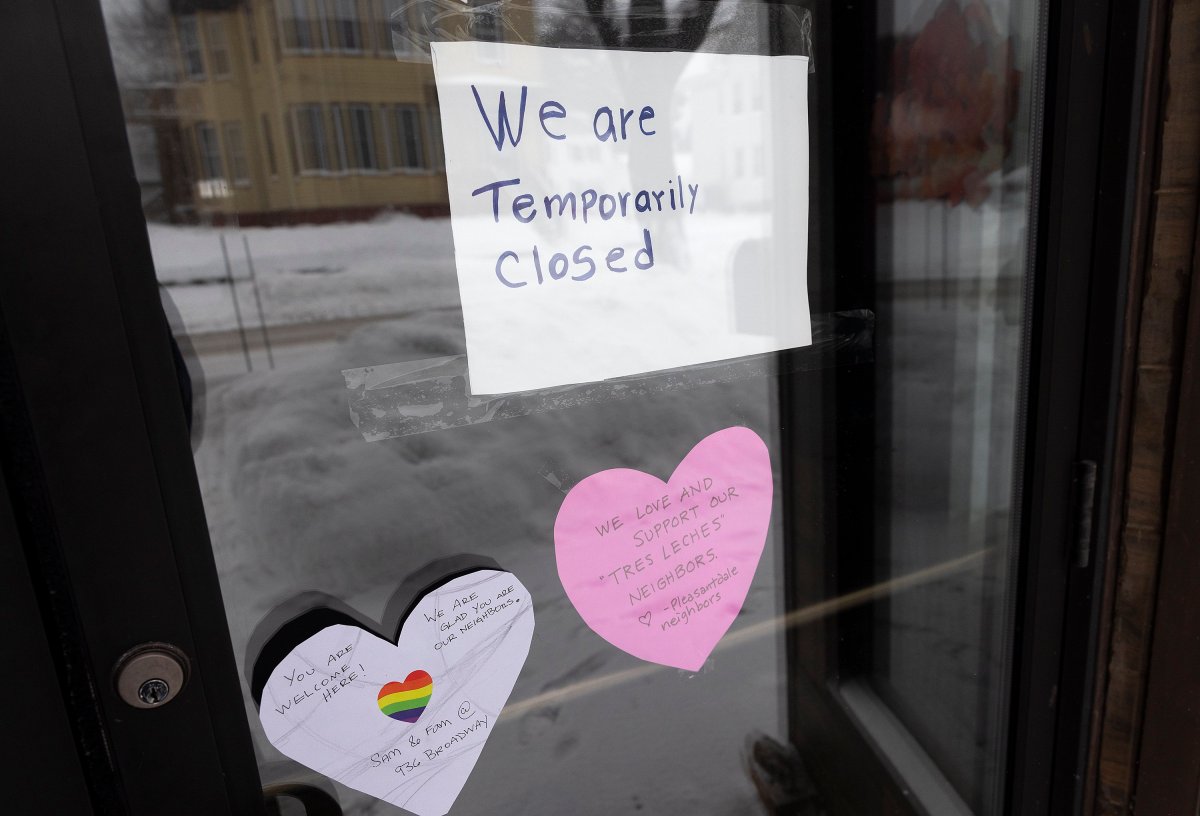
A 10-day surge in immigration enforcement in January cost Maine retailers an estimated $3.4 million, but the wider impact to the state’s economy is likely greater and could be long-lasting, according to an analysis by the Maine Center for Economic Policy.
“Operation Catch of the Day,” as it was named by the Trump administration, led many immigrants to stay home from work and school out of fear, resulting in a 5% to 10% reduction in economic activity among nonwhite Mainers, the progressive think tank found.
It also prompted loud protests outside Portland hotels suspected of housing immigration agents and a retail boycott that shut down many businesses at a time when few owners or employees could afford the lost income.
The disruption was most significant in urban areas with large immigrant populations, namely Biddeford-Saco, Lewiston-Auburn and Greater Portland, where combined revenue losses may have reached $22 million, according to the center’s analysis.
In those same areas, the center estimated that about 2,300 people were absent from work each day and more than 1,000 students were absent from school.
“These findings don’t capture the full impact of federal activity on Maine’s economy,” the analysis stated. “Learning loss for students leads to reduced earnings later in life. Food banks have seen increased need and hundreds of families are at risk of eviction because of having to miss work.”
The center noted that immigration arrests continue in Maine. The analysis used data gathered from various sources, including the U.S. Census, Maine Department of Education and taxable retail reports from Maine Revenue Services.
TEN DAYS IN JANUARY
Increased enforcement by U.S. Immigration and Customs Enforcement began Jan. 20, when federal agents targeted 1,400 Mainers who the Trump administration said were criminals and here illegally.
Ultimately, 206 people were detained, including asylum seekers with pending applications for legal residency. Judges have since ordered that dozens of them be released, finding they pose no danger to their communities.
If just three-quarters of the detainees were in the workforce, that’s 157 workers who added an estimated annual value of $76,000 each to Maine’s economy — a loss that could reduce the state’s economic output by nearly $12 million annually, the analysis estimated.
The impacts reported in the analysis were no surprise to Patrick Woodcock, CEO of the Maine State Chamber of Commerce. His organization warned of the dangers of the surge and called on Maine’s congressional delegation to push for greater control over ICE enforcement.
“It’s consistent with all the anecdotal feedback we received during the enforcement action,” Woodcock said Wednesday. “We saw immediate impacts in worker absenteeism and retail foot traffic. It was quite alarming.”
Woodcock said businesses also reported spending more on legal services, security, transportation and other costs related to keeping employees safe and finding out what happened to workers who were detained.
Any loss of workers is troubling, he said, noting that the chamber is projecting 0.1% growth in Maine’s labor force this year, followed by no growth through 2029.
ANALYSIS ALIGNS WITH SURVEY
The findings in the center’s analysis align with a survey of Portland-area businesses that was conducted near the end of the surge by the Greater Portland Council of Governments in conjunction with the Portland Regional Chamber of Commerce and other groups.
The survey showed that over two-thirds of 245 respondents experienced a negative impact during the ICE surge; more than half said their revenue was down more than 5%; and 37% said some of their employees had stopped coming to work.
Quincy Hentzel, CEO of the Portland chamber, said the center’s analysis reflects the concerns of many chamber members, particularly around disruptions to staffing, customer activity and day-to-day operations.
“When people feel uncertain about going to work, school or local businesses, it has ripple effects across the entire economy,” Henzel said Wednesday. “This includes impacts on our immigrant community, whose contributions are an integral part of Greater Portland’s economic and community life.”
Over the long term, Hentzel said, Maine’s ability to grow depends on a stable workforce and communities where people feel safe, supported and able to participate fully.
The center concluded its analysis saying that “rather than demonizing immigrants and spreading fear throughout Maine communities, lawmakers should welcome new arrivals in a state that desperately needs to expand its labor force and overall population.”

Comments are not available on this story. Read more about why we allow commenting on some stories and not on others.
We believe it's important to offer commenting on certain stories as a benefit to our readers. At its best, our comments sections can be a productive platform for readers to engage with our journalism, offer thoughts on coverage and issues, and drive conversation in a respectful, solutions-based way. It's a form of open discourse that can be useful to our community, public officials, journalists and others.
We do not enable comments on everything — exceptions include most crime stories, and coverage involving personal tragedy or sensitive issues that invite personal attacks instead of thoughtful discussion.
You can read more here about our commenting policy and terms of use. More information is also found on our FAQs.
Show less