

SKOWHEGAN — The Somerset County Board of Commissioners rejected a local behavioral health care provider’s request to tap into the county’s opioid settlement funds, largely agreeing the priority for the money should be the jail’s unique medication-assisted treatment program.
Kennebec Behavioral Health, which has seven clinics in central Maine and offers a slew of other services throughout the region, sought funds for its substance use disorder prevention services in Somerset County. The commissioners heard the pitch during their meeting Wednesday at the county courthouse.
“Right now, we do not have ‘primary prevention’ funding,” said Rob Rogers, KBH’s director of substance use prevention and risk reduction. “So, we’re really looking to enhance our continuum of services.”
Primary prevention would include programs that deter people from using substances and developing addictions, such as educational services and improved patient screening systems, Rogers said.
The organization serves about 9,000 people per year, said Tina Chapman, KBH senior engagement officer.
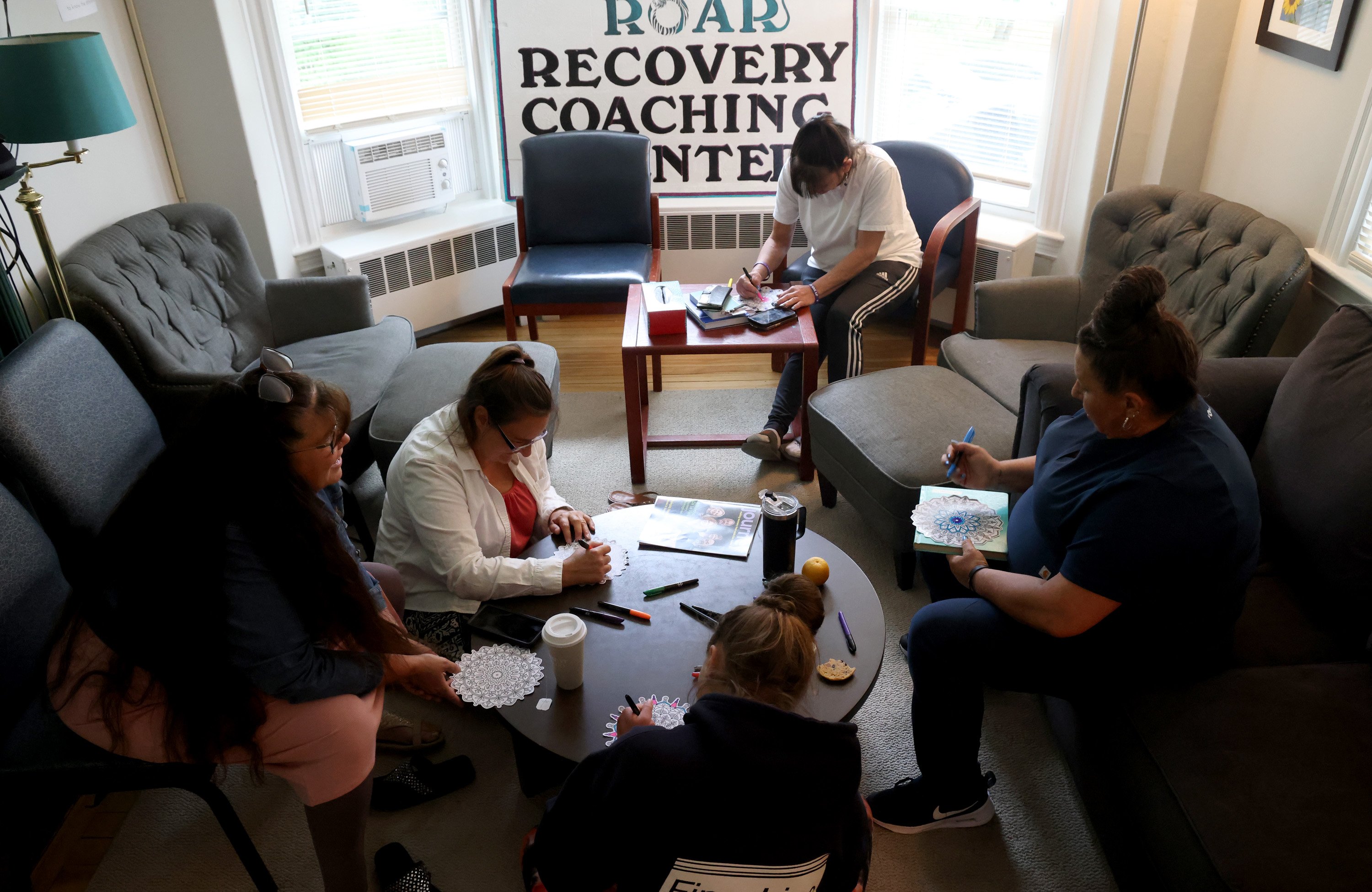
Chapman said the provider was seeking $163,000 for this year and a similar amount next year. After that, KBH expected it could get the necessary funding to continue the program from a different source that already supports its other services.
The commissioners, however, said they simply did not have that kind of money available.
Somerset County has about $650,000 in settlement funds in the bank, Finance Director Patrick Dolan said. Funds expected in future years average to about $150,000 annually, Dolan said.
And county officials plan to use those funds to continue a medication-assisted treatment program at the jail in Madison, which uses an extended-release monthly medication known as Sublocade to treat people with opioid addiction.
The injections cost approximately $1 million per year, Sheriff Dale Lancaster said. So far, in the program’s first three years, the county has funded it with grants.
About $390,000 of that grant funding remains, Dolan said. Adding in the opioid settlement funds in hand, the county can fund the Sublocade program for approximately one more year, he said.
“The grants are drying up,” Dolan said.
Lancaster said he is exploring other grants, but whether the county secures them is uncertain. He is also waiting to see the outcome of Maine’s request to the federal government to modify its Medicaid rules, which, among other changes, would allow incarcerated people to use MaineCare benefits for medication-assisted treatment. Under present rules, people with MaineCare coverage lose it while in custody.
State officials expect it could take years for the federal government to act on the waiver application.
Maine jails are required to provide medication-assisted treatment.
Lancaster said he switched from offering daily Suboxone to Sublocade because it has been found to reduce the risk of overdoses after an inmate is released and make it more likely people continue receiving treatment. The switch also helped cut down on illicit activity among inmates related to Suboxone, he said.
Since starting the program, nobody released from the jail has died from an overdose, Lancaster said. A scientific study of the jail’s early success administering the medication drew national attention, including from the New York Times.
“Not that they don’t have a good program,” Lancaster said of KBH, “but I do not want to give up any of my Sublocade revenue … because the shot is so expensive.”

Dolan suggested that commissioners continue to designate the settlement funds for Sublocade treatment, and if the federal waiver is ever granted, then they could consider funding other programs.
Board Chairman Robert Sezak, the District 1 commissioner from Fairfield, agreed. Taxpayers could end up footing the bill for the Sublocade program if the opioid settlement funds were not used for it.
District 4 Commissioner John Alsop, of Cornville, suggested KBH work with county staff to develop a scaled-back proposal for commissioners to reconsider. District 5 Commissioner Joel Stetkis, of Canaan, said the board could reconsider the KBH request if other funding for Sublocade ever comes to fruition.
In total, Maine is expecting more than $230 million in funds from settlements with pharmaceutical companies, distributors and retailers that played a role in the opioid epidemic. The state started receiving settlement payments in 2022 and is expecting to receive the funds through 2038.
Half is allocated to the Maine Recovery Council, 20% is set to go to the Office of the Maine Attorney General and the remaining 30% is to go to counties and certain municipalities.
Somerset County’s share is estimated to total about $2.5 million by 2038, according to the attorney general’s office.
The county’s total expected payment each year varies because the money comes from different settlements: In 2024, it was about $457,000; in 2025, it was $190,000. This year’s expected payment is $152,000; in 2027, it will be $115,000; and in 2028, $163,000. In the final six years, Somerset County’s funds will taper off and go as low as $60,000 in 2038.
Municipalities and counties have spent only $3 million of the $22 million they have received since 2022, and 10 communities have not spent any of their funds, a report to lawmakers earlier this month showed.
From its share, Somerset County has used $50,000 to supplement funding for a care coordinator from Somerset Public Health to work within the sheriff’s office. The public health agency is a division of Redington-Fairview General Hospital.
The county also gave Kennebec Behavioral Health a grant of $6,250 to help its clients access its services, focusing on transportation, according to the state report sent to the Legislature.

We invite you to add your comments. We encourage a thoughtful exchange of ideas and information on this website. By joining the conversation, you are agreeing to our commenting policy and terms of use. More information is found on our FAQs. You can update your screen name on the member's center.
Comments are managed by our staff during regular business hours Monday through Friday as well as limited hours on Saturday and Sunday. Comments held for moderation outside of those hours may take longer to approve.
Join the Conversation
Please sign into your CentralMaine.com account to participate in conversations below. If you do not have an account, you can register or subscribe. Questions? Please see our FAQs.