
If you use social media with any regularity, then you’ve certainly stumbled across a perky influencer who smiles at the camera and gives you a calorie and protein gram count for their latest trending dish. Some content creators break down the three macro nutrients — protein, fat, carbs — but often neglect to mention fiber content, an essential compound for optimal digestion and gut health.
However, for chefs and influencers who have an understanding of balanced nutritional needs, legumes are emerging as both centerpiece dishes and stealthy additives to other foods that even the pickiest eaters cannot detect. Unfortunately, most U.S. residents still aren’t consuming enough fiber. According to the Centers for Disease Control, Americans average 15 grams of fiber intake a day, versus the recommended 22 to 40 grams.
Fiber is technically a type of non-digestible carbohydrate. It can be soluble or insoluble, meaning it has two different functions. According to the Mayo Clinic, soluble fiber, which can be found in legumes, oats, citrus fruits, avocado and other grains and produce, helps to slow digestion, reducing glucose absorption and maximizing nutrient absorption. Soluble fiber breaks down in water, and supplements like psyllium fiber powder can be added to beverages and food for an undetectable boost to your gut health.
Insoluble fiber binds to your stomach contents and acts as a little colon taxi, ensuring regularity in the bathroom and aiding in healthy gut flora (probiotics, found in fermented foods and yogurts, are also necessary in maintaining balanced gut health). Some insoluble fibers feed your existing gut microbes, helping boost immunity and fight indigestion. If you’re low on insoluble fiber, stagnation in the gut leads to constipation, and the long-term effects of missing your daily fiber intake are much worse than stomach upset.
Colorectal cancer, or CRC, will likely affect someone you know and the growing case numbers are staggering. According to the American Cancer Society, one in 25 men will develop CRC; for women it’s one in 26. There is no current data for trans or non-binary people, however, people in those demographics statistically develop more precancerous conditions due to fewer precautionary screenings, according to National Institutes of Health. An article published by the Cancer Research Institute in March of this year states that CRC diagnoses continue to rise by as much as 3% annually for people under the age of 50, making colon cancer a leading cause of death in that demographic. The good news is that high fiber foods – a strong line of defense against colon cancer – are easily accessible.
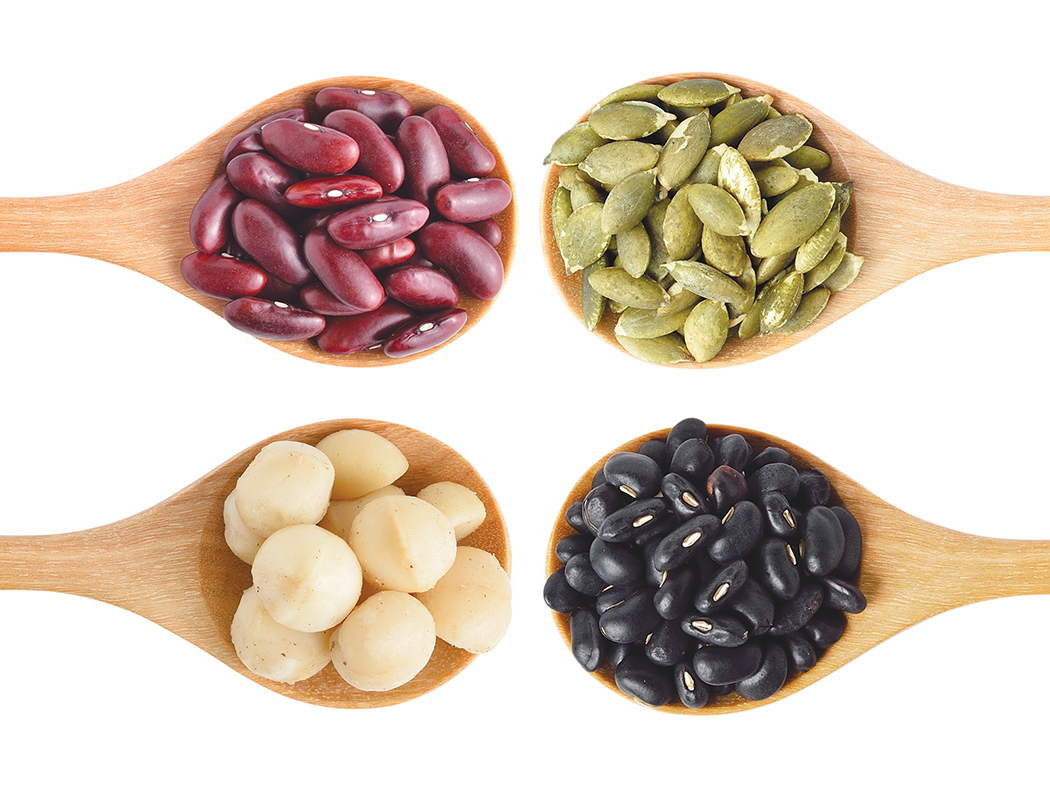
Beans are one of the most nutritionally balanced, affordable and globally accessible sources of food. The mighty bean can be sustainable to farm, and versatile amongst different flavor profiles and cuisines. Just a single cup-sized serving of beans provides up to 15 grams of protein and 15 grams of fiber, varying only slightly by bean type. (This calculation and other nutritional information is sourced from the Mayo Clinic.)
Additionally, beans are rich in micronutrients, or vitamins and minerals, and are an excellent source of iron, potassium, magnesium, and folate. A one-cup serving is about 200 calories — before you add cheese, butter, chicken stock or anything else your heart desires.
If you have an aversion to beans, or if you prepare food for a picky eater, beans can stealthily be added to both sweet and savory dishes:
One cup of blended navy or cannellini beans provides a creamy base that can be added to a mac-n-cheese, Alfredo sauce, soup or mashed potatoes.
One cup of black beans can be blended and added to brownie mixes or chocolate cake, but be sure to blend until smooth! An extra teaspoon of cocoa powder and a pinch of instant coffee will really aid in camouflaging any mild bean flavor for the most picky of eaters.
If you’re seeking maximum fiber content in your food, and beans just aren’t your thing, the fastest way to boost your gut health is to add chia seeds into beverages and cereals and yogurts. Consuming fiber at the beginning of your day can set your GI tract for regularity, and with a whopping 34 grams of fiber per 100 gram serving, chia seeds are not to be ignored.
Be careful of overconsumption though! Recommended daily fiber intake depends on gender and health factors. People who have IBS, Crohn’s or other chronic illnesses should consult a physician for any potential dietary contraindications. Other gut-healthy, high fiber foods that range from 5-10 grams of fiber per 100 gram serving are: avocado, coconut, dark chocolate, dates, tofu and raspberries.
If you’ve previously consumed a low-fiber diet and are making big changes, the Mayo Clinic advises that you create an adjustment period for your gut and bowels. A healthy gut is a gut that consumes a diverse assortment of foods. But for a one-stop nutritional superfood, you can bet on beans.
Risotto With Sweet Potatoes, Peas and Green Beans
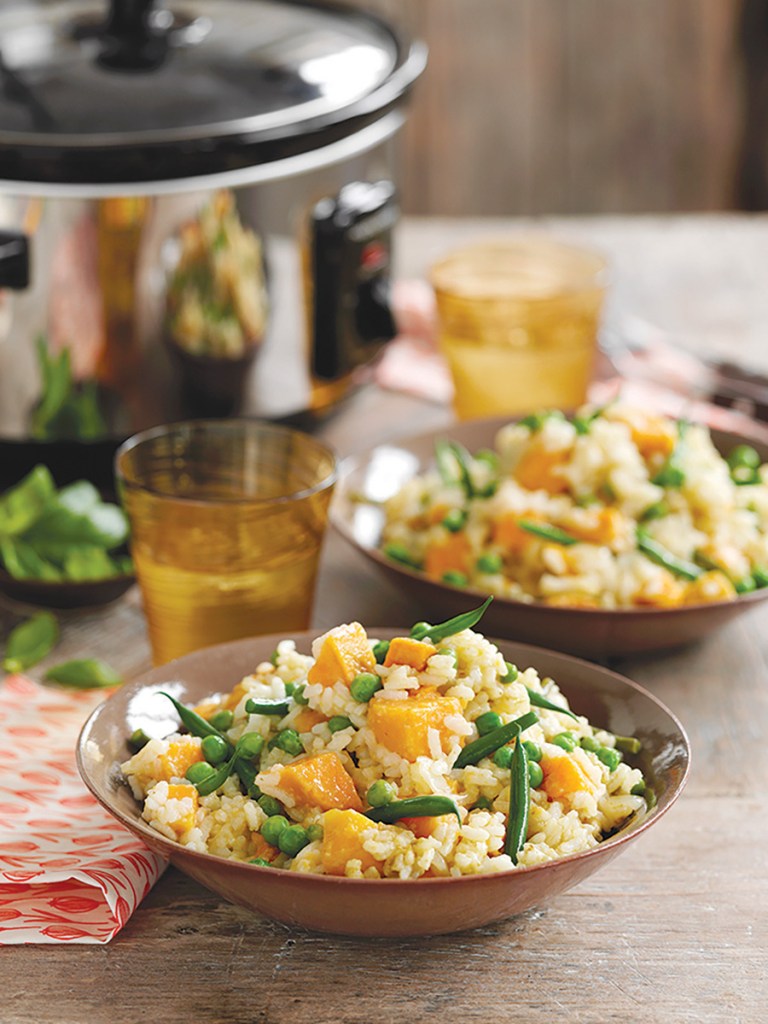
From Lines+Angles
Makes 6 servings
All the vegetables in this dish are considered good sources of fiber. Use brown arborio rice for an even higher dose.
2 tablespoons olive oil
1⁄2 onion, chopped
1 clove garlic, chopped
12⁄3 cups arborio rice
4 cups low sodium vegetable broth
1 tablespoon white wine
1 large sweet potato, peeled, chopped and par boiled
Kosher salt, to taste
1 cup blanched green peas
1 cup blanched green beans
1. Heat olive oil in a large saucepan over medium heat. Add the onion and saute until slightly translucent, about 3 minutes. Add the garlic and cook another minute, stirring.
2. Add the rice to the pan and stir well to coat with the oil. Cook until slightly toasted, about 3 minutes.
3. Stir in 3⁄4 of the broth and the wine. Bring to a boil and then cover. Reduce heat to low and cook for about 5 minutes.
4. Add the sweet potato and salt and simmer for about 15 minutes, until the rice is tender. Stir about every five minutes, adding more broth, if necessary.
5. Add the peas and green beans and the remaining broth and stir gently. Serve hot.
Comments are not available on this story. Read more about why we allow commenting on some stories and not on others.
We believe it's important to offer commenting on certain stories as a benefit to our readers. At its best, our comments sections can be a productive platform for readers to engage with our journalism, offer thoughts on coverage and issues, and drive conversation in a respectful, solutions-based way. It's a form of open discourse that can be useful to our community, public officials, journalists and others.
We do not enable comments on everything — exceptions include most crime stories, and coverage involving personal tragedy or sensitive issues that invite personal attacks instead of thoughtful discussion.
You can read more here about our commenting policy and terms of use. More information is also found on our FAQs.
Show less