
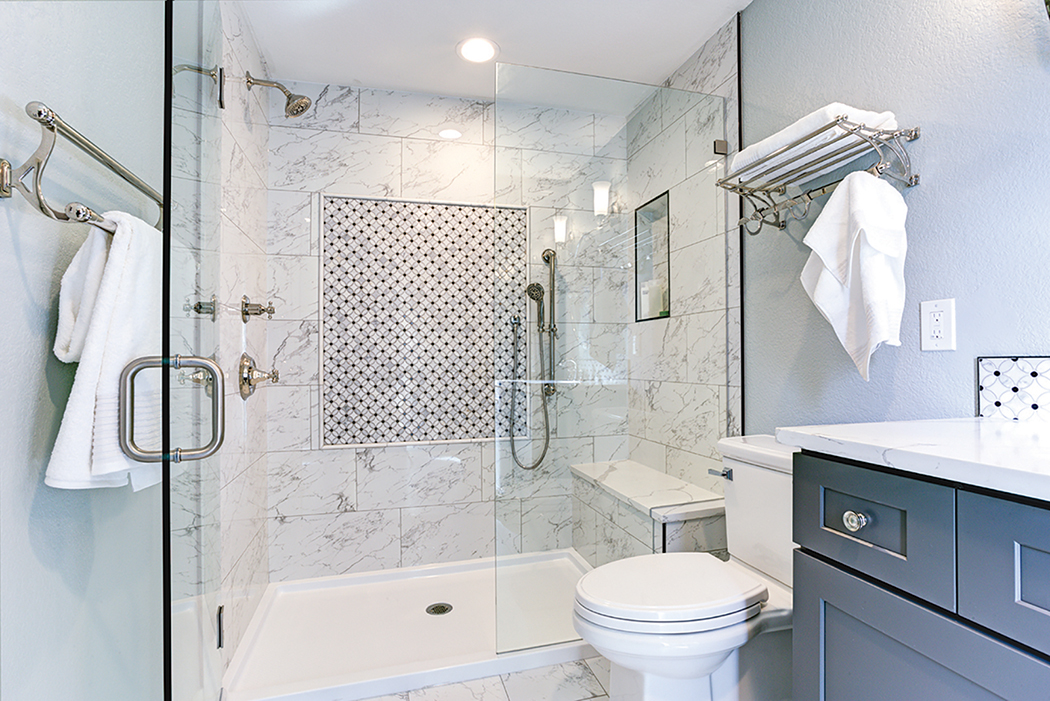
Many seniors want to spend as long as possible residing in the comforts of their own homes. According to AARP’s 2021 “Home and Community Preferences Survey,” more than three-quarters of U.S. adults age 50 and older prefer living at home. For many of us, nothing is more emblematic of our ability to stay independent than remaining in our home. But getting older often comes with certain deficits that may not make current living situations the safest for seniors.
Retirement Living reports that an older person is treated in an emergency room for a fall-related injury nearly once every 10 seconds. Falls cause millions of injuries and 32,000 deaths a year, according to the U.S. Centers for Disease Control and Prevention. Seniors may be affected by low vision, mobility limitations, cognitive decline, balance issues and loss of muscle strength. Certain adaptations may be necessary if someone wants to stay in their home, particularly in an older home that has not recently been renovated.
These suggestions are just a few of the many home modifications that can help seniors safely age in place.
Create zero-threshold entryways
Zero-threshold entryways, also known as flush entries, do not require crossing a lip or any raised barrier. They can appear on doorways and showers and make it easy for people who have mobility issues, as well as those using scooters, walkers and wheelchairs, to move about unencumbered.
Clear clutter/move obstructions
One inexpensive modification is to remove extraneous furniture and accessories. Such a change widens walking spaces in a room and accommodates walkers and wheelchairs. In addition, furniture can be pushed to the room’s perimeter to make moving around easier. It’s also important to remove area rugs, as they’re often tripping hazards.
Change knobs to levers
This is an easy modification. Levers are much easier for individuals with arthritis or persons who lack dexterity in their hands. Everything from doorknobs to faucet knobs can be replaced with levers.
Invest in storage systems
A cluttered countertop is a potential safety hazard. Items used everyday, like in kitchens or bathrooms, can easily end up on the floor, and that goes for bathing items like shampoo and soap in the shower as well. Consider a larger vanity for a bathroom and counter or tabletop organizers for cooking, office or bedroom items. Install a shower caddy to reduce the chances of items dropping or having to bend down to pick something up.
Consider smart lighting
Motion-activated or darkness-activated lighting switches and fixtures can automatically turn on lights, thereby improving visibility. Also, rocker light switches are easier to maneuver than standard toggles.
Increase lighting in bathrooms
Increasing lighting in the bathroom and upgrading existing features to LED lighting can make the bathroom easier to navigate at night. That’s a notable benefit, as seniors may need to make routine bathroom trips overnight.
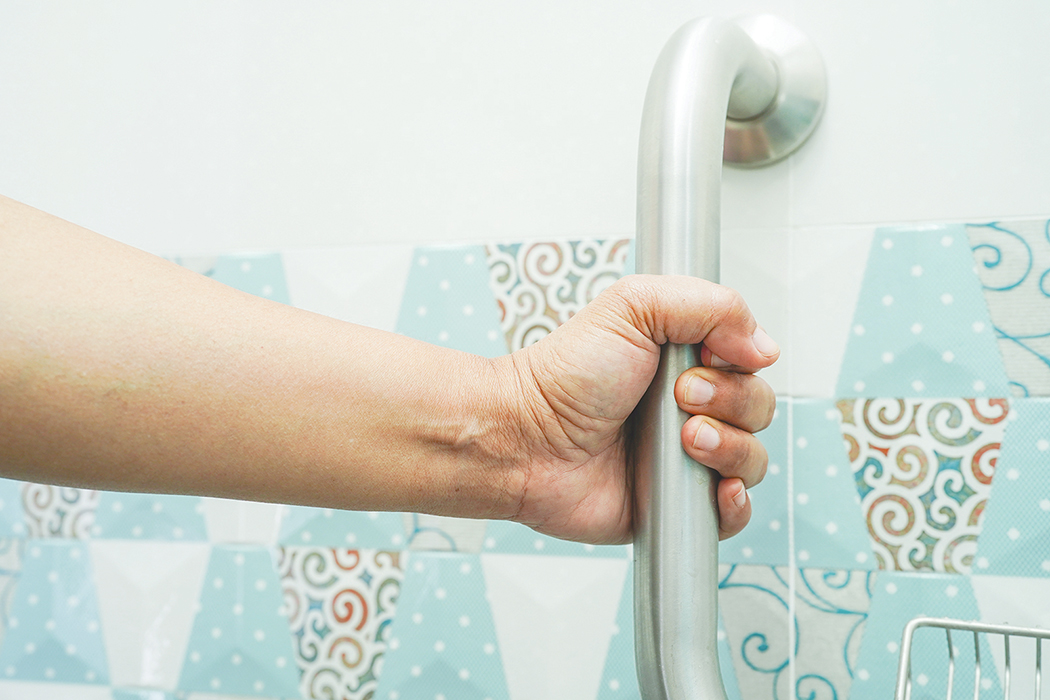
Install grab rails and supports
Minimizing falls could come down to providing support in key rooms of a home. Grab rails are often found in public restrooms, but they’re equally useful in the bathrooms of private homes. Grab rails can be installed on both sides of all toilets and in the bathtub/shower stall so people can get up and down easily and reinforce their stability on wet surfaces. You could also install a grab rail close to seating in the kitchen to add support.
Renovate your existing shower
Seniors whose current bathrooms house a traditional shower setup that requires them to step over a tub can renovate the space and replace that feature with a walk-in shower. A walk-in shower does not require a step over the bathtub, greatly reducing the risk of falls while bathing. Some additional shower renovations include installing a bench so someone can sit down while bathing, ideally while using a hand-held shower head.
Purchase non-slip rugs
Non-slip area rugs are essential for anyone, and especially beneficial for seniors. From hallway runners to the bath mat, edges should be secured and a non-slip mat placed beneath the rug if it does not have built-in rubberization.
Elevate toilet heights
Elevating toilet heights in bathrooms throughout the home can make it easier for seniors to sit down and get up when going to the bathroom. Toilets compliant with the Americans with Disabilities Act (ADA) are roughly 18 inches taller than standard toilets, which can make a big difference for seniors.
Invest in a stairlift
Single-story homes are preferable for growing older gracefully, but many seniors live in multi-story homes. A stairlift makes a multi-floor home more accessible, according to Elder, an eldercare service provider. Stairlifts make it easier to traverse staircases and reduce the risk for falls.
Comments are not available on this story. Read more about why we allow commenting on some stories and not on others.
We believe it's important to offer commenting on certain stories as a benefit to our readers. At its best, our comments sections can be a productive platform for readers to engage with our journalism, offer thoughts on coverage and issues, and drive conversation in a respectful, solutions-based way. It's a form of open discourse that can be useful to our community, public officials, journalists and others.
We do not enable comments on everything — exceptions include most crime stories, and coverage involving personal tragedy or sensitive issues that invite personal attacks instead of thoughtful discussion.
You can read more here about our commenting policy and terms of use. More information is also found on our FAQs.
Show less