
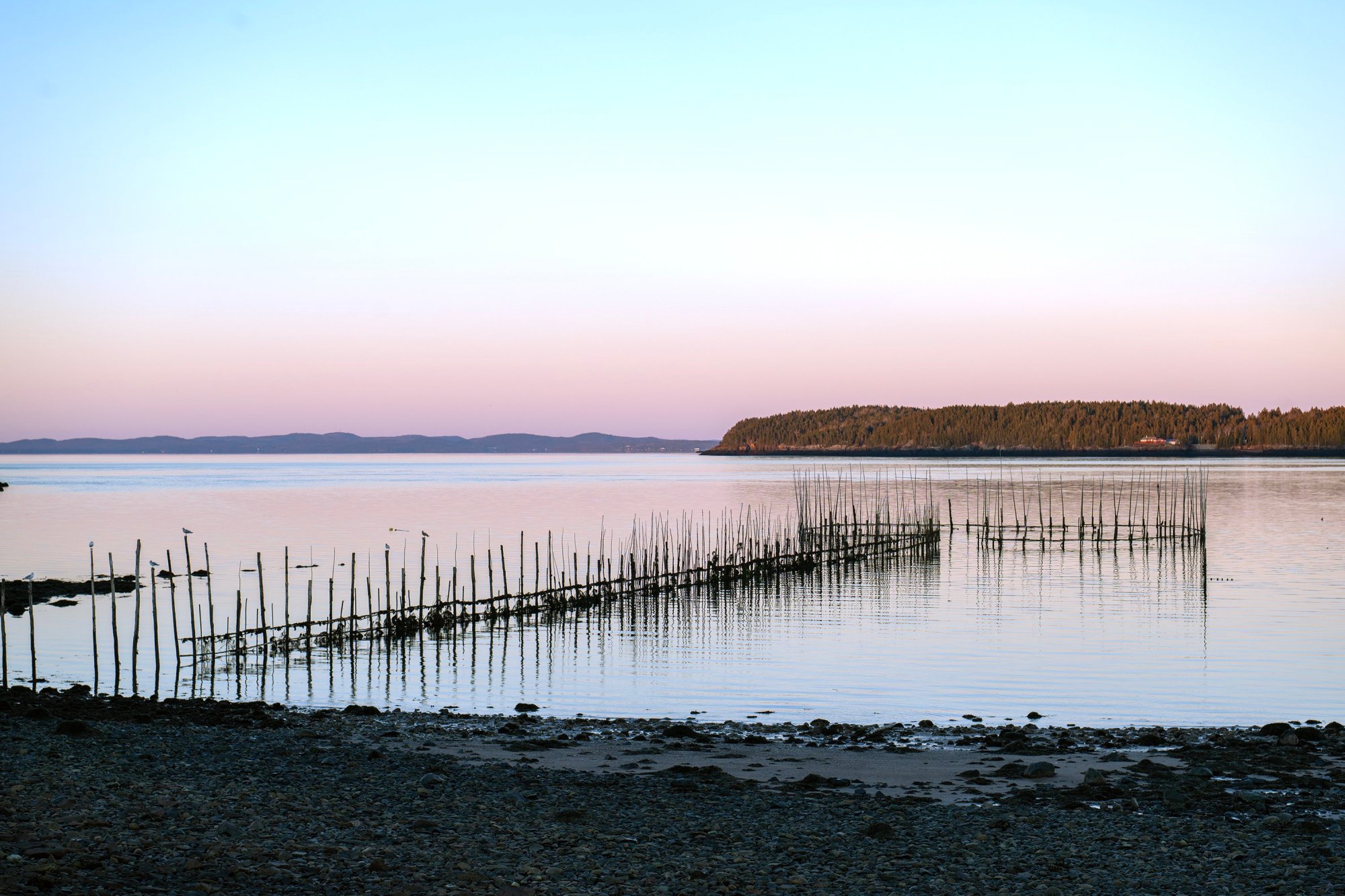


North of Eastport, ocean waters surge in from the Bay of Fundy and through the Western Passage at speeds topping three knots — a sprint for a tidal current, some three times faster than those in the Portland Harbor.
Six hours later, the tide flushes back out, often draining over 20 feet of water.
“There is a tremendous amount of energy that the good Lord provides every day through our lunar tides,” said Chris Gardner, director of the Eastport Port Authority. “So it is not unreasonable for people to be thinking tidal power in Eastport, Maine.”
Louis Wolfson is one of those people.
The Needham, Massachusetts-based realtor is trying to orchestrate the development of an underwater artificial intelligence data center — all powered by the energy of the tides and cooled by the surrounding seawater.
Both elements of the project, if realized, are poised to be among the first of their kind. Taken together, they represent a new approach to powering the AI tech boom.
With construction still a distant dream, it’s not the imminence of Wolfson’s project that makes it noteworthy, so much as its ambition: the future it proposes and the communities it might threaten in doing so.
His plans read as though they’re drawn from a work of science fiction: infrastructure mounted on 27 acres of seabed, with 170 marine hydrokinetic turbines hooked up to modular, air-tight computing pods via standardized docking cradles. Those cradles would be universal in their size and shape, meaning third-party turbines could be attached with relative ease — slipping in like plugs into an electrical wall socket.
The way Wolfson sees it, his project harnesses the cool temperatures and immense energy of the Atlantic to address two of the biggest challenges with data centers — their electricity consumption and cooling needs.
He filed a preliminary permit application last month to the Federal Energy Regulatory Commission requesting approval to study the 400-acre site over a period of four years. The filing quickly garnered attention from neighboring residents as well as the local press.
By any measure, Wolfson is still years from submarine construction, with numerous bureaucratic and logistical hurdles still to clear.
Some in the Passamaquoddy community at Sipayik, which lies just over two miles to the west as the gull flies from the project site, have their doubts. The devastating ecological legacy of a previous attempt at tidal power still lingers out their back door.
The new project could threaten tribal fishing access — Passamaquoddy culture — and bring about significant economic consequences for the local community.
A MOONSHOT
The project, formally proposed by a company called DeepGreen Western Passage SPV, LLC, is the brainchild of Wolfson alone. He said the ambitious proposal is his first venture into the realms of power generation and computing.
He’s seemingly shooting for the moon. Where he’ll land is unclear.
Microsoft first began piloting underwater data centers more than a decade ago, dubbing the experiment “Project Natick.” In 2018, researchers dropped an early model into the water off Scotland’s coast, pulling it back up two years later, according to the company. They claimed that the servers onboard showed a much lower failure rate than those in the control group on land.
But the company has not announced any follow-up plans for similar projects, and an executive in 2024 told the industry outlet Data Center Dynamics that it was not building any more subsea centers.
A realtor, appraiser and developer, Wolfson likened his Maine project to real estate development.
“We’re taking land, and we’re going to solve problems with that land and bring the best tenants into that project,” Wolfson said in a phone interview this month.
Unencumbered by specifics, he figures himself a sort of visionary capable of adapting on the fly and of enlisting experts — people with deep knowledge of computing and electrical engineering — who can bring his plans to fruition.
His application is conspicuously absent of certain details, including the exact design of the turbines, the computing equipment they would power and the companies Wolfson plans to use in his seabed surveys. He said many of those details are still subject to change.
Dimitrios Nikolopoulos, an engineering professor at Virginia Tech who researches artificial intelligence and high-performance computing systems, called DeepGreen’s proposal “fascinating as a concept” but said he was unsure of its feasibility. He’s never heard of a project this large being tried anywhere.
Nikolopoulos pointed to the undulating, rhythmic nature of tidal power as another potential challenge.
“With any environment like this, your power fluctuates,” he said, drawing the shape of a wave with his hand on a recent video call. “Even if you can get this 51 MW out of the tide somehow, it will not be 51 all the time.”
DeepGreen’s application does not explicitly mention batteries, but Wolfson said he plans to “use short-term storage” to bridge the periods of reduced tidal motion.
The subsea location could pose another problem: How would anyone perform upkeep on the underwater hardware?
Wolfson said the data center’s modular, plug-and-play design would ease maintenance.
“If a server pod needs work, we use a robotic vehicle to just unplug that specific pod and bring it to the surface,” he said in an email Tuesday. “We swap in a fresh one, and the whole process only takes a few hours.”
The project’s success would hinge on the quality of Wolfson’s still-undetermined technology partners, according to Nilanjan Chaudhuri, a professor at Pennsylvania State University who studies AI and power systems.
“The key question would be, ‘How much experience do these guys have?’” he said. “That is, I think, a crucial thing for a project like this. It is not a turnkey project.”
And finally, there’s the cost.
Wolfson’s company has unspecified cash reserves, which he plans to put toward the project. But he needs $9 million for an initial study alone. Construction could cost some $415 million, he estimates.
He is seeking private equity investment, but said he has yet to ink any contracts with investors.
‘EASTPORT LORE’
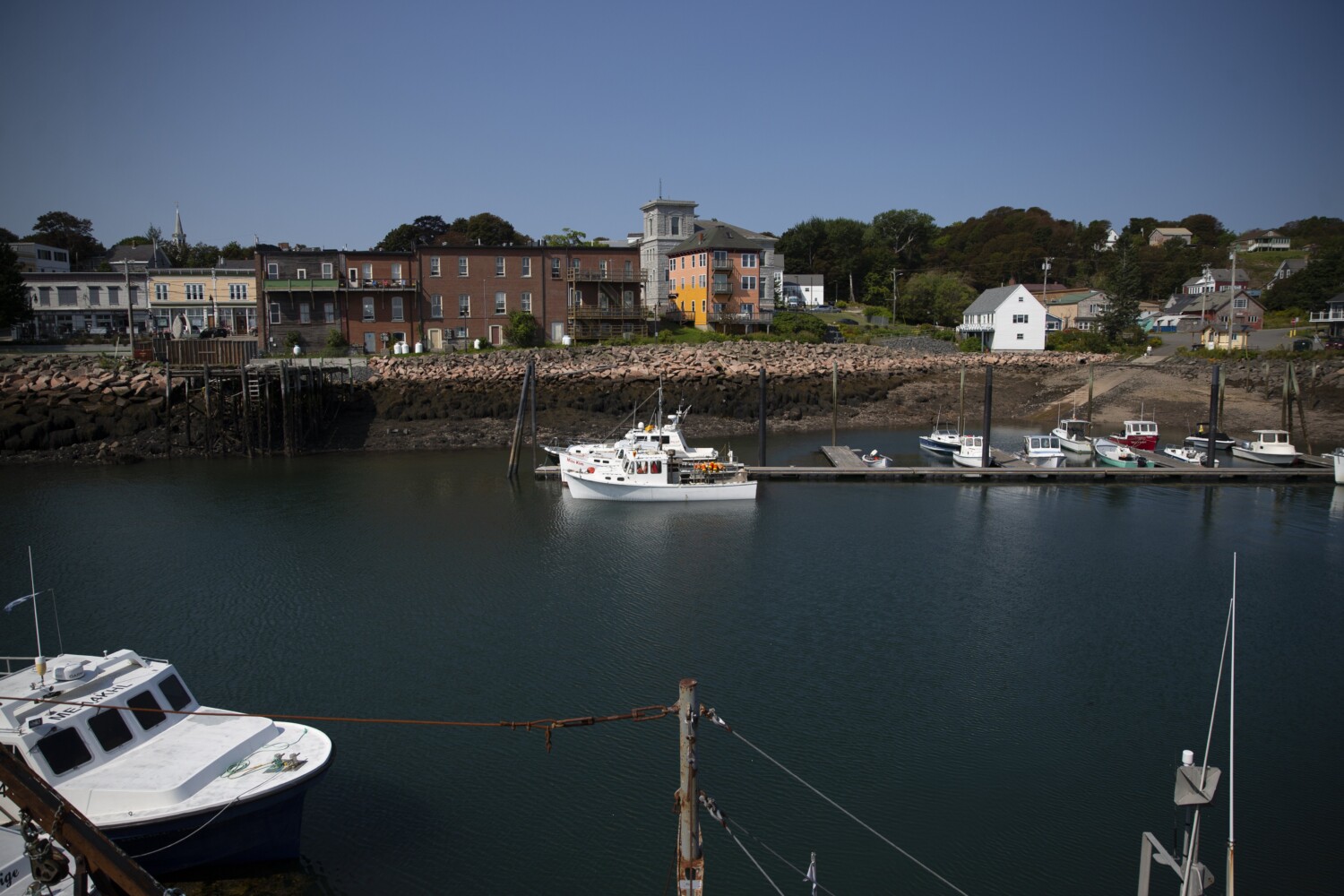
Western Passage is a narrow channel flanked by a string of islands along Maine’s eastern shoulder. On the northeast side is Canada; the southwest, American soil and the Passamaquoddy Reservation.
Wolfson’s project would sit nestled in Johnson Cove off the coast of Moose Island, just north of Eastport. It’s out of the shipping lanes, but is likely to stoke the ire of fisherman, predicted Gardner, the port authority director.
“As somebody who has to work with the fishing industry on a daily basis, we know that they’re going to have some concerns,” he said.
The area has been targeted for tidal power before.
Nearly a century ago, President Franklin Roosevelt sank $7 million — about $144 million in today’s dollars — into a project intended to extract electricity from the region’s mighty tides. Congress eventually pulled the plug, but an earthen dam remains, atop which a causeway now connects Eastport to the mainland.
“It’s just a thing that just will not leave Eastport lore,” Gardner said.
The causeway isolated Half Moon Cove from Passamaquoddy Bay, leaving it full of silt and bereft of sea life. As a result, many Passamaquoddy people are naturally wary of tidal power projects.
“That was devastating to tribal culture,” said Fred Moore, fisheries coordinator and former chief of the Passamaquoddy Tribe at Sipayik.
Wolfson said he has no interest in pursuing the plan if it meets serious resistance. And there are reasons to think his project could coexist with the nearby tribe. In 2023 ORPC — a Portland-based renewable energy company — received a permit for a since-stalled smaller tidal electricity generator in the channel. The tribe supported that plan, the application indicated.
Wolfson has approached the tribal government, which has not formally taken a stance on the project. Both parties are doing their due diligence, he said.
But tribal concerns about the project might transcend the logistics.
Some officials say Wolfson’s plan could threaten historic tribal fisheries and the natural environment while providing little benefit to the tribe.
“We have an entire culture that has evolved over a millennium through our access to the marine environment,” Moore said. “And that’s a spiritual relationship to the environment, and cultural in terms of subsistence.”
The Passamaquoddy Tribe never ceded its right to fish waters in the region, Moore said. Officials take seriously a responsibility to steward that access for future generations.
Both inside the borders of the reservation and beyond, the aura of artificial intelligence is itself distasteful to some. To some tribal members, the benefits could be sparse while the costs are evident.
“It goes against our cultural beliefs,” said Aaron Dana, the tribal representative to the Maine Legislature who had spoken to the chiefs of both Passamaquoddy communities.
WHAT COMES NEXT?
DeepGreen’s application is currently under initial review by FERC staff to determine whether the application includes all of the details required by federal regulation. If it passes that first review, staff will issue a public notice, soliciting feedback from project stakeholders and potential competitors for 60 days.
With a preliminary permit, DeepGreen would have the right to study the project site, and would be given priority if other firms file applications to use the same site. DeepGreen would need to submit progress reports every six months, according to FERC.
At this stage, DeepGreen only needs approval from the federal government. Any future design or construction would require permits from the state.
At that point, the project could face a different regulatory and funding landscape from what exists today.
State lawmakers are weighing a bill that would temporarily bar state and local agencies from issuing new permits for data center projects, giving a new Data Center Coordination Council time to review the landscape and draft policy recommendations. Meanwhile, some investors and analysts warn that funding for new AI projects, including data centers, could dry up down the line.
But Wolfson said he is ready to adapt to those changes, as long as the community will work with him.
“I’m very confident in what we’re attempting to do,” Wolfson said. “Their concerns, we listen to — and then we hopefully can address their concerns. If we can’t, we’re not going to be able to do it anyway. It’s that simple. I’m not here to fight.”


We invite you to add your comments. We encourage a thoughtful exchange of ideas and information on this website. By joining the conversation, you are agreeing to our commenting policy and terms of use. More information is found on our FAQs. You can update your screen name on the member's center.
Comments are managed by our staff during regular business hours Monday through Friday as well as limited hours on Saturday and Sunday. Comments held for moderation outside of those hours may take longer to approve.
Join the Conversation
Please sign into your CentralMaine.com account to participate in conversations below. If you do not have an account, you can register or subscribe. Questions? Please see our FAQs.