

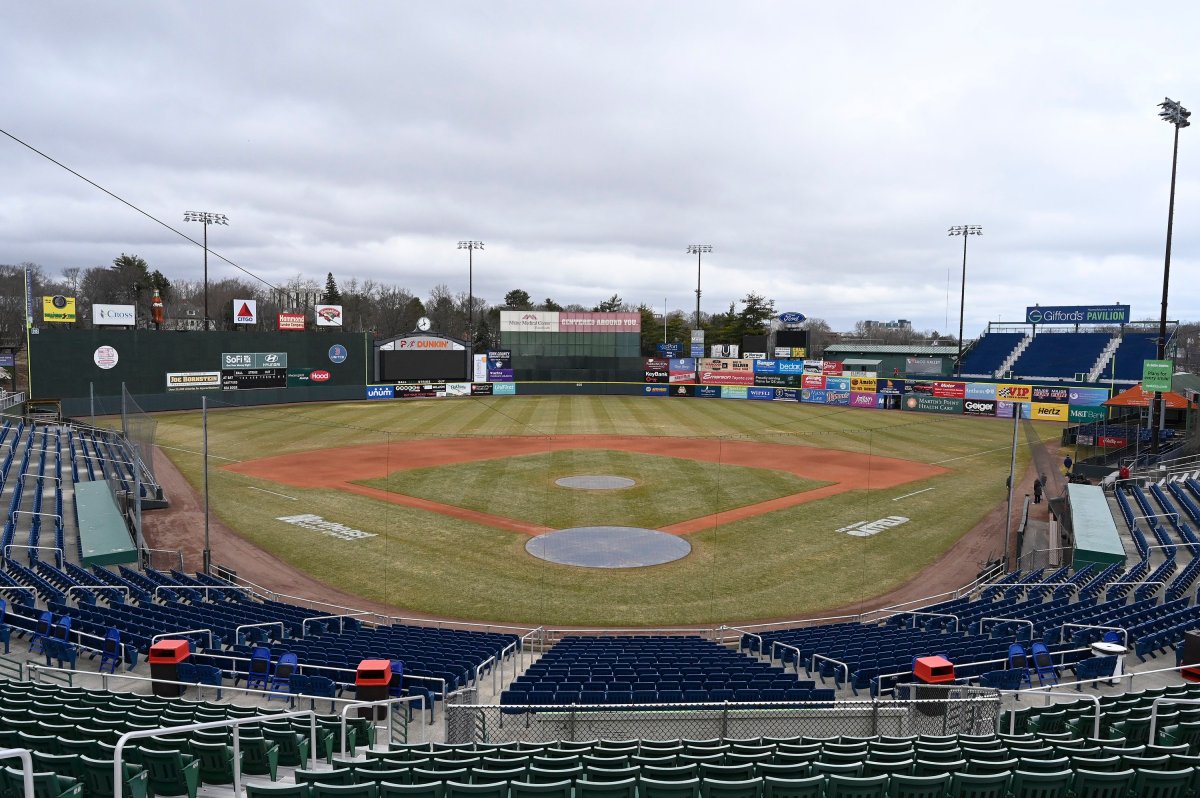
Democratic lawmakers are trying to reassure local businesses, including two minor league sports franchises, that a proposed data privacy bill would not limit businesses’ ability to provide targeted advertising to online customers.
Leaders of the Maine Mariners and Portland Sea Dogs expressed concerns in a Press Herald op-ed this month that if a new Democrat-led proposal were to become law, they would no longer be able advertise to people searching online for related products or services. For example, the Portland minor league baseball team worries it wouldn’t be able to target shoppers looking for Boston Red Sox tickets.
But proponents of the legislation argue that type of targeted advertising would still be allowed, since it’s based on an active internet search. Not allowed: advertising based on a collection of sensitive personal information mined and sold by data brokers — often without the user’s knowledge.
Maine is considering joining 20 other states with data privacy rules. Lawmakers have passed competing versions of a bill with strict “data minimization” standards, allowing companies to collect and use only the information necessary to provide a good or service.
The controversial proposal, LD 1822, would prohibit companies from collecting an individual’s biometric information, such as fingerprints, unless necessary. And it would ban targeted advertising to minors and the sale of their information.
The measure comes amid increased scrutiny of how businesses are using consumer data to feed artificial intelligence models and products.
The future of the bill, which is opposed by the Maine Chamber of Commerce, is in doubt. The House version initially passed with a three-vote margin, but the Senate passed a different version, exempting political groups, by a two-vote margin. Gov. Janet Mills signaled she may not support the measure, and urged lawmakers to compromise.
Bill sponsor Rep. Amy Kuhn, D-Falmouth, said in an interview that she is optimistic that lawmakers will find common ground. She said the House version already has exemptions for political activity, since that activity is protected by the First Amendment.
“The Legislature has been working on data privacy for six-plus years now,” Kuhn said. “We are experiencing a real urgency around the adoption of these AI tools that are dependent on using people’s data in ways that they have never imagined.”
Leaders of the Maine Mariners and Portland Sea Dogs outlined their concerns in an op-ed this month. Without large TV contracts or media deals, the teams must rely on ticket sales and fan engagement to survive.
They worry that the bill would limit their ability to target local sports fans.
“One important way we do that is through simple online advertising,” they wrote. “This happens when someone sees an ad based on things they search for or watch online. … This is a cheap and effective way for us to get fans into our seats and it helps keep minor league sports alive in Maine.”
Caitriona Fitzgerald, the deputy director of the Electronic Privacy Information Center, which tracks and works on digital privacy nationwide, said in an interview that type of advertising would still be allowed under Maine’s bill.
The advertising described by the sports teams doesn’t rely on any sensitive personal information collected by third-party trackers through unrelated searches, apps or online activity, she noted.
“When you search for Red Sox tickets and you see an ad for the Sea Dogs, the ad tech company doesn’t need to know anything about you to show you that ad,” she said. “It knows what you’re looking at, at that moment. It doesn’t know that you also have a heart condition and like to gamble.”
Kuhn and Sen. Anne Carney, D-Cape Elizabeth, made a similar argument in a March 19 letter to the minor league franchises.
“The examples in your op-ed are exactly the type of targeted advertising that LD 1822 aims to promote,” the lawmakers wrote. “These types of ads, known as ‘contextual ads,’ do not violate a consumer’s privacy because they are not targeted at a user based on who they are, but rather because of the content of the page(s) they look at.”
But Adam Goldberg, CEO of the Mariners hockey team, said the letter from Maine Democrats did little to allay his concerns.
He said the Senate’s decision to exempt politicians was akin to “an admission of guilt.”
“That tells me that they know the ramifications of this bill, and they don’t want to participate in those rules, which to me is so hypocritical ” Goldberg said. “That even caused more concern.”
Both opponents of the new measure and proponents are pointing to a similar law in Maryland as a case study. While some have argued that businesses are easily complying, the Maryland Chamber of Commerce argued otherwise to Maine lawmakers in a letter sent after the House version passed.
Maryland Chamber President and CEO Mary Kane wrote to Kuhn and Sen. Anne Carney, D-Cape Elizabeth, on Feb. 27, saying businesses were struggling to comply and lawmakers in that state were considering changes.
Kane said a letter from one local affiliate to Maine lawmakers created “a false impression that the law had not had a negative effect on businesses” and she wanted to “correct the record.”
“We consistently hear from our members about cost of compliance, unresolved issues with data minimization … and inconsistent definitions throughout the law that create challenges with compliance and enforcement,” Kane wrote.
Fitzgerald, the data privacy expert, said that other states with weaker laws are considering the stricter rules in Maine’s bill that limit a company’s ability to create detailed profiles of users.
“This is the way things are moving, and Maine has long been a leader in protecting privacy,” Fitzgerald said.
The bill is currently pending in the House. It’s unclear when it will be taken up again.

We invite you to add your comments. We encourage a thoughtful exchange of ideas and information on this website. By joining the conversation, you are agreeing to our commenting policy and terms of use. More information is found on our FAQs. You can update your screen name on the member's center.
Comments are managed by our staff during regular business hours Monday through Friday as well as limited hours on Saturday and Sunday. Comments held for moderation outside of those hours may take longer to approve.
Join the Conversation
Please sign into your CentralMaine.com account to participate in conversations below. If you do not have an account, you can register or subscribe. Questions? Please see our FAQs.