

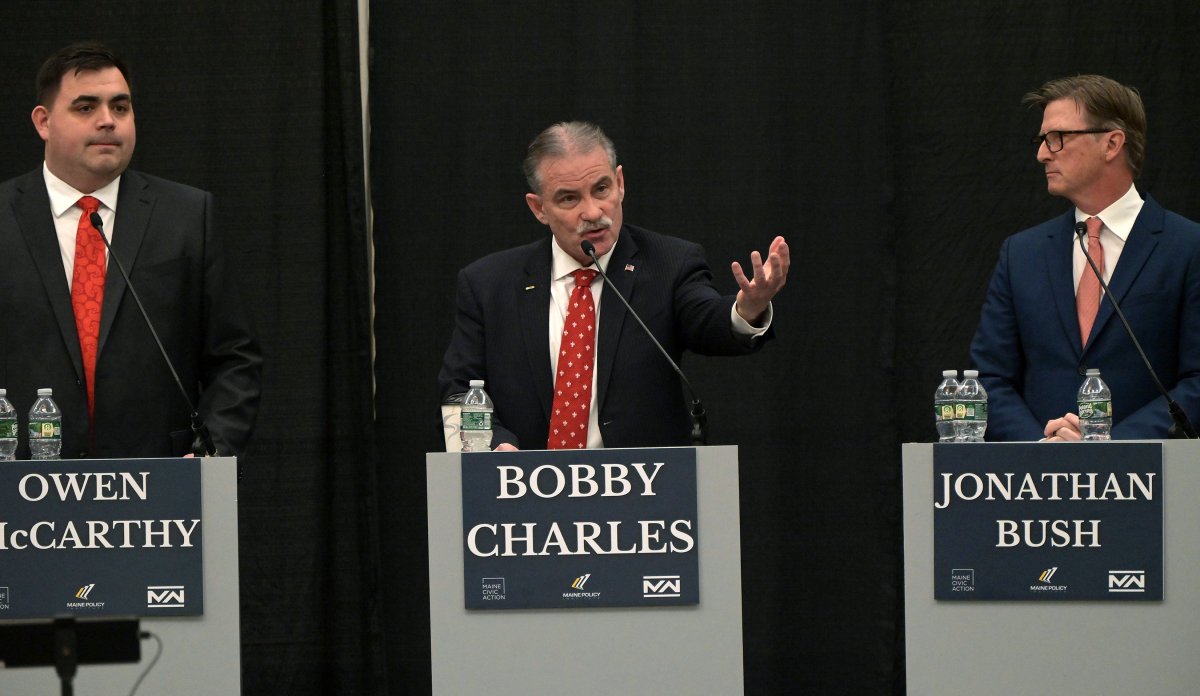
BANGOR — They didn’t give out a sword after all.
After teasing that the “winning candidate” of its Republican gubernatorial would be awarded the “Sword of Truth,” the conservative Maine Policy Institute didn’t deliver. But the event did deliver a lively discussion on fraud, organized crime, education and the state budget.
The debate, hosted by the institute and Maine Wire at the Cross Insurance Center, marked the first gathering of all the candidates who qualified for the primary ballot.
The eight are vying for the Republican nomination in the June 9 primary, the winner of which will seek to succeed Democratic Gov. Janet Mills, who is term-limited and running for U.S. Senate, in the November election.
The candidates are: Jonathan Bush, a businessman and cousin of former President George W. Bush; Bobby Charles, a former U.S. assistant secretary of state; David Jones, a real estate broker; Jim Libby, a state senator and Thomas College professor; Garrett Mason, former Maine Senate majority leader; Owen McCarthy, a medical technology entrepreneur; Ben Midgley, a former fitness franchise executive; and Robert Wessels, a retail manager from the town of Paris.
Here are a few takeaways.
CANDIDATES HAVE DIFFERENT EXPERIENCES, BUT AGREE ON IDEAS
At the end of Tuesday’s debate, Mason summed up the evening saying he liked almost every idea that was presented and noted that there wasn’t a lot of disagreement on the issues. But he tried to stand out by arguing that his legislative experience would set him apart.
On a question about the state budget, Mason said he was one of the few candidates who already understands the process of putting together a budget. “With me you have someone who has been there, done that and can build a budget while running a campaign,” he said.
Other candidates framed themselves as outsiders, arguing that their fresh perspectives are what’s needed most. Fielding a question about how he’s never held elected office, Midgley argued that he has other relevant experience from the corporate world.
“When you’re from outside the political world, you don’t look so much at the process as at the problem,” he said. “And you go to fix the problem.”
FRAUD, CRIME ARE IMPORTANT ISSUES
The first questions the candidates got were focused on fraud and eliminating organized crime — and every candidate agreed they are major issues. State officials are currently grappling with fraud allegations against a MaineCare provider, and the Trump administration has also been leading efforts to crack down on Medicaid fraud in Maine and other states.
On the question about fraud, Mason talked about efforts to tighten eligibility and put caps on benefits while he was in the Legislature, while Bush talked about getting government out of health care delivery and Charles cited his work as a former federal investigator. He suggested budget reforms and hiring more state investigators.
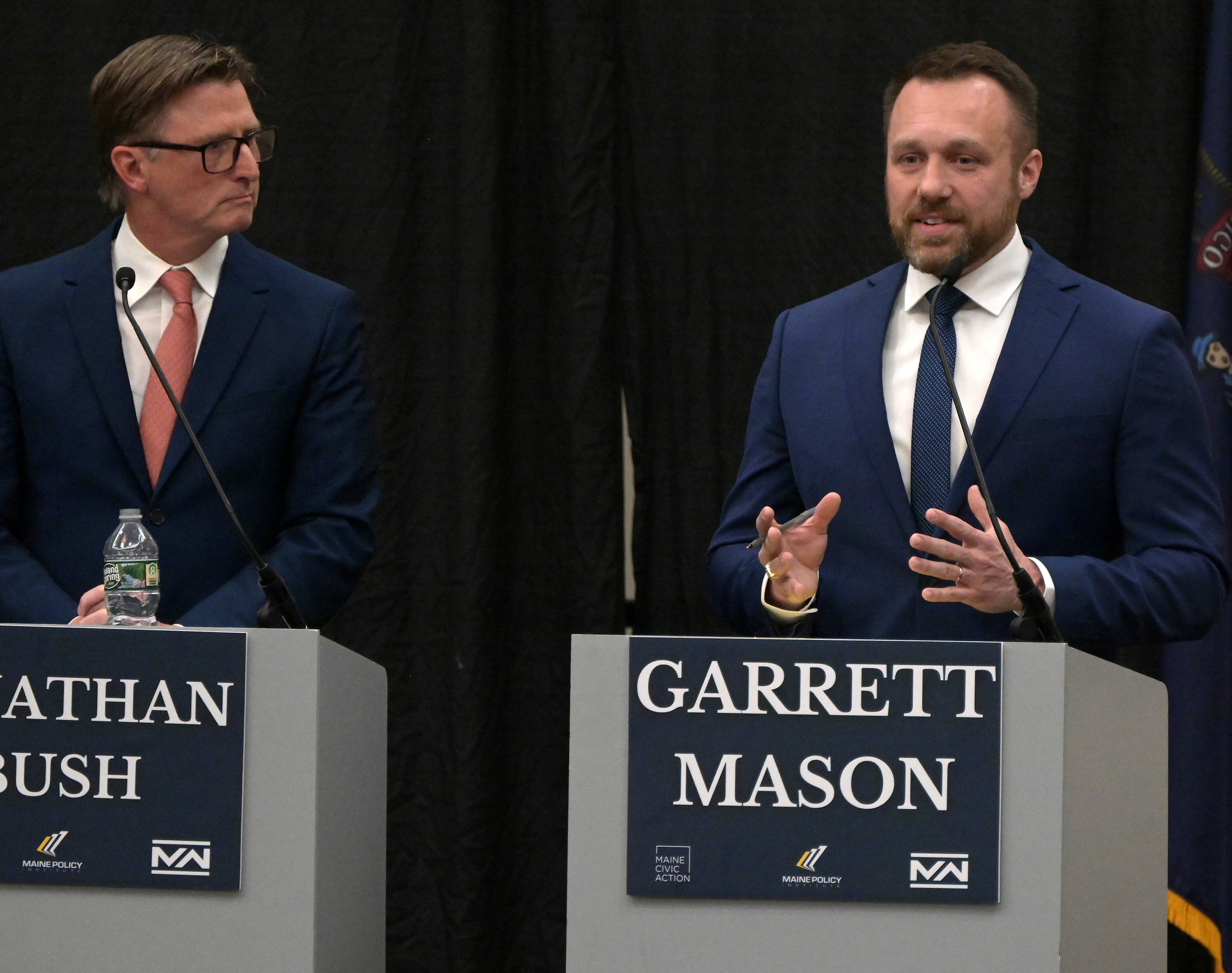
McCarthy called for “auditing absolutely everything” and said artificial intelligence could be used to expose fraud. Jones called for accountability over funding that was raised for victims of the 2023 Lewiston mass shooting, while Midgley said he would implement a system for flagging reports that are missing information in the Department of Health and Human Services.
Libby said there are existing measures like the attorney general’s office and legislative committees that could be used to address fraud, but they need to be more aggressive. Wessels said there needs to be a temporary state equivalent to the former federal Department of Government Efficiency championed by billionaire Elon Musk, and it needs to be led by “constitutionally minded business people” to go after fraud and regulations that need changing.
IS THERE A FRONT-RUNNER?
Tuesday’s debate was mostly cordial between the candidates, though Jones used his entire closing statement to call out Charles, whom he criticized for missing previous debates and accused of making unrealistic promises about cutting the state budget.
Charles has led recent polling in the race, with one survey released this month showing him to have 26% support among likely primary voters, the most of any of the candidates.
Jones also criticized Charles for “dropping into the state in 2022,” since Charles spent most of his career in Washington, D.C., even though he largely grew up in Maine. Jones’ attacks drew booing from the live audience, and some people stood and turned their backs to the debate stage.
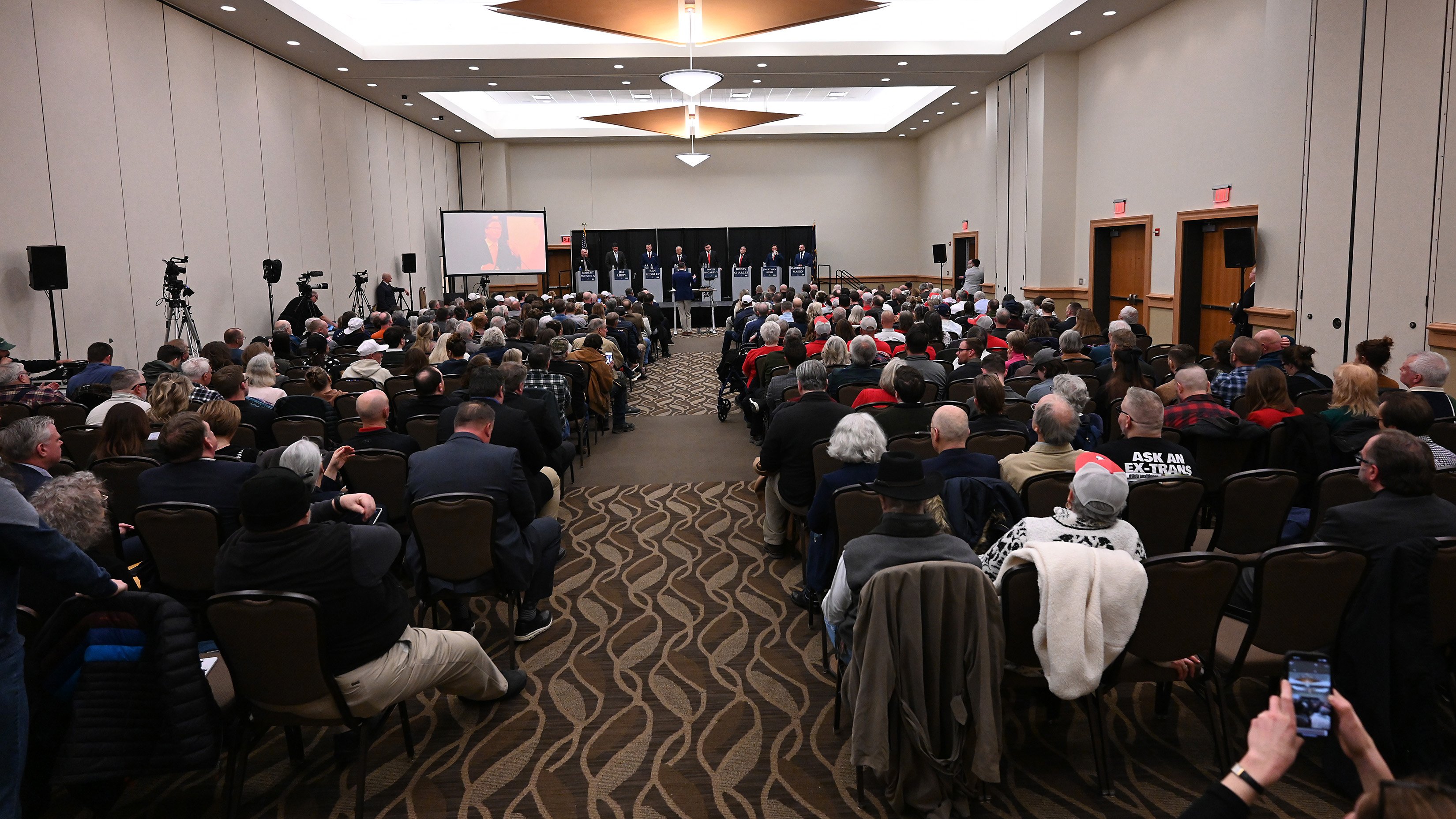
“So this is what it looks like to be the front-runner,” Charles said in response.
“The bottom line is my values are defined by the state I grew up in,” he said. “And I grew up right here in rural Maine. I did leave, but I came back like so many of our Maine kids.”
MANY GOP VOTERS ARE UNDECIDED
It was clear talking to voters Tuesday night that many haven’t decided yet whom they’ll support.
Adam Kasprzak, of Newport, is leaning toward supporting Charles because he’s seen ads for him and likes that he has pledged to do away with the state income tax. “That’s kind of big to me,” said Kasprzak, 66.
But Kasprzak, speaking before the debate, said his front-runner could change. “This (debate) is going to make a difference in terms of who is most well-spoken,” he said.
Melissa Strang recently moved back to Maine from Nashville, Tennessee, and is looking for a candidate who can reduce taxes and lower the cost of living. “I’m looking for someone who’s going to step up and make Maine the way it was when I was growing up,” said Strang, 45.
Strang was undecided going into the debate. “Ultimately I’m looking for someone who has a plan that makes sense and isn’t just giving political rhetoric,” she said.

We invite you to add your comments. We encourage a thoughtful exchange of ideas and information on this website. By joining the conversation, you are agreeing to our commenting policy and terms of use. More information is found on our FAQs. You can update your screen name on the member's center.
Comments are managed by our staff during regular business hours Monday through Friday as well as limited hours on Saturday and Sunday. Comments held for moderation outside of those hours may take longer to approve.
Join the Conversation
Please sign into your CentralMaine.com account to participate in conversations below. If you do not have an account, you can register or subscribe. Questions? Please see our FAQs.