

GORHAM — Everyone seemed to know their places.
More than a dozen shoppers stood shoulder to shoulder, toeing a painted white line on the concrete floor. Hands on hips or clasped behind their backs, they surveyed the offerings, picking their targets and planning their routes. A bin of secondhand treasures shimmered a few feet away.
In an instant, the crowd broke its stillness, replacing the pensive silence with a rush of thudding footsteps, jingling jewelry and crinkling bags.
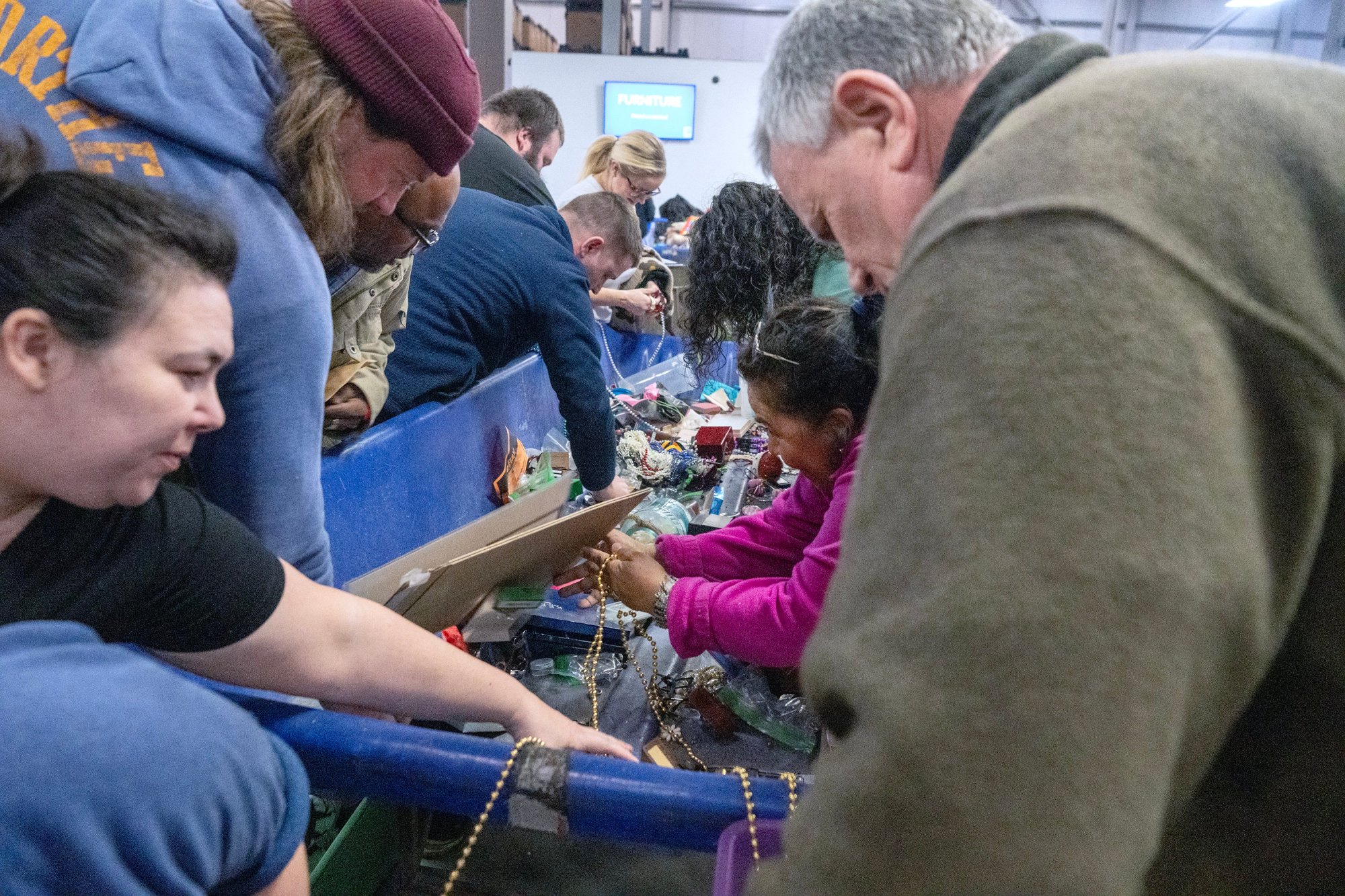
They rummaged through a pile of jewelry boxes, loose earrings, eyeglasses and chains of unknown metal — holding onto as much as they could. Almost no one spoke.
It was over in about 90 seconds. The bin sat like a carcass picked clean by birds.
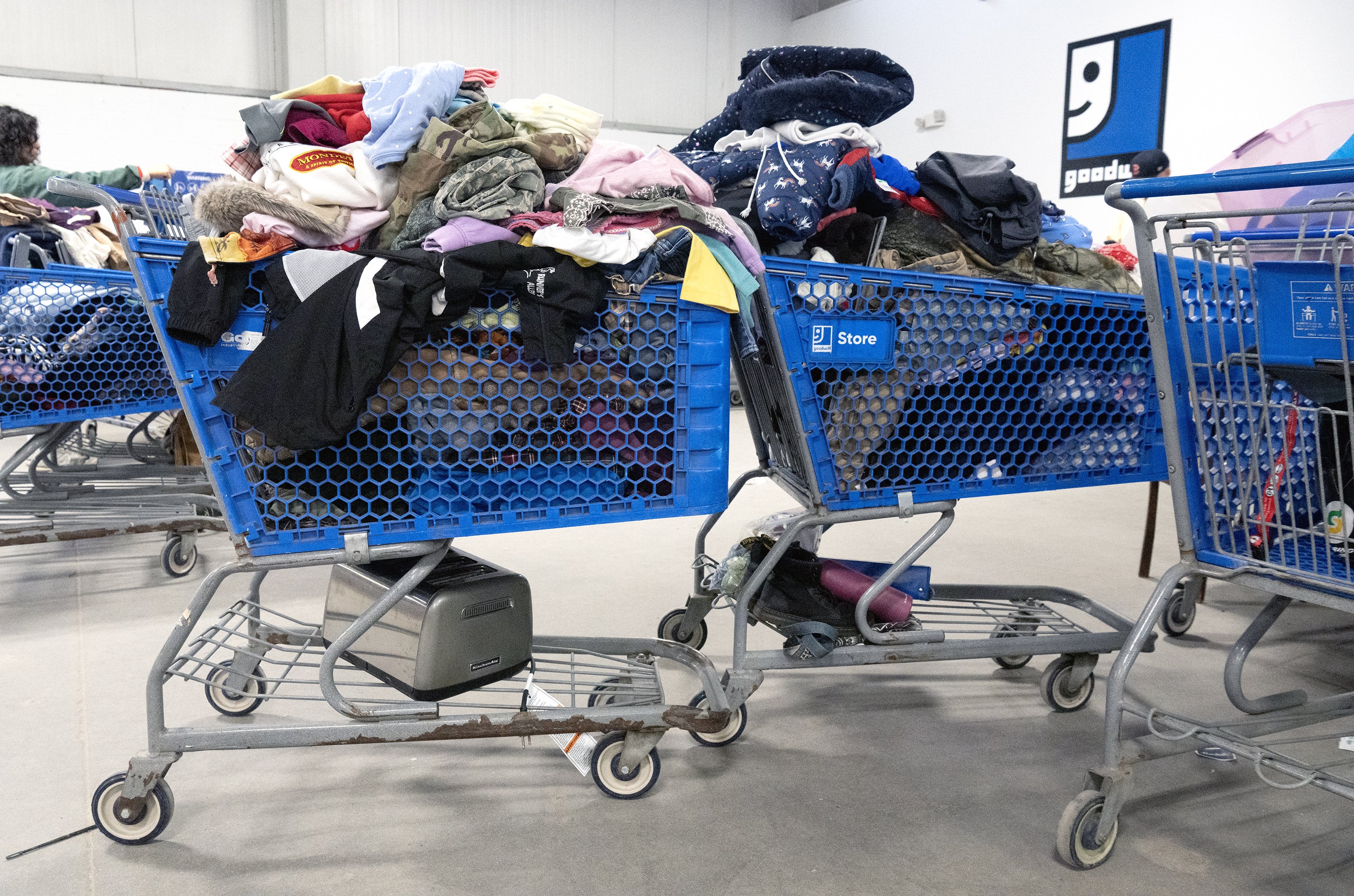
The scene plays out several times an hour at the Goodwill Outlet in Gorham, where the wares sit not on shelves but in loosely organized carts of everything from textiles to electronics to glassware. Prices are set not by tag, but by weight.
Workers wheel out new bins every 15-30 minutes, according to Goodwill spokesperson Westleigh Morin. Viewed from above, the carts resemble pages in a ’90s “I Spy” book.
Regulars simply call it “the bins.” And they swear that with enough patience and luck, you can strike gold.
The outlet has grown in popularity since the COVID-19 pandemic, when social media influencers began to highlight vintage finds at hard-to-imagine prices.
These days, with affordability at the top of many Mainers’ minds, the place is usually bustling on any given day. On a visit last week, cars spilled from the parking lot, with shoppers forging an extra space wherever they found room.
“Everybody here is a little bit of a gambler, little bit of a pirate,” said Nate Pritchard, an Oxford resident who has been shopping the outlet for years. “You have like 30 seconds, maybe, where it’s like, anything could happen.”
LAST STOP
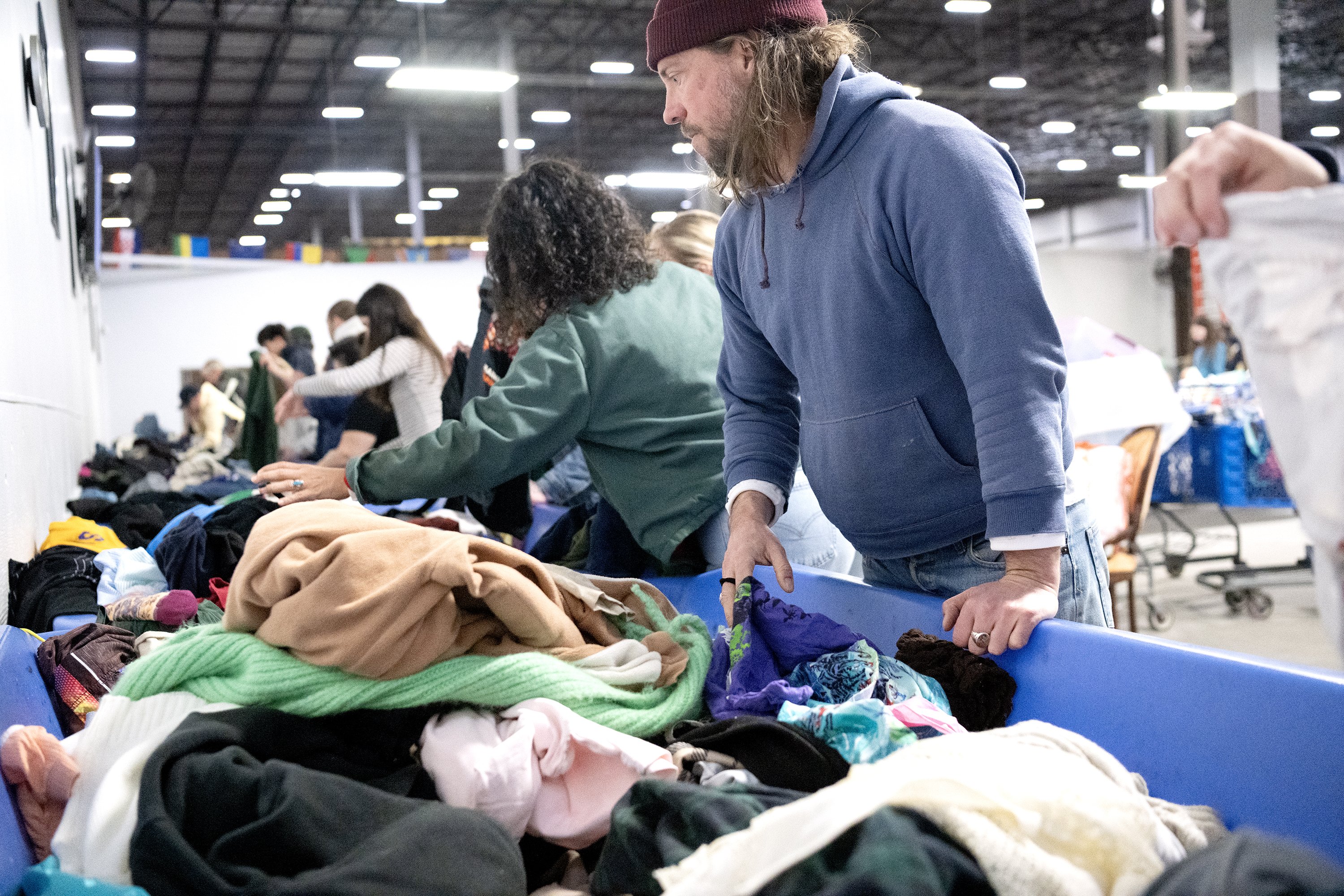
Donations usually start their Goodwill journeys on the shelves of a traditional retail store, where their prices are progressively marked down over time, said Morin. If something goes a few weeks without selling, it heads to the outlet.
“That just gives the donations a second chance to be purchased,” she said.
Goodwill Northern New England — which manages sites in Maine, New Hampshire and northern Vermont — collected more than 65 million pounds of donated goods last year, she said. But it’s not clear how much of that ended up at the Gorham outlet or ultimately went unsold.
If something makes it through the outlet without being purchased, it is sent for recycling, said Lindsay Robson, another spokesperson. She said the specific recycling process differs from item to item.
Ray Bala and his wife, Lety, make the roughly 2-hour round trip from their home near Boston to Gorham several times a week. Reaching the outlet by its 7 a.m. opening means getting up around 4 a.m., he said. On a good day, they stay until the store closes at 4 p.m. and may not get home before dark.
The couple tends to focus on kitchenware and small appliances, which they sell at flea markets across Greater Boston, he said. But they’ll take anything they think they can turn a profit on.
Bala said he closely watches gas prices and other high-level economic indicators. When consumer sentiment seems low, people are more likely to hold onto what they have instead of upgrading.
“So the donations come less,” he said. “It’s slow.”
On Thursday, as gas approached $4 per gallon on average nationally, Bala said they took the small car — prioritizing fuel efficiency over carrying capacity.
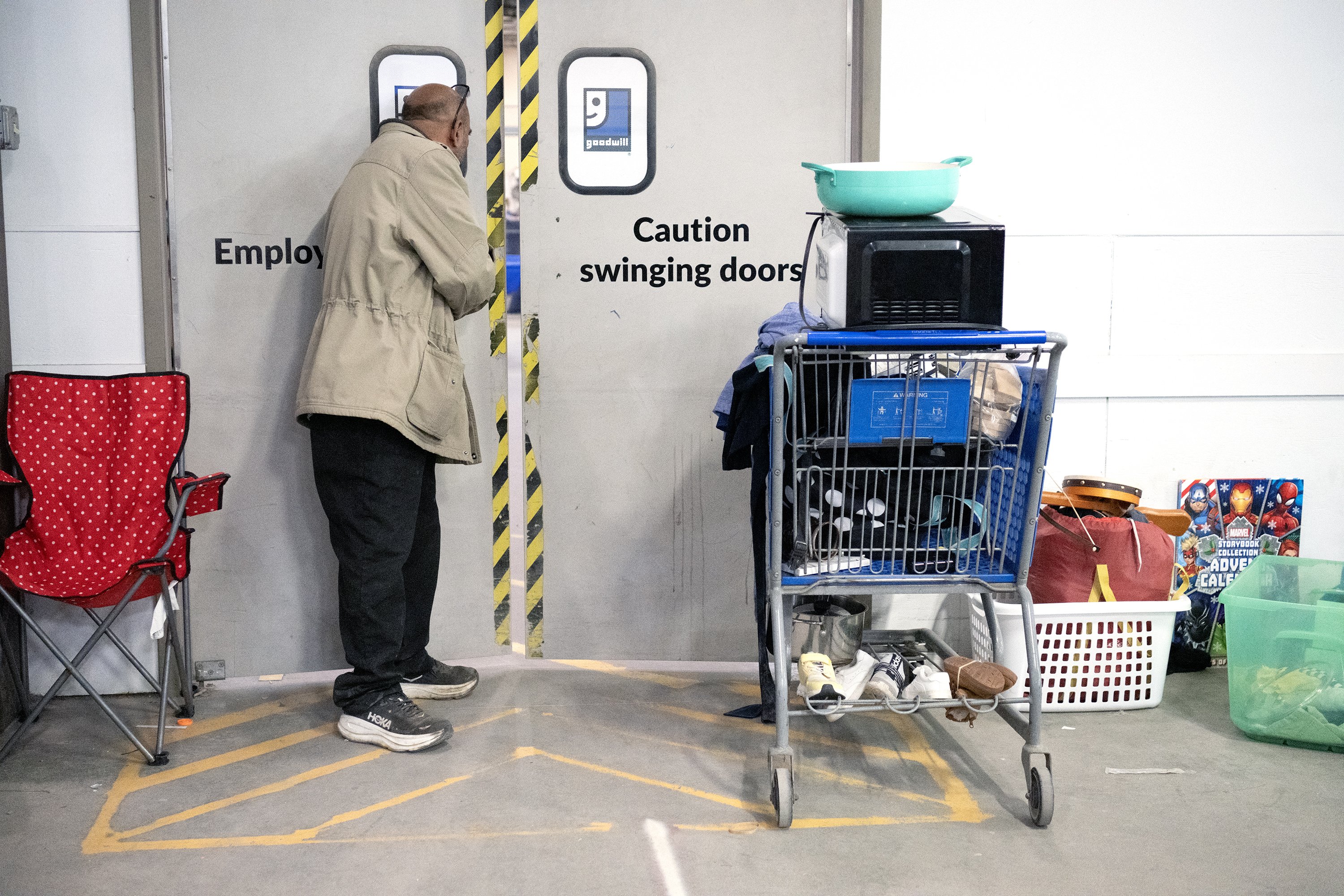
Earlier that afternoon, he fished a teal, enameled pot out of a bin in the middle of the room. Bala tossed it gently, estimating the weight. He figured he’d pay a dollar or two, lining up a healthy resale margin, depending on whether he could find a lid to match.
“With a cover, they pay me $5. With no cover, $4,” he said.
Though resellers made up a significant portion of Thursday’s attendees, several people came primarily for themselves or their loved ones.
One woman held a baby on her back as she stared into the bins. She carried away a stack of plastic beach buckets and shovels, ready to usher in a Maine summer.
A few feet away, Gorham resident Kim Hatch dug through a basket of glassware and porcelain. Hatch said she has been visiting since the outlet opened in 2012, and she’s developed an intuition for what could be worth holding onto.
As she spoke, she pulled out a small glass bottle stamped with “MINARD’S LINIMENT BOSTON” and handed it to her husband.
Old? Certainly. Valuable? She wasn’t sure.
“There aren’t any secrets. You come and hope for the best,” Hatch said. “It’s just fun.”
UNWRITTEN RULES
While the scene may look chaotic, Bala and Pritchard said regulars have a keen sense of etiquette.
Some rules are hard and fast: No pushing or roughhousing, no taking from other deal hunters’ carts or hands, and make sure to give employees time and space to lay out each new rotation of bins.
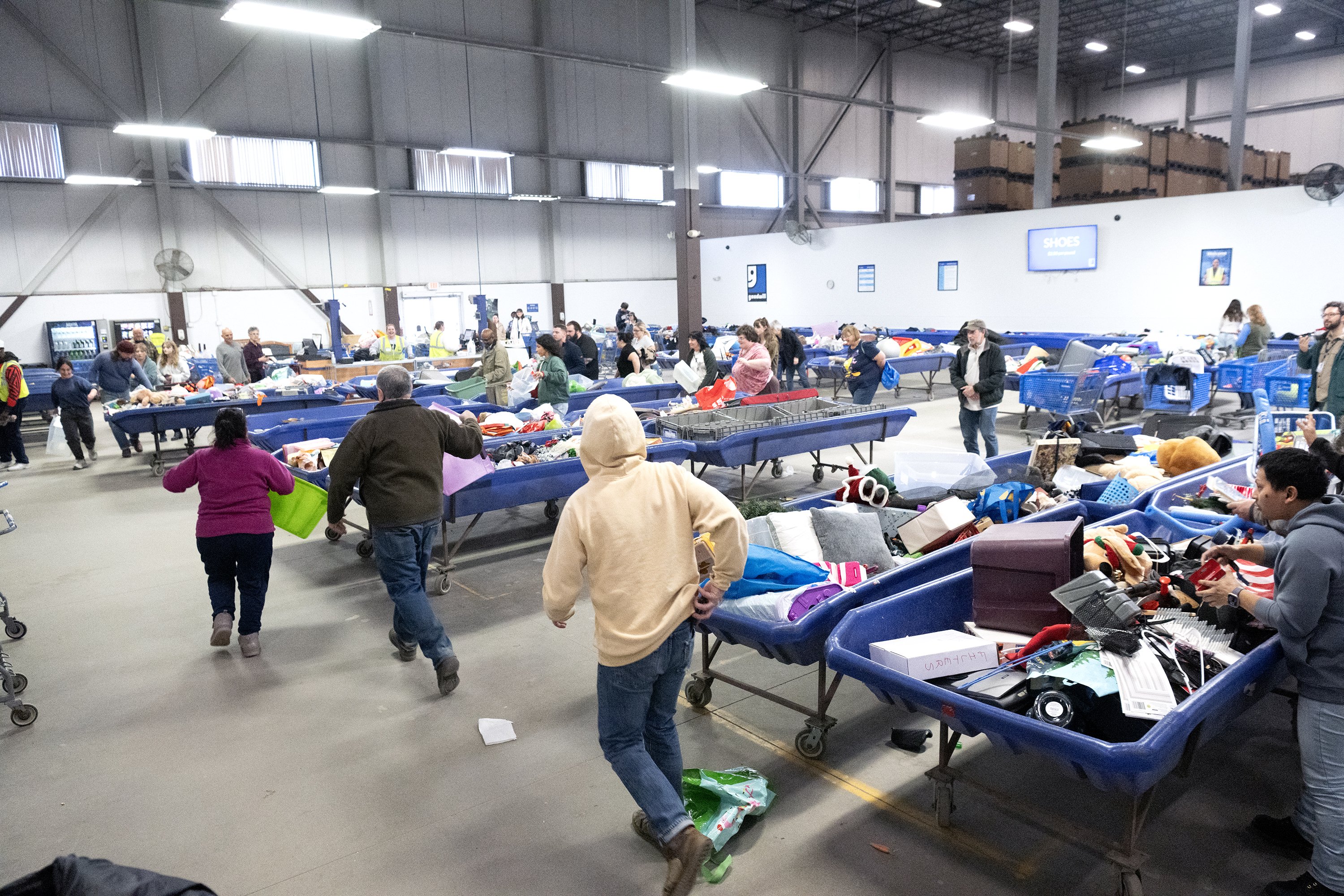
“The second the person puts the last one out, and the hands are off, they can come. … I’ll just kind of duck and cover my head,” said employee Wendi Webb, who has worked at the outlet for about three weeks. “It’s like Supermarket Sweep.”
The extreme bargain hunting of the Goodwill outlets can seem like an overwhelming ecosystem to break into. But Stephanie LaFavor said newcomers get the hang of things relatively quickly.
“Everyone kind of knows,” she said from the white line, moments before another rush, “when they put the last bin out, you just go.”
Thursday marked LaFavor’s third visit. The Vassalboro resident first came about six months ago, returning a couple weeks later, she said.
“And then I got so much stuff my husband made me take a break,” LaFavor said with a laugh.
Over time, LaFavor said she has learned to value quality over quantity, trying to grab only promising items instead of sifting through random collections after the frenzy. She has also come to notice a surprising amount of cooperation between diggers, especially among regulars with well-known niches.
“Sometimes other people will notice things and help each other out,” LaFavor said.
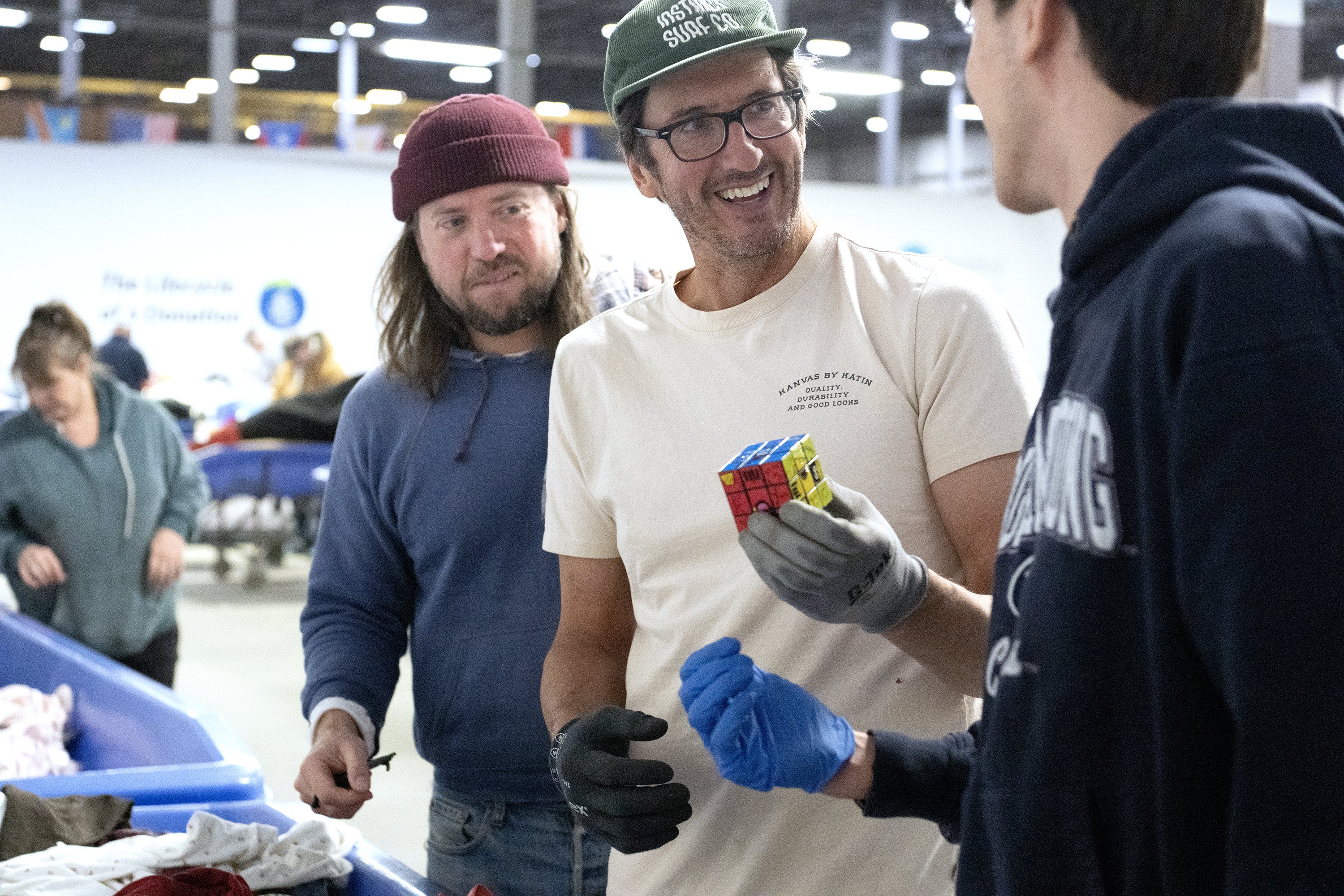
Pritchard echoed that sentiment, adding that there is a whole subeconomy of trading and gifting that takes place before checkout. Some shoppers want to keep everything they find for themselves. Others are willing to barter — under the right circumstances.
“There’s a lot of buying, and selling and trading,” he said. “People just being like, ‘This isn’t necessarily my lane. Maybe I don’t know what this is, maybe I do know what it is, but it’s not really my thing. I know it’s your thing — here.'”
Pritchard mainly focuses on vintage American workwear and military clothing. And he’s built a reputation among other regulars as someone willing to spend for pieces that he sees value in.
As Pritchard spoke from near the scales and registers Thursday afternoon, another man caught his eye from a few yards away. Without a word, the man held up a canvas duffle bag.
Pritchard shook his head. The man tossed the bag back where he found it, then he slinked to a new bin on the far side of the room.

We invite you to add your comments. We encourage a thoughtful exchange of ideas and information on this website. By joining the conversation, you are agreeing to our commenting policy and terms of use. More information is found on our FAQs. You can update your screen name on the member's center.
Comments are managed by our staff during regular business hours Monday through Friday as well as limited hours on Saturday and Sunday. Comments held for moderation outside of those hours may take longer to approve.
Join the Conversation
Please sign into your CentralMaine.com account to participate in conversations below. If you do not have an account, you can register or subscribe. Questions? Please see our FAQs.