

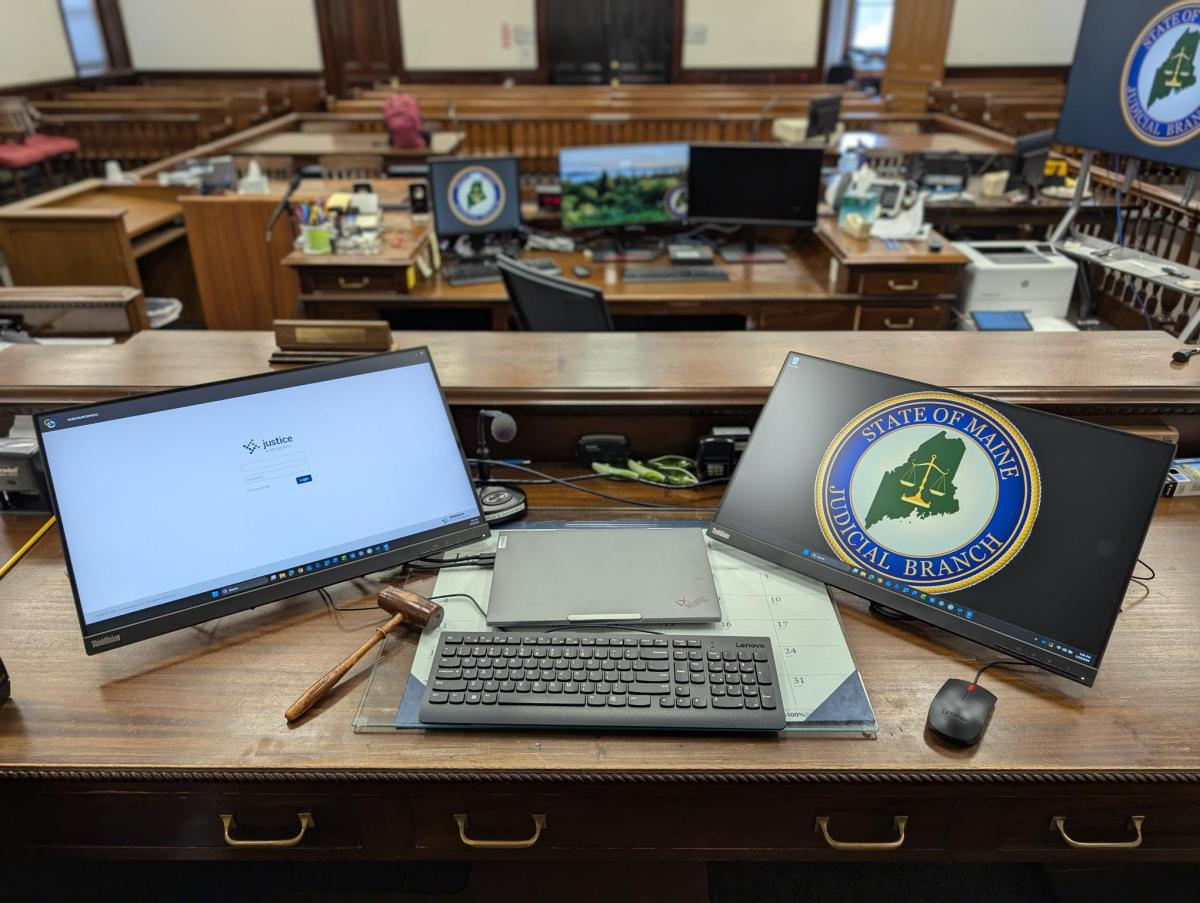
SKOWHEGAN — Maine courts’ new electronic filing system has been touted as a long-awaited effort to bring the judiciary into the 21st century.
But for staff in District Attorney Maeghan Maloney’s offices in Kennebec and Somerset counties, the effort at modernization has made more work for them.
District Attorney Neil McLean Jr., whose offices in Androscoggin, Franklin and Oxford counties were in the first court region to switch to the new system, agrees.
And county property taxpayers may ultimately have to foot the bill if the situation reaches the point of needing more staff, the two said. Court officials, meanwhile, say they are aware of the issue and hope technology may one day solve it.
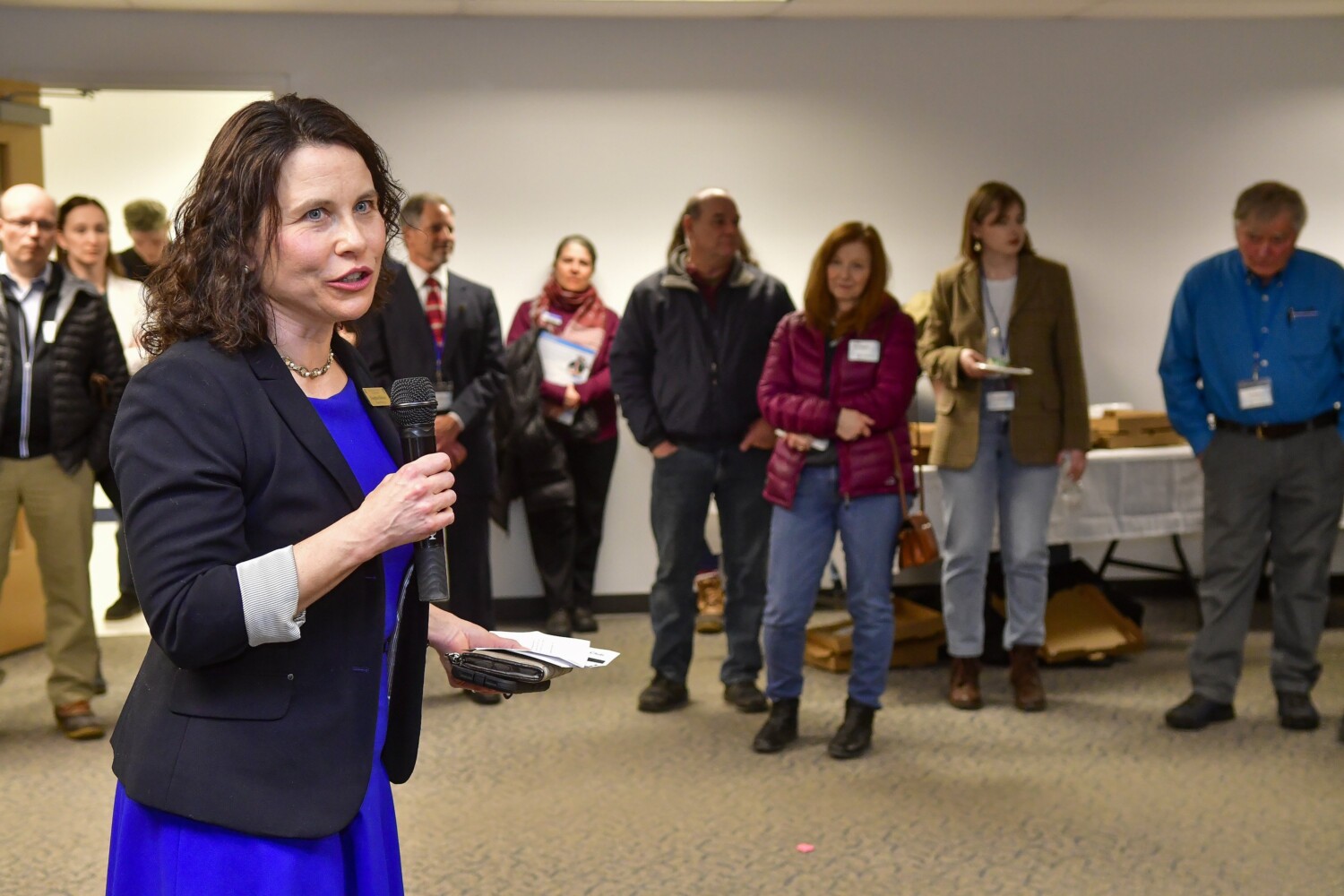
The problem, Maloney told budgetmakers in her two counties at recent meetings, is the new Tyler Technologies court e-filing software requires her staff, rather than court clerks, to manually enter numerous details. Those include everything from a defendant’s demographic information to the statute for each offense on a complaint.
For example, each criminal complaint, the initial charging document in a case, takes staff about five to 15 minutes to enter, Maloney said. If the court rejects the filing for any reason, staff have to start over.
In the past, prosecutors or legal assistants brought a stack of complaints and other filings to the courthouse, and a court clerk entered all the information into their old docketing software. That process took the district attorney’s office staff just a few minutes to file documents in dozens of cases, as the court clerks — state employees — did all the data entry.
The eight offices of district attorneys are funded by a combination of state and county dollars. The state pays prosecutors. The counties, funded largely by property taxes, pay for everything else: office space, supplies and wages and benefits for all other staff such as legal assistants, investigators and victim-witness advocates.
Courts in Kennebec and Somerset counties switched from paper files to electronic filing Feb. 2, so Maloney’s office has been using the system only for a few weeks. But she warned officials in both counties of her district that she may need to ask for more county-funded office staff if the workload continues to be a burden.
“We’re hopeful that we’re going to get over this learning curve and that we’re going to be able to do it within our existing resources,” she told the Somerset County Board of Commissioners when it met March 4.
Maloney, a Democrat, sent a similar message to the Kennebec County Budget Committee when it met Feb. 25. “It might be that next year I will have to ask (for new positions), but right now we’re trying to absorb this extra work in-house and just keep going,” she said.
McLean, a Republican, said he recognizes the change has put more pressure on understaffed offices of court clerks, too.
But McLean, whose court region started using the new software for criminal cases in mid-2025, said his offices already needed more employees before the software launch. The recent implementation has made that prospect a “real and significant concern,” he said via email Friday.
If his three counties cannot meet that need within their budgets, McLean warned of an
“even more catastrophic issue”: the heavy workload will lead staff to quit.

“I see the stress and the burden daily and worry for (my staff’s) wellbeing,” McLean wrote. “Some of it based on the additional digital entry requirements for filing, but also for the work that is needlessly created based on some of the inefficiencies of efiling notifications, communications, and the inability to interface generally with our internal system.
“This not only creates additional work, sometimes frustratingly repetitive work, but it also causes grave concerns for meeting strict deadlines and procedural obligations that can affect the posture of very serious and complex criminal matters.”
Court officials understand that district attorneys’ offices where courts have switched to the new system are taking on a larger workload because they are mandated to file electronically, Maine Judicial Branch spokesperson Barbara Cardone said in a statement.
The impacts of e-filing might be greater on prosecutors’ offices than on a typical private law firm because of the large number of criminal cases they handle, Cardone said.
“Perhaps at some future date there will be a technology tool that will assist with the workload,” Cardone said, “but for now, the district attorneys are looking for staffing solutions to help manage their efiling process.”
The Judicial Branch has long warned it, too, is understaffed. A study in 2022 found that the court system needed 54 more clerk positions across its courthouses.
Chief Justice Valerie Stanfill said in her annual State of the Judiciary address in February that the Legislature has been slowly working to address that need but indicated it is far from solved.
Officials have pointed to funding and staffing struggles in the courts as reasons for some of the delays in the implementation of all features of the new software, such as remote public access to electronic filings. For the most part, accessing records still requires a trip to a courthouse, even for locations that have switched to the electronic system.
In 2016, the court system signed a contract with Tyler Technologies to computerize its records systems. The “eCourts” project includes a suite of software applications for public access to court records; docketing and case management; uploading and submitting documents; and online fine and fee payments.
The rollout, which so far has cost the state more than $17 million, has been rocky and delayed several times.
Two of eight court regions, encompassing five counties, have made the switch to e-filing for all case types. Also on the new system are civil and family filings in Penobscot County Superior Court and Bangor District Court, a statewide specialty business docket and the traffic violations bureau.
The Judicial Branch is planning what it calls an “ambitious” phased schedule to get the Tyler software up and running in all courts by February 2027.
Prosecutors across Maine had been planning to switch to case management software from Tyler Technologies, with the hope that it would interface directly with the court e-filing system, according to Shira Burns, executive director of the Maine Prosecutors Association.
“After four years, seamless integration between the two Tyler Technologies products did not work as anticipated,” Burns wrote in an email.
The prosecutors association is implementing eProsecutor software from Journal Technologies.

We invite you to add your comments. We encourage a thoughtful exchange of ideas and information on this website. By joining the conversation, you are agreeing to our commenting policy and terms of use. More information is found on our FAQs. You can update your screen name on the member's center.
Comments are managed by our staff during regular business hours Monday through Friday as well as limited hours on Saturday and Sunday. Comments held for moderation outside of those hours may take longer to approve.
Join the Conversation
Please sign into your CentralMaine.com account to participate in conversations below. If you do not have an account, you can register or subscribe. Questions? Please see our FAQs.