
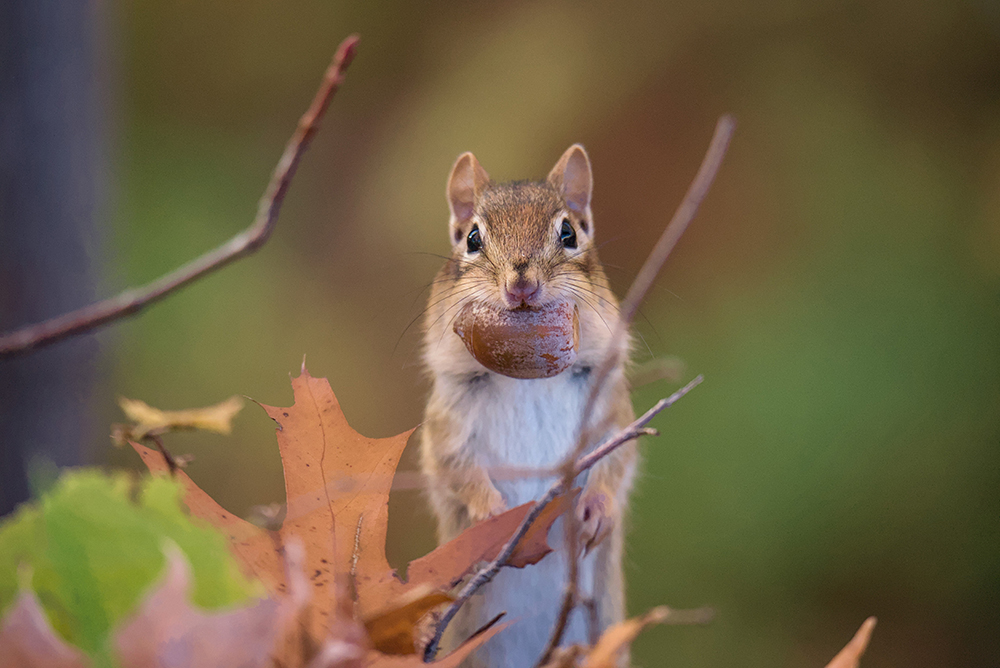
Who’s digging holes in your yard? And should you be worried? Those mysterious tunnels in your garden or near your steps might look like something out of a movie. Sometimes they resemble Andy Dufresne’s prison escape route in “The Shawshank Redemption”. Other times they appear like miniature versions of Boston’s Big Dig scattered across the lawn.
In most cases, the answer is simple: wildlife has moved in.
From chipmunks and voles to raccoons and bats, animals frequently make use of residential yards, gardens and even attics. While many visits are harmless, others can lead to garden damage, structural concerns or potential health risks.
Understanding what animal might be responsible can help homeowners decide when to let nature be and when it’s time to intervene with the help of a wildlife professional or pest management company.
Thomas Tripp, general manager of a pest management company’s Portland branch, said identifying the source of burrows is often the first step toward resolving a problem.
“Finding chipmunks, moles and other burrowing animals in a residential setting is usually a relatively simple process,” Tripp said. “Wildlife technicians will typically survey the area and may place a humane trap above or near the hole. In Maine, licensed professionals are required by the Department of Inland Fisheries and Wildlife to check traps regularly so animals don’t suffer unnecessarily.”
If you leave it alone, it will leave you alone … sometimes
In many cases, wildlife conflicts are temporary and relatively harmless. Small animals such as squirrels and chipmunks are often seasonal visitors simply burying nuts and seeds.
However, some species can cause more significant problems. Voles commonly tunnel through garden beds and feed on bulbs and root vegetables. Groundhogs dig large burrows that can create hazards in lawns and near structures and, in rare cases, may contribute to foundation shifting. Raccoons can also cause structural damage and may carry diseases such as rabies.
When wildlife activity begins causing damage or poses a health risk, experts recommend contacting licensed wildlife professionals rather than attempting to handle the situation yourself.
Are there bats in the belfry?
More than eight species of bats live in Maine, from the common big brown bat (Eptesicus fuscus) to less frequently seen species such as the silver-haired bat (Lasionycteris noctivagans) and the red bat (Lasiurus borealis).
Although bats are beneficial because they consume large quantities of insects, they can become unwelcome guests when they take up residence in an attic or other parts of a home.
One commonly used method for addressing bat infestations is called exclusion. This involves installing a one-way device that allows bats to leave the building while preventing them from reentering. Other potential entry points such as loose screens, uncapped vents or small cracks in siding or foundations are then sealed. Bats can squeeze through openings as small as half an inch.
Bat droppings, known as guano, can create health concerns if they accumulate indoors. Disturbing guano can release microscopic spores that may cause a respiratory disease called histoplasmosis. Guano can also harbor other pathogens that may affect people and pets, which is why cleanup work is often performed by trained technicians using protective equipment.
Despite long-standing myths, bats are not blind, do not intentionally fly into people’s hair and, in Maine, none of the species feed on blood. Experts believe the hair-tangling myth may stem from bats detecting insects near people while using echolocation to hunt.
Wildlife experts emphasize that bats and other animals play important roles in local ecosystems. As natural habitats shrink, encounters between people and wildlife are becoming more common. Finding safe, humane ways to manage conflicts helps protect both human homes and the animals that share our environment.
For more information about bats in Maine and how to reduce conflicts with wildlife, visit the Maine Department of Inland Fisheries and Wildlife at maine.gov/ifw.
