

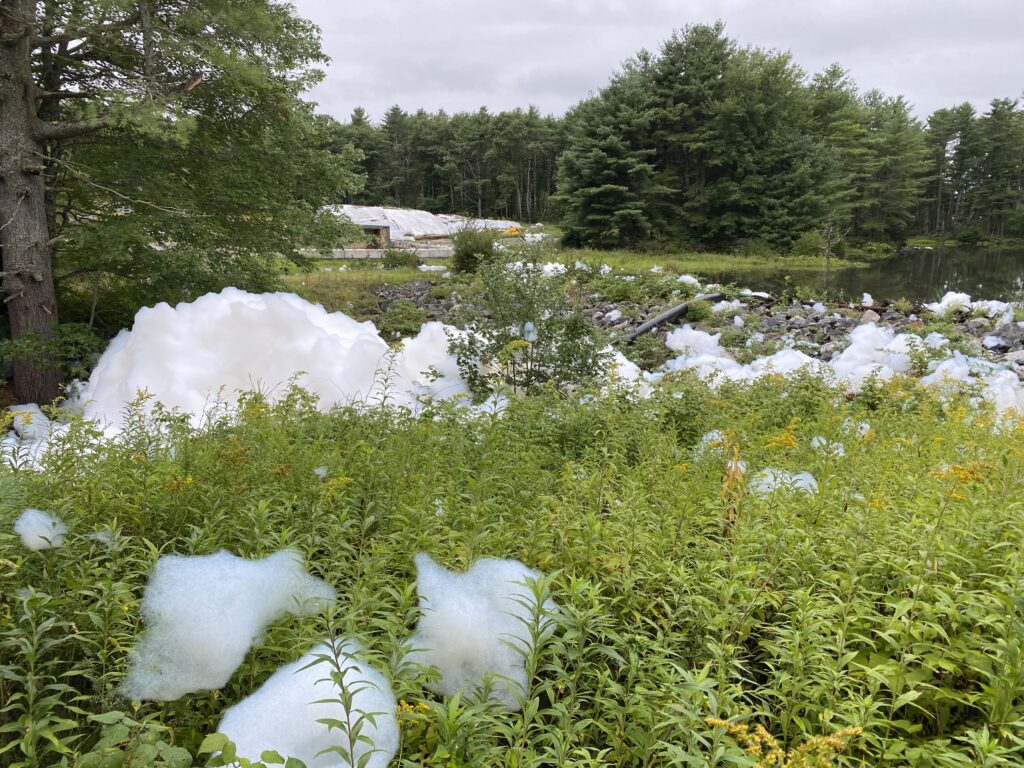
A massive spill of firefighting foam at a former naval air station has revealed the dual threat of forever chemicals in Casco Bay, highlighting the contrast between persistent everyday pollution and the sudden shock of industrial accidents.
A study released Wednesday found persistent, low-level contamination throughout the bay, but concentrations of these harmful manmade chemicals spiked after the August 2024 spill of 51,000 gallons of firefighting foam filled with forever chemicals at Brunswick Landing.
“An acute event is like a heart attack,” said Casco Baykeeper Ivy Frignoca, one of the researchers and authors behind the new study. “And chronic is like letting cholesterol build up in your arteries; eventually, it has a negative health impact.”
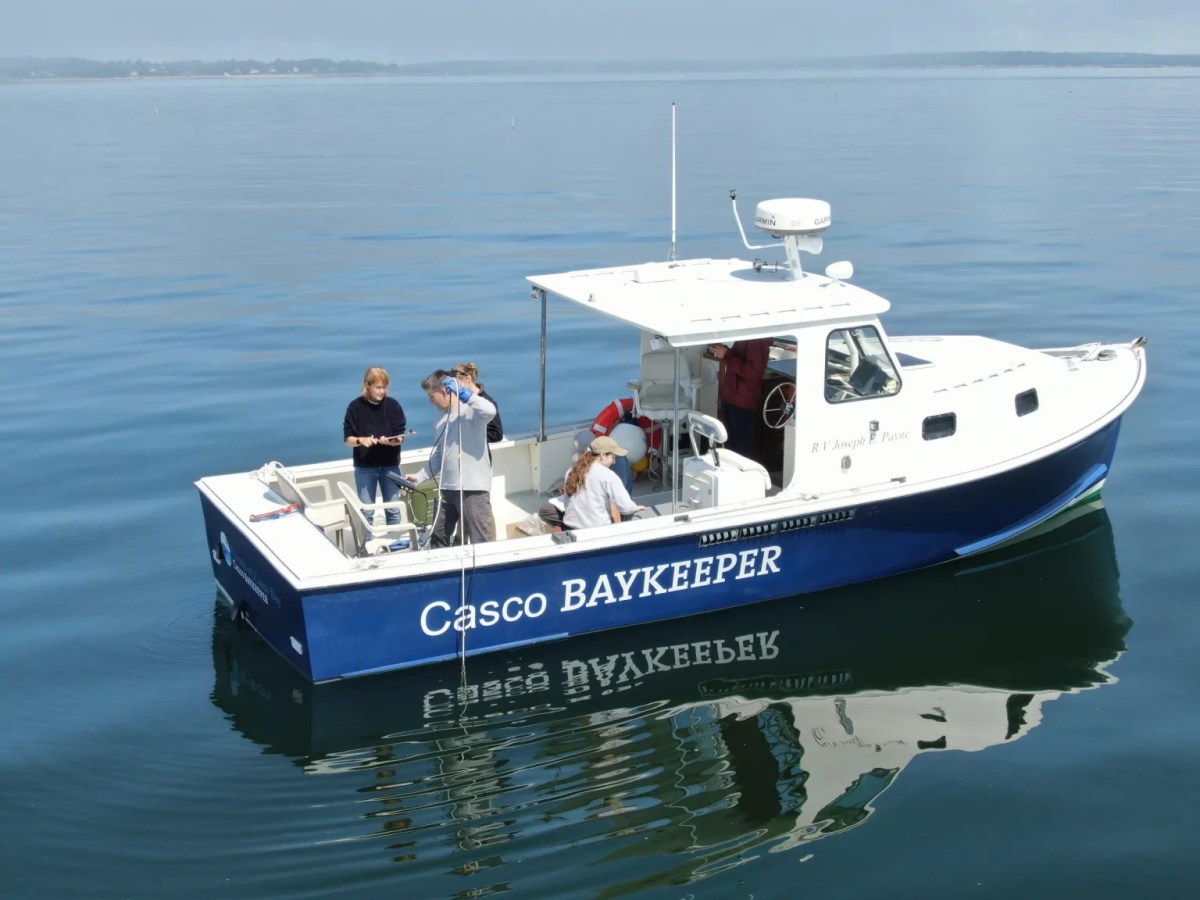
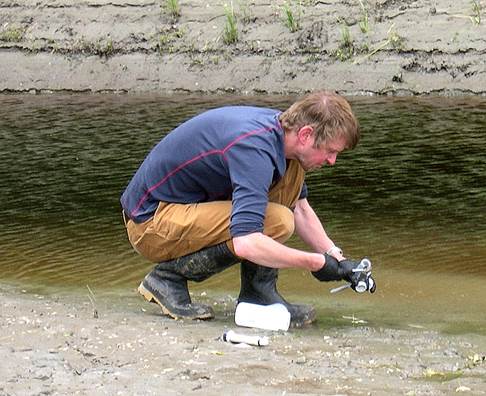
The two-year study by Friends of Casco Bay and Bigelow Laboratory for Ocean Sciences in East Boothbay collected 456 water samples from 76 locations and sediment from 45 sites across the Casco Bay watershed to assess how forever chemicals impact Maine’s coastal environment.
Pre-spill tests showed only three sites, all located in the Fore River, had forever chemical levels above current federal thresholds, but regulators had already closed those areas to fishing and shellfish harvesting due to other pollution problems.
Using chemical “fingerprinting” to isolate the foam’s unique signature, environmental chemist Christoph Aeppli from Bigelow Lab was able to track the spilled PFAS as they drifted up to 10 miles from Brunswick Landing, lingering in the waters long after the initial accident.
The biological impact was immediate: levels of forever chemicals in local mussels and soft-shell clams spiked to 25 parts per billion, which is more than seven times the state’s safety threshold and prompted an emergency closure of shellfish harvesting in Harpswell Cove.
“I was surprised to see how high it got,” said biologist James Stahlnecker, who oversees the Maine Department of Environmental Protection water monitoring program. “But the concentrations in the water were extremely high.”
It took about 10 weeks for PFAS levels in the water to return to pre-spill conditions, results show. The state reopened shellfish harvesting in Harpswell Cove in the fall of 2025 after tissue tests in November 2024 and May 2025 confirmed levels below the state’s 3.5 parts per billion action level.
The study also identified the Kennebec River as a significant contributor to Casco Bay’s chemical burden. The river acts as a primary conveyor belt, funneling PFAS from upstream industrial and farm sources into the bay and accounting for a substantial portion of its total chemical load.
The sheer volume of the Gulf of Maine provides a degree of dilution that keeps concentrations in most of the bay below federal safety benchmarks, but the study warns that dilution doesn’t equal disappearance. PFAS don’t break down naturally; instead, they move into the food web.
“It’s a really interesting look at how long it takes a chemical, a toxin, to travel in a marine system,” Aeppli said.
Fish typically show higher concentrations than stationary clams or mussels, as the chemicals build up in animals higher up the food chain. Tests found post-spill PFAS levels spiked in Atlantic silverside, a common minnow, in Harpswell Cove.
PFAS earned the nickname “forever chemicals” because of their nearly unbreakable molecular bonds. Used since the 1950s in everything from nonstick cookware and waterproof jackets to specialized firefighting foams, PFAS are now ubiquitous in the environment.
They typically reach the ocean through wastewater discharge, landfill runoff or contaminated groundwater. In Maine, one of the most common sources of groundwater contamination was the now banned practice of fertilizing farm fields with sewage sludge.
The risks are twofold. In aquatic life, PFAS can disrupt hormones and damage immune systems. In humans, long-term exposure is linked to developmental issues and increased cancer risk. The threats have moved Maine health officials to limit fish consumption from contaminated waters.
Despite the prevalence of PFAS, significant data gaps remain. Standard environmental testing in Maine tracks about 40 of the thousands of known forever chemicals, researchers warned, which makes it impossible to assess the cumulative impact of the remaining chemicals.
In response to the Brunswick spill, Maine lawmakers passed laws in 2025 to create a statewide inventory of firefighting foam and a voluntary collection program. The program, however, is not funded and some fear it won’t happen unless Maine wins a lawsuit against PFAS manufacturers.
Researchers behind the new study say the state’s next step should be to pair continuous water monitoring with more frequent tissue sampling of fish and other marine life, including clams, mussels and lobster, to better understand the long-term health of the estuary.

We invite you to add your comments. We encourage a thoughtful exchange of ideas and information on this website. By joining the conversation, you are agreeing to our commenting policy and terms of use. More information is found on our FAQs. You can update your screen name on the member's center.
Comments are managed by our staff during regular business hours Monday through Friday as well as limited hours on Saturday and Sunday. Comments held for moderation outside of those hours may take longer to approve.
Join the Conversation
Please sign into your CentralMaine.com account to participate in conversations below. If you do not have an account, you can register or subscribe. Questions? Please see our FAQs.