


Dr. Sheena Whittaker is no longer surprised when parents refuse the hepatitis B vaccine, eye ointment and a dose of vitamin K for their newborns.
A pediatrician at Northern Light Maine Coast Hospital in Ellsworth, Whittaker relays the importance of vaccinating newborns against hepatitis B within 24 hours of birth. She tells parents that babies can develop severe bleeding without the vitamin K injection.
Some still decline, citing the U.S. Centers for Disease Control and Prevention’s rollback of vaccine recommendations, or claims, supported by health secretary Robert F. Kennedy Jr., that vaccines can cause autism. Pediatricians say vaccine hesitancy has surged in Maine over the past year, weakening protections against preventable and dangerous diseases.
“What we’ve seen in the last year or so is more hesitancy stirred up based on governmental changes, changes to the recommended vaccine schedule per the CDC,” said Dr. Brian Youth, a pediatrician and the president of Maine’s American Association of Pediatrics chapter. “People see this information … and it makes them start to question: Are vaccines safe? Are vaccines vetted?”
Federal cutbacks haven’t gone unopposed. Maine was one of several states to sue the Trump administration over its move to reduce the number of vaccines recommended for all children, and on March 23, a federal judge temporarily blocked the cuts.
But some parents make decisions about childhood vaccines well before they see a pediatrician. Whittaker, met with a growing list of safety concerns, responds with the same set of facts and scientific evidence that has backed immunization for decades.
If they won’t listen to that, she said, maybe they’ll listen to their doctor.
SAME SCIENCE, MORE QUESTIONS
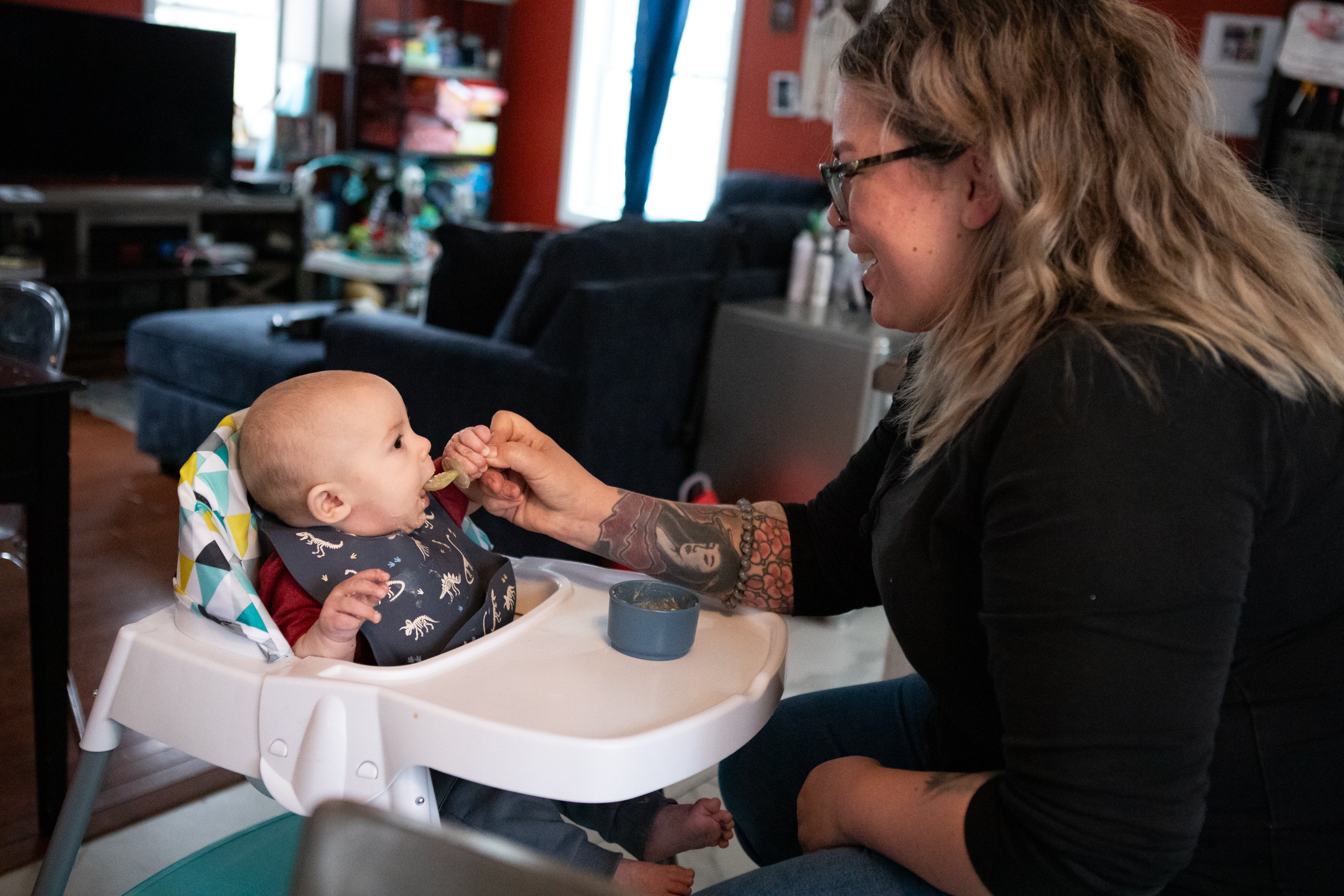
Melody Richards had already planned to delay her newborn’s vaccines when the CDC rolled back recommendations. For the Naples mother, who has turned down all but two of the eight vaccines doctors recommend for a nearly 6-month-old baby, it just confirmed she made the right choice.
“I read a ton of studies and stuff, and yes, there is a very small percentage for adverse reactions, but that percentage is still there,” Richards, 37, said. “I’m not someone who is completely against vaccinations. For me, I just want to spread them out a little bit and not overload his tiny body.”
In 2024, about 90% of children in Maine between 19 and 35 months were vaccinated against polio and measles, mumps and rubella (MMR), serious diseases that were largely eliminated in the U.S. But this year, Maine saw its first case of measles since 2019, mirroring a nationwide rise in outbreaks that suggest the disease could be making a comeback.
Whittaker said losing herd immunity, or group protection against disease, is dangerous for people who are immunocompromised or at higher risk for vaccine complications.
Richards’ son, Aurelio, has not been vaccinated against polio. She cares for him at home rather than sending him to day care, where he could be exposed to disease, and where children are required by Maine law to be vaccinated. The same goes for Maine’s schools.
Richards will likely homeschool Aurelio and get him vaccinated at her own pace.
In February, the CDC withdrew routine recommendations for six immunizations, including rotavirus (RV), hepatitis A and hepatitis B. Those three vaccinations alone have prevented nearly 2 million hospitalizations and more than 90,000 deaths over the past 30 years, according to the CDC’s 2024 report.
A preliminary injunction restored the previous vaccine schedule, but Maine’s pediatricians say that hasn’t stopped fear and doubt from spreading. Claims from Trump officials that the hepatitis B vaccination is not necessary for babies born to mothers who test negative has caused immunization to fall in Maine, they said, even though it does not protect babies from being infected after birth.
The first year of life is when babies are most vulnerable to illnesses like pneumonia, whooping cough and respiratory syncytial virus, or RSV, the leading cause of infant hospitalization in the U.S. The CDC also no longer recommends all children to be vaccinated against RSV, flu and COVID-19.
Immunization is one of myriad safeguards for newborns. Pediatricians also recommend a vitamin K shot and erythromycin ointment to prevent eye infection, and Maine mandates a bloodspot screening, obtained from a prick on the baby’s heel, to screen for rare medical conditions.
Dr. Meredith Jackson, a pediatrician at MaineHealth Barbara Bush Children’s Hospital in Portland, had three parents refuse the bloodspot screening this year, concerned “the government is going to hold onto their DNA.”
In more than a decade as a pediatrician, she’s never had anyone refuse it until now.
BEFORE AND AFTER BABY IS BORN
Kennedy has attempted to overhaul federal immunization standards since he stepped into office. Along with repeating claims that vaccines can cause autism and attempting to link aluminum in vaccines to chronic diseases in children, he has advised parents to do their own research when deciding whether to vaccinate their children.
Whittaker said she increasingly encounters vaccine reluctance from parents in Maine who are older, somewhat educated and wealthy enough to provide their own child care or schooling. Because there is limited time to build trust at a newborn’s first appointment, she said pediatricians often struggle to compete with what parents hear about vaccines from the media or other parents.
Richards also has a 14-year-old son. When he was born, she “just followed what everyone told me to do” and stuck to the recommended childhood vaccine schedule. With Aurelio, she said she read peer-reviewed studies and spoke to people who have had adverse reactions to vaccines before making a plan to delay most of his newborn shots.
Her pediatrician was not on board.
“I left the first appointment in tears because she was saying things like: ‘Not getting these vaccines could kill your child, and that would be on your hands,'” Richards said. “She was really not happy with me wanting to delay things or wanting to separate out the shots, and basically told me that any research that I had done couldn’t possibly match the research that other people have done.”
Youth, head of the state’s AAP chapter, said pediatricians should always try to understand where a parent is coming from while discussing vaccines. He said starting those conversations before birth, with an obstetrics provider or a family doctor, can establish consistent messaging that “vaccines are safe, vaccines are effective — hey, and by the way, vaccines start from the day of birth.”
Ari Pinkham, 29, of Westbrook, gave birth to her son in November. She knew she wanted him to get all of his vaccines, but said it was still helpful to ask her obstetrics doctor about when she should get her own shots for RSV, flu and COVID-19 to maximize his protection. When he was born, she picked up the vaccine conversation with her pediatrician.
The CDC is also encouraging people to turn to their providers. The six childhood vaccines that were cut from the universal recommendation list are now only recommended for children in high-risk groups and in situations of “shared clinical decision-making,” or consultation between parents and doctors.
Whittaker said that has always been the standard of care for pediatricians.
“We’re always willing to work with parents, if they want to do a few less or space them out — we’re happy to work with them to help them feel comfortable,” Whittaker said. “They need trust, and right now, they can’t trust in what they’re hearing from the world.”
Richards left her pediatrician and started discussing Aurelio’s vaccinations with her family doctor, someone she trusts. Although they disagree about her approach to vaccines, she feels she is being listened to, “like my decisions as a parent are more respected.”
Aurelio is scheduled to be vaccinated against polio next month.

Comments are not available on this story. Read more about why we allow commenting on some stories and not on others.
We believe it's important to offer commenting on certain stories as a benefit to our readers. At its best, our comments sections can be a productive platform for readers to engage with our journalism, offer thoughts on coverage and issues, and drive conversation in a respectful, solutions-based way. It's a form of open discourse that can be useful to our community, public officials, journalists and others.
We do not enable comments on everything — exceptions include most crime stories, and coverage involving personal tragedy or sensitive issues that invite personal attacks instead of thoughtful discussion.
You can read more here about our commenting policy and terms of use. More information is also found on our FAQs.
Show less