
Fowsia Musse learned about Lewiston in 2000 from a friend who suggested the city might be a good fit for her and her family who, like thousands of others, fled the civil war in Somalia for the U.S.
“She said, ‘I think this town we’re in, Lewiston, will be conducive to your life because it’s quiet, less traffic jam, less noisy,’” Musse recalled.
She traveled to Maine for a visit, and, after experiencing the city for herself, decided to stay.
“I remember looking into Kennedy Park … just scanning the surrounding area. … There weren’t a lot of immigrants that were visible like they are today. But nevertheless, it was very quiet, and I just remember feeling this sense of ease.”
Musse called her then-husband and told him she’d made a decision.
“I said, ‘I’m not coming back.’ That was the story of Maine.”
That is also Lewiston’s story over the past 25 years, as an influx of men, women and children originally from Somalia settled in the city beginning in 2001 and, like the many immigrants before them, changed it.
Today, more than 1,200 Somali people live in Lewiston, according to census numbers, with some estimates of Somali-born and second generation residents beyond 3,000. About 6,000 of Lewiston’s residents are immigrants or refugees.
Lewiston’s estimated population as of July 1, 2024, was 38,772, according to the U.S. Census Bureau website.
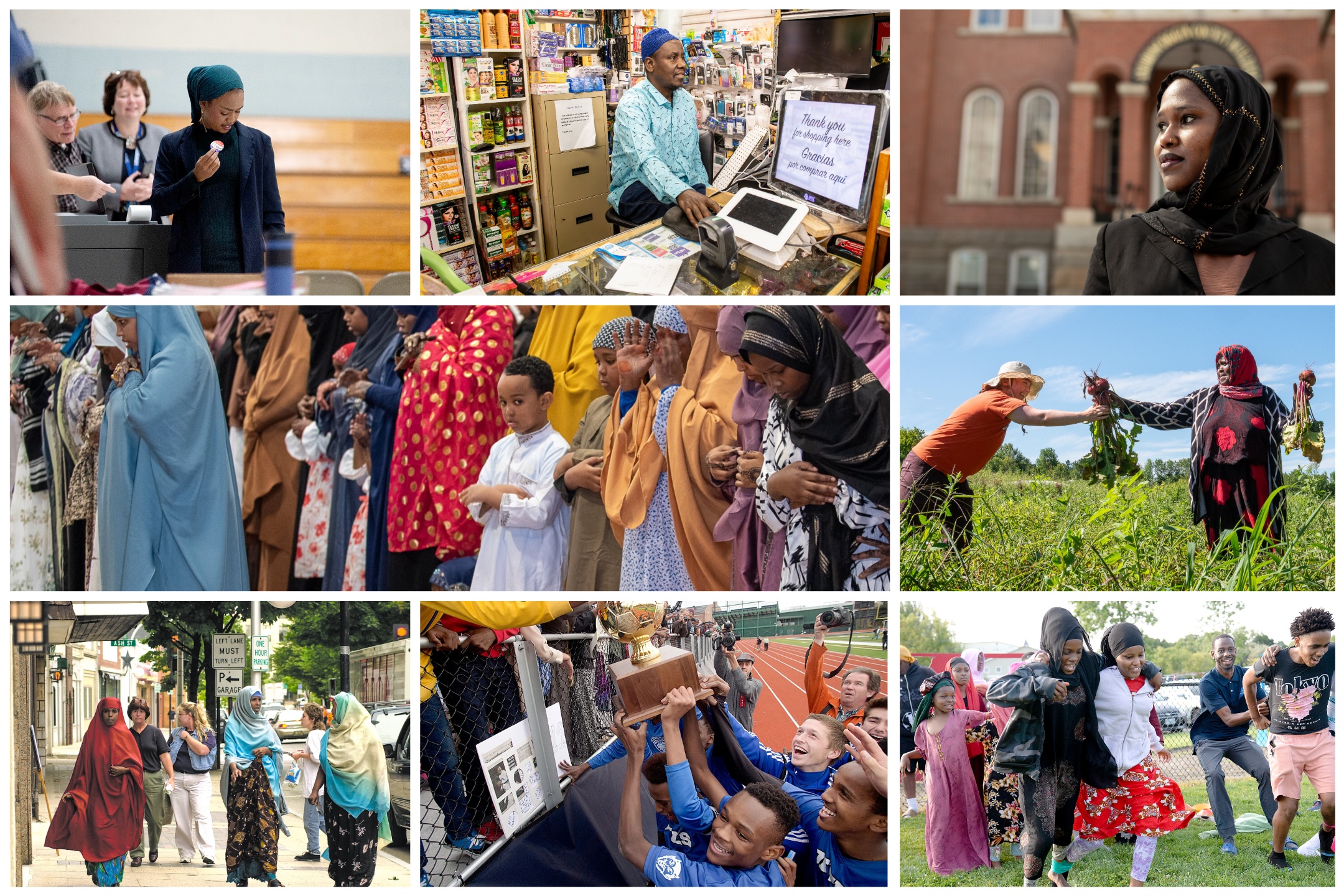
It hasn’t been easy, marked by protests and counterprotests, racial tensions and growing pains that tightened housing and increased city budgets.
But as with past waves, those same immigrants over the past 25 years have also filled critical jobs and empty storefronts, paid rent, bought property, helped win state high school championships, and taken positions of leadership in the city and the state.
HOW IT STARTED
Lewiston’s first refugee settlement since the 1970s came between 1999 and 2000 with families from Togo, said former Lewiston Deputy City Administrator Phil Nadeau, who published a book on the city’s experience welcoming Somali immigrants.
Like with many past resettlements, Catholic Charities spearheaded efforts to resettle Togolese families, approaching Portland and Lewiston institutions as potential sites due to available housing, hospitals, social services networks, education and a cultural linguistic bridge: French.
Months of meetings between the charity, city officials, St. Mary’s Regional Medical Center and nonprofit partners led to the resettlement of 37 Togolese families in Lewiston.
Coordinated efforts and the small numbers of immigrants, Nadeau said, ensured families could move in without much fanfare.
Many early arrivals were educated and had relevant prior employment, making it easier to transition into daily life in Lewiston and requiring limited public assistance, Nadeau said.
The experience led city officials to believe that refugee resettlement could be managed successfully by planning and ensuring collaboration among stakeholders.
A NEW CHAPTER IN LEWISTON’S STORY
Life centered around the Androscoggin River has changed shape over the years.
The Great Falls of Lewiston-Auburn was the traditional site of living for the Wabanaki until about 1690, when Massachusetts colonists progressively destroyed, occupied and reconstructed the area to later became Lewiston-Auburn.
By the time Maine became a state in 1820, Lewiston was a growing mill town. The city experienced rapid French Canadian in-migration in the 1870s as the growing Bates Mill textile complex offered jobs. For the following century, the city was defined by the waves of French Canadian and Irish immigrants settling in working-class neighborhoods along the Androscoggin River.
In the mid-1900s, as the mills began closing, economic uncertainty hit. Jobs disappeared, population declined and housing stock aged.
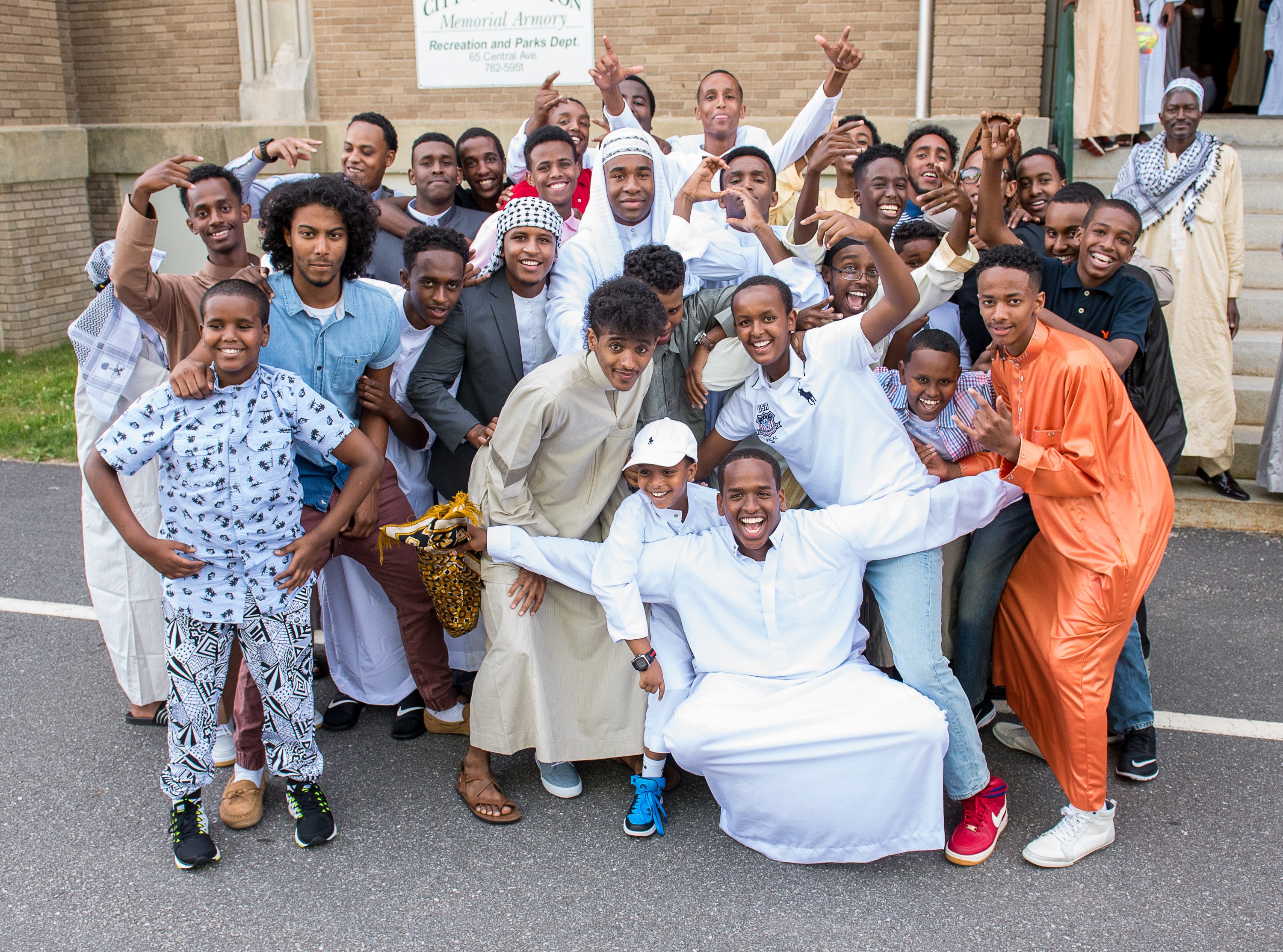
Lewiston’s struggle for redevelopment was transformed beginning in 2001 by the arrival of Somali immigrants.
The Somali diaspora reached Portland in the 1990s, shaped by years of upheaval in East Africa. Somali migration to the U.S. came in multiple stages, Nadeau said, beginning with the numerous refugees who made their way to large U.S. cities. After that, many began secondary migrations to find better suited areas of the U.S. for their families.
By 2000, Portland was facing a housing crunch with low vacancy rates, growing shelter use and diminishing vacancy at hotels due in part to the increase in Somali migration. Portland officials approached their Lewiston counterparts about absorbing “secondary” migrants who found their way to Maine from other parts of the country, Nadeau said.
Lewiston officials agreed to assist, especially since local landlords were struggling to fill vacant apartments.
“There was simply more housing available in Lewiston,” Nadeau said. “That was the difference.”
The two cities worked to relocate 30 to 40 families from Portland’s shelter and hotels to Lewiston, with informal agreements that each city would provide what support they could once families arrived.
However, as word spread through Somali networks more began arriving on their own outside of formal resettlement and municipal coordination.
In schools and places such as Kennedy Park in downtown Lewiston, “we could visibly see the numbers growing,” Nadeau said.
By the end of 2001, Lewiston’s Somali population had grown to an estimated 400 people, marking a shift from a small coordinated effort to a broader wave of secondary migration.
And it continued to grow. For many longtime Lewiston residents, the change was striking.
“Going from zero to 1,500 Somali residents (in just a couple years) was very interesting and quite a surprise,” said James Reese, associate dean of students and international student adviser at Bates College in Lewiston.
Ten years on, the population of Somali residents in Lewiston was about 5,000.
At Bates, Reese said the impact of the arrival of Somali people, and what resulted from years of growth, were hard to miss.
The arrival “provoked furious debates about the cost of poor immigrants to Lewiston’s precarious economy and the impact of cultural and racial difference on the city’s proud Franco- American identity,” according to anthropologist and Colby College professor Catherine Bestemen’s book “Making Refuge.”
Reckoning with the wave of migration meant deciding between viewing the resettlement of Somalis “as an assault on an already struggling city or as a force of renewal,” Bestemen wrote.
A LONG JOURNEY
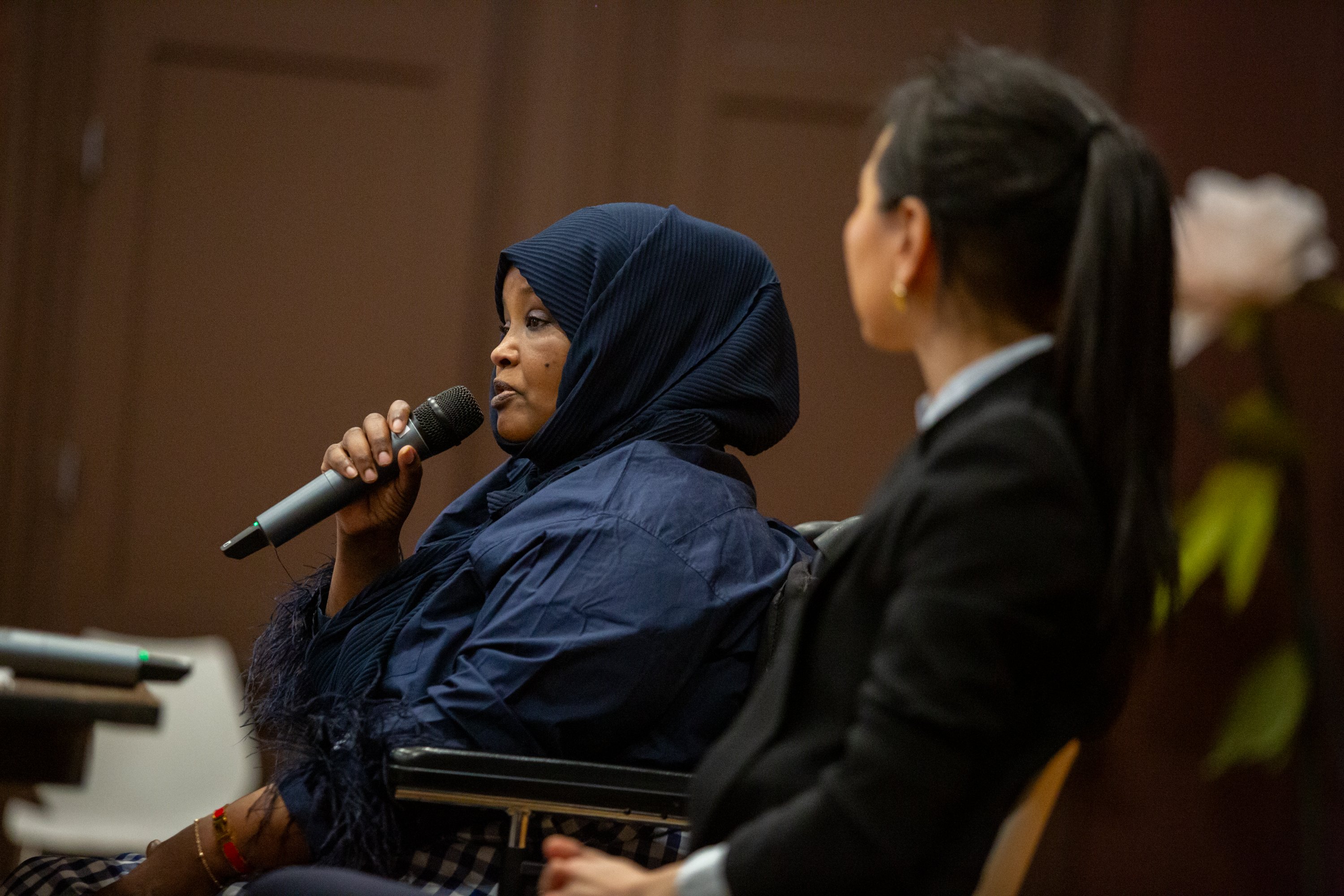
Musse fled Somalia as a child and spent some of her youth in Ethiopia before immigrating to California and then Georgia.
When Musse arrived, she said, the Somali presence in the city was small.
“I remember there was one Somali tiny store,” Musse said. “Everybody sort of had little tiny offices behind it.”
The early Somali shops served as more than just businesses, she said.
“Every so often you come around and you sit in a Somali store, and they’ll give you a tea and, instead of buying something, it turns into four hours of just chatting.”
Existing connections made a world of difference with already difficult transitions. Mobile phones made a considerable impact in spreading the word about Lewiston as a safe place for families to relocate.
“There was already a well-established Somali community when we got here,” said Mohamed Awil, an associate director of volunteer programs and community partnerships at Bates College. Awil and his family emigrated from Kenya to Lewiston in 2009.
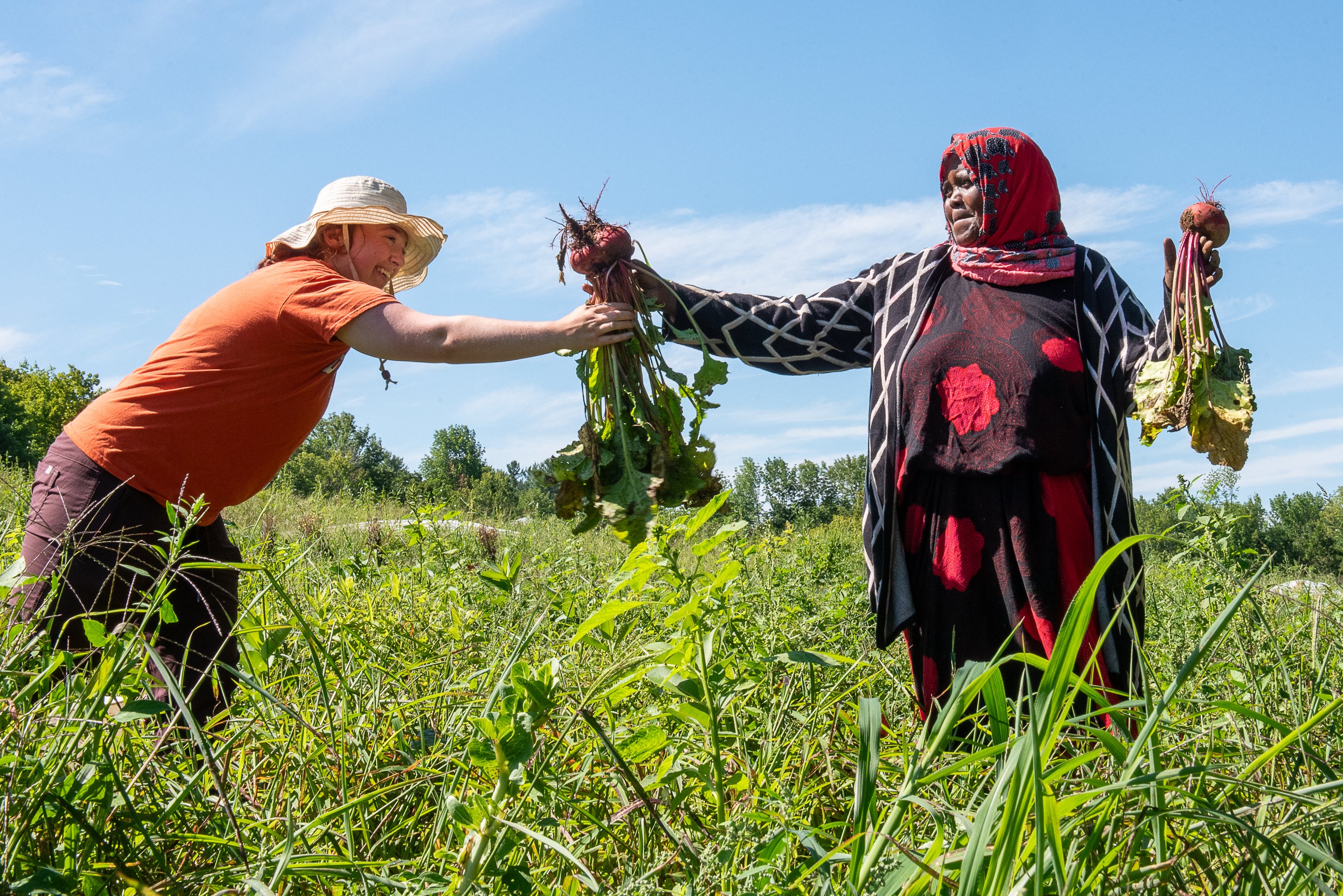
“So that helped a lot, made the transition very much easier,” Awil said.
Awil graduated in 2014 from Lewiston High School, where he was a notable cross-country athlete, before going on to study at the University of Southern Maine, eventually returning to the Lewiston-Auburn area.
Having a community he recognized already was key.
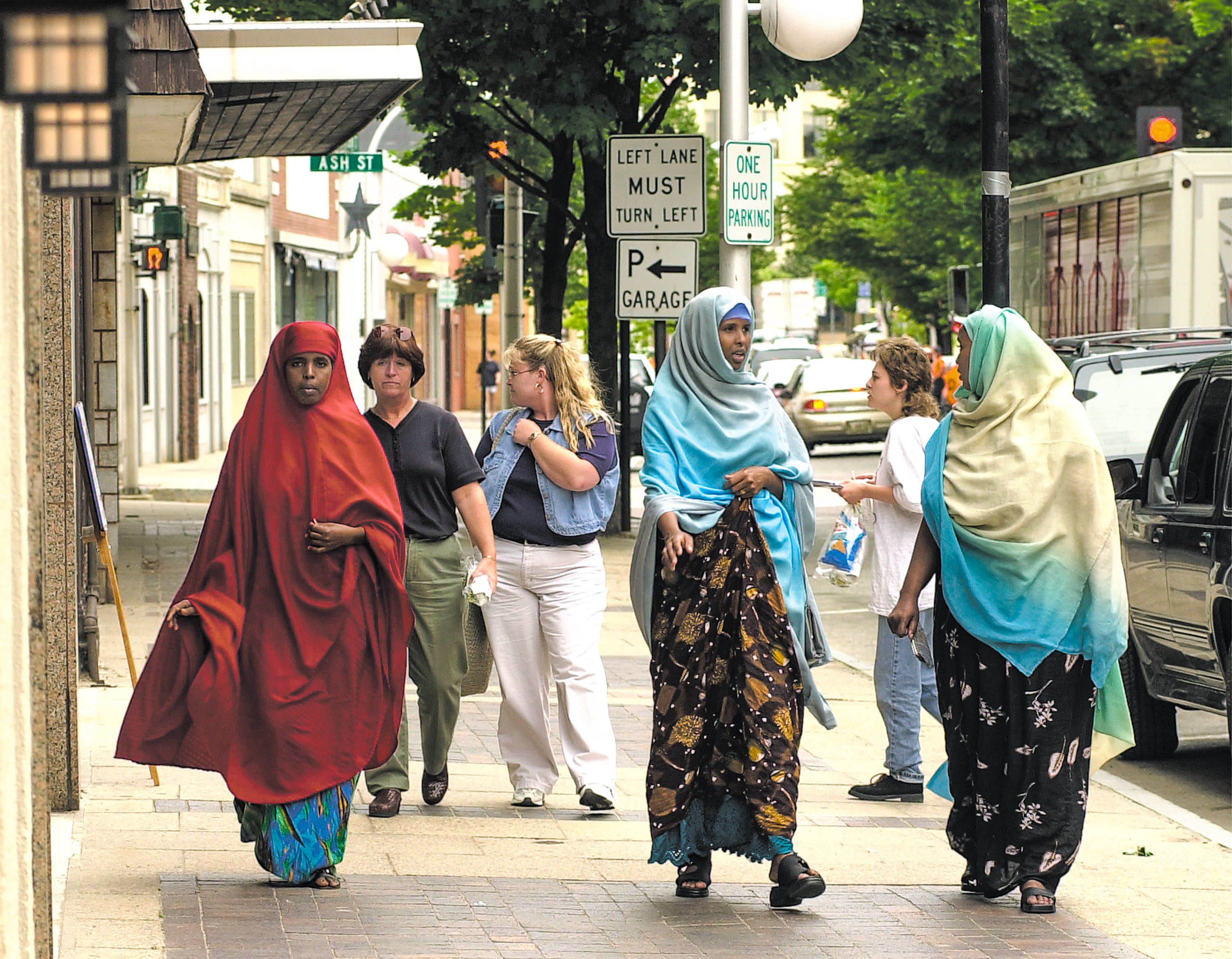
Today, the change in Lewiston is reflected along Lisbon Street, which was largely vacant in the early 2000s and is now lined with Somali-owned businesses, eateries and markets.
“When I first came here, this road was empty,” said Abdullahi Abdi, a longtime Lewiston Middle School soccer coach who emigrated from Somalia. “Now you see how busy it is.”
TENSION AND A MAYOR’S LETTER
The escalation of tension around Somali arrivals began with 9/11 and the 2002 release of the film “Black Hawk Down.” The film chronicled the failed 1993 military operation in Somalia that ended with 19 U.S. soldiers killed, among them Staff Sgt. Thomas Field of Lisbon.
After 9/11, city officials began receiving reports of threats and harassment. There were anthrax scares at City Hall. Somali residents began retreating from public view.
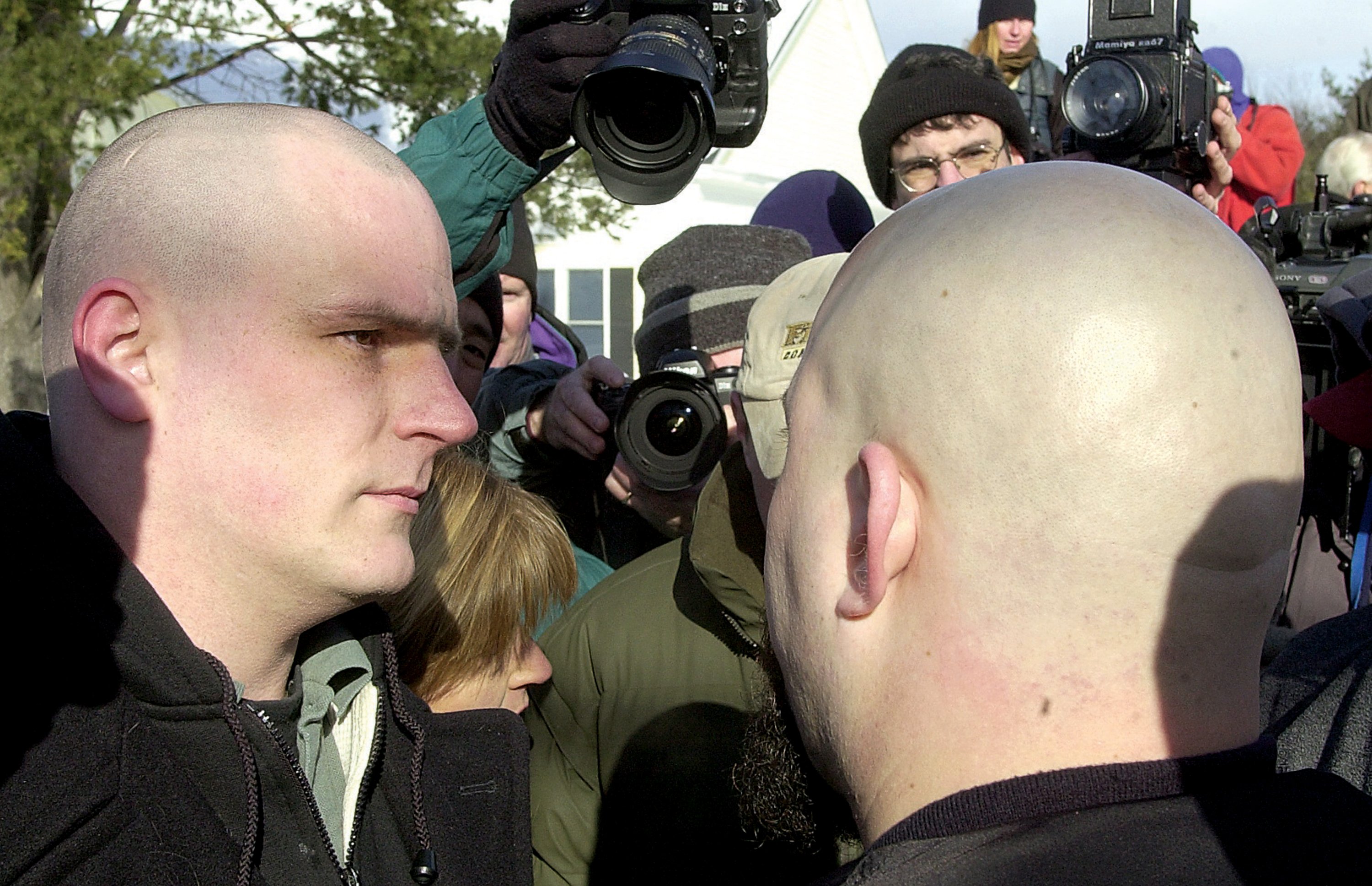
Somali arrivals began dominating public discourse in 2002, Nadeau said.
In April of that year, the Maine Sunday Telegram ran a story reporting 500 to 1,000 Somali people might be relocating to the area, a figure that spread quickly and widely, intensifying public anxiety, he said.
The tension became national news in October 2002 when Mayor Larry Raymond issued an open letter asking Somali communities to dissuade potential migrants from coming to Lewiston.
“This large number of new arrivals cannot continue without negative results for all,
Raymond wrote. “The Somali community must exercise some discipline and reduce the stress on our limited finances and our generosity. I am well aware of the legal right of a U.S. resident to move anywhere he/she pleases, but it is time for the Somali community to exercise this discipline in view of the effort that has been made on its behalf.”
Nadeau, who as deputy city administrator at the time helped edit the letter, said he advised Raymond the letter would not be well received by the people or the media.
And it wasn’t.
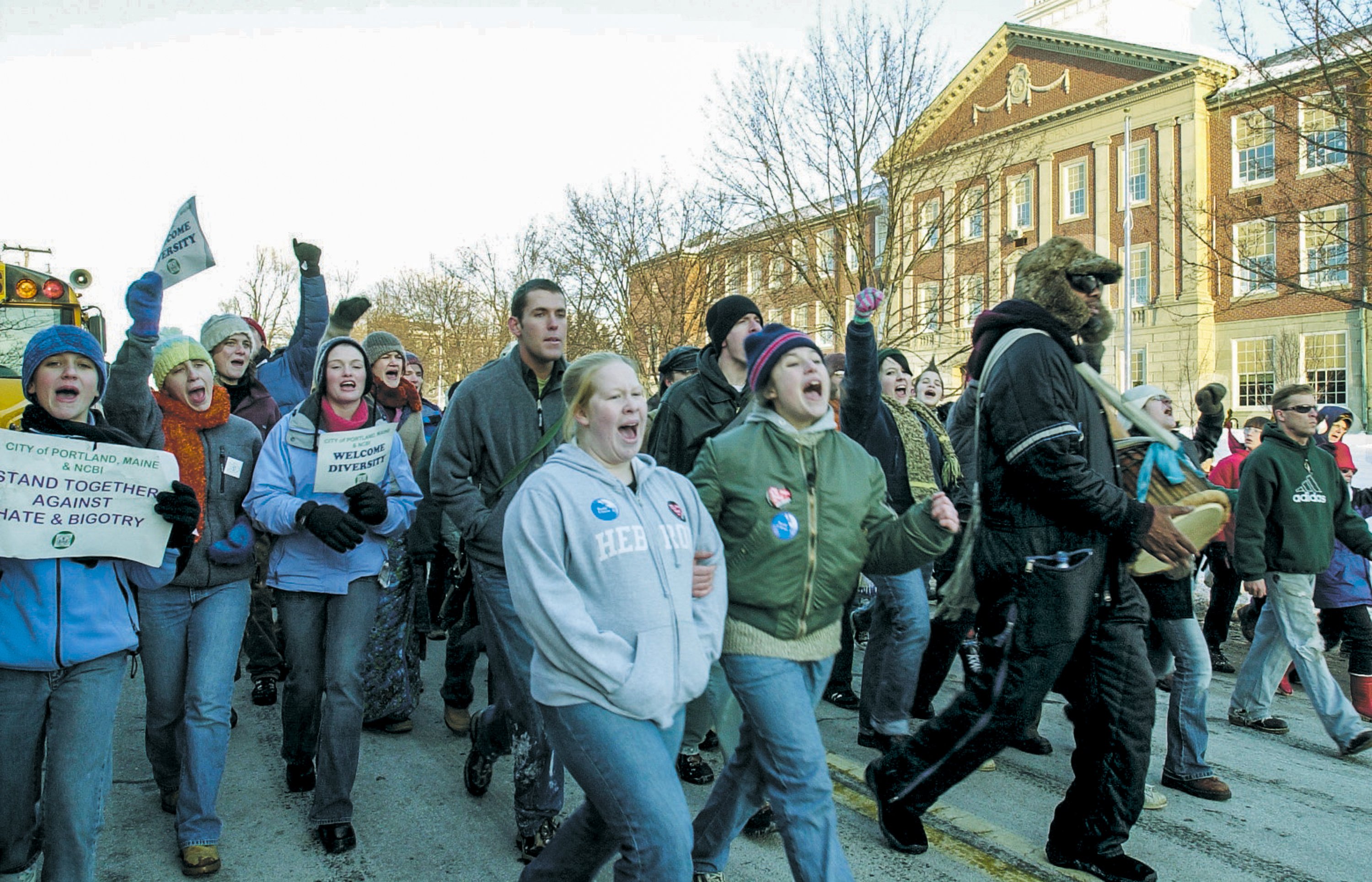
The letter, seized upon by international media and scholars, reached a Midwest neo-Nazi group, World Church of the Creator. The church launched a demonstration at the Lewiston Armory on Jan. 11, 2003.
The event didn’t draw many demonstrators — “There were more reporters in the room than there were people there,” Reese said — but a counterprotest held the same day certainly did.
The “Many and One” rally packed Bates College’s Merrill Gymnasium with 5,000 protesters, with another 1,700 who could not enter due to occupancy limits.
Reese said the crowd outside resolved to hold its own rally in the frigid winter weather.
“And then they joined the whole 5,000 as we walked down to the armory for the conclusion of that day,” he said.
Two senators and two congressional representatives were in attendance and gave speeches, a big statement coming from Maine’s delegation.
“I was impressed by the people who came from very far, meaning out of state … to join in,” Reese said.
In the end, the rally was a turning point in Somali inclusion and support in Lewiston, smoothing the transition for the people and for the city.
THE KIDS
For many of the earliest arrivals, building a life in Maine meant starting over in a new area while managing ongoing responsibilities linked to family overseas.
It made for difficult choices, especially for young people navigating education, sports and family responsibilities.
Sports writer and author Amy Bass encountered these dynamics while researching Lewiston High School’s successful soccer teams.
“These are teenagers, but often with the weight of the world on their shoulders,” Bass said. “If a student has to bring a parent to a doctor’s appointment to serve as a translator, he is going to skip soccer practice.”
Those realities put the public school system at the center of Lewiston’s transformation. Teachers, coaches and administrators became the first point of contact for new students whose families were beginning to navigate the Maine way of life.
Schools were where the first sense of belonging began to take shape, Musse said. Children learned English quickly, made friends and became the bridge between their parents’ generation and the wider community.
“(They) had an immeasurable impact on the negotiations that took place between newcomers and longtime Mainers,” Bass said.
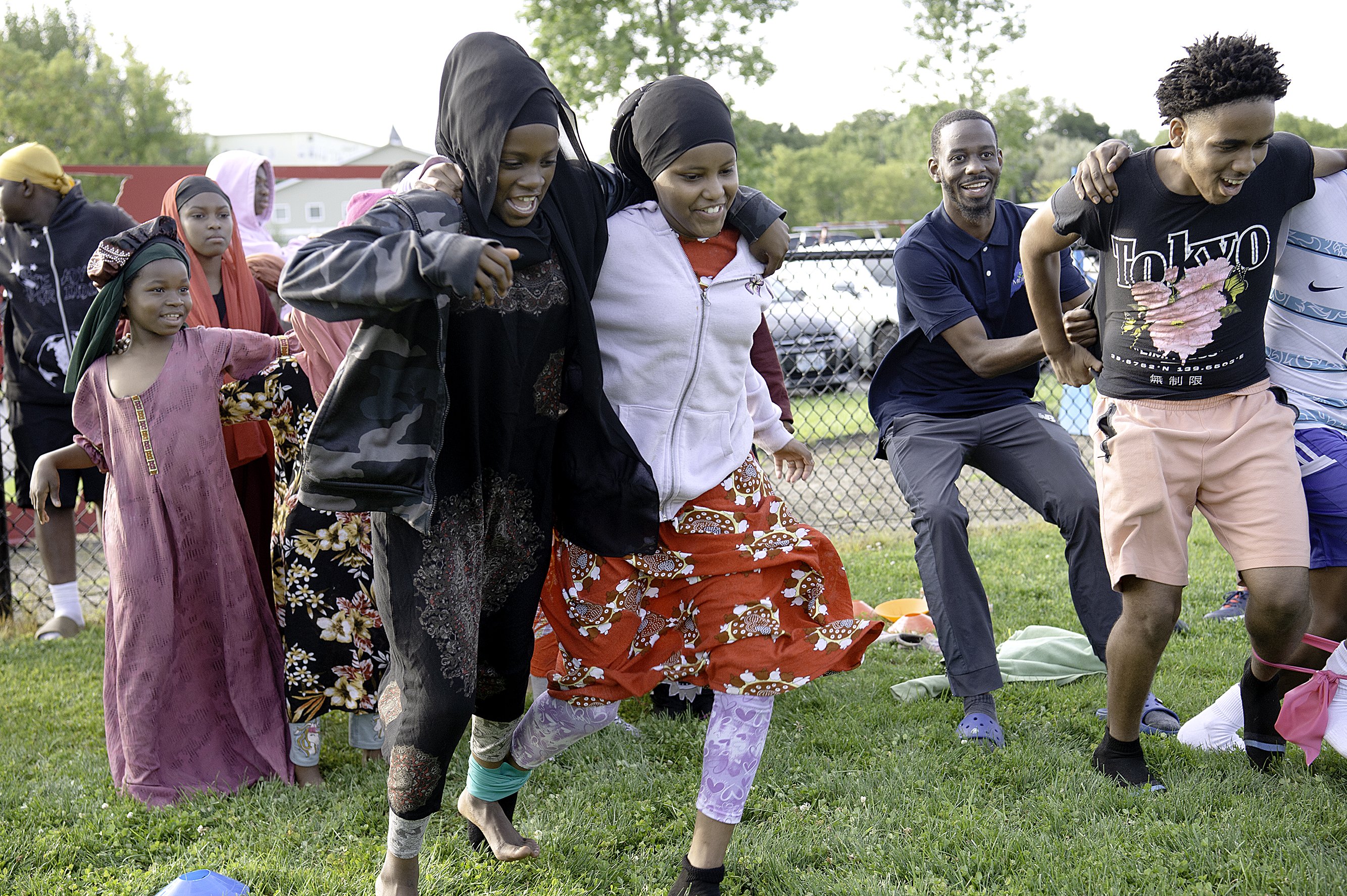
Today, diversity inside Lewiston’s classrooms marks the city’s broader changes.
Lewiston school Superintendent Jake Langlais said nearly 2,000 students, or 38.5% of the entire population of Lewiston schools, are multilingual learners.
Students now speak dozens of languages representing countries across the globe, Langlais said. The most common multilingual learners include Portuguese, Somali, Arabic, French and English.
Diversity extends beyond language: After the U.S., the top countries of origin for the families of Lewiston students are Angola, Kenya, Democratic Republic of the Congo and Afghanistan.
“It is remarkable to walk through Lewiston High School and see the interactions, the murals on the walls, the pages of the yearbook,” Bass said.
A BRIDGE BETWEEN COMMUNITIES
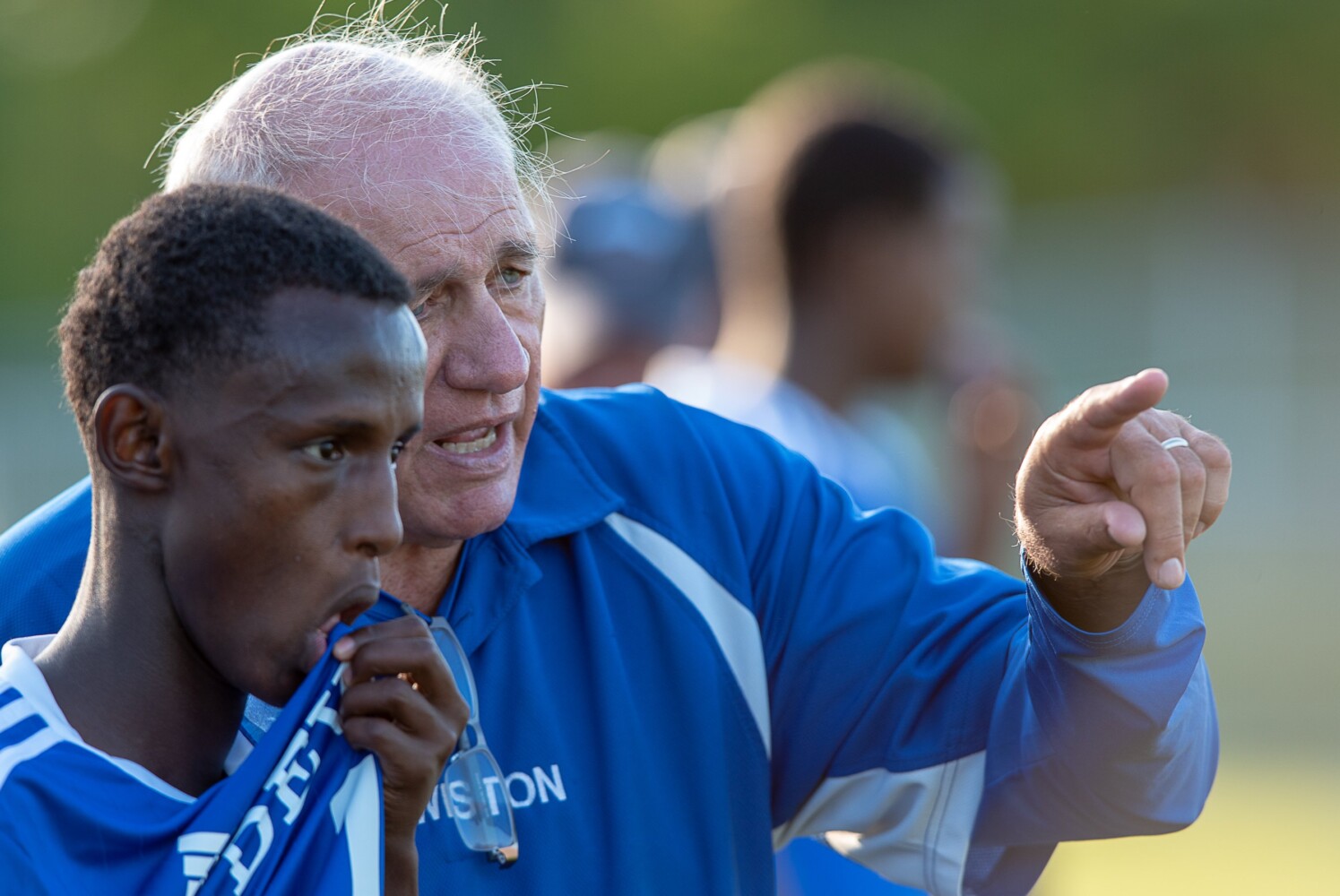
Sports, of course, is the most visible bridge between communities, Bass said. While soccer had long existed at Lewiston High School, the program began to change as Somali students joined the team.
“Lewiston had some good teams under coach Mike McGraw,” Bass said. “But as Somali students started to try out and become members of the team, it changed. These were kids who prioritized soccer rather than use it as a sport to get ready for hockey season or basketball.”
The student athletes would eventually become team leaders and recognizable around the city, she said.
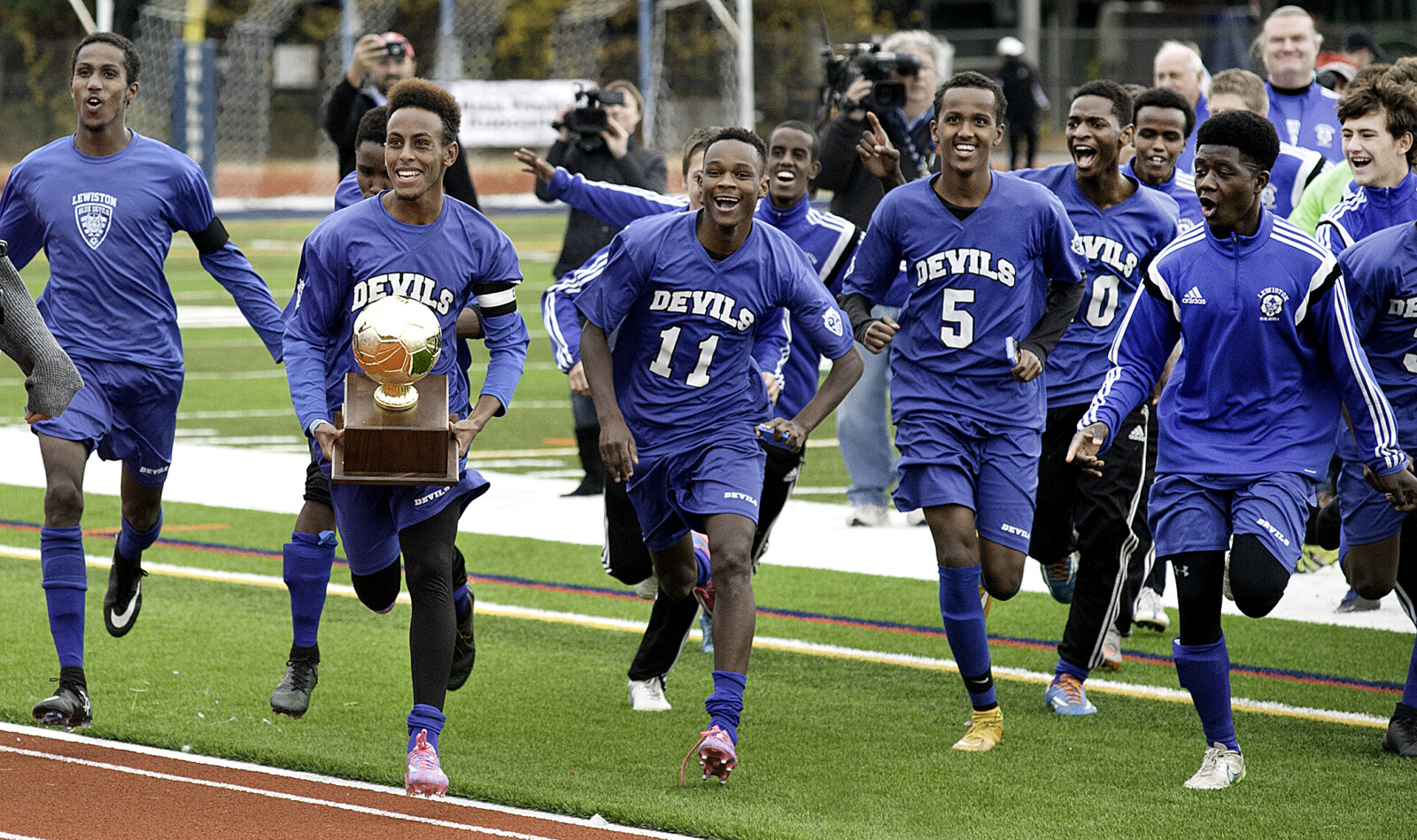
When Lewiston won the state championship in 2015, the team became a symbol of the city’s transformation.
“I think the sheer numbers of people who attended the state championship game in 2015 is an indicator of an extraordinary coming together,” Bass said.
The city’s changes come not just in championship mementos and swag, but in all the young players coming up through the city’s fields. Abdi has been a part of that for years.
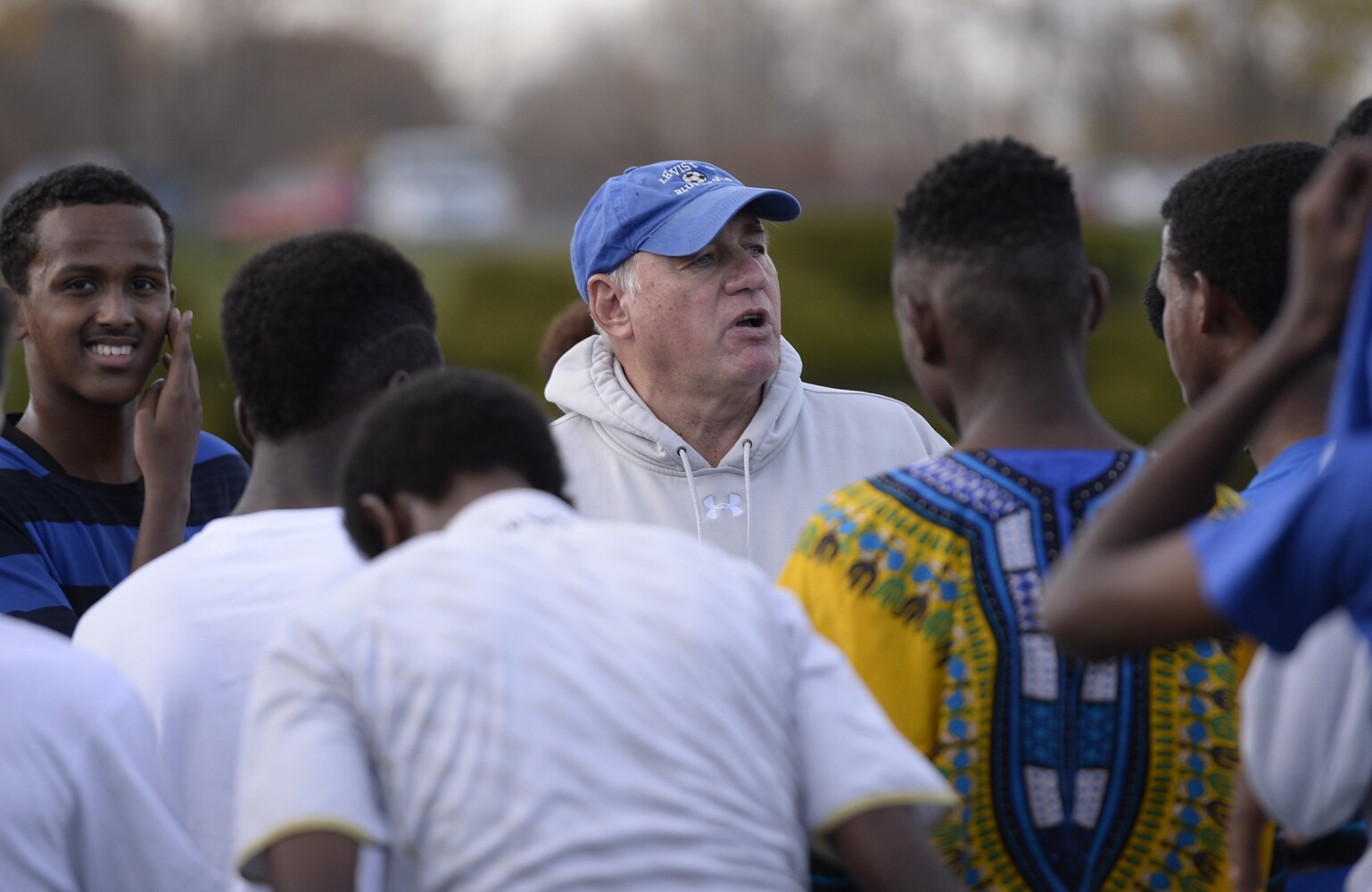
After moving to Lewiston in 2006, Abdi became involved with soccer, coaching many of the elementary and junior high school athletes McGraw would later foster in his program.
“I believe that I helped a lot because of my experience, especially in sports,” Abdi, who was an Olympic team trainer for Somalia in 1996, said. “The players that I coached — almost five of them, they did All-American.”
The first few years in Lewiston were not easy, though, Abdi said, with the gaps between cultures.
“But after that, there is great — we understand each other,” Abdi said. “One community … Now the city of Lewiston is multicultural.”
The first changes didn’t happen on Lewiston’s streets, McGraw said. They happened on the field.
“You don’t have to go up and hug each other,” McGraw recalled saying to his student athletes. “But if you look at each other, nod your head, put a hand up, get a high-five — that’s how it starts, that’s how you build it.”
Progress wasn’t linear, McGraw said. Moments of success were followed by tension. Political rhetoric and public sentiment sometimes turned against the communities that were becoming a part of Lewiston’s fabric. McGraw recalled moments when students were fearful to leave their homes.
One thing remained constant, he said: the expectation that you look out for one another.
‘A LOT OF HOPE’
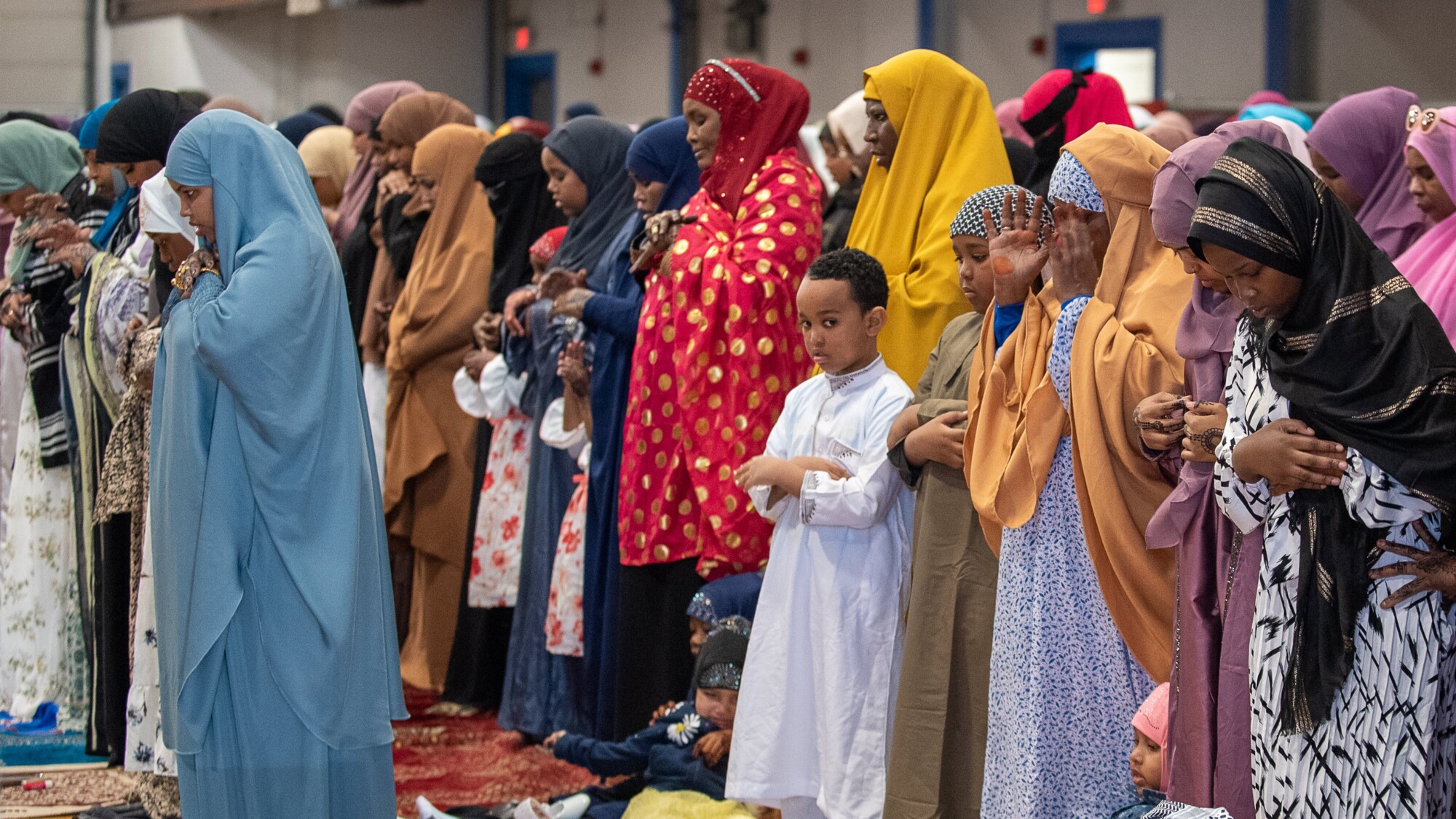
For Lewiston’s Somali population, obligation seeps into everyday life, Musse said.
The second generation is increasingly shaping Lewiston today. Many have become business owners, educators and community leaders.
“I see a lot of hope,” Musse said. “I feel like a lot of hope is bubbling up to the surface.”
Some of that hope was realized on Nov. 5, 2019, when Safiya Khalid was elected to the Lewiston City Council.
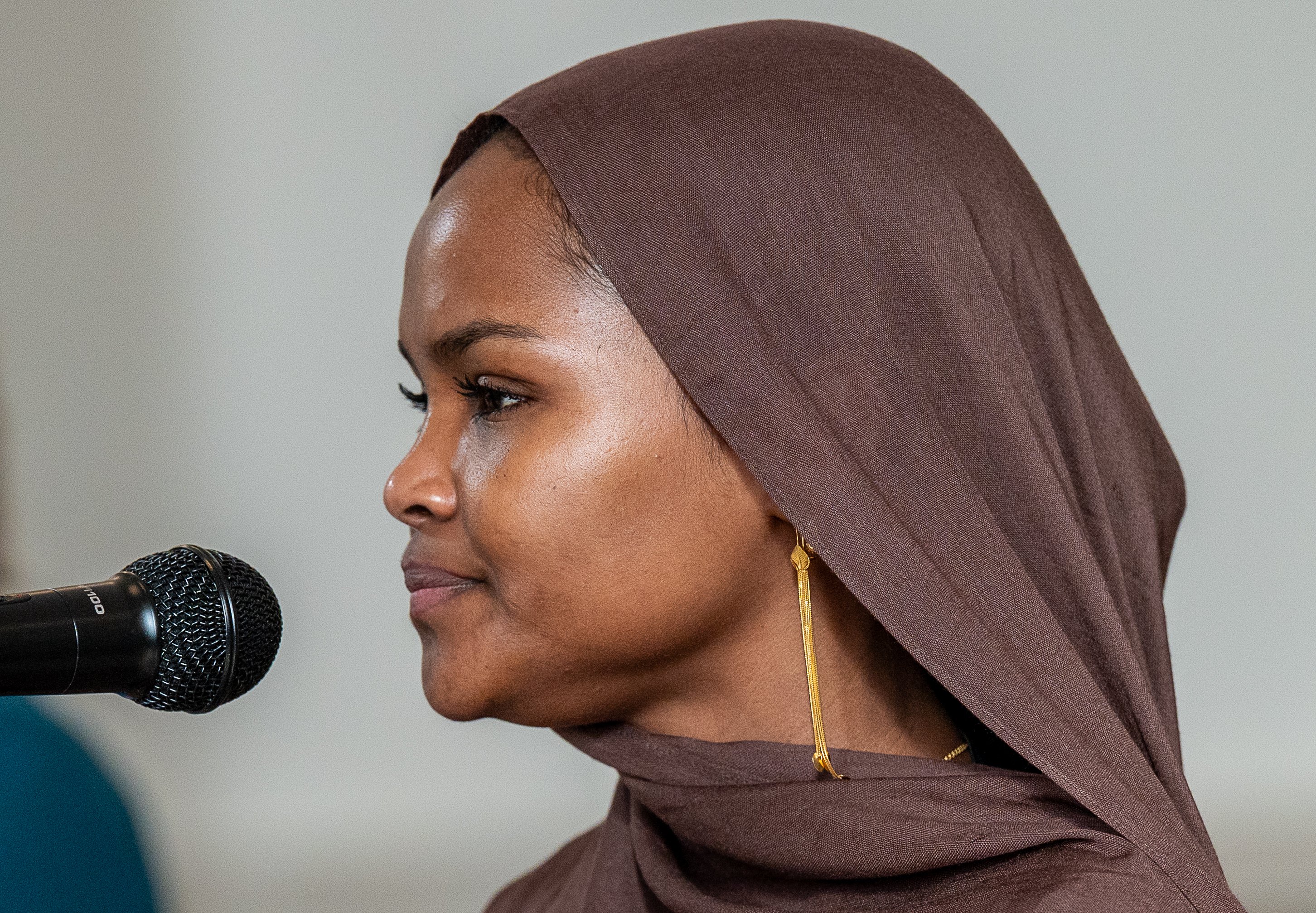
“To see someone like Safiya Khalid being elected to public office in Lewiston,” Bass said, “supported by her brothers and his teammates who campaigned for her door-to-door, that tells you something about where the city is now.”
Lewiston is growing, Androscoggin County Commissioner Shukri Abdirahman said. She came to Lewiston at age 10 from a refugee camp in Kenya, where her family, who fled Somalia in 1990, waited for nearly two decades to come to the U.S.
“We heard Lewiston is a good place — small, safe, a place for families. My parents just wanted a place where the children can get education and live a better life,” she said. “A lot has changed. There’s more opportunity, better education … Racism has decreased … There are new developments all over the city.”
Mayor Carl Sheline, a supporter of Lewiston’s multicultural heritage, said the city has come a long way since Raymond’s letter, which he described as disgusting.
“Lewiston is a city of immigrants built by immigrants,” Sheline said. “Like the Irish and French before them, Somali immigrants have contributed positively to the cultural and economic development of our great city. Let me be clear: our Somali neighbors are our fellow Lewistonians, and along with our recent immigrants from around the world, are all partners in success for our community.”
But after 25 years of life in Lewiston, recent changes to federal immigration policy have silenced many from immigrant communities.
Some immigrants and asylum seekers in Maine have been swept up in January’s federal ICE efforts to detain the state’s “worst of the worst” of immigrants lacking permanent legal status. The effort resulted in more than 200 detainments of 1,400 targeted individuals across the state, including Lewiston. Most of those detained did not have criminal backgrounds.
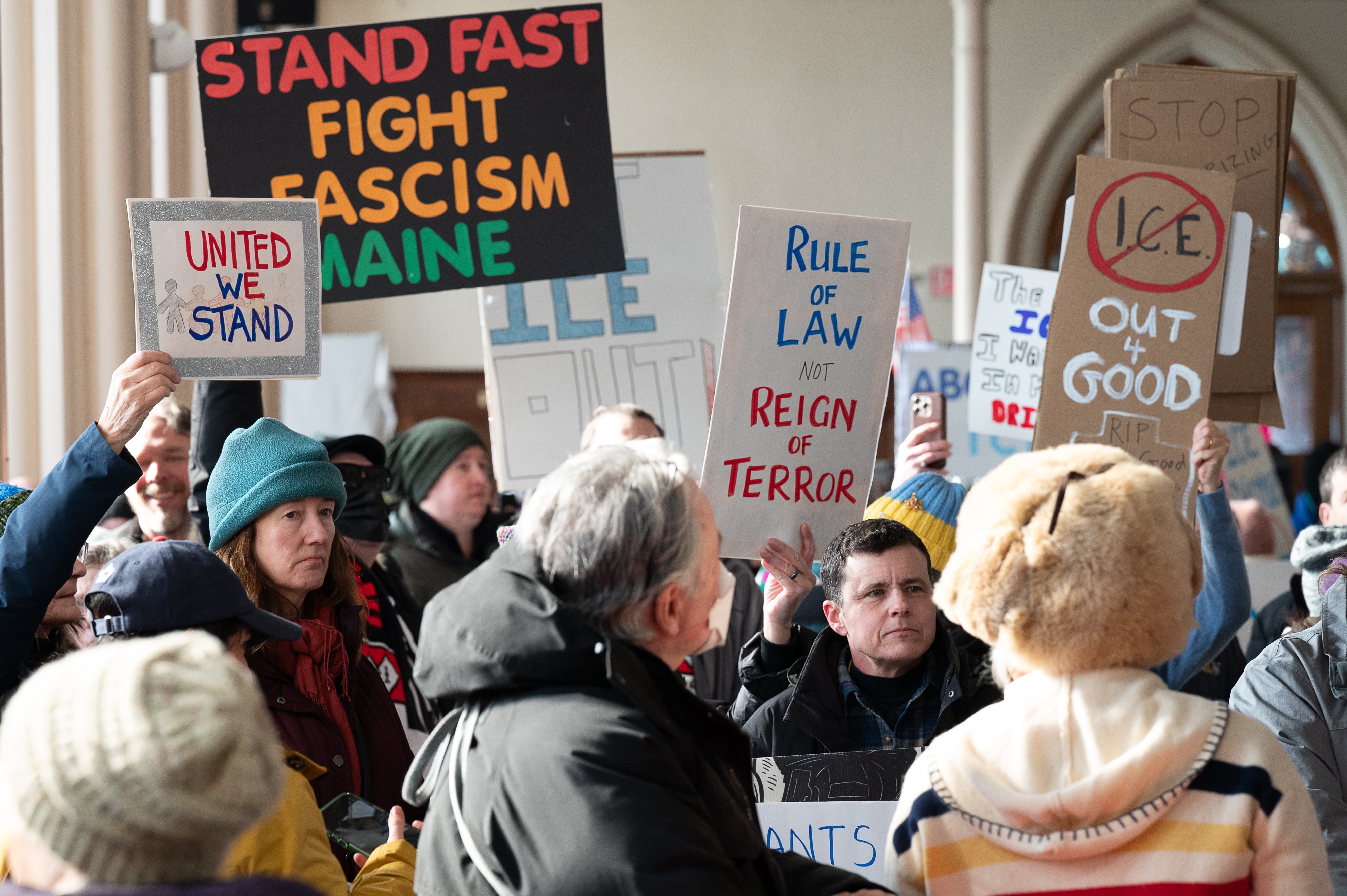
A Somali public health worker, who asked to remain anonymous, said people are still afraid to leave their homes to go to work and school. In the Portland, Lewiston-Auburn and Biddeford-Saco areas, the Maine Center for Economic Policy estimated that through to mid-March about 2,300 people were absent from work each day and more than 1,000 students were absent from school.
Somalis should be celebrating a quarter century of calling Lewiston their homes, the public health worker said, not staying home out of fear.
“Regardless of what’s happening on the political stage, people are still supporting one another. They’re still doing what’s needed — food, housing, health care, education. That work continues,” the public health worker said.
“As much as we’ve been able to shape the community around us and integrate into it, it’s also shaped us. It’s taught us what it means to be a Mainer. People outside the state might not understand it, but growing up in that multicultural space, I can say hand on heart it was a great experience,” the public health worker said.
Comments are not available on this story. Read more about why we allow commenting on some stories and not on others.
We believe it's important to offer commenting on certain stories as a benefit to our readers. At its best, our comments sections can be a productive platform for readers to engage with our journalism, offer thoughts on coverage and issues, and drive conversation in a respectful, solutions-based way. It's a form of open discourse that can be useful to our community, public officials, journalists and others.
We do not enable comments on everything — exceptions include most crime stories, and coverage involving personal tragedy or sensitive issues that invite personal attacks instead of thoughtful discussion.
You can read more here about our commenting policy and terms of use. More information is also found on our FAQs.
Show less