

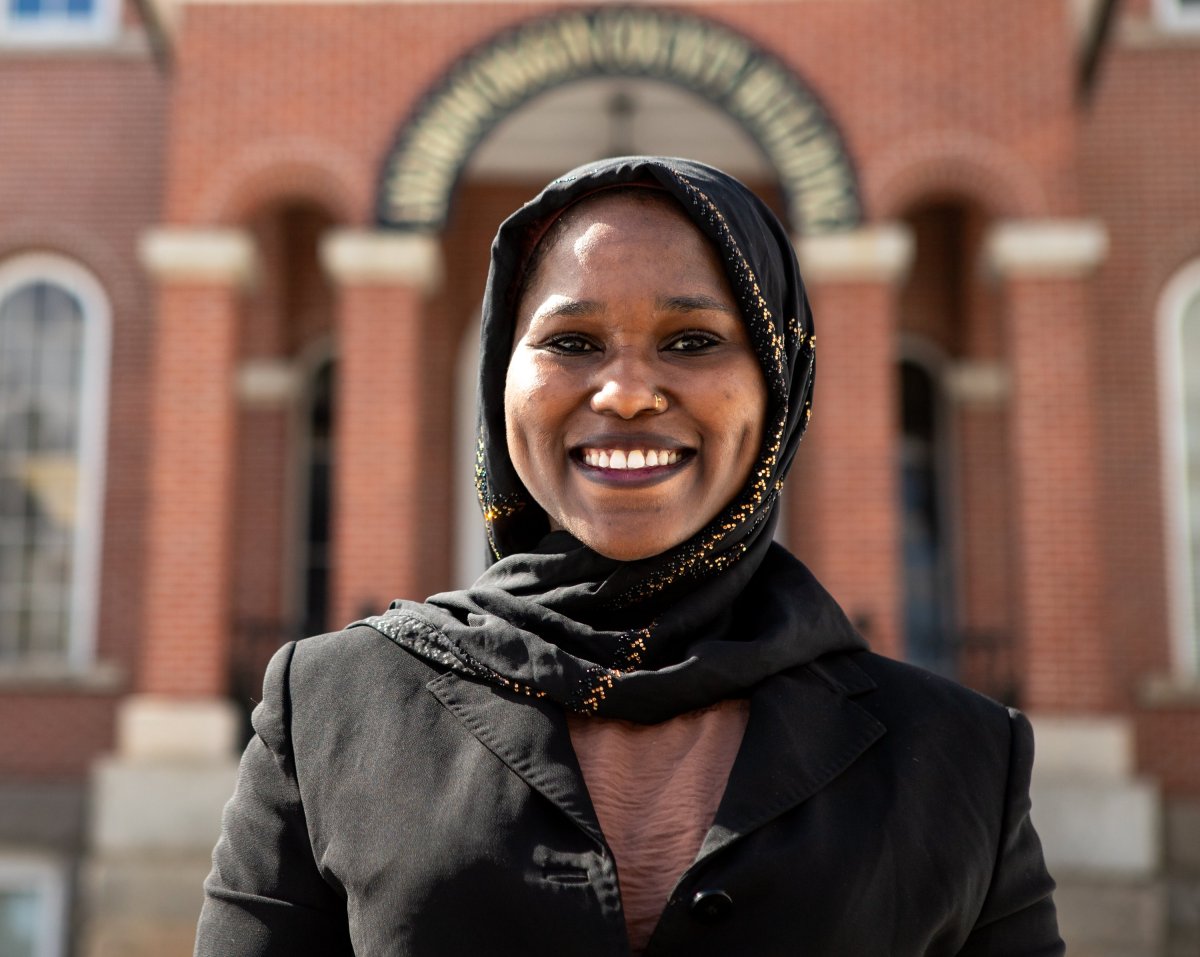
Shukri Abdirahman, now an Androscoggin County commissioner, came to Lewiston from a Kenya refugee camp when she was 10 years old.
Her parents left Somalia empty-handed in 1990 after their house was bombed at the start of the country’s civil war, she said. Fleeing on foot, her parents arrived in Kenya, where they would wait nearly two decades in one of the world’s largest refugee camps for a place to go — a story typical of Somali immigrants who eventually made their way to Maine.
“It had at least half a million people,” Abdirahman said. “But for me, growing up, I never even saw it as a refugee camp until I came to the U.S.”
That understanding would come later inside a Lewiston classroom, Abdirahman said, after she and her family came to the city in 2009.
“I started elementary school and kids were calling me ‘refugee,’ telling me to go back to my country,” she said. “Then I went on Google and searched ‘refugee,’ and then I realized that was me, that’s my background.”
Growing up in Lewiston was difficult, Abdirahman said. She and her family were settled into an apartment on Knox Street, where she experienced chaos, conflict and outright racism. Some of the harassment Somali people would experience went beyond words.
“One of the things people did was unleash their dogs so they could run after us,” Abdirahman said. “They knew Somali people had fear of dogs, and they were using that fear.”
But the city began to change, she said. Now, there’s more community and better education, and racism, once overt, has eased.
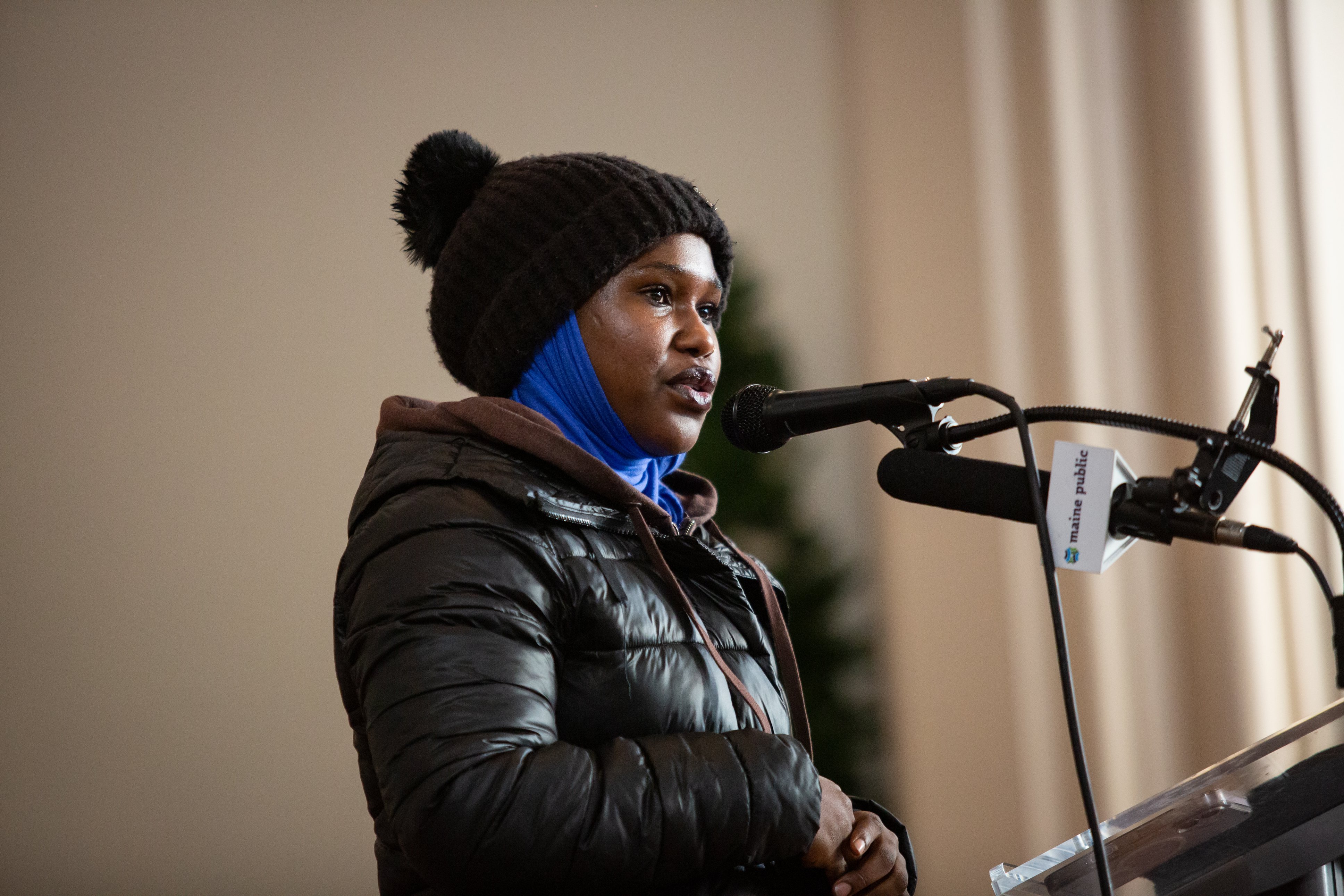
“Back then, people were scared. ‘Who are these people?’ But over the years, they’ve been educated and gotten to know who we are,” Abdirahman said. “I’ve always been a big fan of this city, I’ve seen the vision of what this city could be like, even as a kid. “
And Lewiston is growing, she said, a metamorphosis in real time with developments happening all around the city, with business growth and successful nonprofits. Somali people are embedded in everyday life as much as anyone, Abdirahman said.
“We’re not replacing one identity over another; we’re melting both cultures together,” she said. “Just because someone is different from you does not mean they are a threat. Our differences shouldn’t divide us, they should bring us together.”
All of Lewiston’s residents face the same problems, from poverty to drugs and violence, she said. They are problems that can only be overcome together.
The idea of “going back where she came from,” as elementary school classmates suggested, has no meaning for Abdirahman.
“When people tell me to go back, I say, ‘Where?'” she said. “This is our home. There’s nothing we can do. This is it.”

Comments are not available on this story. Read more about why we allow commenting on some stories and not on others.
We believe it's important to offer commenting on certain stories as a benefit to our readers. At its best, our comments sections can be a productive platform for readers to engage with our journalism, offer thoughts on coverage and issues, and drive conversation in a respectful, solutions-based way. It's a form of open discourse that can be useful to our community, public officials, journalists and others.
We do not enable comments on everything — exceptions include most crime stories, and coverage involving personal tragedy or sensitive issues that invite personal attacks instead of thoughtful discussion.
You can read more here about our commenting policy and terms of use. More information is also found on our FAQs.
Show less