

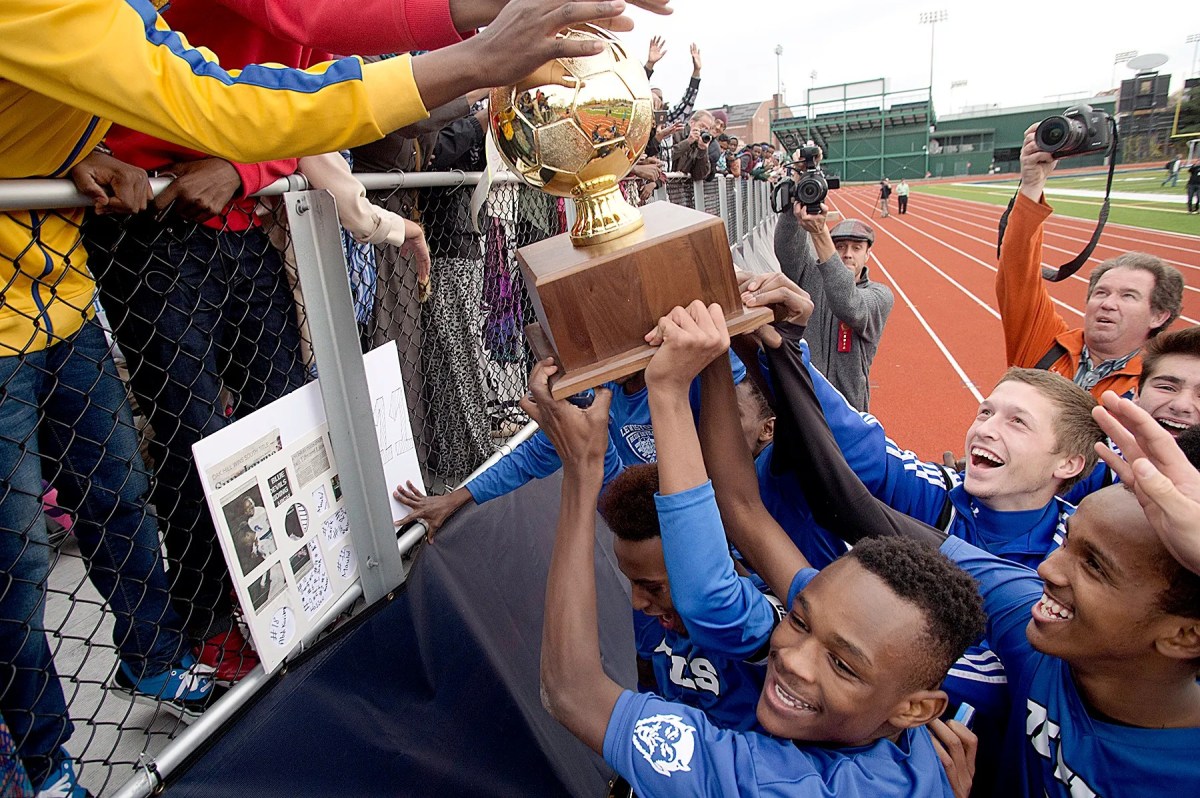
As Somali people began settling in the city in 2001, Mike McGraw, at the time a Lewiston High School teacher and coach, said a group of boys approached him on the field during summer soccer and asked to play.
The kids pushed back at first on the idea of a registration fee. McGraw recalls them saying they were so good that they should be paid to be on the field.
But the boys came back the next week, paid and played. The same happened during fall soccer. tryouts were a foreign concept, yet the Somali kids came back and worked their way onto the teams.
“When they found out I would be fair with them, and the other guys would be fair too, then they started coming out in bigger numbers every year,” McGraw said.
McGraw noted that the barriers for students and athletes — language, culture and trust — caused many to insulate themselves. Girls were congregating at the back of classes to gossip while boys who got in trouble hid behind language barriers.
While students and teachers worked through cultural and linguistic differences, the hardest thing to address was on the field.
“Trust,” McGraw said. “The biggest thing was getting the kids to trust each other.”
Not only did trust need to be encouraged on the field, in class and around town, it needed to be taught. In some cases, McGraw said, it needed to be enforced where players sat and where they played on the field.
The change was noticeable. By 2013, the talent on the Lewiston boys soccer team was finally bringing them to state championships. When the team took a devastating loss against Cheverus High School in 2014, McGraw announced that the team would come back the next year and win, no matter who they would face.
“I saw about 25 heads nodding along,” McGraw said. “And we did.”
The unity that led to the 2015 state title was McGraw’s greatest pride, he said, as he watched students who arrived without English or any knowledge of New England life adapt, excel and become leaders on their team, in their school and, later, in the community.
“I told them people in the community are watching this,” he said. “How you play together — this is how a community should work.”

Comments are not available on this story. Read more about why we allow commenting on some stories and not on others.
We believe it's important to offer commenting on certain stories as a benefit to our readers. At its best, our comments sections can be a productive platform for readers to engage with our journalism, offer thoughts on coverage and issues, and drive conversation in a respectful, solutions-based way. It's a form of open discourse that can be useful to our community, public officials, journalists and others.
We do not enable comments on everything — exceptions include most crime stories, and coverage involving personal tragedy or sensitive issues that invite personal attacks instead of thoughtful discussion.
You can read more here about our commenting policy and terms of use. More information is also found on our FAQs.
Show less