

A citizens initiative restricting transgender athletes’ ability to compete in school sports isn’t valid because of problems with the signatures gathered to send it to the ballot, according to a new lawsuit.
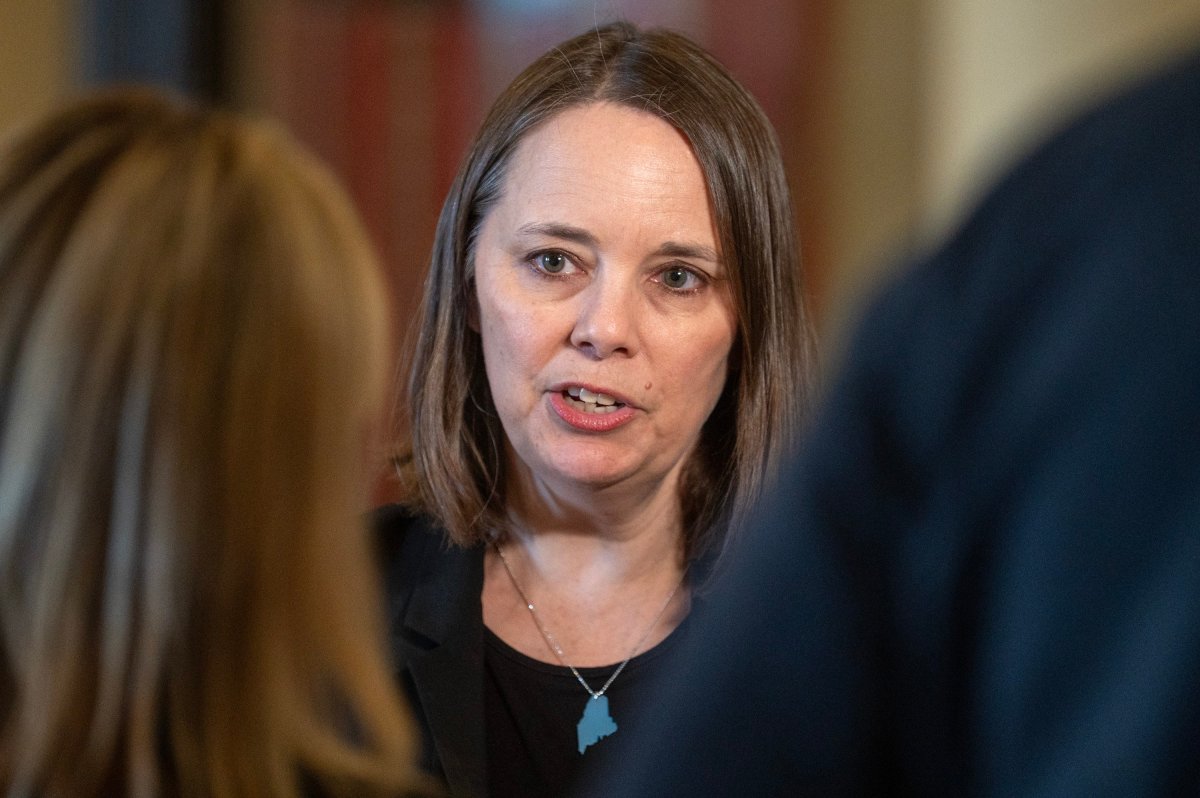
The challenge was filed in Cumberland County Superior Court on Friday by Maine residents Jane Gilbert, Mark Sayre and Kaitlin Webber. It says that Secretary of State Shenna Bellows erred in her determination this month that proponents of the measure had gathered the necessary number of signatures to send it to voters in November.
The lawsuit seeks to vacate that decision, or at least send it back to Bellows for reconsideration. Bellows’ office declined to comment, citing potential action by the Legislature on the scholastic sports issue.
The initiative, which Mainers are expected to vote on in November, would require public school students to play on teams matching their sex as it appears on their birth certificates. Girls could participate on a boys team if no female team is available to them in a given sport.
It also would require schools to maintain separate bathrooms and locker rooms for use by students based on the sex they were assigned at birth.
In the lawsuit, Gilbert, Sayre and Webber argue that there are a “host of issues” with the signatures gathered. Some signatures appear “suspicious” because they look like they were made in the same handwriting on behalf of numerous people, according to the suit.
There were also problems with the signature-gathering process, the trio asserted, including circulators leaving papers unattended. State law requires circulators to personally witness all signatures gathered, the suit notes.
In other cases, the petition circulators failed to give people the opportunity to read the ballot initiative summary in violation of state law, the lawsuit said. And some affidavits included “critical errors,” such as missing dates and notary information, the suit said.
Gilbert, Sayre and Webber estimated that at least 7,900 signatures declared valid are actually invalid, and said that would be enough to disqualify the measure from the ballot.
“When the dust settles on the ‘whole’ record, it will be clear that the proponents of the ballot initiative have simply failed to qualify,” the suit said.
Bellows announced this month that proponents had turned in 79,682 signatures, of which 71,033 were found to be valid. The requirement to make the ballot is 67,682.
It’s not unusual for some signatures to be found invalid during the review process. Bellows said most of the invalid signatures on the scholastic sports petitions were either not certified by municipal registrars as belonging to voters in that municipality or duplicates of signatures already counted.
The referendum comes as the U.S. Department of Justice has sued Maine for allowing transgender athletes to participate in school sports in a way that aligns with their gender identity, and after lawmakers in the Maine Legislature rejected several bills seeking to limit transgender athletes’ participation in school sports last year.
Supporters of the referendum were well-funded as they embarked on their signature-gathering effort. In October, they received an $800,000 contribution from conservative megadonor Richard Uihlein, the founder of the Wisconsin-based Uline Corp., a shipping supplies company.
Leyland Streiff, lead organizer behind the referendum, said Monday that he is confident in the validity of the signatures.
“We’ve looked at Shenna Bellows’ validation of our petitions and it looks like she did her job,” Streiff said. “We stand behind that and the work we did.”
According to state law, the court will need to issue a written decision within 40 days of Bellows’ validation of the petitions, which means a ruling is expected by late April.

Comments are not available on this story. Read more about why we allow commenting on some stories and not on others.
We believe it's important to offer commenting on certain stories as a benefit to our readers. At its best, our comments sections can be a productive platform for readers to engage with our journalism, offer thoughts on coverage and issues, and drive conversation in a respectful, solutions-based way. It's a form of open discourse that can be useful to our community, public officials, journalists and others.
We do not enable comments on everything — exceptions include most crime stories, and coverage involving personal tragedy or sensitive issues that invite personal attacks instead of thoughtful discussion.
You can read more here about our commenting policy and terms of use. More information is also found on our FAQs.
Show less