


FREEPORT — The Island Rover sits, tucked away in a forested neighborhood, with boarded up windows and a rusting construction ladder nearby.
The 80-ton steel ship is only a few hundred yards from the water, but the coast can’t be seen from the cluttered lot it has occupied for the last two years. It’s not what the original owner and builder, Harold Arndt, had in mind when he started construction on it more than 30 years ago.
Arndt, who worked as a waste minimalization specialist for Bath Iron Works before retiring in the mid-1990s, wanted to teach young people about creative ways to reuse what they might otherwise discard. The now-83-year-old said his dream was to cast off nearby, taking a group of college students on a trip to the Arctic.
But the Island Rover remains landlocked.
Last year, the Freeport Coastal Waters Commission denied a temporary boat launch for the roughly 90-foot schooner in the residential area, where the water in Raspberry Cove‘s mudflat only reaches about 6 feet at the highest astronomical tide. Now, several of Arndt’s supporters are pursuing a referendum to override the town’s decision. The group has until April 22 to gather signatures for a petition to add the referendum to the ballot for the June election.
Freeport has asked the Maine Department of Environmental Protection to weigh in on whether the agency might determine portions of the ordinance violate state shoreland zoning laws, town attorney Amy Tchao said. A spokesperson for the DEP said Tuesday that the “entire matter is under review.”
Arndt also sued Freeport in February, claiming the town has spent more than 20 years fighting him in court to get the schooner removed, imposing thousands of dollars in fines, while rejecting his efforts to launch the ship. The town has asked a federal judge to dismiss the case.
Arndt said in an interview this month that he wants to get the “boat in the water so it can deliver on its original mission.”
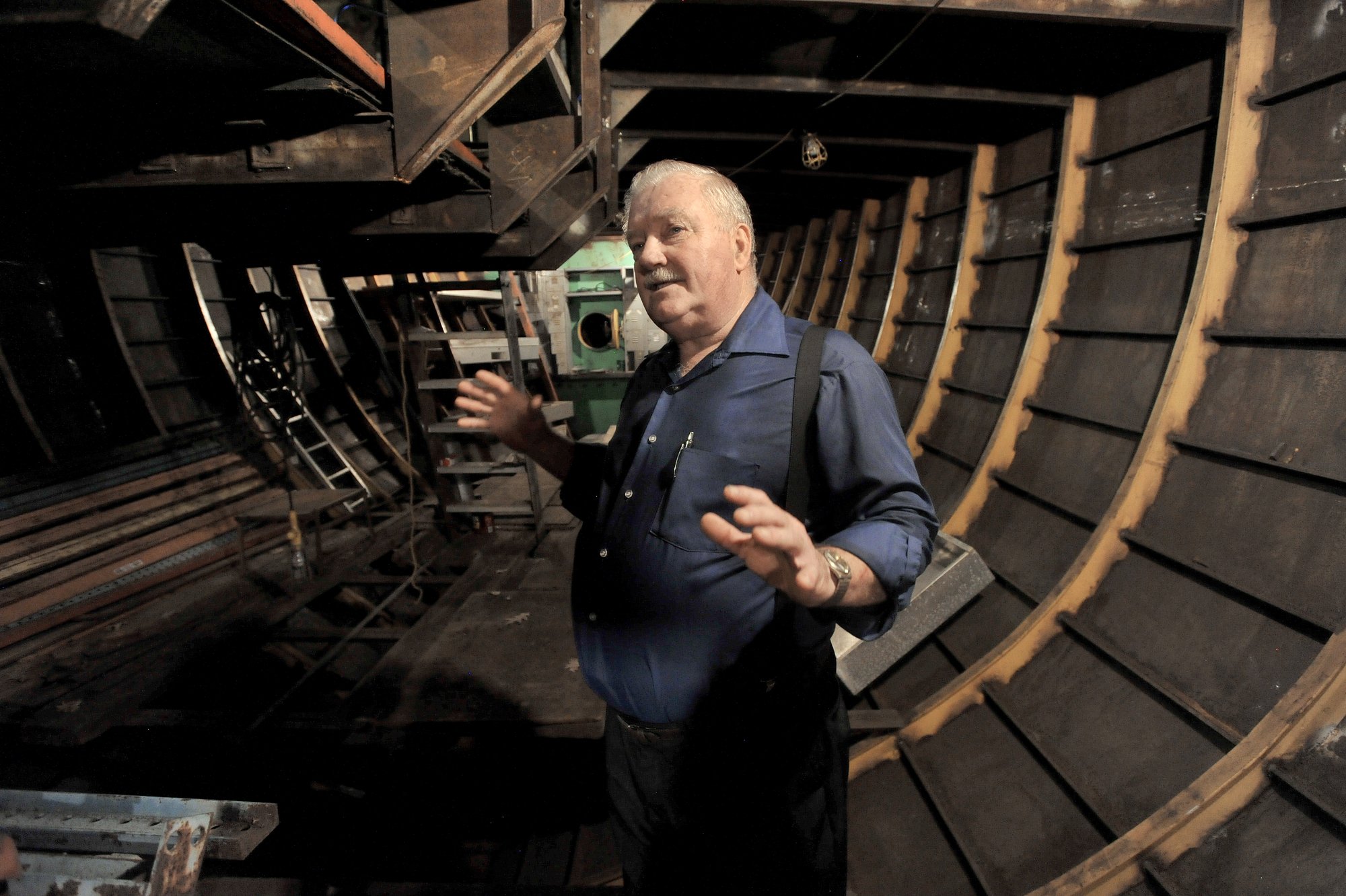
His legal battles with the town have spurred news stories and documentaries. Judges have repeatedly found Arndt violated court-imposed deadlines to move the ship. Its ownership is also unclear, after Arndt mortgaged some of his property and granted a security interest in the ship to a local businessman to take over and help finish construction, according to court records. The town sued both men in 2017, arguing Freeport is the ship’s owner after Arndt went back on an agreement to remove it.
Residents of Raspberry Cove say the latest plan to launch the boat off of Lower Flying Point Road is not practical. On top of concerns about coastal erosion and the well-being of wildlife, they worry the ship — larger than the famous L.L.Bean Boot statue in town — will get stuck in the mud.
Other private property owners have denied similar requests from Arndt to use nearby locations. Neighbors opposed to a launch from their neighborhood said they admire Arndt’s craftsmanship.
“The guy did an amazing job, building the boat,” said resident Ken Murphy. “He made one mistake, and that was not figuring out how to get the boat in the water.”
ORDINANCE LANGUAGE
Freeport received a letter in early March from seven residents, all supporters of the Island Rover, requesting a referendum. The proposed ordinance would allow permits to build temporary boat launches.
At a recent meeting, town councilors said they were open to letting voters decide.
Tchao said Monday that the referendum’s proposed language is not exclusive to the Island Rover, and could allow anyone in that residential zoning district to build a temporary boat launch.
Twain Braden, Arndt’s attorney, said the referendum is the quickest way to end years of litigation and get the Island Rover in the water.
“This is a one-time chance to put all of this to rest,” Braden said during a March 17 town council meeting. “Get this boat out of the town of Freeport. That’s all this ordinance wants to do, is to give it to the voters to say, ‘We’ve had enough, we do not want to litigate this anymore.'”
The Island Rover’s launch would still need approval from the state, even if a referendum is passed. A DEP spokesperson said in March that the ship would need a Natural Resources Protection Act permit.
“It’s not as simplistic as it might look,” Tchao said.
OWNERSHIP DEBATE
Freeport first challenged Arndt in 2004, when town officials at the time accused him of violating rules against “manufacturing use” in a residential zone. Arndt agreed in 2014 to move the Island Rover out of the neighborhood within two years or cede ownership of it to the town.
In the lawsuit filed in February, Braden argued Arndt reached the agreement under pressure and without a lawyer. The lawsuit also claims the legal issues scared away potential donors who could have helped fund the ship’s construction after Arndt formed the Island Rover Foundation, a nonprofit.
Arndt hired Carter Becker, a local businessman, in 2016 to help finish construction and champion the Island Rover’s launch. When the town learned the following year that Arndt had mortgaged his property to pay Becker, officials sued them both, alleging fraudulent transfer. The men have denied that in court, where the boat’s ownership is still being debated.
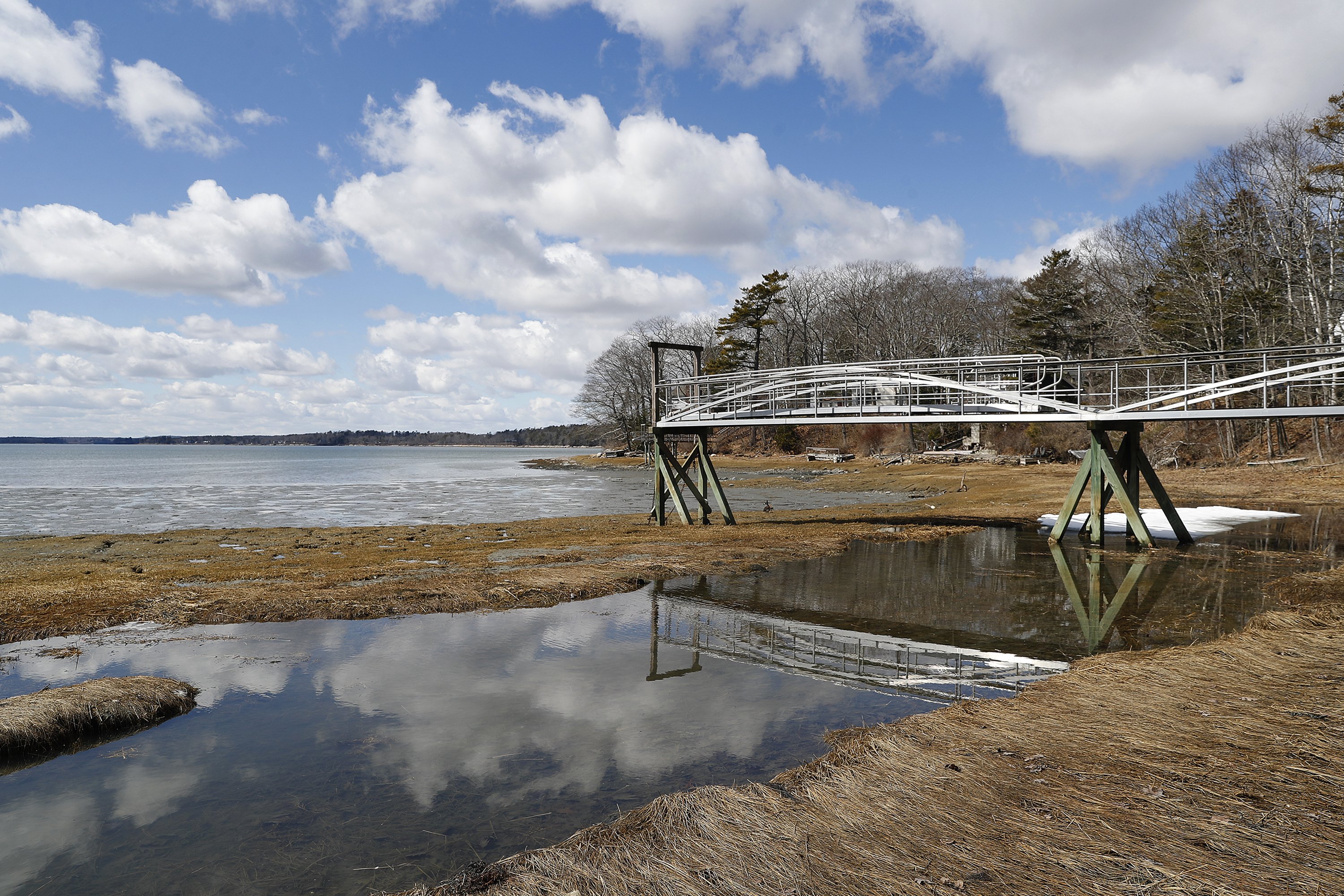
Becker, who owns a waterfront construction company in town, also owns the land where most of the temporary launch would be constructed, including the intertidal part. The town’s Coastal Waters Commission rejected the proposal last fall for environmental reasons, including potential risks to the cove’s horseshoe crab population and birds.
Becker had previously applied to build a permanent launch in 2016, but withdrew his application before a decision was reached. Becker said this month that he still stands by the proposal for the temporary launch. He appealed the denial in Cumberland County Superior Court, where the case is still being considered.
“The stuff they denied, they were following the directions of their political leaders,” Becker said of the commission. “There’s some bad politics going on in the backroom.”
Town officials denied in interviews this week that Freeport has treated Becker’s proposal any differently than other projects routinely considered by the commission.
PROPOSED LAUNCH PROCESS
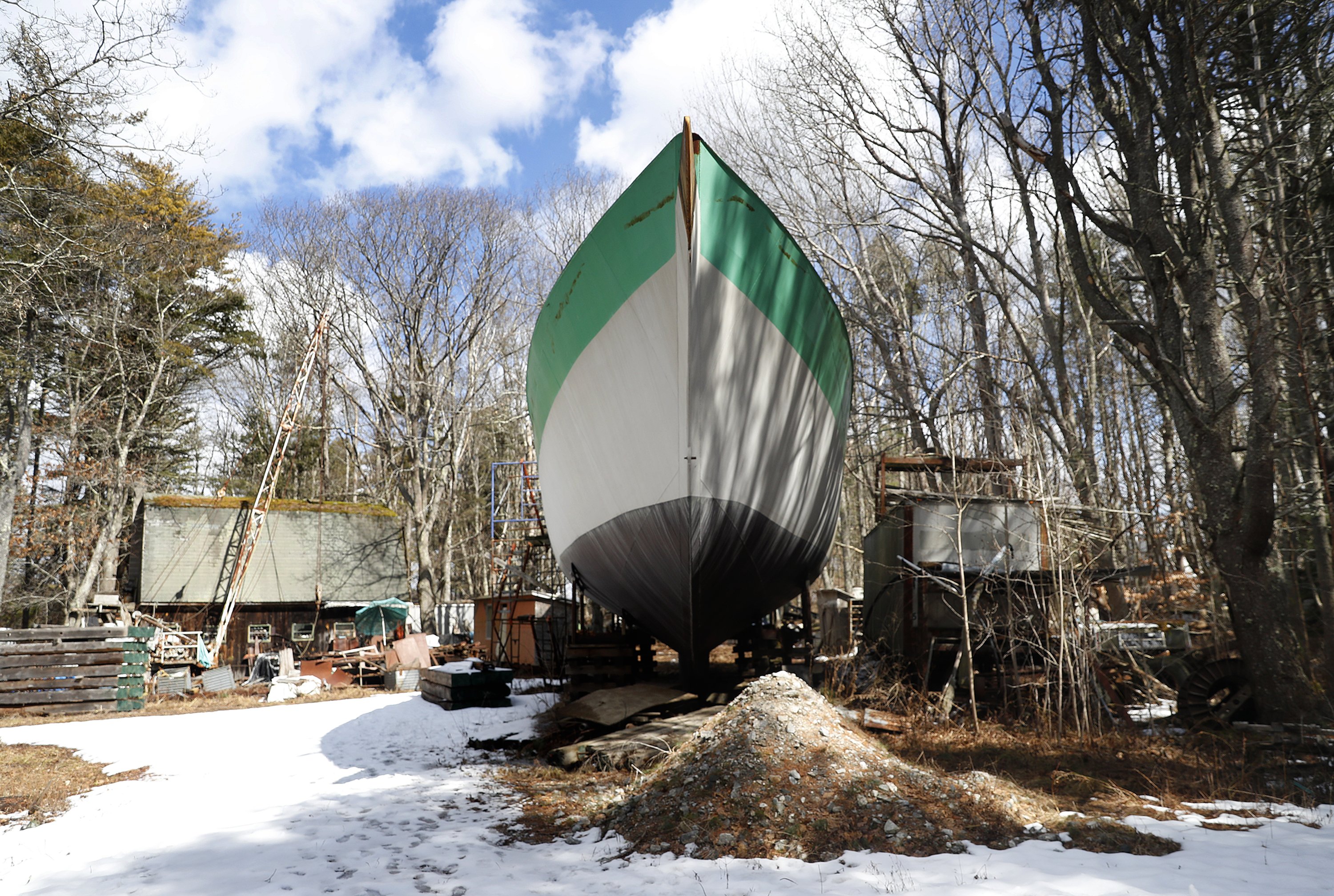
In addition to environmental concerns, an engineer hired by neighbors said the process described in the launch proposal for the Island Rover is one that would typically be performed in a larger, commercial setting with the appropriate infrastructure in place — not a residential neighborhood.
It would require setting up a new access road, stretching from the public street, down a wooded gully and into the mudflats and salt marsh, according to the proposal. It would also require mesh mats and tote bags filled with stone and gravel to help level the uneven terrain.
Tim Forrester, the engineer hired by the neighbors, said the Island Rover’s weight would have a devastating impact on the soil. He questioned why it couldn’t be cut up and reassembled over deeper water.
“It sounds harsh, and it took me a while to come to that conclusion, but that’s what should happen at this point,” Forrester said. “Just because Harold had a dream, doesn’t mean it should have a negative impact on someone else’s property a few yards down.”
A judge in 2017 suggested that “cutting it up and disposing of the pieces as scrap” may be the only way Arndt could comply with court orders.
Arndt’s supporters have balked at such suggestions, given his decades of labor and investment in the project. On Monday, Braden, his attorney, said Arndt welded the Island Rover so tightly that it would not reassemble the same way.
Doug Piehl, a referendum supporter, called it the “fairest, fairest steel boat I’ve ever seen made. Harold’s just a master at metal work.”
DEBATE AMONG SUPPORTERS, NEIGHBORS
Nicholas Walsh, one of the seven supporters who asked the town for a referendum, recently said it would be “a great shame” if the boat couldn’t launch after all this time.
“Shipbuilding and ship maintenance and yacht maintenance remain important industries for the town,” Walsh said. “And the only reason that wouldn’t happen, really, is that the neighborhood has changed around the ship as the construction has occurred.”
But residents of Raspberry Cove, where Becker and Arndt want to launch the Island Rover, said a referendum would do more harm than good.
“There are rules in place for a reason,” said neighbor Cathryn Bigley.
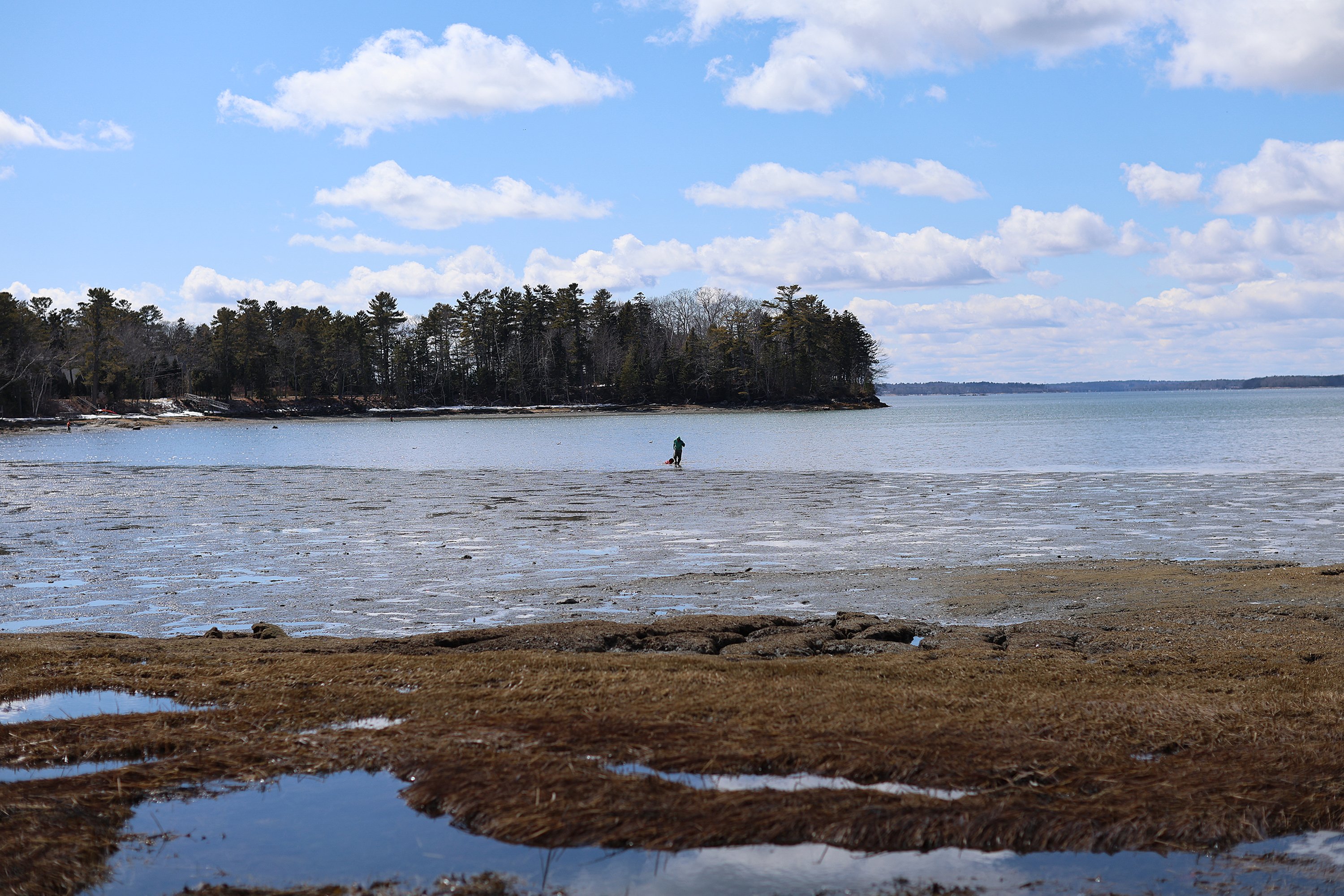
On a recent March afternoon, looking out on the placid water with a few clammers and some geese and gulls in the distance, Bigley described efforts elsewhere along the coast to stabilize the land and prevent erosion.
Dragging an 80-ton steel ship, and all of its accompanying launch gear, over the marsh and mudflats, she said, would do the opposite.

We invite you to add your comments. We encourage a thoughtful exchange of ideas and information on this website. By joining the conversation, you are agreeing to our commenting policy and terms of use. More information is found on our FAQs. You can update your screen name on the member's center.
Comments are managed by our staff during regular business hours Monday through Friday as well as limited hours on Saturday and Sunday. Comments held for moderation outside of those hours may take longer to approve.
Join the Conversation
Please sign into your CentralMaine.com account to participate in conversations below. If you do not have an account, you can register or subscribe. Questions? Please see our FAQs.