

As residents struggle with inflation and soaring energy bills, state climate leaders are trying to convince a skeptical public that green initiatives are among the most effective tools to lower living costs.
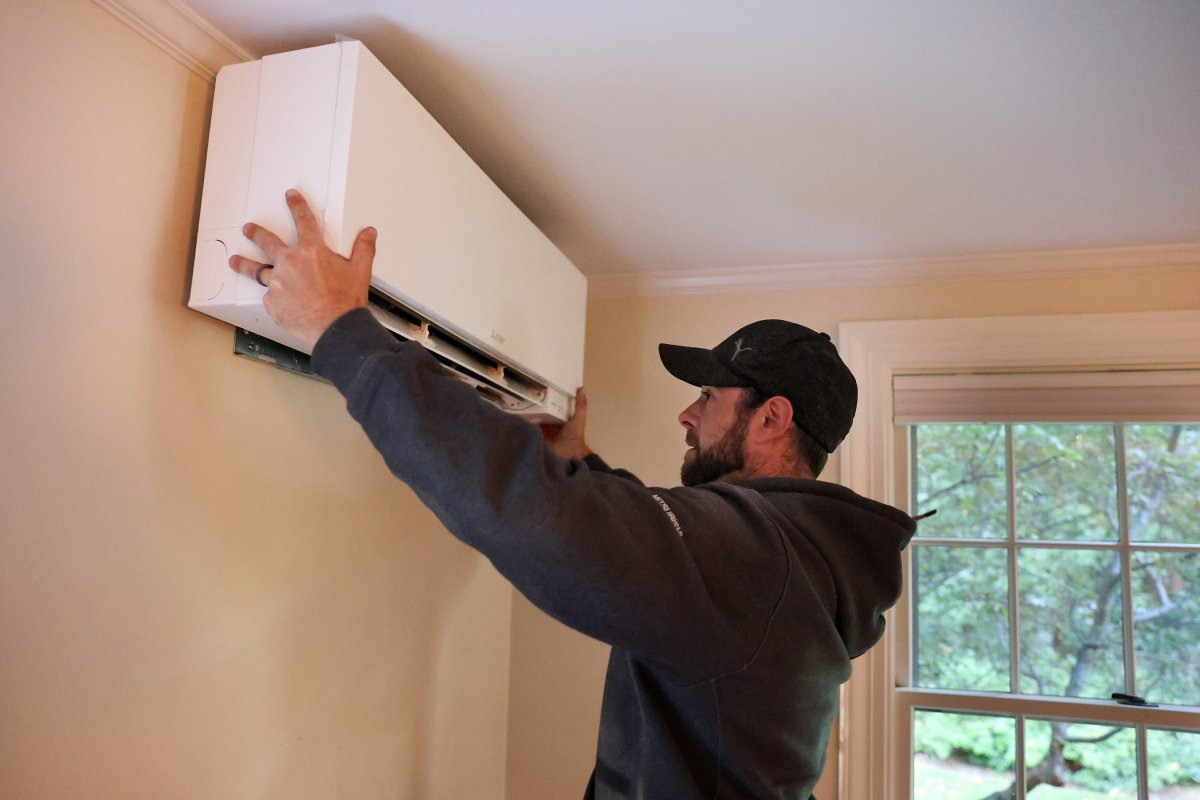
Heat pumps save money by slashing reliance on oil, natural gas and propane, for example. Storm preparedness minimizes repair costs following extreme weather.
At its first meeting in 2026, the Maine Climate Council acknowledged the perception that climate action is a luxury that many can’t afford. A survey of members indicated their concern that Mainers are more focused on immediate survival than long-term environmental goals.
The challenge is especially acute for Maine’s seniors, the largest demographic in the nation’s oldest state, said Noel Bonam, the director of AARP Maine. He described the daily trade-offs facing older Mainers living on fixed incomes at the March meeting.
“Do I keep the heat going, you know, for a little bit longer, so that I can actually stay warm when I need to stay warm, or should I split my medication so that I’m using half the dosage I need to so I can save that to pay for my energy cost?” Bonam said.
The state’s traditional heritage industries are facing similar clashes of short and long-term risks.
Melissa Law, an organic farmer at Bumbleroot Farm in Windham, described a landscape where soaring labor and material costs are meeting unpredictable weather extremes, such as a record-breaking wet spring followed immediately by a summer drought.
Lobster fisherman and biologist Curt Brown noted the rising cost of fuel and bait are squeezing his industry while scientists are trying to understand new changes in the Gulf of Maine, where record-low salinity and temperature fluctuations are disrupting commercial harvests.
Ethan Tremblay, the manager of planning and policy at the Department of Energy Resources, noted that historic winter storms have already added roughly $20 to the average monthly utility bill just to cover infrastructure recovery.

Rebecca Boulos, executive director of the Maine Public Health Association, highlighted a new bipartisan law to increase storm preparedness as a rare example of policy that restored trust in public institutions by responding directly to community feedback.
“We heard them, we deliberated really good policy and we passed something that’s going to help people shore up their homes, to make them safer, to make them more resilient to climate change,” Boulos said. “I think it’s imperative we keep doing that.”
Keith Carson, communications director at Maine Conservation Voters, said the state must do a better job of repeating these financial realities and legislative successes to the public so they can understand the benefits of climate mitigation and not lose hope in the face of federal resistance.
“We’re now at a point where we can say solar and onshore wind are, per megawatt, the cheapest,” Carson told the council. But many Maine residents still mistakenly believe that the green energy transition is driving prices up rather than down, he said.
The council warned that unless the state can bridge the gap between “abstract” climate policy and these “kitchen table” realities, the pace of Maine’s implementation of its ambitious climate action plan will likely stall, especially now that federal funding and support have disappeared.
Maine has written four greenhouse gas goals into state law to compel the government to do its part to curb climate change and prevent the earth from overheating: cut emissions 10% from 1990 levels by 2020, 45% by 2030, 80% by 2050, and achieve carbon neutrality by 2045.
In 2024, the Department of Environmental Protection announced Maine had met its easiest emissions goal — a 10% reduction by 2020 and was 91% of the way toward meeting its carbon neutrality goal by 2045.
It has a long way to go for its next goal — 17.3 million tons, or a 45% cut — and four years to do it.
Moving forward, the council plans to launch a resilience funding and finance study to find new ways to help communities and individuals afford upfront climate investments, with a dedicated meeting in September to focus on financing a local green transition without federal help.
.

We invite you to add your comments. We encourage a thoughtful exchange of ideas and information on this website. By joining the conversation, you are agreeing to our commenting policy and terms of use. More information is found on our FAQs. You can update your screen name on the member's center.
Comments are managed by our staff during regular business hours Monday through Friday as well as limited hours on Saturday and Sunday. Comments held for moderation outside of those hours may take longer to approve.
Join the Conversation
Please sign into your CentralMaine.com account to participate in conversations below. If you do not have an account, you can register or subscribe. Questions? Please see our FAQs.