

SKOWHEGAN — A third person has been charged in connection with the March 2025 shooting death of a 28-year-old man in Palmyra, a killing which prosecutors said resulted from an orchestrated, drug-related robbery involving several people who fled the state.
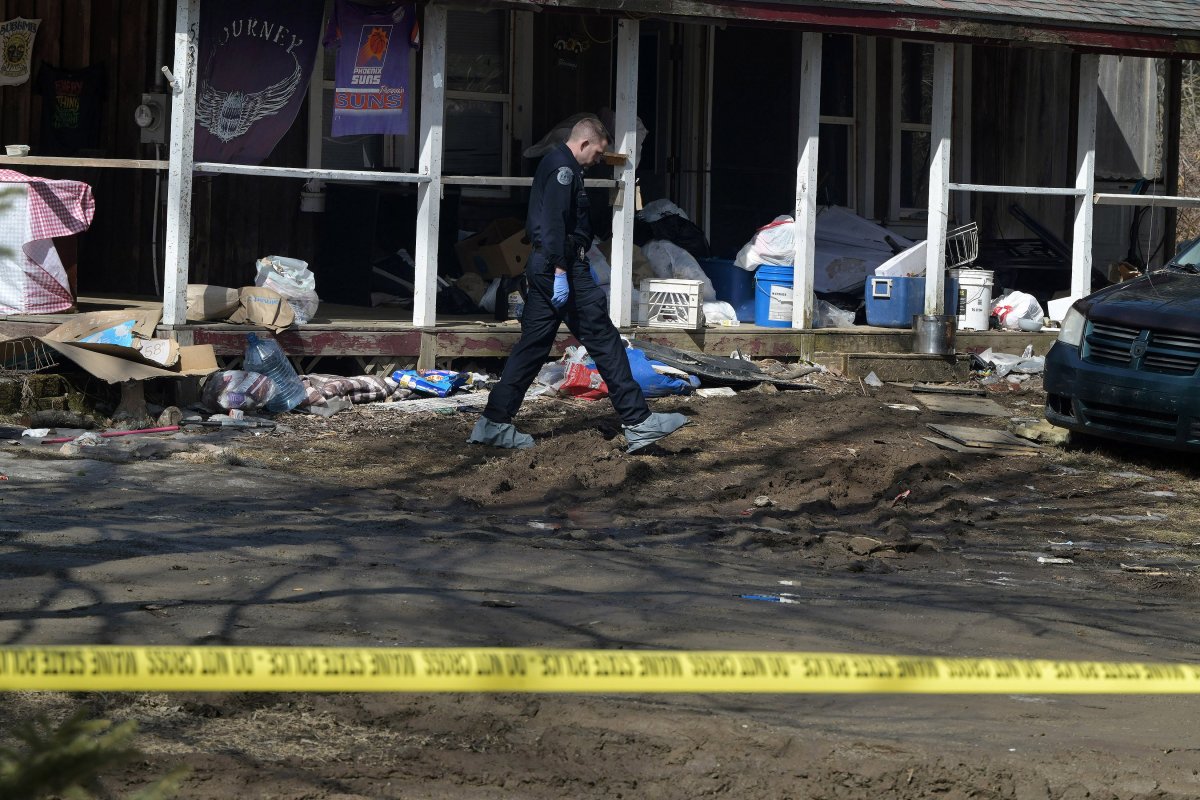
Authorities have been tight-lipped about what they believe led to the death of Jaquan Humphries, whose body was found March 12, 2025, in a house the Somerset County Sheriff’s Office had investigated months earlier for being the site of suspected drug trafficking.
But police and prosecutors have slowly revealed their case as they proceed with charges against multiple people they believe were involved in the plot.
The latest development came Friday, when Garrell Grooms, 37, was arraigned in Skowhegan.
Grooms, whose last known residence was not listed in available court records, is charged with Class A felony murder, Class A robbery and Class B conspiracy to commit robbery.
Felony murder is a lesser offense than murder under Maine law. The charge indicates Grooms, alone or with others, caused Humphries’ death while committing, attempting to commit, or fleeing immediately after committing or attempting to commit murder or robbery. The conspiracy charged alleges Grooms drove the vehicle that transported multiple people to and from the alleged robbery.
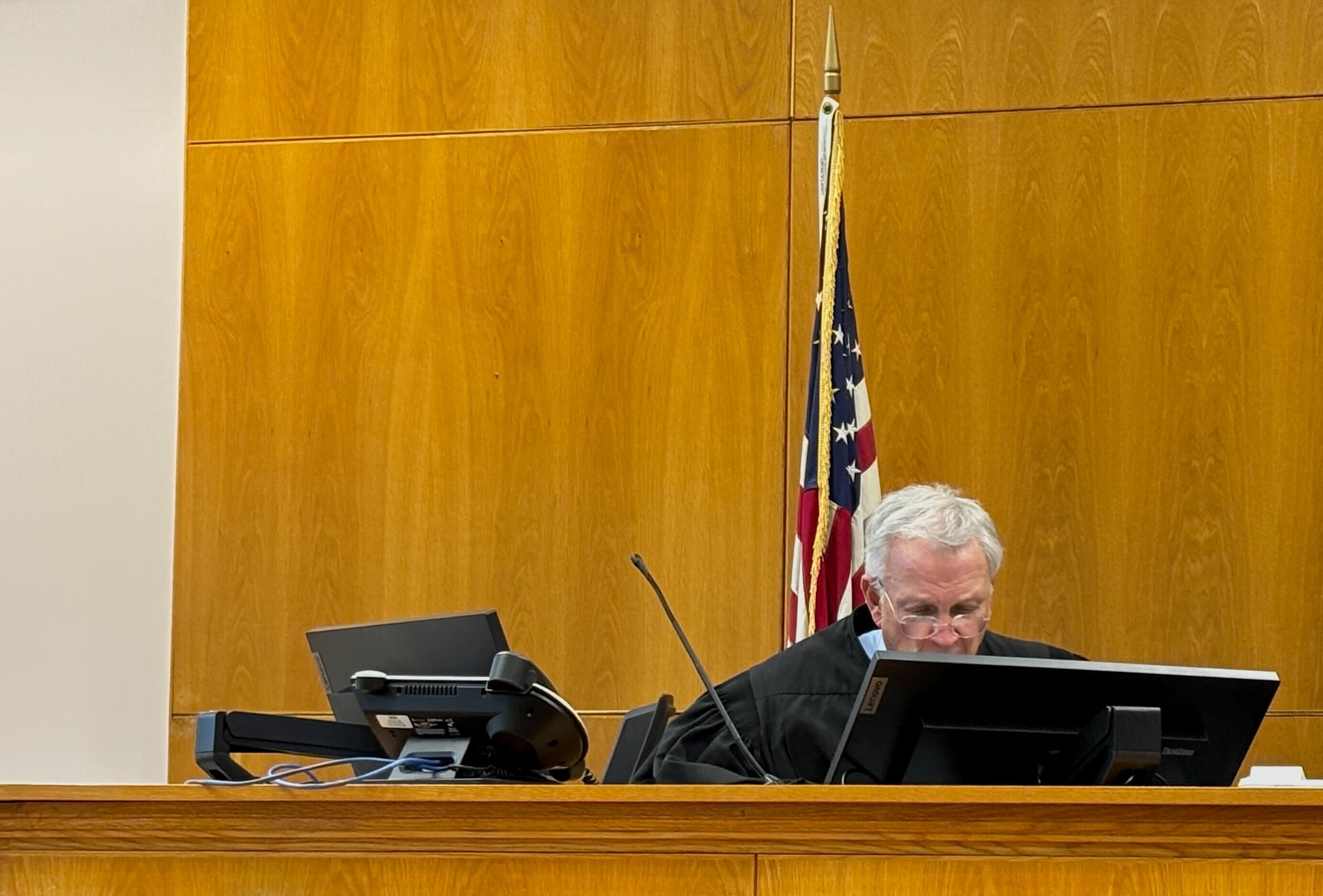
A grand jury returned an indictment Dec. 11, 2025. Superior Court Chief Justice Robert E. Mullen ordered it unsealed during Friday’s brief arraignment.
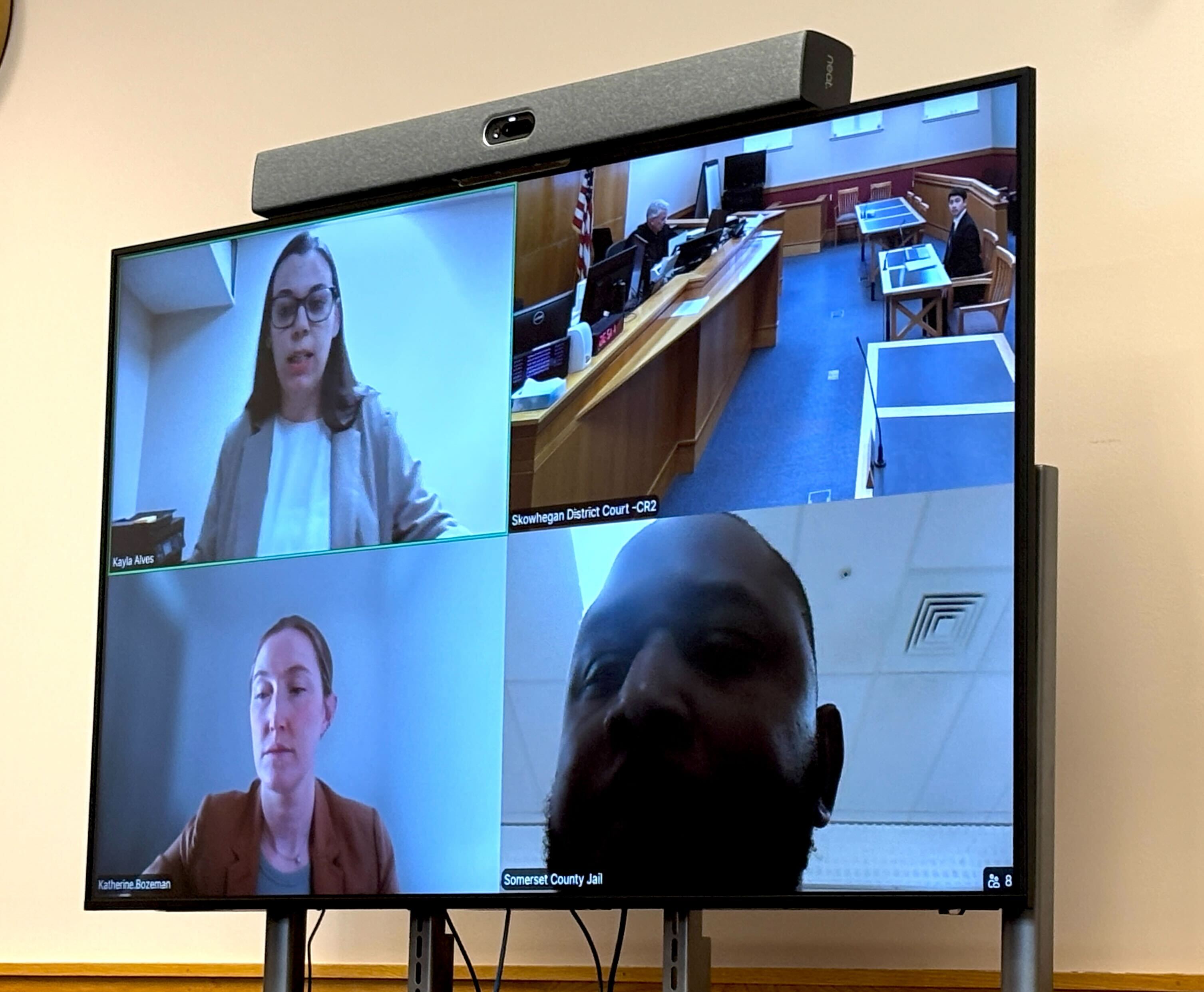
Grooms pleaded not guilty to each count, appearing via videoconference at the Skowhegan District Court.
Grooms was booked Thursday at the Somerset County Jail, records show. He was arrested in Connecticut and was recently extradited, said Danna Hayes, spokesperson for the Office of the Maine Attorney General. She had no further details of the arrest immediately available.
At Assistant Attorney General Katherine Bozeman’s request, Mullen ordered Grooms held in jail on $500,000 cash bail. Grooms’ court-appointed attorney, Kayla Alves, said she may seek to amend bail later.
Bail conditions prohibit Grooms from contacting two other people charged in connection with Humphries’ death.
Kareem Quattlebaum, 38, of New York, is charged with murder in connection with Humphries’ death. The Maine State Police announced in October that the FBI had arrested Quattlebaum in the Bronx.
Quattlebaum pleaded not guilty in December after authorities brought him back to Maine. He is being held in jail without bail pending a hearing scheduled July 30 in Skowhegan, court records show. The court has set tentative trial dates in April 2027.
As of this week, the court filings in Quattlebaum’s case remained impounded — unavailable for the public to view.
Also charged in connection with the killing last year was Jacqueline McClure, 34, of Palmyra.
In November, McClure pleaded guilty to Class B hindering apprehension or prosecution and Class B conspiracy to commit arson in a case in Penobscot County. In a related case in Somerset County, she pleaded guilty to Class C conspiracy to commit robbery. All counts are felony-level.
The exact terms of McClure’s plea deal were not made clear. When Judge Meghan Szylvian asked attorneys to explain the agreement in court, Assistant Attorney General Mark Rucci requested a sidebar conversation, which was not captured on the official audio recording the court produced.
The judge said after the sidebar that although the two sides negotiated a recommended sentence, technically the agreement was an “open plea,” meaning it is up to a judge to determine an appropriate sentence.
McClure’s sentencing was originally set for February in Bangor, but it is now scheduled for June 12, court records show.
At McClure’s plea hearing, Rucci, the prosecutor, laid out a complicated series of events surrounding Humphries’ death and the subsequent police investigation.
A woman called 911 around 1:30 a.m. March 12, 2025, to report an incident at her home at 531 Madawaska Road in Palmyra, Rucci said. Law enforcement responded and found the woman with about a half-dozen other people. Police also found Humphries deceased on the second floor of the residence.
Humphries, of the Mattapan neighborhood of Boston, was believed to be living there, state police said previously.
The Office of Chief Medical Examiner later determined Humphries died of a gunshot wound to the head-neck area, Rucci said.
Witnesses at the home told police a man they knew and two unknown men entered the house, Rucci said.
The unknown men were wearing masks, Rucci said, and most witnesses described one as a large Black man and the other a smaller Black man.
The larger man held those downstairs at gunpoint, while the smaller man ran upstairs, Rucci said.
The witnesses then reported hearing what sounded like firecrackers upstairs, and the two men left the house, Rucci said.
Everyone at the house then left in a van, although some came back later and called 911, Rucci said.
A few hours later, just before 4 a.m. police were called to a vehicle fire in Carmel that appeared to be intentionally set, Rucci said. Investigators later that day tracked down the son of the vehicle’s owner, who told them McClure borrowed the car and told him it was for a drug run.
The vehicle owner told police McClure and a man known as “Major” told him that morning the car was stolen and gave him drugs in exchange, Rucci said.
On April 16, 2025, the Maine State Police tracked down McClure in Massachusetts using cellphone location information, Rucci said, and she was arrested on unrelated charges out of Maine.
In two interviews with detectives, according to Rucci, McClure said she and “Major” — believed to be Grooms, with whom she has children — decided to rob someone named “Jersey.” Prosecutors say they believe that is a nickname for Humphries.
McClure told police that on March 11, three people she did not know came to her house on the Hicks Pond Road in Palmyra, in a red vehicle with New York license plates, Rucci said. She described them as a large Black man, a shorter, thinner Black man and a Black woman.
McClure said they asked her to get a car to execute the plot, and she did — the same car that was later set ablaze — Rucci said.
McClure said she and the unknown woman stayed at her home, while “Major” and the two unknown men drove to 531 Madawaska Road, Rucci said. A man who was at that house, who McClure knew, came to her house in a panic and told her “Jersey,” or Humphries, had been killed.
Around the same time, the unknown woman with McClure heard from her boyfriend he had been stabbed in the robbery, and there was blood in the car he was using, so they had to dispose of it, Rucci said.
Next, McClure and the unknown woman drove to Bangor and met with Grooms, who had the car used in the robbery, Rucci said. The three drove to Carmel and the unknown woman set the vehicle on fire, McClure told police.
After the trio returned to Palmyra, McClure told police she never saw the unknown woman or the two unknown men again, Rucci said. She eventually left for Massachusetts.
Meanwhile, the state police Major Crimes Unit detectives found a knife next to Humphries’ body, and the crime lab matched physical evidence to information on Quattlebaum in a national law enforcement database, Rucci said.
He said cellphone data corroborated Quattlebaum’s movements, per prosecutors’ account: Quattlebaum traveled to Maine from New York on March 11, 2025, was in the area of 531 Madawaska Road at the time of Humphries’ death early March 12 and left for New York shortly after.
Police used similar data to corroborate McClure’s version of events, Rucci said.
At McClure’s change of plea hearing in November, Humphries’ mother objected to the agreement between McClure’s attorney and the attorney general’s office.
“As a mother, how could you allow somebody to take my baby from me?” she said. “I think it should be: She shouldn’t see her kids for a while, your honor, to show her how it feels.”

Comments are not available on this story. Read more about why we allow commenting on some stories and not on others.
We believe it's important to offer commenting on certain stories as a benefit to our readers. At its best, our comments sections can be a productive platform for readers to engage with our journalism, offer thoughts on coverage and issues, and drive conversation in a respectful, solutions-based way. It's a form of open discourse that can be useful to our community, public officials, journalists and others.
We do not enable comments on everything — exceptions include most crime stories, and coverage involving personal tragedy or sensitive issues that invite personal attacks instead of thoughtful discussion.
You can read more here about our commenting policy and terms of use. More information is also found on our FAQs.
Show less