


Parivash Rohani learned from the radio that 10 of her friends were dead.
After fleeing religious persecution in Iran in 1979, Rohani took shelter in India, constantly listening to the radio for any sign of positive news that would mean it was safe for her to return home.
She was on her honeymoon in 1983 when a reporter announced on the radio that 10 women in Shiraz — where Rohani is from — had been hanged by the Iranian government. Hearing the name of her city, she froze.
Then, one by one, the reporter listed the names of the 10 executed women. Rohani — screaming and crying over the broadcast — recognized every name.
“I could have very well been the 11th person,” she said.
After decades of survivor guilt, Rohani found her calling and her path to healing through advocacy. A retired intensive care unit nurse living in Maine for the past 40 years, Rohani, of Portland, is an artist and activist advocating for the Baha’i community — Iran’s largest non-Muslim religious minority — and the rights of women in Iran.
The weeks-long war between the United States and Iran has not kept Rohani from speaking out about her story, her advocacy campaign and the Baha’i community.
As a Baha’i, Rohani says she stays away from politics. She doesn’t want to be asked her opinion on the war. Too often, human stories are overshadowed by geopolitics and are missing in the news, she said. Rohani wants the Baha’i community to be heard and their sacrifices honored.
“Baha’is are voiceless and helpless and nobody covers their story,” Rohani said. “It’s because the government doesn’t want that news to come out.”
FLEEING PERSECUTION
Rohani was 18 years old during the 1979 Iranian Revolution that led to the establishment of the Islamic Republic of Iran and the persecution of the Baha’i. That year, a mob burned down 500 Baha’i homes in Rohani’s city, including her own.
Earlier that morning, Rohani’s family had been warned about the attack, so her father told her to take her things and go to her cousin’s college dormitory for safety.
Rohani said she didn’t believe — or didn’t want to believe — the warning, and she didn’t grab any of her belongings. Surely nothing like that would actually happen in her city, she thought. But that evening, her father came back and told her their home had been burned to ashes.
Nothing remained but a single tablecloth her almost 100-year-old grandfather had wrapped around himself as protection from the cold when he had been thrown out of the house before it burned.
The only memories of her childhood she has are a few photos her aunt and uncle had. Overnight, she became homeless.
Rohani and her family left Shiraz for a town seven or eight hours north, where they had family, but still fearing for her safety, her parents told her to leave Iran. She didn’t want to go, but she agreed to leave with two cousins to give her parents peace of mind.
They escaped to India, hoping to be able to return in a few months when the revolution ended. Eventually, their passports expired, she said, and the new regime wouldn’t renew the documents unless they became Muslim.
Now stateless, Rohani couldn’t travel or stay in India legally, so her only option was to become a refugee. She moved to California in 1986, but after 6 months, she moved to Maine, where she has lived ever since.
ADVOCACY
In 1979, just prior to her exodus from Iran, Rohani said she was expelled from university because of her beliefs, and to this day, Baha’is are still barred from higher education in the country.
Rohani used to advocate for the human rights campaign “Education is not a crime,” which raises awareness about the denial of education for Baha’is in Iran through art.
She said she felt obligated to speak out about the discrimination against the Baha’i community because sitting around and feeling guilty after the execution of her friends wasn’t resolving anything.
“When I heard they were executed, part of me also died,” she said.
In 2023, the international Baha’i community commemorated the 40th anniversary of the execution of the 10 women through an art campaign called #OurStoryIsOne.
“Maybe I’m alive to promote that campaign,” Rohani said.
As part of the campaign, Rohani and her husband collected and created art as a tribute to the 10 women, which they have been presenting at libraries, universities, churches and synagogues across the state since 2023.
In March, the collection was displayed at Husson University in Bangor, and Rohani spoke about female empowerment and Iran.
CALL FOR UNITY
At first, it was hard to help many Americans understand why they should care about 10 women who died in Iran 40 years ago, halfway across the world, she said.
“The 10 women in Iran died for values that we are also struggling with here,” Rohani said. “They died for equality, freedom, justice.”
The story of womanhood is universal, Rohani said. She implores people to look at the bigger picture, beyond their own survival and freedom, and see the connection between themselves and the women who are executed and persecuted every day.
“We categorize ourselves as Iranian women, American women, and we undermine our power,” Rohani said. “The issue is justice and freedom. The issue is not the color of these people, the religion of these people or the nationality of these people.”
She shares the story of the 10 women because they fought and died for universal values and because many women in Iran are still fighting and dying for those same values.
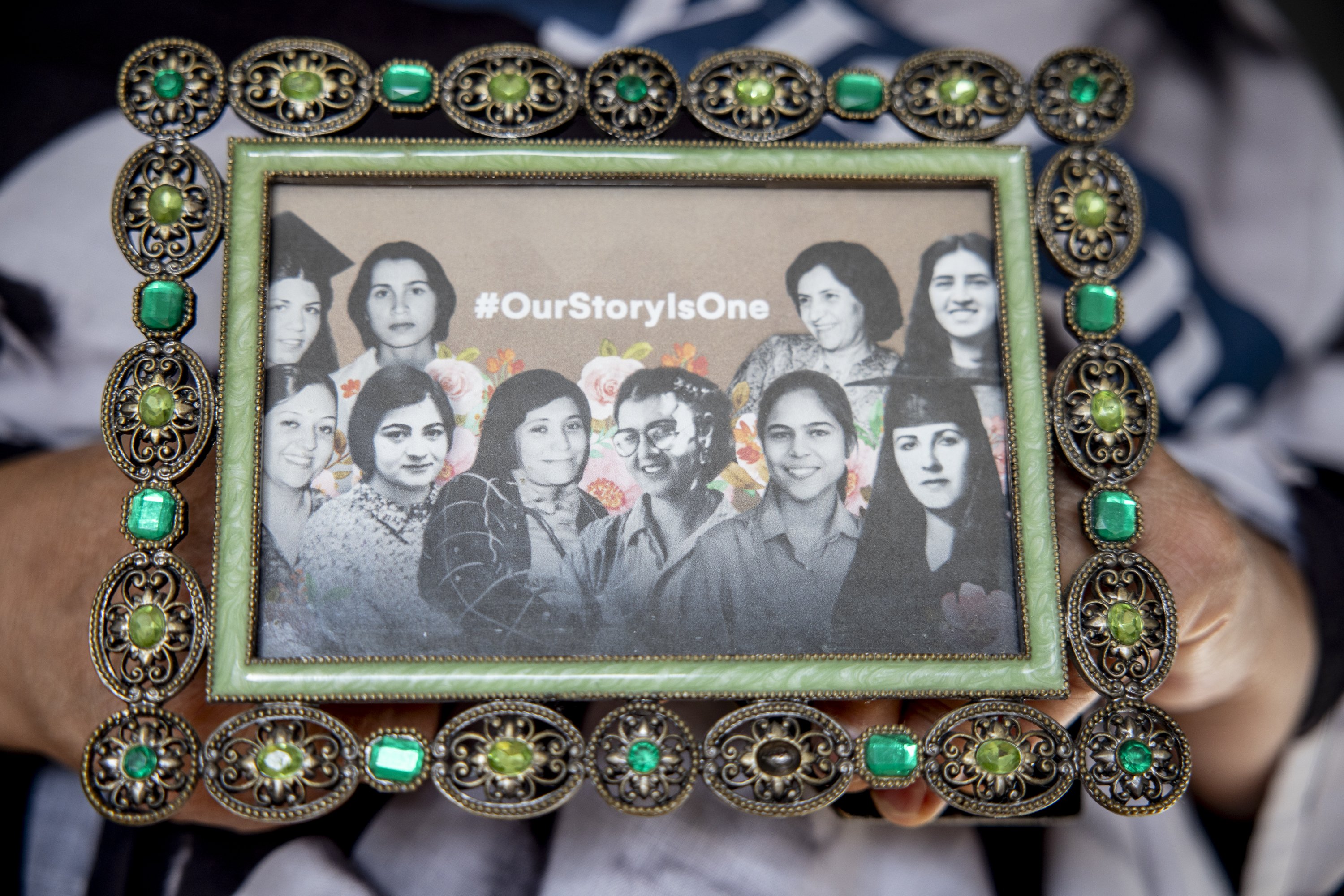
The 10 women ranged in age from 17 to 57, two of them were mother and daughter, and two of them were Rohani’s mentors. They were all brilliant and highly educated people who served their community, Rohani said.
At their execution, some of their family members were killed, too, Rohani said. The women were given a choice: Convert to Islam or die. She said the executioners killed the women one by one, forcing them to watch each execution in an attempt to weaken them.
They all chose to die rather than recant their faith.
“Freedom and equality and justice were more important to them than living with the guilt that they denied all of those things that they stood for,” Rohani said.
The women shouldn’t be pitied, she said; they should be celebrated.
“Every day I think I’m so lucky to be a woman and know that women are capable of achieving such a station,” Rohani said.
Rohani has a framed photo of the 10 women on her end table. Every morning, when she wakes up, she looks at the photo and promises to do something, no matter how small, in their name.
