
Maine Voices Live-Waterville features conversations between Morning Sentinel and Kennebec Journal writers and notable Mainers.

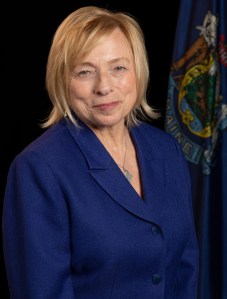
The discussion centered on the new book “In Other Words, Leadership: How a Young Mother’s Weekly Letters to Her Governor Helped Both Women Brave the First Pandemic Year.” Morning Sentinel reporter Amy Calder interviewed the book’s author, Shannon Mullen, and Gov. Janet Mills at the Ostrove Auditorium at the Colby College campus in Waterville.
The book tells the tale of “two unforgettable women from opposite poles of power in Maine” who “forge an uplifting bond, through old-fashioned letter writing, that helps them navigate the COVID crisis. Both women bring civility, grace, wit, and wisdom to the challenge of protecting those who depend on them — in other words, leadership.” More information about the book can be found here on the Steerforth Press website.
Mills is the 75th governor of Maine and the first woman elected to that office. She was sworn in for her second consecutive term in January 2023 after winning re-election. Mills previously served as Maine’s first female Attorney General and its first woman district attorney, as well as in the state’s House of Representatives. She is step-mother to her late husband’s five daughters and a grandmother of five.

Mullen is a journalist, author, screenwriter and film producer, playwright and podcast host. She grew up in the White Mountains and Lakes Region of New Hampshire and studied at UNH before earning a graduate degree in broadcast journalism at Boston University. Shannon went on to report for national programs on public radio for two decades, including Marketplace, Morning Edition and All Things Considered. Her print journalism has been published by The New Yorker, Boston Magazine and The Boston Globe, among other outlets.


MAKE A DIFFERENCE.
Comments are not available on this story. Read more about why we allow commenting on some stories and not on others.
We believe it's important to offer commenting on certain stories as a benefit to our readers. At its best, our comments sections can be a productive platform for readers to engage with our journalism, offer thoughts on coverage and issues, and drive conversation in a respectful, solutions-based way. It's a form of open discourse that can be useful to our community, public officials, journalists and others.
We do not enable comments on everything — exceptions include most crime stories, and coverage involving personal tragedy or sensitive issues that invite personal attacks instead of thoughtful discussion.
You can read more here about our commenting policy and terms of use. More information is also found on our FAQs.
Show less