


As President Donald Trump doubles down on his administration’s targeting of Somali immigrants living in Minnesota, members of Maine’s large Somali community said the rhetoric is creating unnecessary fear and division and are calling on elected officials to stand up for them.
In recent weeks, as the Trump administration has continued unprecedented moves to limit immigration, the president has escalated his focus on Somali immigrants, stating in a Cabinet meeting Tuesday that Somalis “contribute nothing” to America.
“I don’t want them in our country. Their country is no good for a reason,” he said.
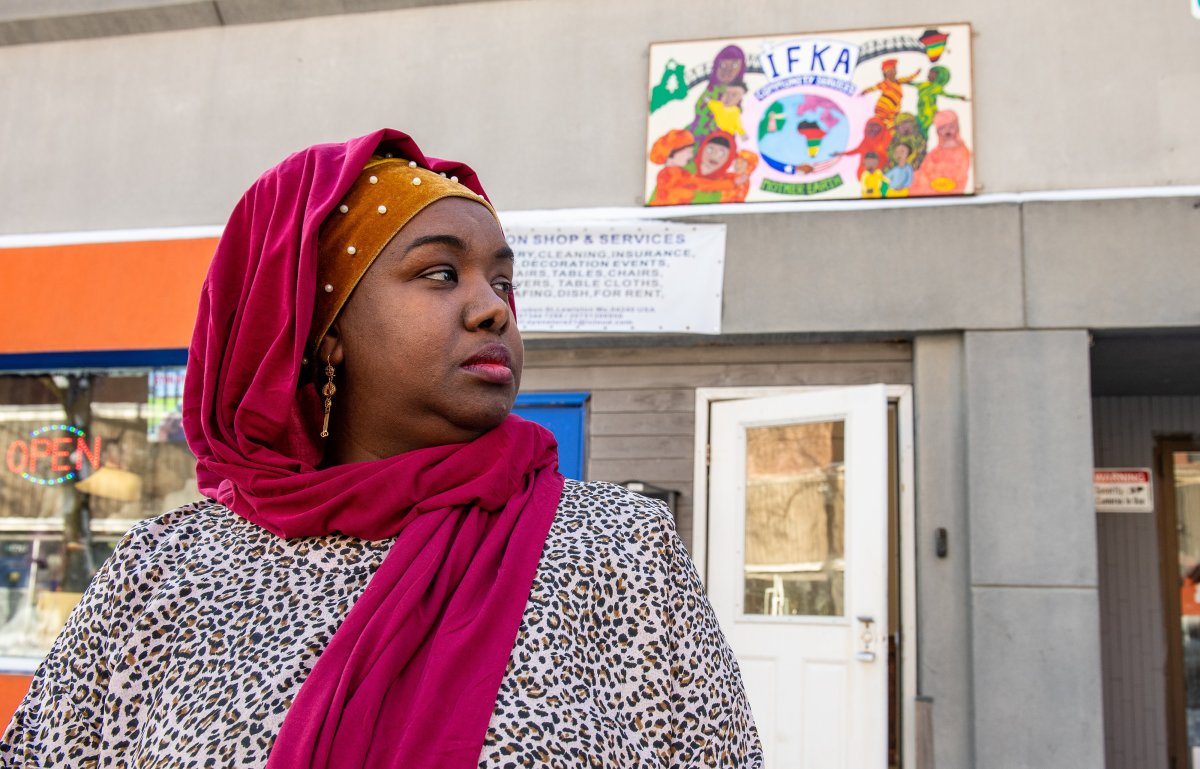
In Lewiston, which has the state’s largest Somali population, Somali Americans are feeling a mix of fear, disappointment and, according to Ifraax Saciid-Ciise, a little betrayal.
Saciid-Ciise, an interpreter who leads the nonprofit IFKA Community Services, said a lot of Muslims and Somalis voted for Trump, hoping he would “improve their livelihoods and represent all Americans.”
“Now many feel that they are being treated as outsiders in a country they consider home,” she said. “Many of us are longtime residents or citizens who have followed every rule. On top of that, the president’s statements portraying Somalis as a security threat or a burden are painful and stigmatizing to a community that has worked incredibly hard to rebuild their lives and contribute to Maine’s economy and civic life.”
She said there is fear within the community that Trump’s ire will direct more negative attention to a community that still struggles with acceptance, and that people are anxious about “how they are being perceived in their own neighborhoods, workplaces and schools.”
Sheikh Saleh Muhamad, imam at the Lewiston/Auburn Islamic Center, said Wednesday that most Somalis living in Lewiston are U.S. citizens, and that the president’s rhetoric is only causing division.
“Somali people have been living here 30 years,” he said, adding that many of the first Somali immigrants in Lewiston have adult children and grandchildren who were born in America.
‘IMPOSSIBLE SITUATIONS’
Trump’s focus on Somalis in Minnesota came after a conservative news outlet claimed that taxpayer dollars from defrauded government programs have ended up in the hands of the Somali group al-Shabab.
Last month, Trump said he would terminate temporary protected status for Somalis living in Minnesota, a legal safeguard against deportation for immigrants from certain countries. A report produced for Congress this summer said there are 705 Somalis covered by the program nationwide.
Lisa Parisio, policy director for the Immigrant Legal Advocacy Project, said that under the law, a temporary protected status designation for a country can only be terminated when conditions have improved to an extent that people’s lives will not be endangered if they return. She said those protections cannot lawfully be terminated to target a specific community within the U.S., and it cannot be terminated based on racial animus.
Saciid-Ciise said ending temporary protected status would force people who have lived, worked, and contributed to the country for years into “impossible situations” — either returning them to danger or facing losing their legal status.
“For many families, this is terrifying,” she said.
Both Saciid-Ciise and Muhamad said the president seemed to be using a few “bad apples” in Minnesota to define an entire population or to justify “blanket decisions that disrupt families who have done nothing wrong.”
‘NOT A MOMENT FOR SILENCE’
As Trump’s comments Tuesday made headlines, Somali-American activists and community leaders called on Maine’s congressional delegation and local elected officials to stand up for immigrant communities.
Safiya Khalid, a former Lewiston city councilor who was the first Somali to be elected to the council, said on social media that she was “deeply offended and disgusted by Donald Trump’s targeting of Somali Americans.”
“I expect our state leaders and elected officials to speak out forcefully against this vile attack and to show unwavering support for their Somali constituents,” she said. “This is not a moment for silence or political calculation.”
Shukri Abdirahman, an Androscoggin County commissioner and community activist, said the president’s rhetoric “puts our communities in danger and fuels ignorance.”
“So I’m urging Maine’s elected officials — from Augusta to every city hall: Stand up. Speak out. Defend immigrant communities. Reject hate. Support policies that protect and empower new Mainers instead of making us political targets,” she said on social media.
They also pushed back on Trump’s narrative that the Somali population relies heavily on government assistance and contributes little to the economy.
‘DEEPLY WORRIED’
Reached by the Maine Trust for Local News on Wednesday, members of Maine’s congressional delegation denounced Trump’s comments and defended Maine’s Somali population.
Rep. Chellie Pingree, D-1st District, said Trump’s statements about the Somali community in Minnesota were “outrageous” and “out of line,” but that she wasn’t surprised by his remarks.
Still, Pingree, a Democrat, worries about the actions his administration has taken regarding the thousands of Somalis in Maine and those from 18 other “travel-ban” countries. Trump recently said he wants to halt asylum applications from these countries.
“I’m deeply worried that this current action will make it very difficult to get work permits, green cards, to have their citizenship processed,” Pingree said in an interview Wednesday. “That’s a huge swath of people in Maine, and many of the ICE pickups have been related to people who are in the process of applying for asylum, waiting for their court date. … It could give a lot more opportunities to pick people up in ways that we’re already disturbed about.”
In a statement Wednesday, Rep. Jared Golden, D-2nd District, said, “There is no such thing as a ‘garbage’ community, just as there is no such thing as a perfect community. Somali Americans, like all Americans, deserve to be assessed by the content of their character — not to be insulted because of where they come from.”
In a wide-ranging podcast interview with Paul Rieckhoff on Wednesday, Sen. Angus King, an independent who caucuses with Democrats, said Somali refugees in Maine “work hard, they support their families, just like everybody else.”
“You said (Trump) doesn’t like African refugees,” King said in the interview. “He likes white African refugees. His big deal is letting in white people from South Africa, supposedly subjects of persecution. … It’s a little hard to take when you call one set of people from Africa garbage and the other people you’re welcoming — on its face, it looks like it has something to do with race.”
The office of Sen. Susan Collins, a Republican, issued a statement Wednesday saying, “Sen. Collins does not agree with the president’s offensive comments about Somali immigrants.”
‘EMOTIONAL TOLL’
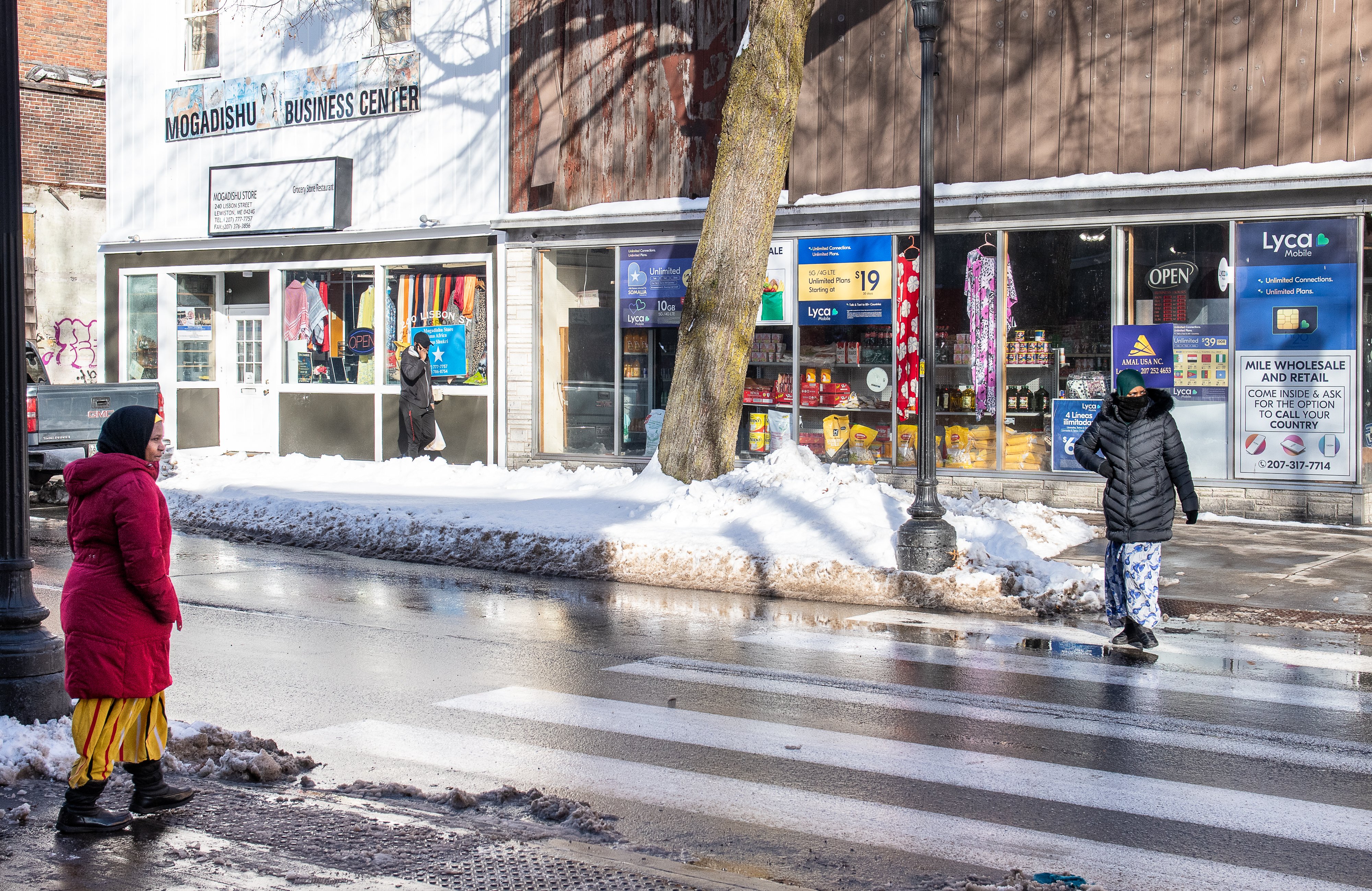
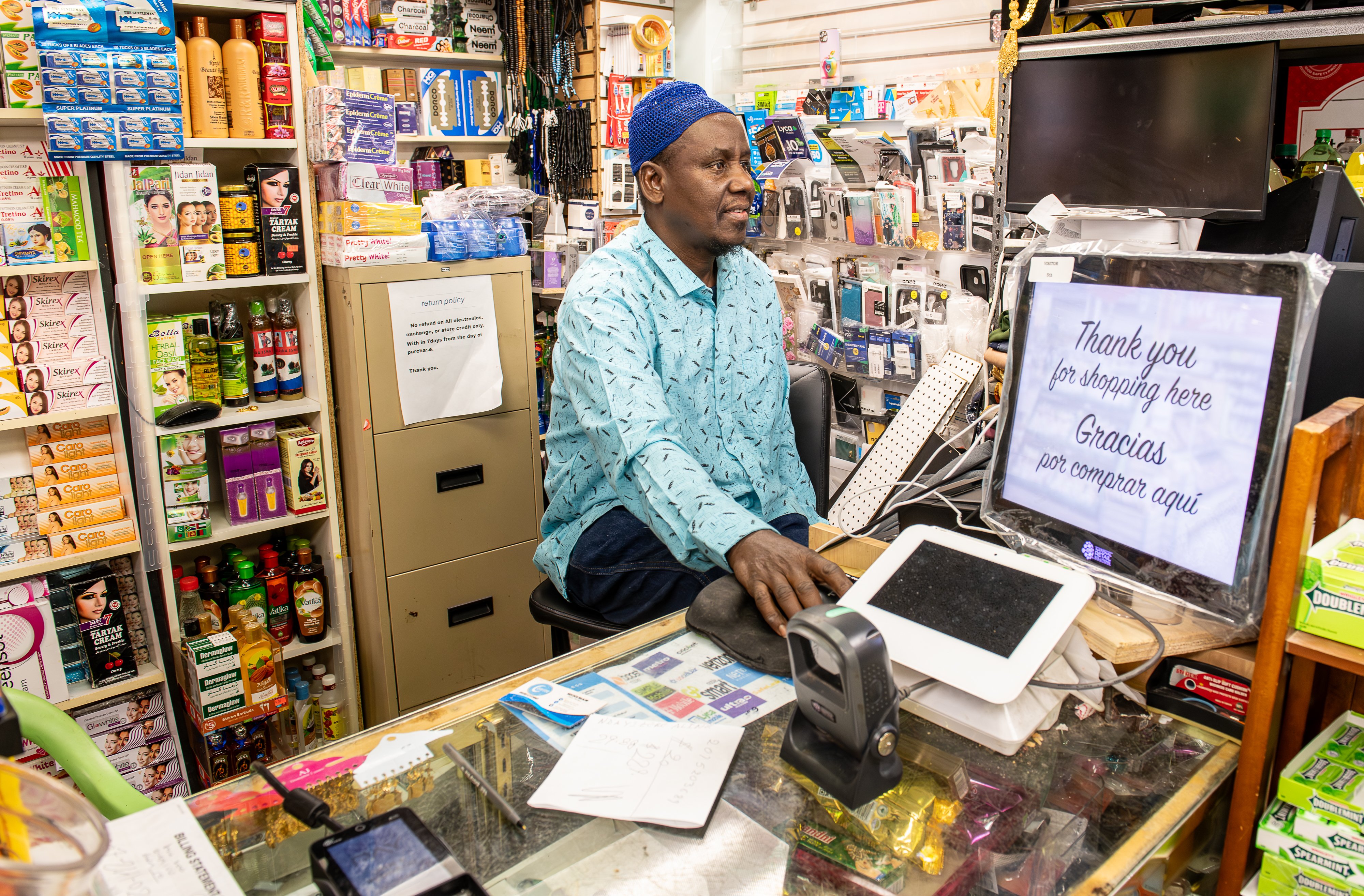
Lewiston Mayor Carl Sheline said he’s been talking to Somali friends and business owners this week, and that the president’s claim that Somalis “contribute nothing to this country is disproven by communities like Lewiston every day.”
“Here, Somali entrepreneurs are business owners and hard workers, creating jobs and strengthening our economy,” he said.
Saciid-Ciise said that while people are afraid for their friends and families, the community also “remains resilient.”
“People are supporting one another, staying informed, and continuing to participate in community life despite feeling under attack,” she said. “But the emotional toll is real, especially for people who came here to escape trauma and are now reliving fear and uncertainty through these policies and statements.”


Comments are not available on this story. Read more about why we allow commenting on some stories and not on others.
We believe it's important to offer commenting on certain stories as a benefit to our readers. At its best, our comments sections can be a productive platform for readers to engage with our journalism, offer thoughts on coverage and issues, and drive conversation in a respectful, solutions-based way. It's a form of open discourse that can be useful to our community, public officials, journalists and others.
We do not enable comments on everything — exceptions include most crime stories, and coverage involving personal tragedy or sensitive issues that invite personal attacks instead of thoughtful discussion.
You can read more here about our commenting policy and terms of use. More information is also found on our FAQs.
Show less