

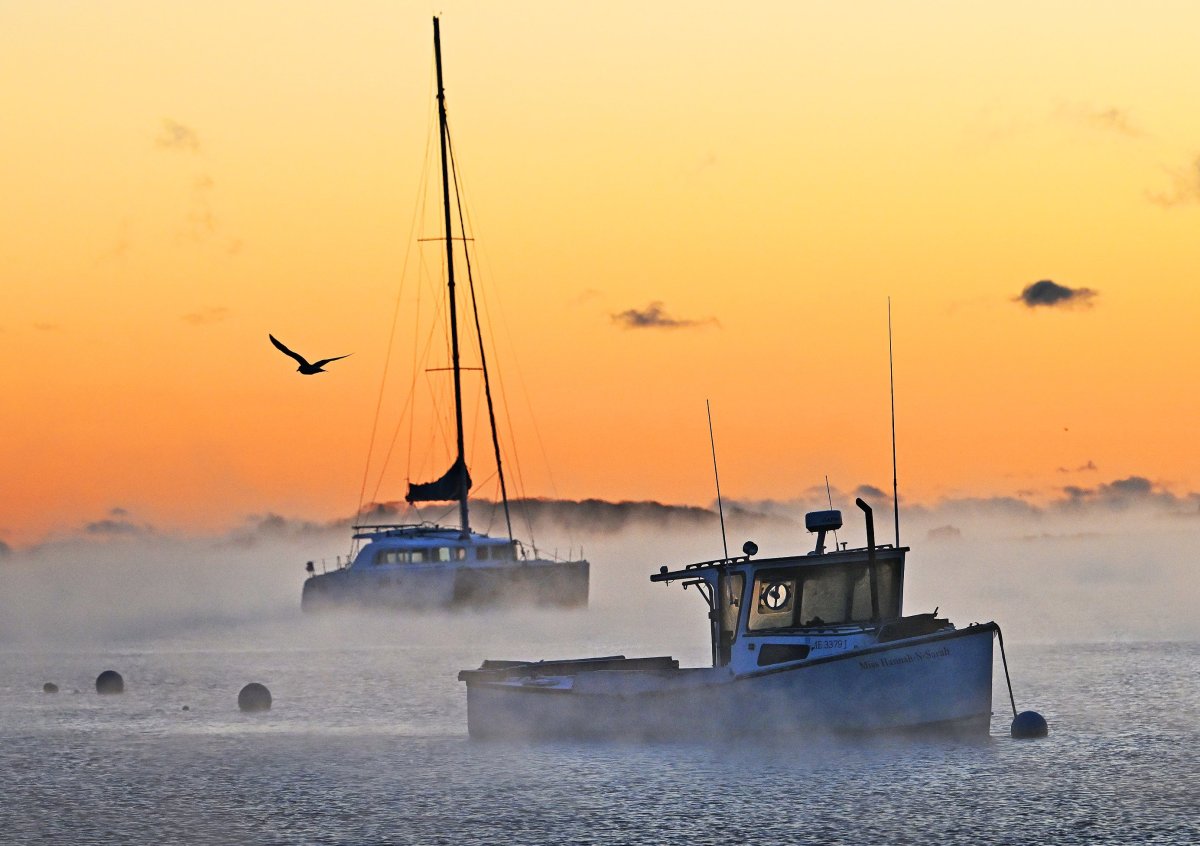
People in many areas of Maine awoke Tuesday morning to chilling, below-zero temperatures, though the frigid air didn’t break records the way it did last week, forecasters say.
Scientists have said that dangerous cold may be a result of two large-scale events disrupting weather across the nation, but the low temperatures aren’t expected to stick around.
Portland recorded a low of minus 3 degrees overnight into Tuesday morning, according to the National Weather Service.
Freeport hit minus 4 degrees early Tuesday and Topsham hit minus 12. In York County, observations in Buxton and Cornish showed overnight lows of 9 and 10 degrees below zero, respectively.
Some of the coldest readings were nearly 20 degrees below zero, meteorologist Zack Hargrove said Tuesday from the weather service’s office in Gray.
In both Bangor and Lewiston, Hargrove said, temperatures dipped to minus 15 degrees. Fryeburg recorded 17 below zero. And in Piscataquis County, preliminary observations in Brownville showed a low of minus 18 degrees.
The bitter lows weren’t quite cold enough to break any records, Hargrove said, adding that Portland’s record at this point of the year is minus 5 degrees. Last week, Portland and Augusta set record-low temperatures as an arctic cold front blasted the state.
Hargrove said the forecast for the rest of this week predicts a few inches of snow for areas in the mountains and foothills. A winter weather advisory has been issued between 7 a.m. Wednesday and 1 a.m. Thursday for parts of west-central and western Maine.
In Greater Portland, highs Wednesday will be in the mid-30s and they are expected to drop later in the week to high 20s to low 30s.
Temperatures will be a touch colder inland, Hargrove said, staying between the high 20s and low 30s Wednesday and through the weekend.
A scientist from the National Oceanic and Atmospheric Administration told the Press Herald last week that she expected temperatures in Maine to be unusually low because of some atmospheric activity up north.
Above the North Pole, a disruption in the polar vortex is pushing arctic air into lower latitudes. Amy Butler, a research scientist in NOAA’s Chemical Sciences Laboratory, said last week that such a disruption is rare so early in the season.
Butler also pointed to a high-pressure system in the Pacific Ocean that was blocking air from flowing across the continental United States, keeping the East Coast colder than normal.
Amid the run of frigid air in recent weeks, the Maine Department of Public Safety has attributed multiple fires to improperly used or installed heating equipment.
A news release from the fire marshal’s office Tuesday reminded residents to take precautions while heating their homes, including keeping space heaters away from flammable materials and having heating systems inspected regularly.
People should avoid overloading electrical circuits or using extension cords for space heaters. Smoke and carbon monoxide alarms should be installed and tested, and everyone in the household should be prepared with a fire escape plan, the department said.

We invite you to add your comments. We encourage a thoughtful exchange of ideas and information on this website. By joining the conversation, you are agreeing to our commenting policy and terms of use. More information is found on our FAQs. You can update your screen name on the member's center.
Comments are managed by our staff during regular business hours Monday through Friday as well as limited hours on Saturday and Sunday. Comments held for moderation outside of those hours may take longer to approve.
Join the Conversation
Please sign into your CentralMaine.com account to participate in conversations below. If you do not have an account, you can subscribe here. Questions? Please see our FAQs.