


PORTLAND — High above the water, in the wheelhouse of the Maquoit II, Andy Gildart spotted black smoke rising from somewhere on the waterfront.
The Casco Bay Lines ferry captain was at the helm for the 12-minute ride back from Little Diamond Island. By the time the boat reached Fort Gorges, five minutes from docking, Gildart knew something was wrong.
“I saw some orange with my binoculars and said, ‘Yeah, I’m calling 911,'” he said.
It was just after 5:30 p.m. on Dec. 26 and Gildart was one of the first to report the Custom House Wharf fire as flames and smoke poured from buildings on the working waterfront.
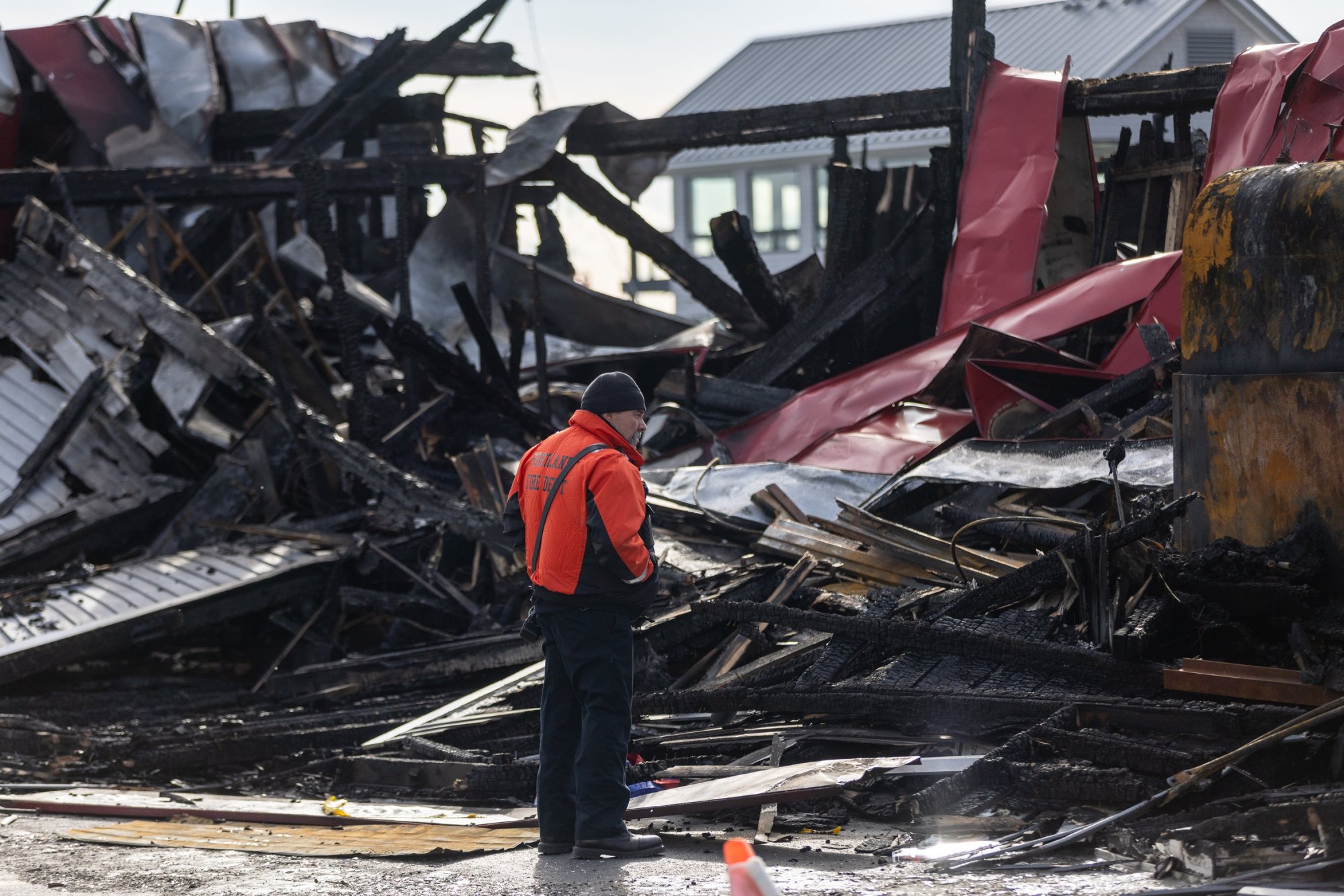
Firefighters from Portland and surrounding communities fought the blaze — which ultimately left four businesses and several fishing boats damaged or destroyed — under some of the harshest conditions. They faced downed power lines, water supply issues, freezing temperatures and old buildings that lacked fire suppression systems.
Responding crews had the three-alarm blaze under control in less than two hours. The cause of the fire is still under investigation by the Office of the State Fire Marshal, but officials have said there is no evidence of foul play.
The Portland Press Herald interviewed several witnesses and department leaders, who walked a reporter and photographer through the scene, to explain how they managed to tamp out the massive flames in those conditions.
THE FIRST WARNING SIGNS
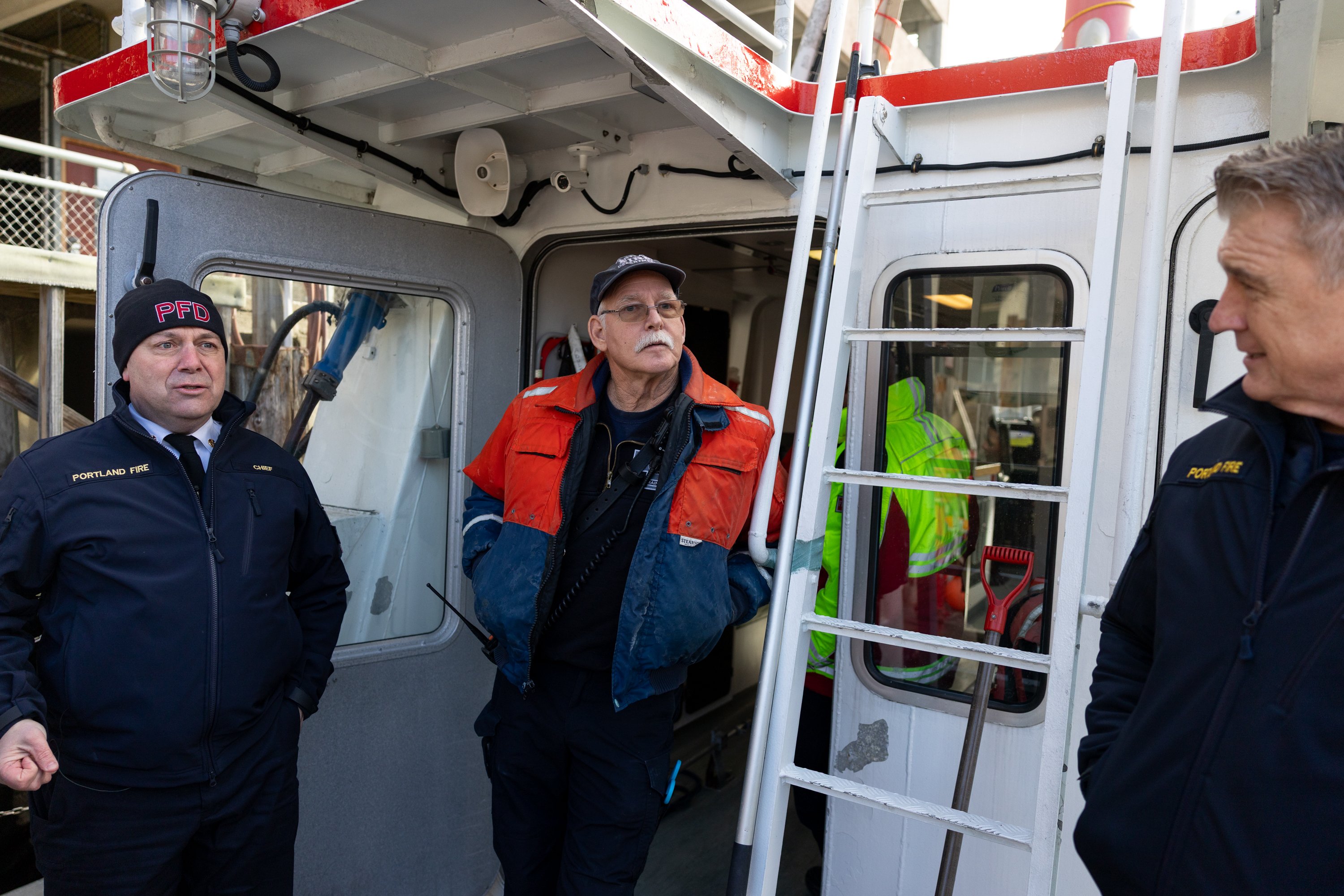
Portland Regional Communications Center dispatcher Patrick Hastings picked up Gildart’s 911 call.
At first Gildart couldn’t pinpoint which pier was on fire, but said he could see flames coming out of the roof of a building.
Hearing Gildart’s description, Hastings said he knew it was serious and reported the situation to the Portland Fire Department, directing crews to the general wharf area.
In the minutes after that first call, Hastings said, phones in the communications center started “ringing off the hook.” Commercial Street was busy on a Friday night and several witnesses called in to report the flames.
Everyone in the dispatch center worked together, he said, as a team.
“We feel responsible for the safety of the first responders going out to a scene,” Hastings said, “so that’s always another weight on our shoulders.”
At 5:35 p.m., by the time Gildart docked at the Maine State Pier — two wharfs east of the fire —the air smelled like burning rubber, flames were picking up and firefighters were arriving on the scene.
FROM THE GROUND AND WATER
The Portland fire crews saw roaring flames coming from a building toward the end of the wharf, Chief Chad Johnston said.
The building where the fire appeared to have started was used as storage and maintenance space by local lobstermen and fishermen, according to the wharf owners. Officials said the fire spread rapidly to Nanuq Kayaks and Maritime Antiques at 27 Custom House Wharf, then toward the Sea Bags Factory Store at 25 Custom House Wharf.
With ground crews cramped onto the narrow pier, it was pivotal to have Portland’s fireboat attack from the water, department spokesperson Sean Donaghue said.
The boat is equipped with water cannons and a pump that can pull more than 3,000 gallons of water per minute, said Lt. Dave Crowley, who was in charge of the boat the night of the fire. He saw the blaze — one of the largest he’s seen in his time at the department — from their station outside of the Casco Bay Lines terminal.
Once he and the other firefighters on board reached the wharf, they ran water lines to one of the fire trucks on shore. Ground crews were forced to press against the building on the other side of the road as the boat doused the flames with thousands of gallons of saltwater from the bay.
The spray, Johnston said, pushed the heat and smoke toward the firefighters, who became drenched with water in below-freezing temperatures.
Deputy Chief Jon Hendricks’ coat froze and he couldn’t zip it up, Donaghue said.
“They’re trying not to turn it into a battle,” Johnston said. “Everyone’s getting soaked, everyone is wet … it was miserable.”
Minutes after firefighters arrived, a power line burned and fell in front of the kayak shop and two fire hydrants in the area were deemed out of commission. One of them had frozen over and the other had uprooted, Johnston said, possibly because of high water pressure flowing through the pipes as firefighters responded.
CALLS FOR BACKUP
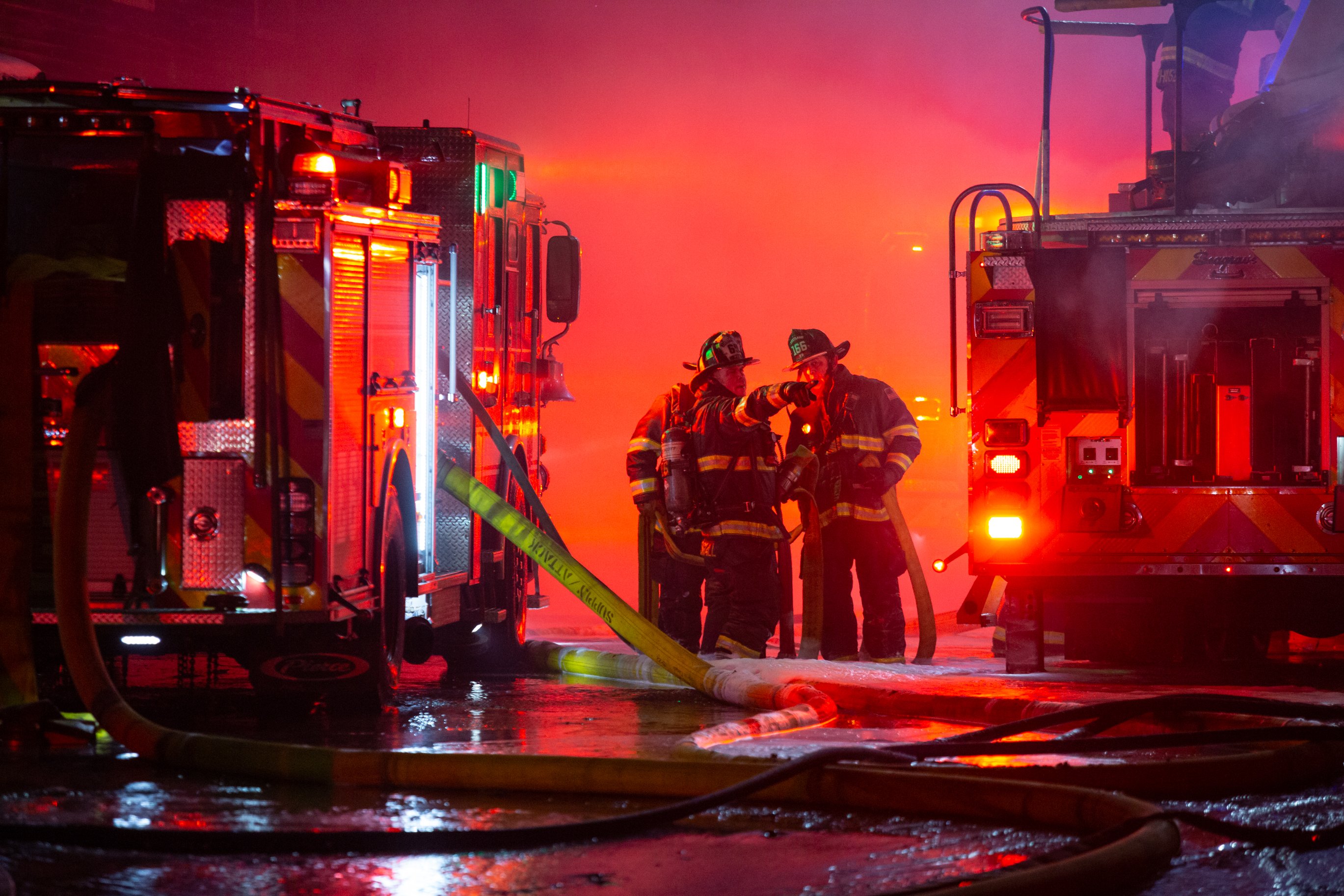
Within eight minutes, the Portland Fire Department struck three alarms, calling in off-duty firefighters and other agencies. Supervisors use the alarm system so first responders, including dispatchers, have a standardized language to call for support.
Donaghue said when the second alarm was struck at 5:41 p.m., the department received help from outside agencies. The South Portland Fire Department sent one truck to fill in at a Portland station and, once the third alarm was struck a few minutes later, the department sent another fire truck, ambulance and seven first responders to the scene.
The third and final alarm means even more help is needed, so off-duty firefighters were asked to respond and more outside agencies were called to help with other city and emergency coverage.
The Westbrook Fire Department responded similarly, contributing a ladder truck, ambulance and six firefighters after the third alarm.
“Fires like this only get accomplished in an effective manner because departments are able to work together,” Westbrook Deputy Chief Brian Langerman said.
SAVING THE WORKING WATERFRONT
Local fisherman Jedediah Spear smelled smoke from his home in Portland’s West End.
He made his way to the wharf, arriving about 10 minutes after first responders, he said. The streets were flooded and fire trucks blocked the road, so he moved to an adjacent waterfront area to get a better look.
“That’s when it started clicking, there’s maybe something I can do to help,” he said.
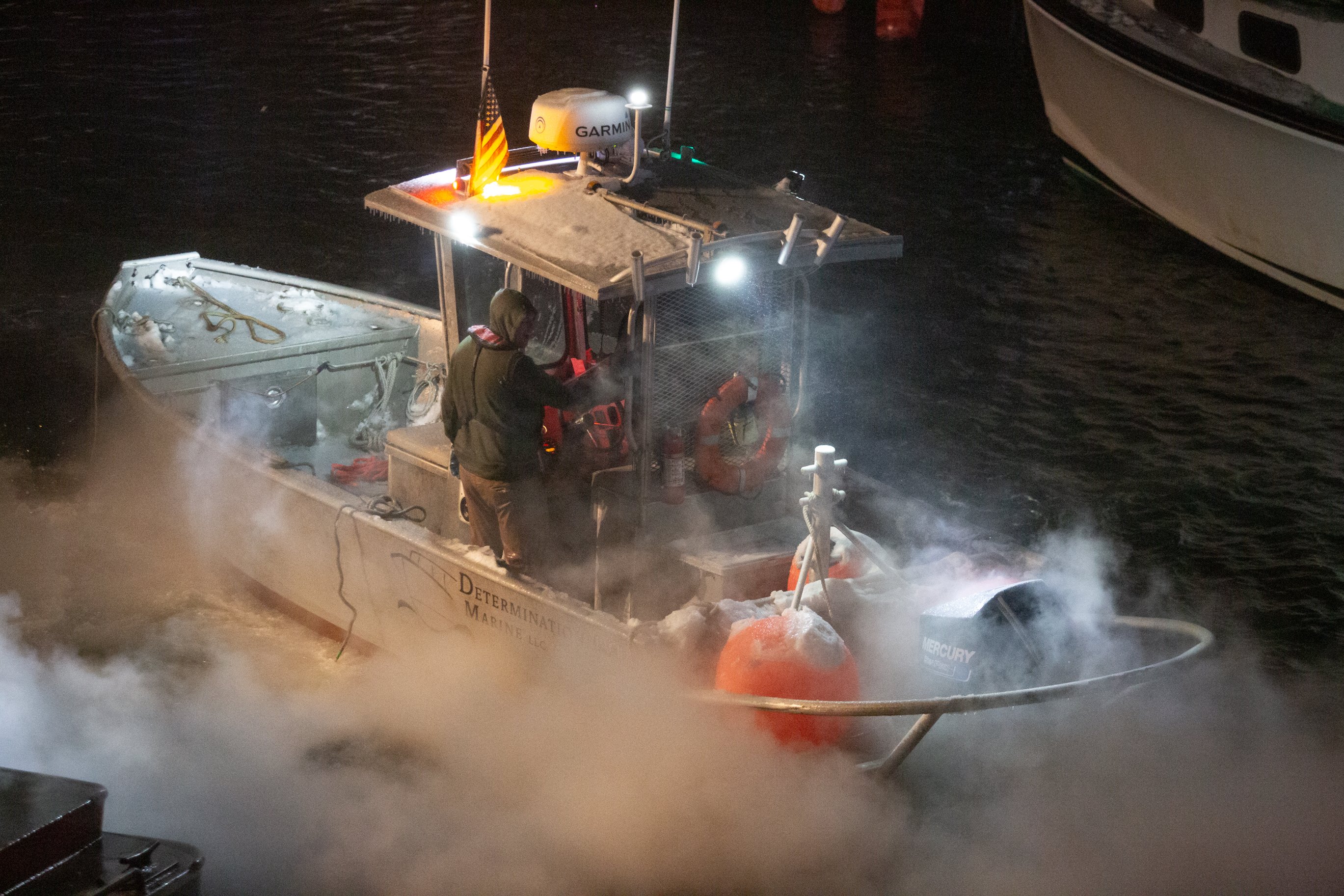
Spear and his family are lobstermen and fishermen and work out of Custom House Wharf. Though his boat was docked on the other side of the pier, his friends and brothers had boats near the flames.
He ran into two fellow lobstermen, who were boarding their boats nearby, and joined them as they drove toward the fire.
They began cutting lines and pulling away fishing boats that were tied up at the wharf.
THE FINAL CUT
As the fire raged on, firefighters strained to “surround and drown” it, South Portland fire officials said.
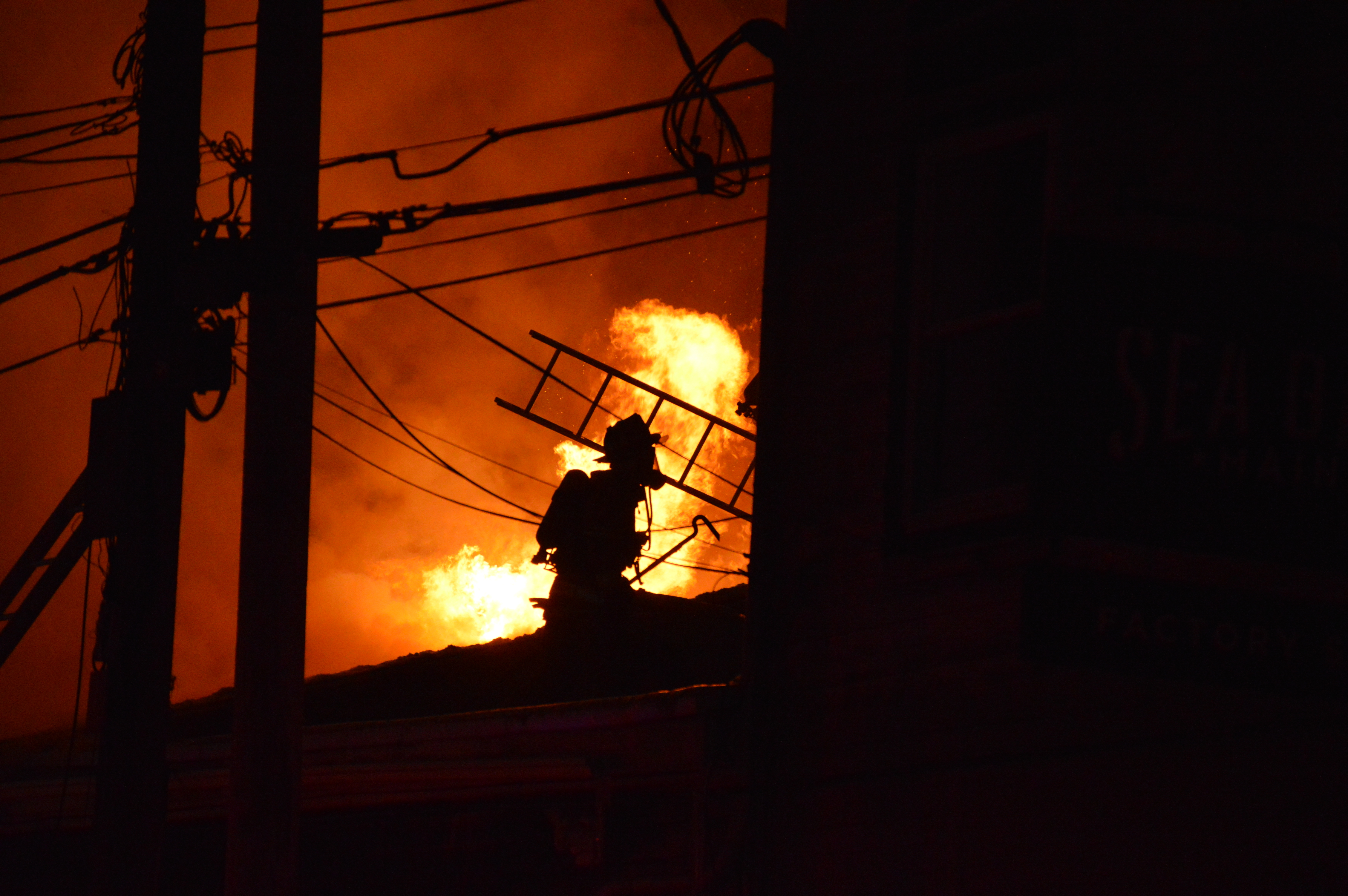
The fireboat deployed more than 200,000 gallons of water, but the old buildings were like tinderboxes and the fire kept moving toward the two-story portion of the Sea Bags building, Donaghue said. This forced firefighters to use a defensive tactic called a “trench cut” to quell the blaze.
The maneuver requires firefighters to get on top of the roof and cut a hole, allowing the fire to escape, so it can stop spreading through the building.
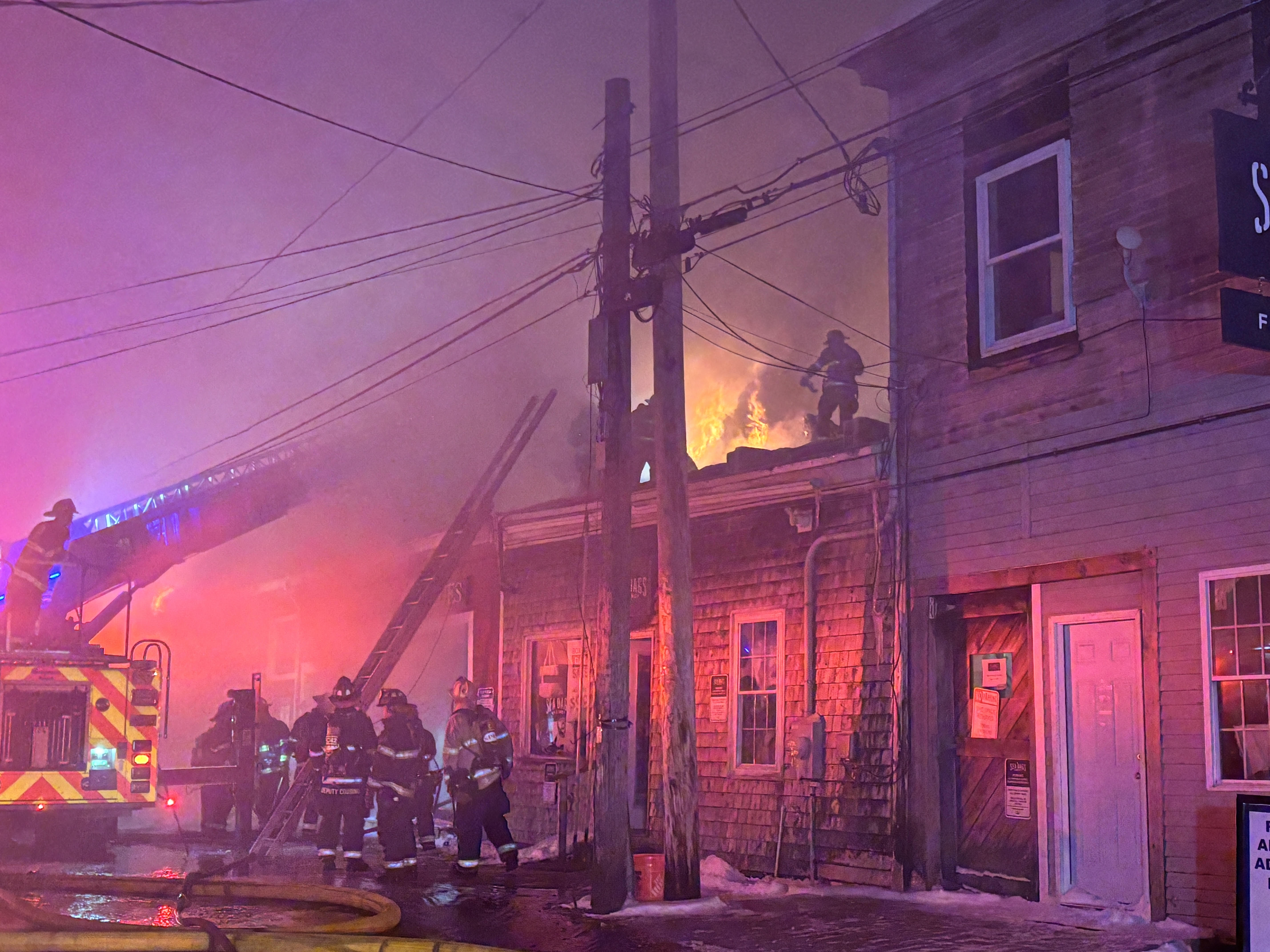
“All of our ventilation tactics are important for the release of heat and smoke, which allows us to get into a building or get underneath it,” Donaghue said. “That is the most extreme version, to just cut all the way across.”
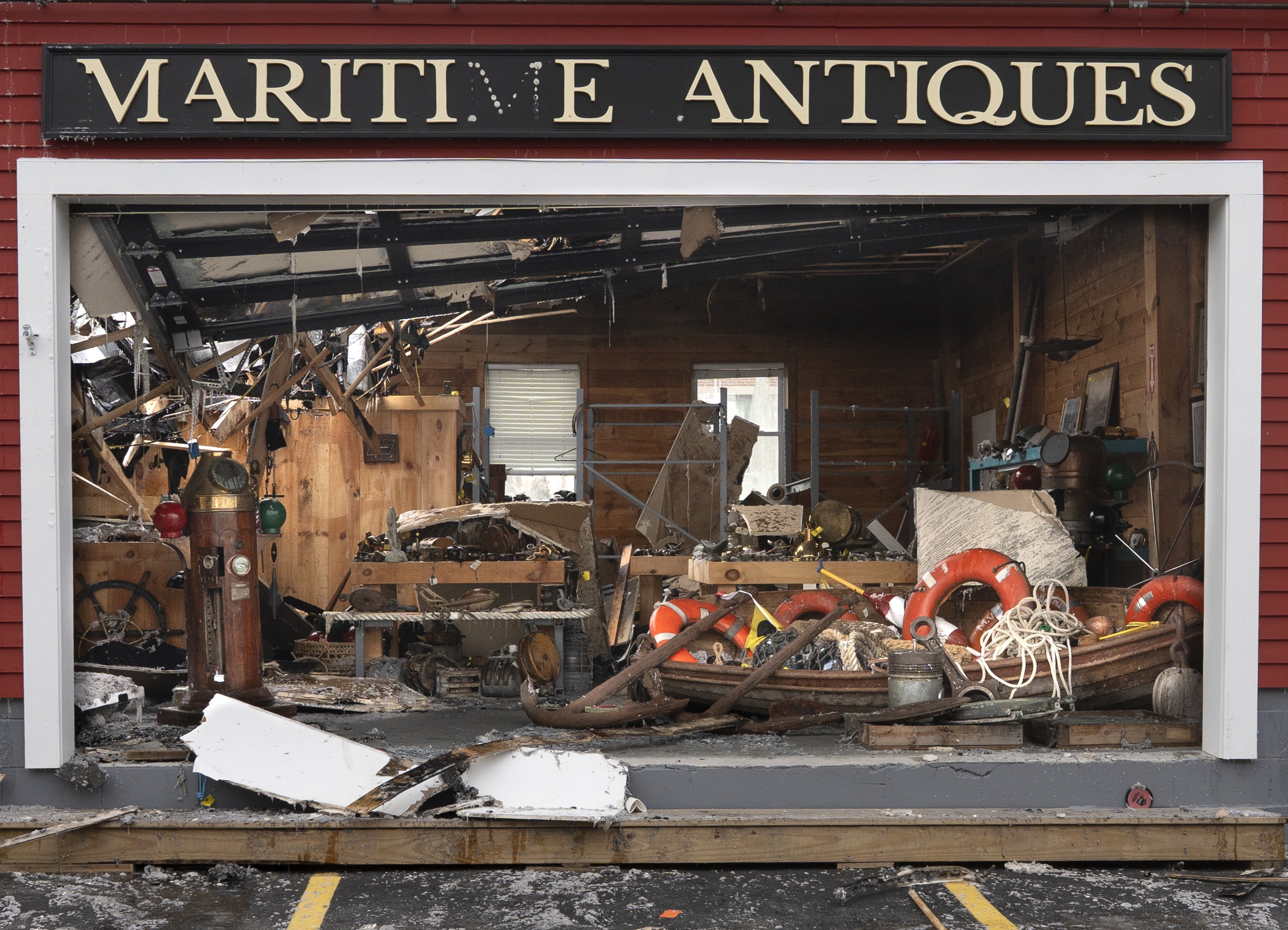
The Westbrook Fire Department was tasked with doing the trench cut on the roof of Maritime Antiques, said Langerman, the deputy chief. Then other crew members pumped water through hoses into the Sea Bags store in case any more flames crept in.
At 7:22 p.m., less than two hours after the first 911 call came in, the fire was considered under control.
THE AFTERMATH
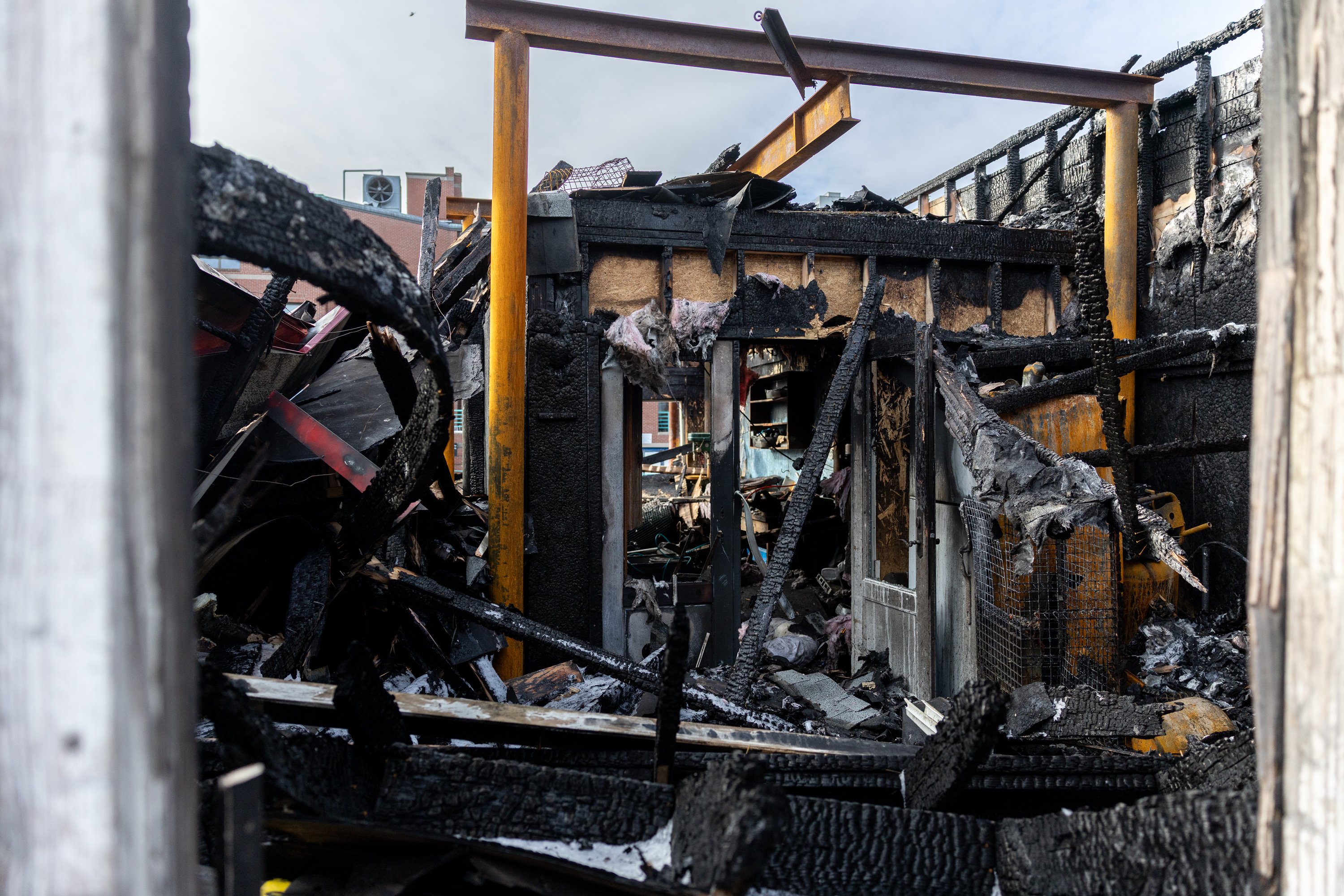
First responders spent several hours that night and on Saturday extinguishing smoldering hot spots, some insulated by the fallen buildings and others hidden under the wooden pier.
Several fishing boats sustained damage from the fire, according to Portland fire officials. Spear, the local fisherman, said parts of his friends’ boats melted or had engines destroyed by saltwater and his brother’s skiff sunk. He and his friends were able to save the other boats, he said.
In the storage and maintenance building, the walls collapsed around the equipment, which was destroyed and trapped in rubble.
Some people who have worked out of Custom House Wharf for decades lost a lifetime of equipment, Spear said.
“These guys lost that part of their identity,” Spear said. “On top of that, their boats are no longer functioning.”
To support them, community members have raised thousands in donations through a fundraiser started by the Brunswick-based Maine Coast Fishermen’s Association, a nonprofit that supports the state’s fisheries industry.
The group also partnered with Mr. Tuna to create a T-shirt to raise money.
Spear said he and other small-scale fishermen rely on Custom House Wharf as a workspace, so seeing the support from people in Maine is “definitely a good feeling.”
“People seem to be more interested in the way we do business than a lot of the other fisheries, because it’s run by the fishermen itself. It’s community-run,” Spear said. “So the first people to reach out to help us were not big corporations … but individuals.”
Johnston, the fire chief, said the work of the ground crews and those on the fireboat was “tremendous” and necessary to stop further damage. He said he’s appreciative that people in Portland have come together to support the working waterfront community.
“We’ve seen groups of people trying to help out the fishermen, trying to help out the businesses that have lost things,” Johnston said. “It wasn’t just our piece of the puzzle here, but it’s the entire city that’s really played a role.”


We invite you to add your comments. We encourage a thoughtful exchange of ideas and information on this website. By joining the conversation, you are agreeing to our commenting policy and terms of use. More information is found on our FAQs. You can update your screen name on the member's center.
Comments are managed by our staff during regular business hours Monday through Friday as well as limited hours on Saturday and Sunday. Comments held for moderation outside of those hours may take longer to approve.
Join the Conversation
Please sign into your CentralMaine.com account to participate in conversations below. If you do not have an account, you can register or subscribe. Questions? Please see our FAQs.