

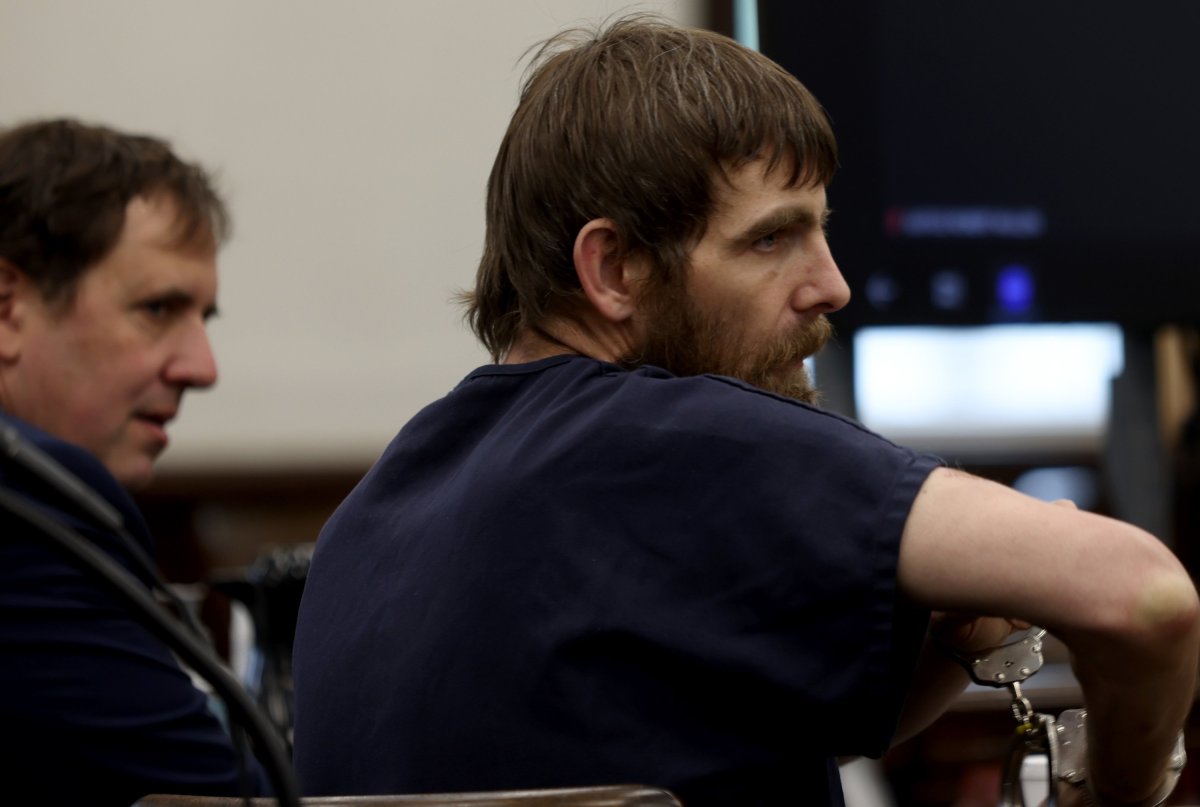
SKOWHEGAN — A Norridgewock man accused of a murder and assault nearly one year ago is competent to stand trial, a judge ruled earlier this month.
And new details about the accusations against Kendall Purnell — including how authorities believe he killed his uncle — emerged after certain court documents in the case were unsealed.
With the ruling on his competency, Purnell, 39, was in court Thursday in Skowhegan for an arraignment on charges of one count of intentional or knowing or depraved indifference murder and one count of elevated aggravated assault. He is accused of killing 71-year-old Harold Burgess and injuring Shawn Haggan, now 46.
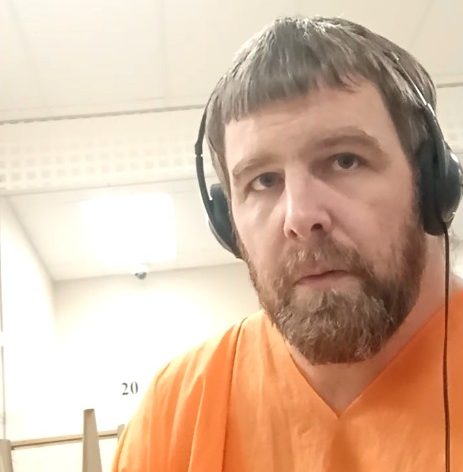
Appearing via videoconference from Somerset County Jail in Madison, Purnell pleaded not guilty to both counts.
One of Purnell’s court-appointed attorneys, Jeremy Pratt, requested Superior Court Chief Justice Robert E. Mullen order a criminal responsibility evaluation, to include evaluation for abnormal condition of the mind and insanity. Mullen granted the request.
Mullen said his order holding Purnell without bail remains in effect. His attorneys, Pratt and Caitlyn Smith, requested a bail hearing, which will be scheduled in the coming weeks.
Both Pratt and Assistant Attorney General Katherine Bozeman said they expect the bail hearing to be relatively brief. Pratt said he anticipates questions about the reliability of information in a police affidavit on which the state plans to base its case.
Pratt and Smith did not respond to inquiries about the case earlier this week.
A trial had been tentatively scheduled for August, according to records from the Office of the Maine Attorney General, which prosecutes all homicides in the state.
A grand jury indicted Purnell in April 2025. Both offenses — murder and elevated aggravated assault — are alleged to have occurred on Feb. 7, 2025.
According to a police affidavit unsealed Thursday that supports Purnell’s arrest , the Office of Chief Medical Examiner determined Burgess died from multiple blunt force and sharp force injuries.
Police had not previously released the cause of his death. Prosecutors requested the affidavit be impounded until Purnell was arraigned, and neither prosecutors nor Purnell’s attorneys objected to its release Thursday.
Somerset County sheriff’s deputies, who had initially responded to a call at 40 Walnut Drive in Norridgewock around 11:30 p.m. Feb. 7, 2025, found Burgess dead with head trauma and a lacerated throat, Detective Nicholas Watson of the Maine State Police wrote in the affidavit. Near Burgess on the floor was a utility knife or box cutter with red-brown staining on it.
The deputies also found Haggan with severe head injuries, and near him was a 2-by-4 board with red-brown staining, Watson wrote. Haggan was flown to Northern Light Eastern Maine Medical Center in Bangor for treatment of his injuries.
Police confirmed that Purnell, Burgess, Haggan, Haggan’s fiancée and a friend who met Purnell at a soup kitchen lived at the home. Burgess, who was Purnell’s uncle, was the homeowner.
Haggan’s fiancée, Jessica MacArthur, and the friend, Rudy Sanchez, found Burgess’s body in his bedroom and Haggan injured on the living room floor, Watson wrote. The two had been away from the house but went there after learning the Oakland Police Department had brought Purnell there because he was causing trouble at his father’s home.
On the way there, they saw Purnell driving Burgess’ SUV but did not stop, the affidavit said. Sanchez told police that earlier in the night, Purnell had called him saying Burgess no longer wanted Purnell living at 40 Walnut Drive. MacArthur told police Purnell had mental health issues and a drug problem, and she felt Purnell had killed Burgess and injured Haggan because they would not give him money for drugs.
MacArthur also provided security video footage to police that apparently showed Purnell handling the 2-by-4 board later found near Haggan.
Around 1 a.m. the next day, Waterville police located Purnell in a vehicle registered to Burgess at the Circle K on Kennedy Memorial Drive in Waterville, Watson wrote. Waterville police detained him and state police eventually arrested him.
Investigators collected other evidence and interviewed at least three neighbors, the affidavit said. One neighbor, Burgess’ sister Robin Purnell, told police she had previously kicked Kendall Purnell out of her home for drug use, and he was later kicked out of the homeless shelter in Waterville for getting into a fight, the affidavit said.
Aside from the unsealing of the affidavit, Thursday’s proceedings marked significant movement in the nearly year-old case, as Purnell had initially been deemed incompetent to stand trial.
Mullen’s determination regarding Purnell’s competency came after a hearing in December 2025.
Mullen called his recent competency decision “a close call.”
In his order, dated Jan. 13, Mullen wrote that despite Purnell’s disorganized and agitated testimony — which included seemingly fantastical theories of underground tunnels, nanobots and government conspiracies — his attorneys did not meet the legal threshold for showing that Purnell is incapable of understanding the charges and court proceedings, comprehending his condition as it relates to the case, and cooperating with legal counsel.
Mullen pointed to testimony from Luke Douglass, a forensic psychologist contracted by the State Forensic Service, who evaluated Purnell in March, July and September 2025. Purnell had been held for several months at the Riverview Psychiatric Center, the state psychiatric hospital in Augusta.
Douglass testified that in September, Purnell showed significant improvement compared to the earlier evaluations and was able to discuss his case in a reality-based way and to compartmentalize his delusional thoughts. He attributed Purnell’s earlier condition to substance-induced psychosis or a personality-based disorder.
Regarding Purnell’s apparent regression to talking about delusions while on the witness stand at the December hearing, Douglass testified Purnell may have been exaggerating for his own benefit or discussing the case could be a stressor that worsens his psychiatric symptoms.
During a break in the hearing, after Purnell testified and before Douglass took the stand, Douglass called two Riverview employees. They told him Purnell’s behavior had improved and only changed once the December competency hearing was scheduled.
Purnell’s attorneys objected to Douglass’ testimony about the phone call, but Mullen ultimately admitted it.
Mullen concluded Purnell can recall facts, follow instructions, take advice, understand the charges and his possible sentence, and consider hypothetical scenarios and decisions. Purnell can be redirected by others, including his attorneys, Mullen wrote.
“Obviously, it remains to be seen if (Purnell) is determined to be criminally responsible for his actions,” Mullen wrote.

Comments are not available on this story. Read more about why we allow commenting on some stories and not on others.
We believe it's important to offer commenting on certain stories as a benefit to our readers. At its best, our comments sections can be a productive platform for readers to engage with our journalism, offer thoughts on coverage and issues, and drive conversation in a respectful, solutions-based way. It's a form of open discourse that can be useful to our community, public officials, journalists and others.
We do not enable comments on everything — exceptions include most crime stories, and coverage involving personal tragedy or sensitive issues that invite personal attacks instead of thoughtful discussion.
You can read more here about our commenting policy and terms of use. More information is also found on our FAQs.
Show less