

Maine’s formula for distributing state funding to local school districts — which lawmakers, school leaders and researchers have described as inequitable for more than a decade — could be getting an update.
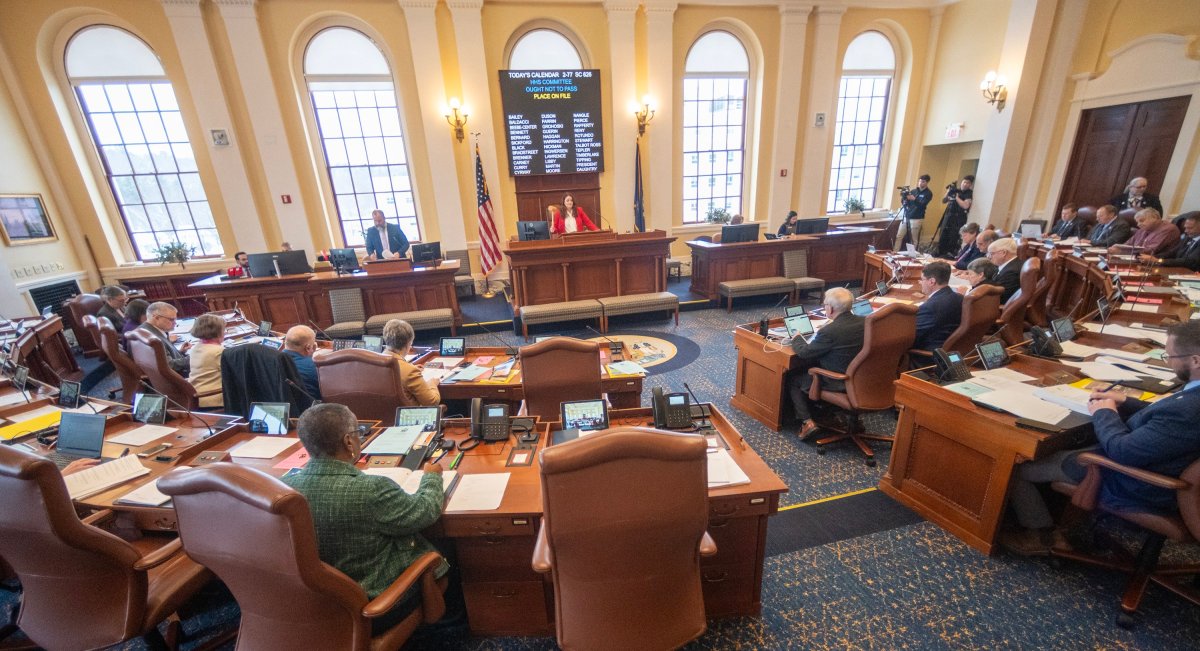
Members of the Legislature’s Education and Cultural Affairs Committee voted Wednesday to introduce a bill incorporating major changes to the funding formula recommended by the nonpartisan Maine Educational Policy Research Institute, which it directed to study the issue in 2024.
The current formula is a complicated puzzle that uses enrollment numbers, among a variety of other factors, to assess a district’s needs, and calculates a district’s ability to pay those costs based on property tax valuations to figure out how much the state will cover. Subsidies range from less than 10% of a district’s costs to more than 80%.
The goals of the study, institute co-director Amy Johnson said, were to ensure that the model accurately reflects the costs of schooling today, and to improve fairness in the distribution of the state subsidy. The institute offered four recommendations:
- Align regional adjustments with cost of living, minimum salaries
The current funding formula accounts for regional differences in salary to provide adequate staffing resources to districts in both high- and low-cost areas in Maine. Johnson said the labor market data used to calculate those regional adjustments has not been updated since the formula was created in 2005.
The institute recommends basing the adjustments on annually updated cost-of-living data, and fixing the adjustments to align with minimum salaries (what the state now uses for its teacher salary matrix), rather than averages.
- Factor community poverty rates into local “ability to contribute” calculations
Maine Educational Policy Research Institute proposes a 90/10 model for calculating how much of their costs districts can afford to cover with local funding. That means 90% of the expectation would be based on property taxes (the current system) and 10% would be based on the economically disadvantaged student rate. Researchers found that rate to be the best proxy for the poverty level in a community.
This adjustment is designed to tackle the phenomenon of communities that have high property values but do not have the local income levels to match.
- Update parts of the formula related to transportation, tech and instructional staff to reflect modern educational needs
This recommendation cleans up several parts of the formula that Johnson said are outdated.
- Reform the special education component of the formula
Johnson said special education is the area of the model that is “the most under stress.” Because of a step in the formula that bases state funding on past spending, the current formula disproportionately privileges wealthier districts.
But before changing the formula, the institute proposes shifting special education to a regional model, wherein districts would collaborate on providing special ed services. Researchers are planning a forthcoming special education-specific report.
The committee voted unanimously Wednesday to initiate a committee bill, which means it is directing the Legislative Information Office to draft a bill based on the institute’s recommendations. A public hearing has not yet been set.
Researchers laid out broad issues with the formula in a 200-page report in July, then presented the formal recommendations to lawmakers last week.
This isn’t the first time the Legislature has attempted to reform the model. Most recently, lawmakers commissioned a comprehensive review in 2013, but did not adopt any of the changes proposed.
The forthcoming bill is being developed as districts across Maine are beginning their budgeting process for the next fiscal year. At a public budget forum Tuesday night, Portland’s finance director said the district expects to get $4 million less from the state in the coming year through the formula, thanks to declines in enrollment and increases in property valuation.
“There could not be a clearer indicator that this funding formula is not working the way that it was intended, and we need rapid changes to that,” school board Chair Sarah Lentz said Tuesday. She said the board planned to take that message to Augusta.

We invite you to add your comments. We encourage a thoughtful exchange of ideas and information on this website. By joining the conversation, you are agreeing to our commenting policy and terms of use. More information is found on our FAQs. You can update your screen name on the member's center.
Comments are managed by our staff during regular business hours Monday through Friday as well as limited hours on Saturday and Sunday. Comments held for moderation outside of those hours may take longer to approve.
Join the Conversation
Please sign into your CentralMaine.com account to participate in conversations below. If you do not have an account, you can register or subscribe. Questions? Please see our FAQs.