

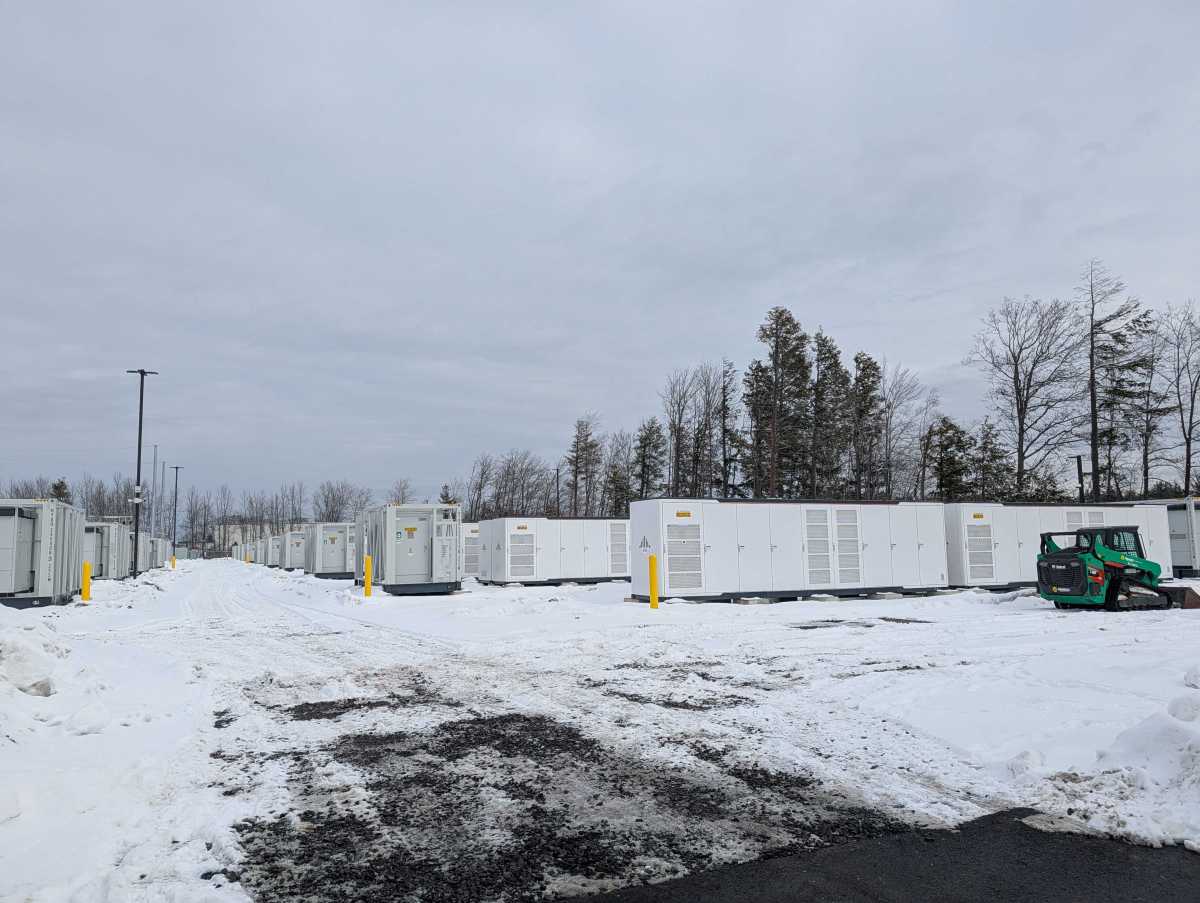
GORHAM — New England’s largest standalone battery facility is now operating in Maine, bringing the state a key step closer to the Mills administration’s electrification and clean energy goals.
The Cross Town Energy Storage facility boasts a capacity of 175 megawatts, bringing the state’s total energy storage capacity to about 240 megawatts — more than halfway to its capacity goal for the end of 2030.
At a Wednesday ribbon-cutting, Gov. Janet Mills touted the roughly 5-acre facility as a key part of the state’s transition to 100% clean energy by 2040, a goal the Maine Legislature formalized last year.
“Basically, these batteries are going to charge up with cheaper electricity generated by solar and wind projects, and then distribute that energy, that electricity, onto the grid when demand for electricity is higher — like when it’s hot in the summer and cold in the winter,” she said.
Mainers have long felt the pinch of rising electricity costs, which last year outpaced inflation. The Mills administration has argued that increased electrification and a shift away from fossil fuels will help contain those rising costs in the long term.
Cross Town — located in the Gorham Industrial Park next to a Central Maine Power Co. substation — can dispatch up to 350 megawatt hours of electricity over two hours, said Polly Shaw, a spokesperson for Plus Power, the Texas-based company behind the project. Over a year, it’s enough to power more than 19,000 homes, assuming the batteries cycle completely each day, Shaw said.
Christina Hoffman, a Plus Power permitting director who has worked on the project since 2023, said the system can “also act like a shock absorber” for the larger New England grid, preventing power outages and disruptions that can occur when supply fails to meet spiking demand.
Statewide electricity demand is anticipated to more than double by 2050, according to the state’s 2025 energy plan. That will likely put additional strain on Maine’s aging electrical grid.
WORKING BY WINTER
Wednesday’s event came more than two months after the site came online Nov. 29, according to Plus Power. Shaw said that the system has operated throughout the winter, but electricity customers may not have felt a difference.
“I like to think of it as what they don’t feel, when there’s no brownout or blackout. (When) winter storm Fern came through, we were 100% available and ready to dispatch,” Shaw said. “That’s the problem with electrons, you can’t see them working until they’re not working.”
Dan Burgess, acting commissioner of the Maine Department of Energy Resources, said the batteries are designed to address periods of peak demand, which can strain the broader grid. Electricity demand can vary widely from day to day and hour to hour.
“We’re building the system for the time that we need it the most, and that ends up being the most expensive,” Burgess said. “Every electron that comes from here is one more that we don’t have to burn or use from fossil fuels that come from somewhere else.”
He called electricity “the only major commodity in our lives” without storage built into its supply chain. Instead, “electricity is produced just in time for when we need it,” which can lead to rapid cost fluctuations as supply attempts to keep up with demand. Increased battery storage should smooth those peaks, he said.
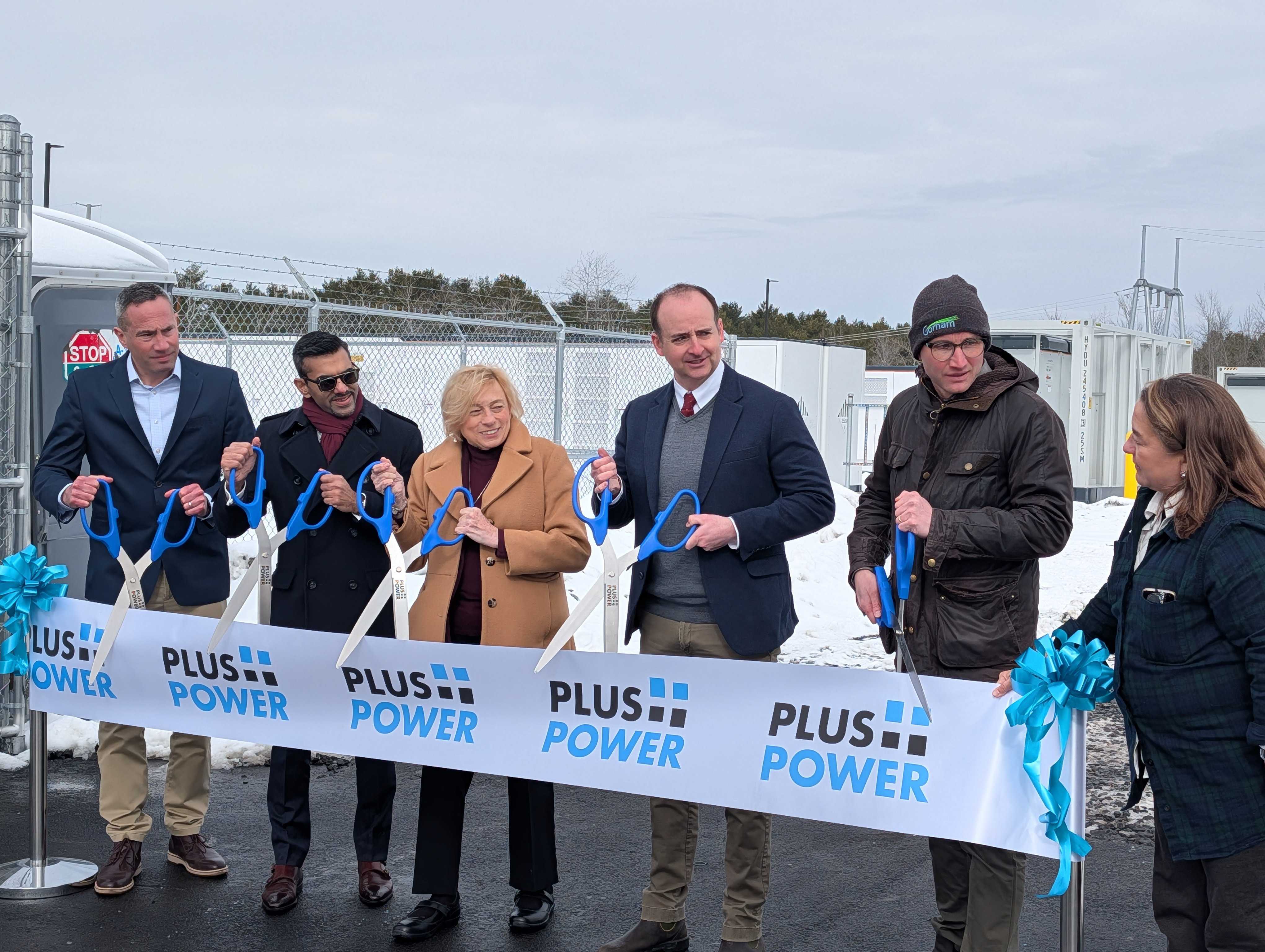
Naveen Abraham, CEO of Plus Power, said he could not estimate how much individual households would save, but argued that the project could prevent spiking supply costs, which ultimately trickle down to ratepayers’ bills.
In Maine, the Public Utilities Commission sets the default cost of residential electricity annually, based on bids from electricity generators. Those prices are largely dependent on the cost of natural gas, which accounts for about half of all electricity produced in New England.
ENERGY STORAGE GOALS
The Mills administration has for years pursued additional energy storage facilities in Maine. In 2021, Mills signed a law setting a goal of 400 megawatts of storage capacity by the end of 2030.
All told, the state currently has seven battery sites connected to the grid, which total about 238 megawatts of capacity, according to the Department of Energy Resources. At 175 megawatts, Cross Town accounts for nearly three-quarters of that.
“This is not the finish line,” Burgess told the crowd. “This is kind of the beginning of our journey to add more energy storage and more resources to Maine.”
In an interview after the event, Burgess said his department is actively working to develop a request for proposals for another battery site in Maine.
He said a draft of that RFP should be available for the public and potential bidders to review “probably in the next month,” but he did not provide specific details on its scope.

Comments are not available on this story. Read more about why we allow commenting on some stories and not on others.
We believe it's important to offer commenting on certain stories as a benefit to our readers. At its best, our comments sections can be a productive platform for readers to engage with our journalism, offer thoughts on coverage and issues, and drive conversation in a respectful, solutions-based way. It's a form of open discourse that can be useful to our community, public officials, journalists and others.
We do not enable comments on everything — exceptions include most crime stories, and coverage involving personal tragedy or sensitive issues that invite personal attacks instead of thoughtful discussion.
You can read more here about our commenting policy and terms of use. More information is also found on our FAQs.
Show less