
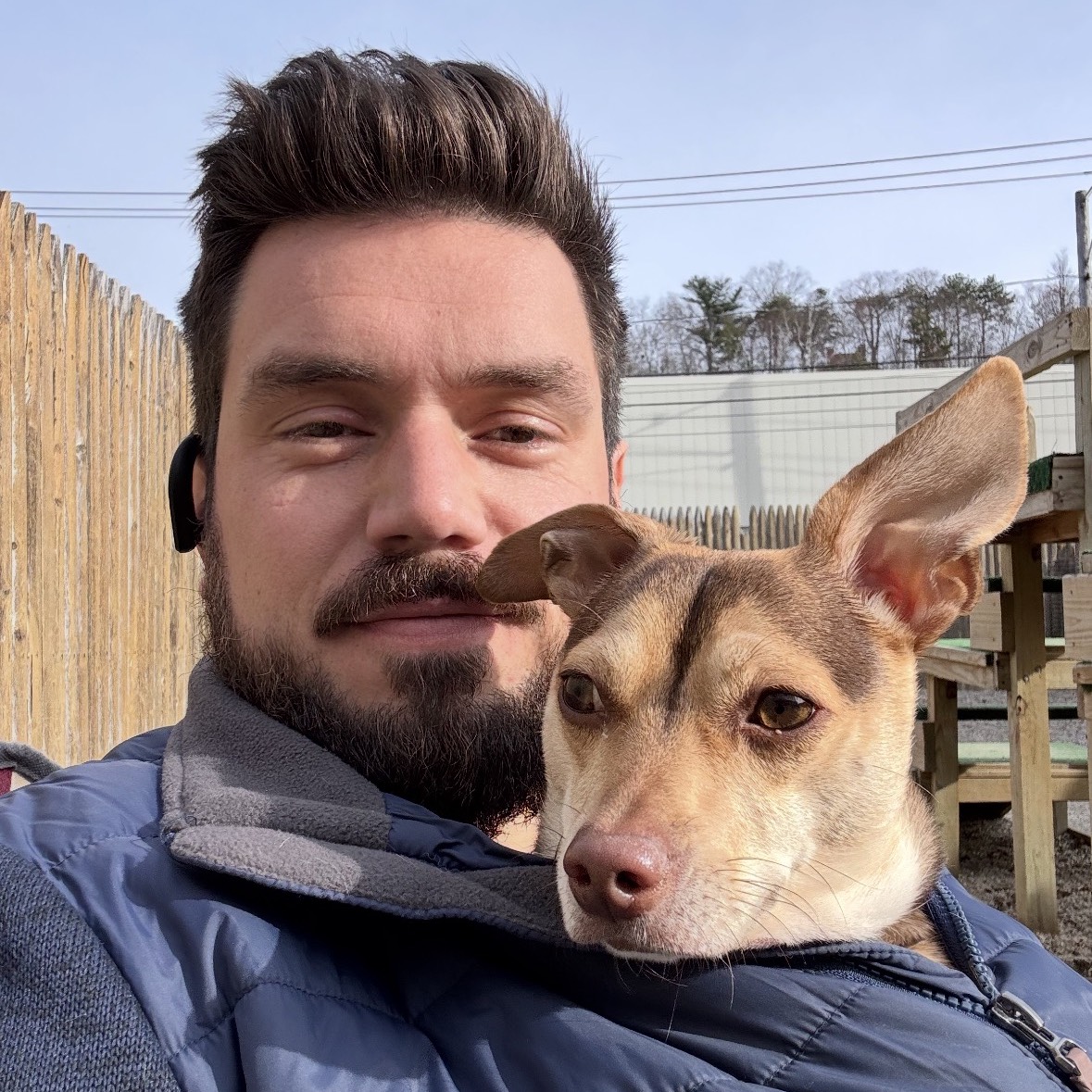
There’s a special kind of devotion reserved for dogs who follow you everywhere. Not just from room to room but from couch to kitchen, kitchen to laundry, laundry to, yes even there, the bathroom.
They don’t need a reason. Standing up is reason enough.
If your dog seems personally invested in every step you take, every door you open and every snack you might be grabbing, you’ve met the lovable phenomenon known as the Velcro Dog.
It’s not (usually) a problem
Dogs are social creatures. They’ve evolved alongside humans for thousands of years, so wanting to be near you is on brand for them. Common reasons your dog sticks so close it that:
- You are their safe place
- You are predictable (and bring snacks)
- They enjoy your company
- They’ve learned following you = good things
For many dogs, this behavior is simply affection.
When following turns into anxiety
However, there’s a difference between loving company and panic when alone.
Signs that your Velcro Dog might need more than side-by-side attachment are:
- Distress when you leave the room, like whining, pacing, or barking
- Destructive behaviors when left alone
- Refusing to settle down without you nearby
This can point to separation-related anxiety—or a dog who hasn’t learned how to be independent yet.
Breed and genetics matter more than you think
Some dogs are simply built to stick close. Herding breeds (like Aussies, Border Collies, and Heelers) were bred to monitor movement and stay tuned in at all times. Companion breeds (think Cavaliers, Shih Tzus, and Velcro favorites like Vizslas) were literally created to be close to their humans.
So, if your dog follows you like it’s their job, that may be exactly how they’re seeing it.
Knowing that offers a helpful reframing of the behavior. Sometimes it’s not anxiety; it’s instinct doing what instinct does best.
Age plays a role
Puppies and adolescents are often extra clingy. Everything is new, and you are their guide to the world. Senior dogs may follow you more closely because:
- Their vision or hearing isn’t as sharp
- They feel safer staying near you
- They’re a little less confident navigating the house alone
A sudden increase in the above behavior in an older dog is worth observing and mentioning to your vet if it’s paired with other changes.
How you might be reinforcing behaviors (“Rut-roh…”)
We mean well, but dogs learn fast. Every time you:
- Talk to them when they follow
- Pet them for hovering
- Let them shadow every move
You’re teaching them that constant proximity is rewarding. Again, this isn’t “bad,” but if you want a little breathing room, be aware of how you’re interacting with your Velcro Dog as you move through your home.
Tips for building confidence and independence
Creating independence is not pushing your dog away. It’s helping them feel okay without needing to be glued to you.
Teach a “place” command
A mat or bed where your dog learns to relax while you move around.
Encourage solo time
Enrichment toys like treat puzzles, stuffed Kongs, or chews given away from you help build comfort with independence.
Practice short separations
Step into another room briefly. Return calmly. Gradually increase time apart.
Reward calm, alone behaviors
If your dog chooses to settle down for a while without following you, that’s worth reinforcing.
When to seek extra help
If your dog shows intense distress or panic when separated, it’s time to involve a trainer or behavior specialist. True separation anxiety is not a training fail. It’s an emotional response that deserves support.
The bottom line is that your dog follows you because you’re important to them. You’re their favorite human, their routine, their comfort, and their safe space. It might be a little inconvenient to never pee without a buddy again, but it feels pretty good to have someone care enough to look out for you at all times.

Kayla Cavallaro and Alexis Ott are co-owners of The Mainely Dog in Falmouth and Portland. They offer personalized daycare, boarding, grooming and enrichment options. For more information about programming visit themainelydog.com.
Comments are not available on this story. Read more about why we allow commenting on some stories and not on others.
We believe it's important to offer commenting on certain stories as a benefit to our readers. At its best, our comments sections can be a productive platform for readers to engage with our journalism, offer thoughts on coverage and issues, and drive conversation in a respectful, solutions-based way. It's a form of open discourse that can be useful to our community, public officials, journalists and others.
We do not enable comments on everything — exceptions include most crime stories, and coverage involving personal tragedy or sensitive issues that invite personal attacks instead of thoughtful discussion.
You can read more here about our commenting policy and terms of use. More information is also found on our FAQs.
Show less