

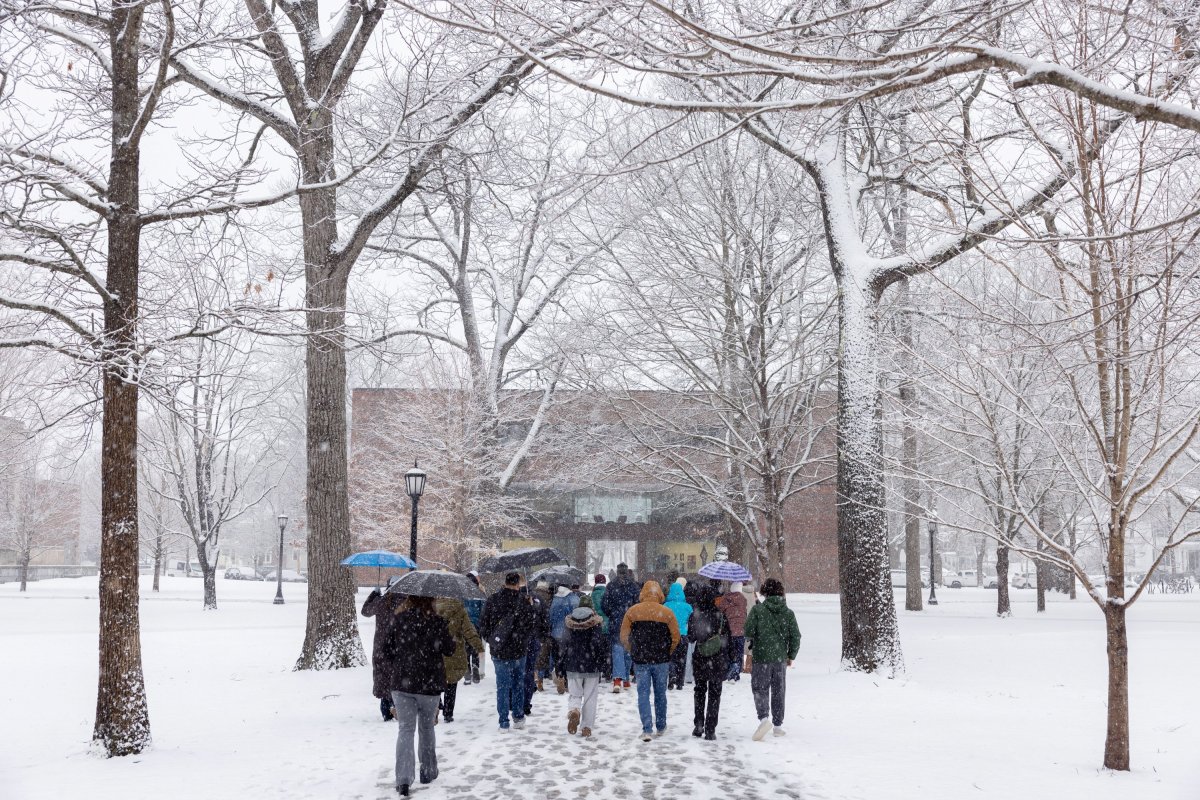
Bowdoin College released new and updated policies last month addressing protests, public demonstrations and posters, among other topics.
They have not been well received by some students and faculty members, who argue they will chill free speech on campus.
Now, the college is developing revisions in response to feedback.
The new policies, announced in a January email and effective immediately, address guidelines for public protests, where posters can be hung and how college building spaces can be used. They were informed by the work of a committee of faculty, staff and students, but met criticism from some for ambiguous language and limitations.
“The College cannot preach a commitment to the ‘free exchange of ideas’ while limiting avenues to do so,” the editorial board of The Bowdoin Orient, the college’s student newspaper, wrote last month.
College spokesperson Doug Cook said Thursday that Bowdoin was actively gathering feedback and working to provide “refinement” on the policies.
Bowdoin’s new policies come more than a year after many public and private schools across the country updated their protest guidelines in reaction to student demonstrations related to Gaza that often involved encampments. They also follow increased federal scrutiny of Bowdoin, following a Palestine-related encampment last year.
NATIONAL REVISIONING
In 2024, after protests and encampments related to Israel’s war in Gaza reached a fever pitch, many institutions adopted new protest policies that included restrictions on time and location of protests, requirements that students get protest plans approved by administrators in advance and the explicit banning of encampments. Administrators said in many cases that the policies just described or clarified existing rules, but critics said they were an attempt to limit protest.
Other colleges in Maine adopted changes to their policies in a similar time frame.
Colby College’s “Framework on the Right to Protest” from July 2024 makes clear that limits on protest should be “narrowly construed” and does not restrict the time or place of protests (nor mention encampments), but does permit the college to set limits on protest activity if it constitutes harassment, causes injury, violates the law or “substantially disrupts” essential operations. Bates College’s policy, updated in 2024, explicitly forbids encampments, and designates that “Bates has the authority to regulate the time, place, and manner of protests.”
Spokespeople for both colleges said those policies were developed through the work of committees.
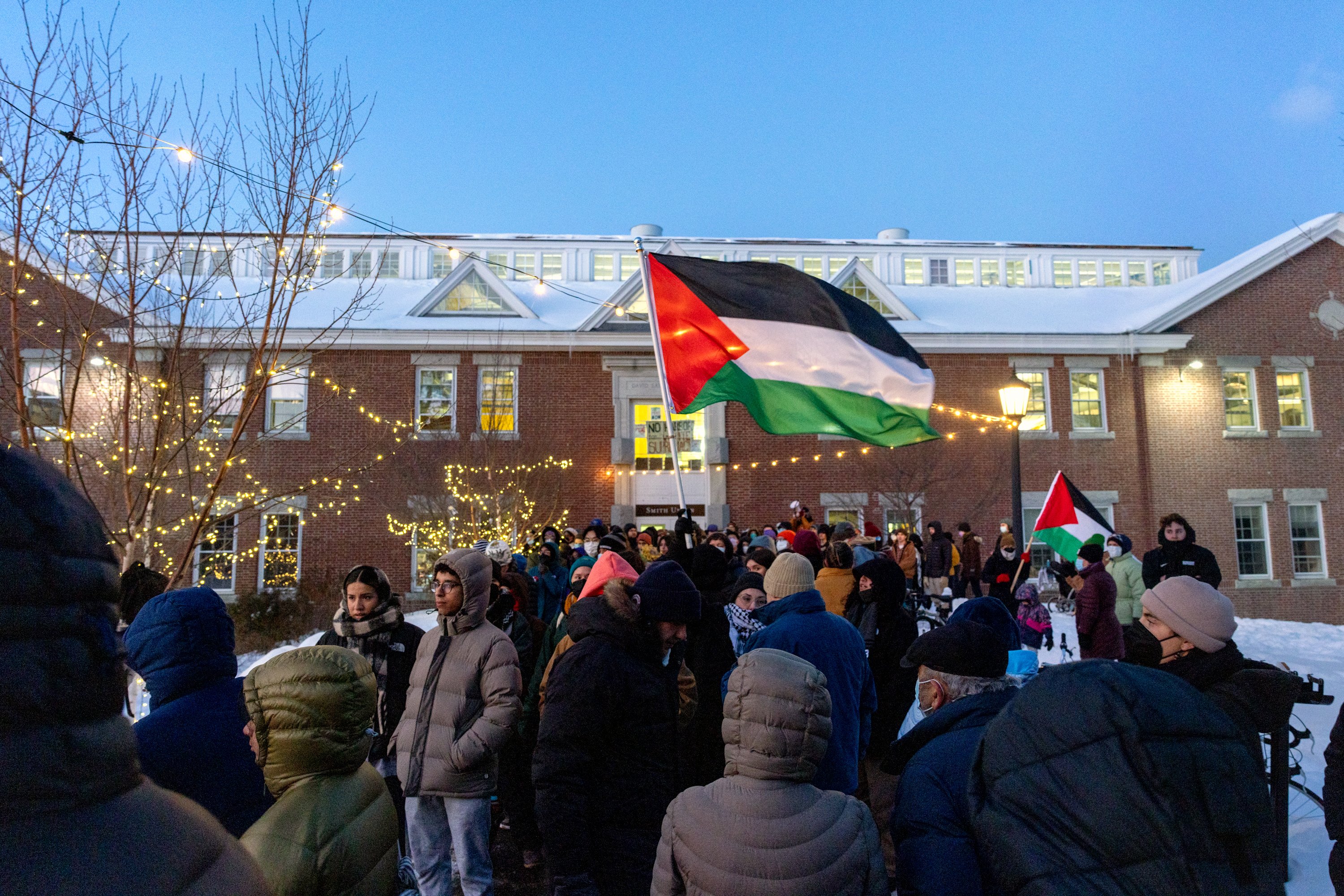
Following a multiday encampment inside Bowdoin’s Smith Union in February 2025, the college suspended eight students whom administrators said repeatedly violated policies within Bowdoin’s Code of Community Standards. Suspended students maintained that they did not break any rules with their initial action of setting up the encampment.
One month later, the school formed the Committee on Postering, Building Use, and Demonstrations, made up of faculty, staff and students. They authored the report that informed the recent policy changes, one of several initiatives President Safa Zaki announced in the wake of the encampment, in a letter titled “Working Together.”
Cook, the college spokesman, said the new policies introduced last summer were, “informed by the careful and collaborative work of a committee of faculty, staff, and students.”
“From the outset of introducing the policies, the college asked the community to share their perspectives with us so we can ensure the policies are clear and actionable,” he said.
‘VAGUE AND SUBJECTIVE’
The new language from Bowdoin says the college “may establish reasonable limits on the time, place, and manner of expression” while emphasizing repeatedly that those limits will be viewpoint-neutral. It says protest activities may not obstruct building access or prevent classes, offices or campus programs from functioning normally.
Junior Shawn Jiminez, a West Gardiner native studying sociology and government and legal studies, said he was troubled that the college framed the new policies as protecting student safety.
“While the college claims that they’re neutral and clear, I found that a lot of them, in my personal opinion, were vague and subjective, which will put students at risk in the event that they choose to take part in political demonstrations,” he said.
Jiminez attended Columbia University for a year before transferring to Bowdoin, and said the college’s new policies seem like a troubling echo of the crackdown on student protest he saw there in the spring of 2024.
He also worried that parts of the new policy that allow the college to limit the participation of “individuals who are not members of the College community” will sow divisions between Bowdoin and the Brunswick community.
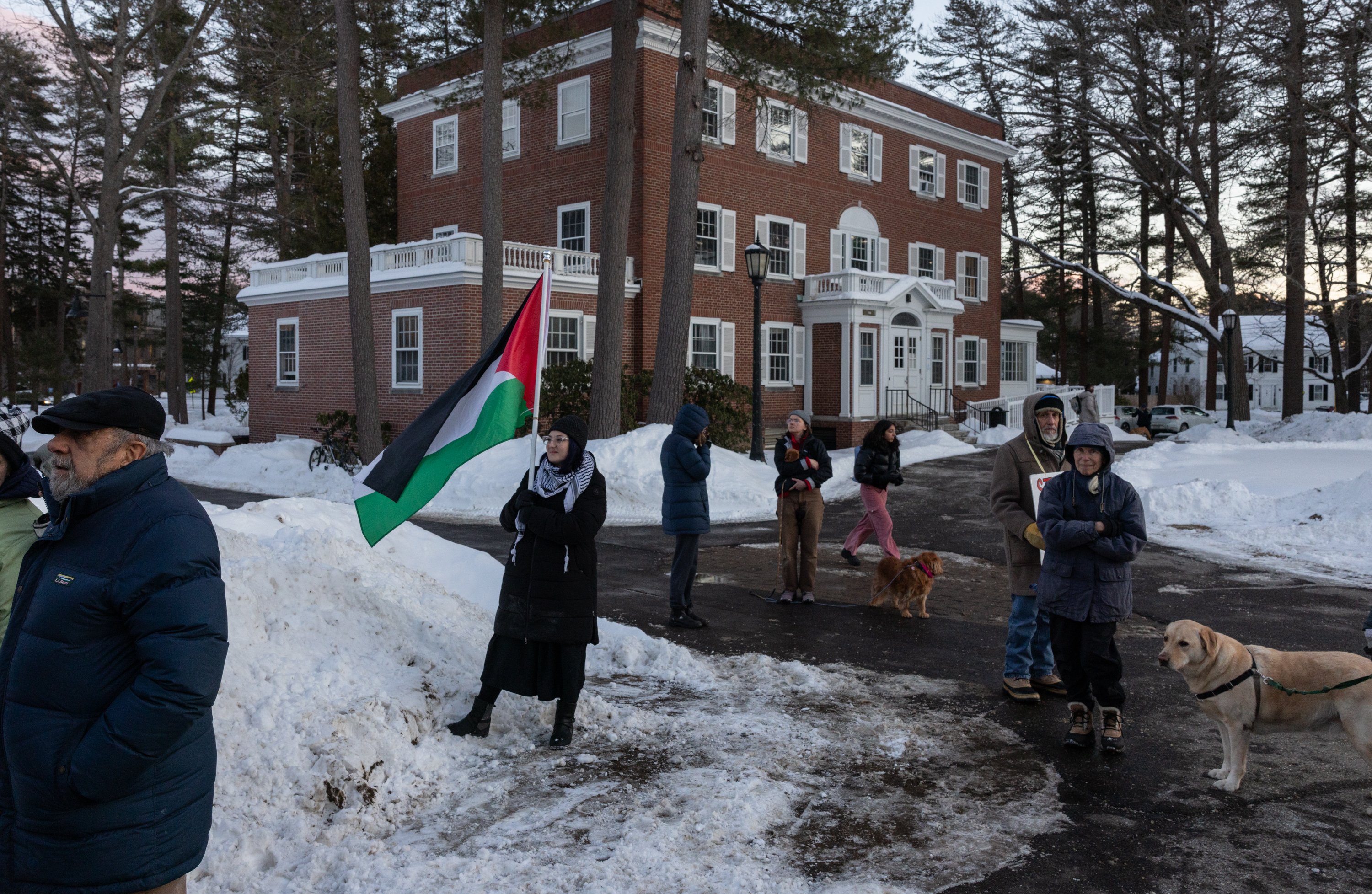
In its Jan. 30 editorial, the Orient argued the new policies contradict the college’s assertion that it values the free exchange of ideas, and imply that “only College-sanctioned dialogue is constructive.”
The editorial board contended that ambiguous wording in the policy will leave enforcement up to interpretation by the institution, and framed the adoption of the policies amid the larger political pressure on higher education institutions.
“This may be the popular route, but it is not the right one,” the board wrote.
Caleb Packard, a senior from Massachusetts majoring in math and philosophy, said the new protest guidelines seem like a clear reaction to Trump administration pressure.
Last February, encampment organizers billed their protest as the first of the new Trump era. In March, a congressional committee sent a letter to Zaki and board of trustees Chair Scott Perper, accusing the college of failing to respond to antisemitism on campus and requesting details on the disciplinary actions against students involved in the encampment. Zaki said the college was confident its policies were fully compliant with the law, and the committee sent a second letter in June, in which it said the college failed to comply with its requests.
“Bowdoin’s past treatment of student political expression demonstrates a clear institutional overreach in determining what type of speech is ‘acceptable,’ Packard said, adding that the policies “extend administrators even more power to silence student expression.”
Other components of the policy update that only apply to employees have created concern as well.
To hang posters, use college spaces to host events or use the college’s name in social media handles, faculty and staff must now officially register as a group through human resources. Students are prohibited from membership in those groups.
Members of the faculty expressed skepticism of the policies at a meeting shortly after they were announced, the Orient reported, and even initiated a motion calling on the president to suspend the policies.
“Many people are concerned that these new policies, which give the administration far-reaching powers to curtail freedom of expression, will further chill speech on campus,” history professor Salar Mohandesi said. “Especially since Bowdoin’s administration has a history of not always applying its policies equitably.”
Now, the college administration is engaging with that feedback.
“We are actively engaging with our community and have gathered a range of thoughtful feedback and clarifying questions in our effort to provide refinement as the policies take effect,” Cook, Bowdoin’s spokesman, said Thursday.
English Professor Aaron Kitch, chair of the Committee on Governance and Faculty Affairs, said that group was able to review draft revisions of the policy this week and felt they responded in substantive ways to the faculty concerns. He said committee members felt the college’s responsiveness was a move in the right direction.

We invite you to add your comments. We encourage a thoughtful exchange of ideas and information on this website. By joining the conversation, you are agreeing to our commenting policy and terms of use. More information is found on our FAQs. You can update your screen name on the member's center.
Comments are managed by our staff during regular business hours Monday through Friday as well as limited hours on Saturday and Sunday. Comments held for moderation outside of those hours may take longer to approve.
Join the Conversation
Please sign into your CentralMaine.com account to participate in conversations below. If you do not have an account, you can subscribe here. Questions? Please see our FAQs.