

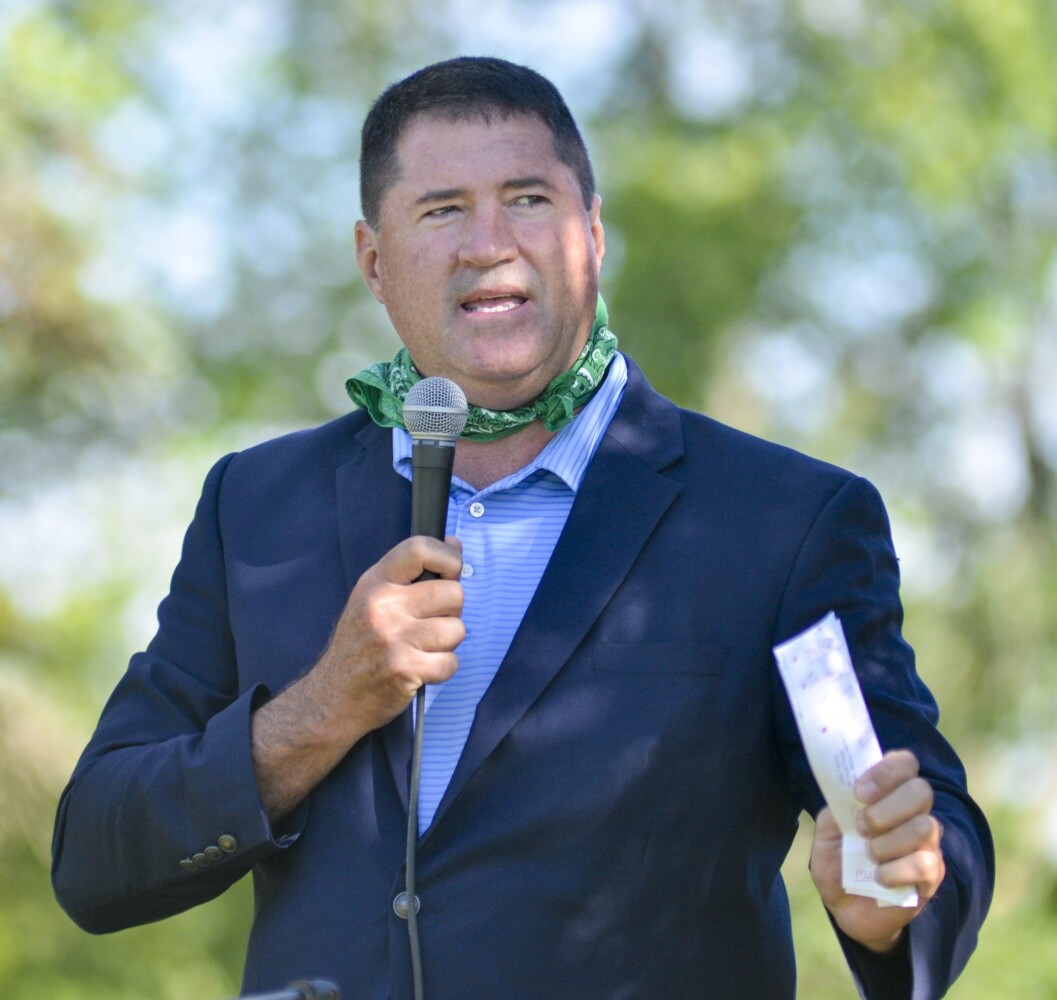
The Maine Ethics Commission voted Wednesday not to further investigate a Republican gubernatorial candidate for a staffer’s offer to pay someone “under the table” to collect campaign contributions.
Commissioners also cleared the Maine Democratic Party in a separate complaint over whether it qualified as a ballot question committee when opposing last year’s referendum to create voter ID requirements and new absentee voting restrictions. However, commission staff will review whether the party adequately filed its campaign finance reports.
State Sen. Jim Libby, a Standish Republican seeking his party’s nomination for governor, had been the subject of a complaint the commission received earlier this month from Falmouth real estate leader David Jones, who is competing against Libby in the GOP primary. Jones’ campaign had provided audio of a phone call in which Libby’s campaign manager, Phil Hendricks, offered to pay someone “under the table” if they collected contributions from voters to help Libby qualify as a publicly-funded Maine Clean Election Act candidate.
Libby and other Clean Election candidates must collect at least 3,200 qualifying contributions of $5 from registered Maine voters by April 1 to meet the bar for gubernatorial campaign funding. There is no evidence the person accepted the offer from Hendricks.
Upon learning of the complaint, Libby expressed disappointment in Hendricks and said he gathered signed statements from seven volunteers who asserted they are volunteering and were not coerced into anything.
Libby appeared before commissioners at their Wednesday morning meeting in Augusta to reiterate his disappointment with the recorded call. He said he spoke with Hendricks, who took “ownership for it and assured me that no money was improperly exchanged in any way.”
Commissioners mulled proceeding with an investigation to confirm no wrongdoing on Libby’s part, but ultimately agreed the lack of evidence of money changing hands meant they had nothing to probe for now.
The commission, which currently includes two Republican members, one Democrat and one independent while a second Democratic seat is vacant, unanimously voted to not continue investigating Libby. However, Maine Ethics Commission Executive Director Jonathan Wayne noted the body could later review qualifying contribution submissions once they arrive.
Former Rep. John Andrews, a Paris Republican representing the Jones campaign at Wednesday’s meeting, was not happy with the decision. (Jones is not running as a Clean Election candidate, and has been near the top of the crowded GOP field in fundraising.)
“I guess I’m stopping by the district attorney’s office,” Andrews quipped to commissioners.
DEMOCRATS ALSO FACING QUESTIONS
The commission had opened a separate probe into the Maine Democratic Party last month after conservative activist Alex Titcomb complained the party did not properly disclose all of its spending against last year’s unsuccessful voter ID referendum. Maine voters overwhelmingly defeated Question 1. Titcomb, the leader of The Dinner Table PAC, spearheaded the unsuccessful campaign alongside Rep. Laurel Libby, R-Auburn.
Titcomb argued the Maine Democratic Party qualified as a ballot question committee, or BQC, under state law because it received and spent more than $5,000 to oppose Question 1. The party spent about $250,000, but told the commission it complied with statutes by filing its spending in regular campaign finance reports submitted as a party committee under a different state law.
Attorneys for the Maine Democratic Party argued the matter came down to the commission’s interpretation of the different statutes. The party had also previously received “confusing” reporting advice from commission staff on this very question, its attorneys said.
Assistant Attorney General Jonathan Bolton told commissioners after they requested his opinion that he believes the relevant statutes “are ambiguous and could be plausibly interpreted in different ways,” but Bolton said the Democrats acted under the “best interpretation” of the law.
Titcomb pushed back on that opinion while saying his complaint was “not about political points.”
Commissioners voted to agree with Bolton’s opinion that essentially found the party was not a ballot question committee. However, it also voted to keep investigating whether the Democrats adequately filed all of their other campaign finance reports to oppose Question 1. (Titcomb had argued the party missed other required reports.)
Wayne, the executive director, told commissioners an additional investigation could determine any penalties regarding missed reports.
“They had good intentions,” Wayne said of the party, “but they should have gone farther.”

We invite you to add your comments. We encourage a thoughtful exchange of ideas and information on this website. By joining the conversation, you are agreeing to our commenting policy and terms of use. More information is found on our FAQs. You can update your screen name on the member's center.
Comments are managed by our staff during regular business hours Monday through Friday as well as limited hours on Saturday and Sunday. Comments held for moderation outside of those hours may take longer to approve.
Join the Conversation
Please sign into your CentralMaine.com account to participate in conversations below. If you do not have an account, you can subscribe here. Questions? Please see our FAQs.