
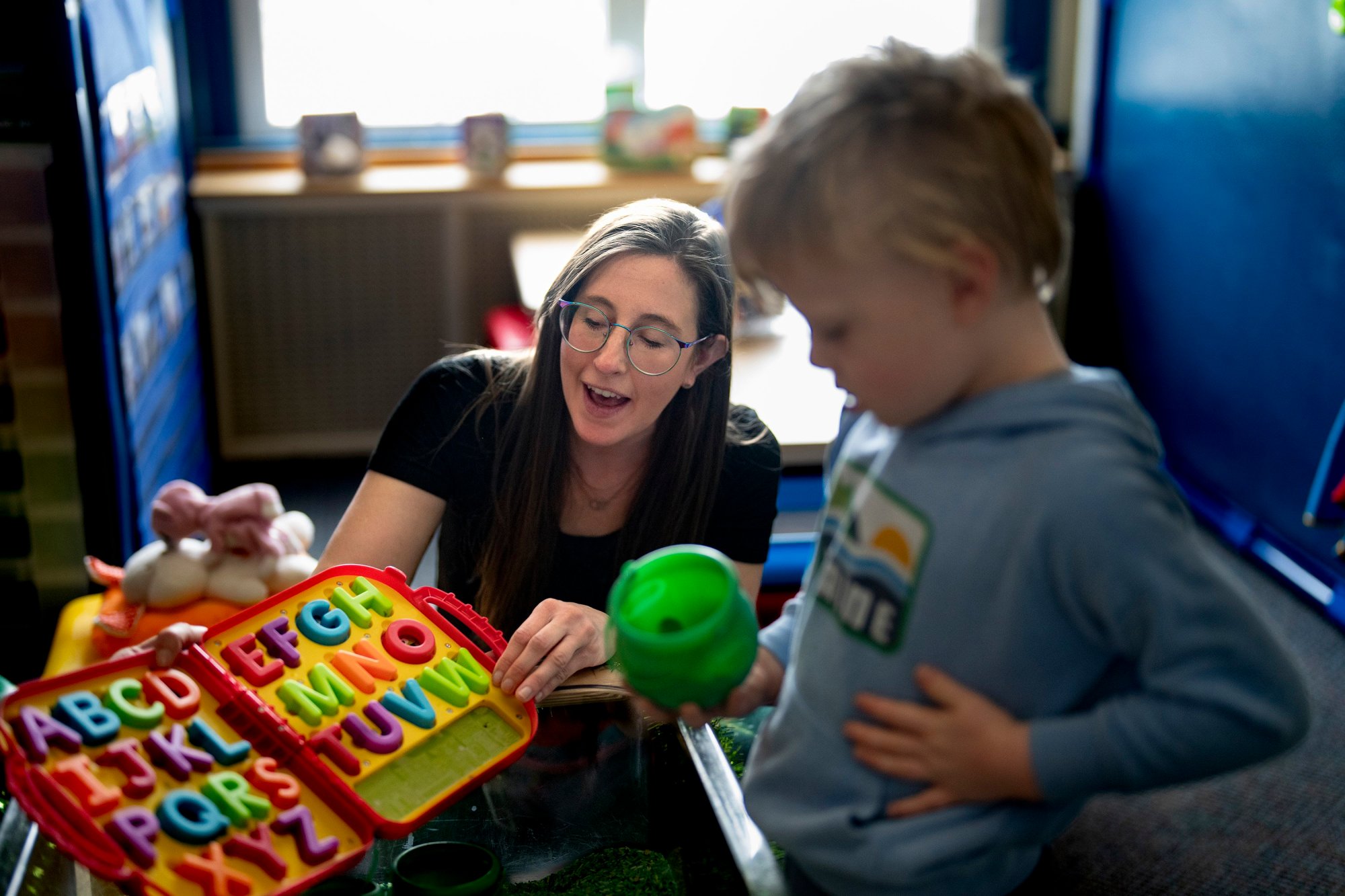

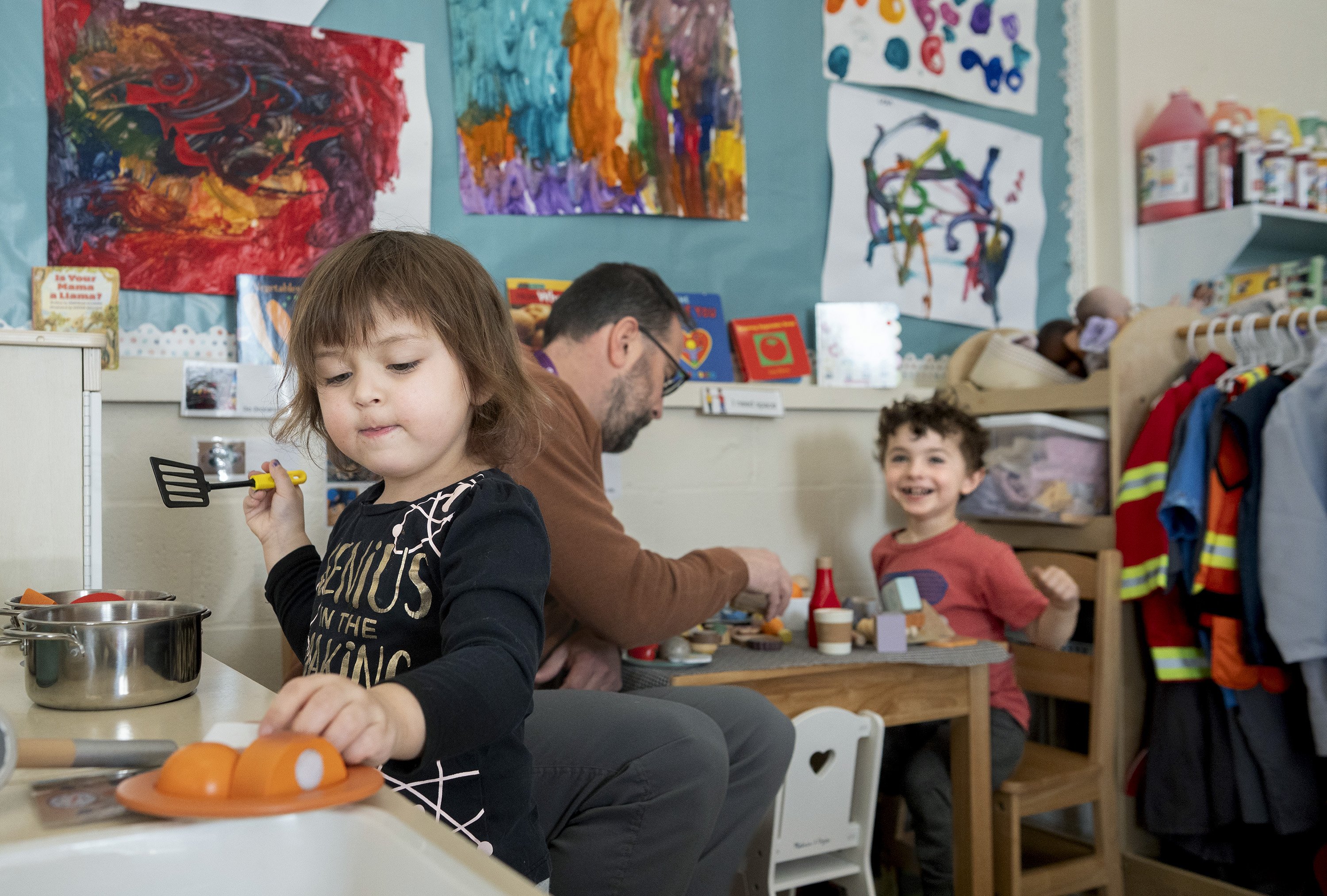
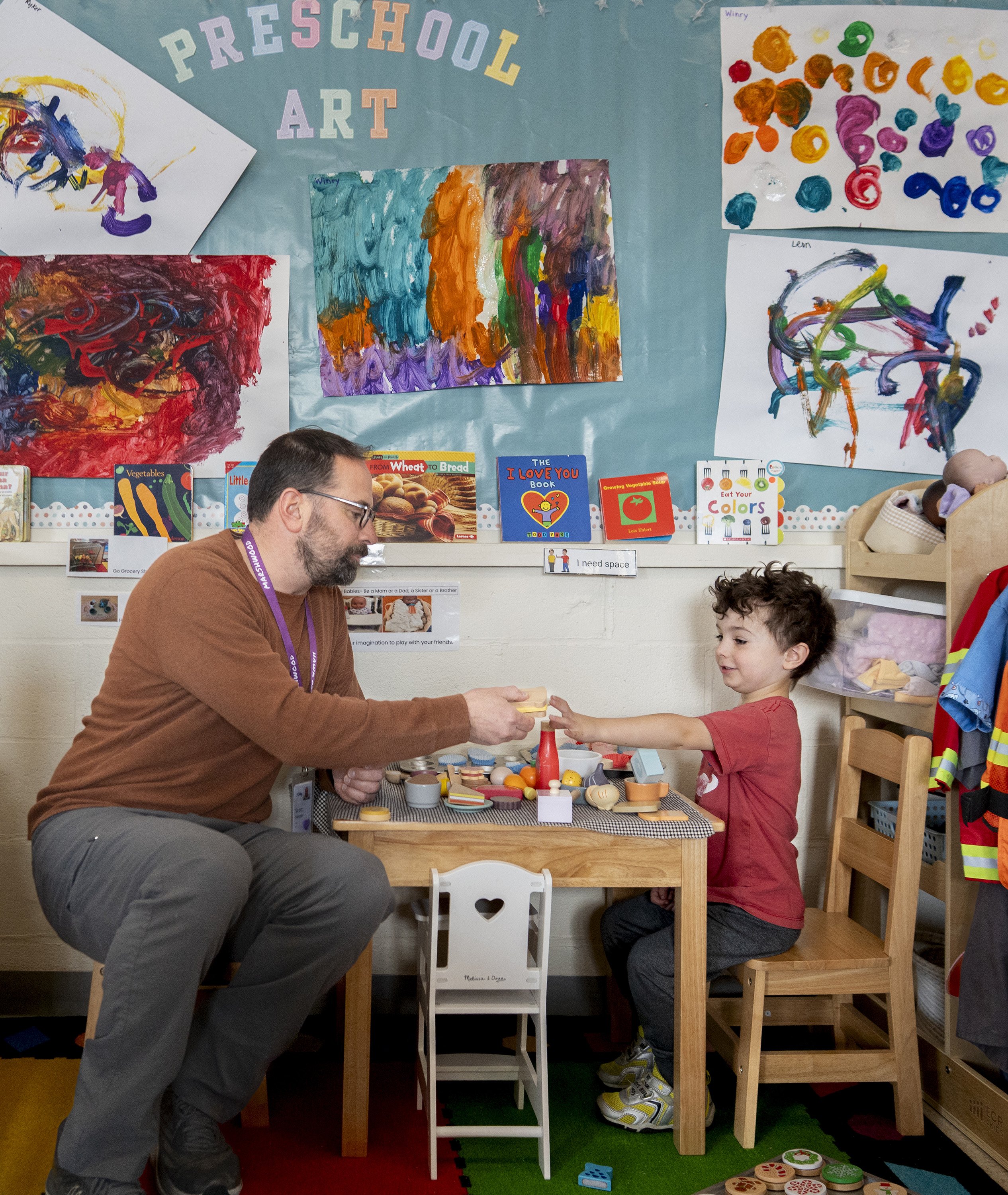
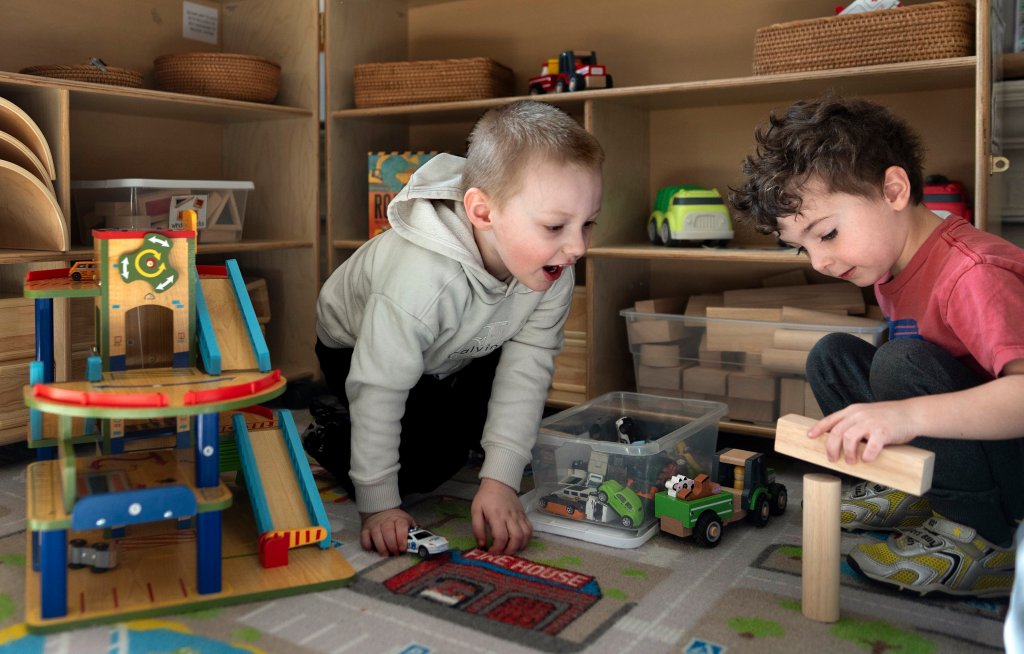
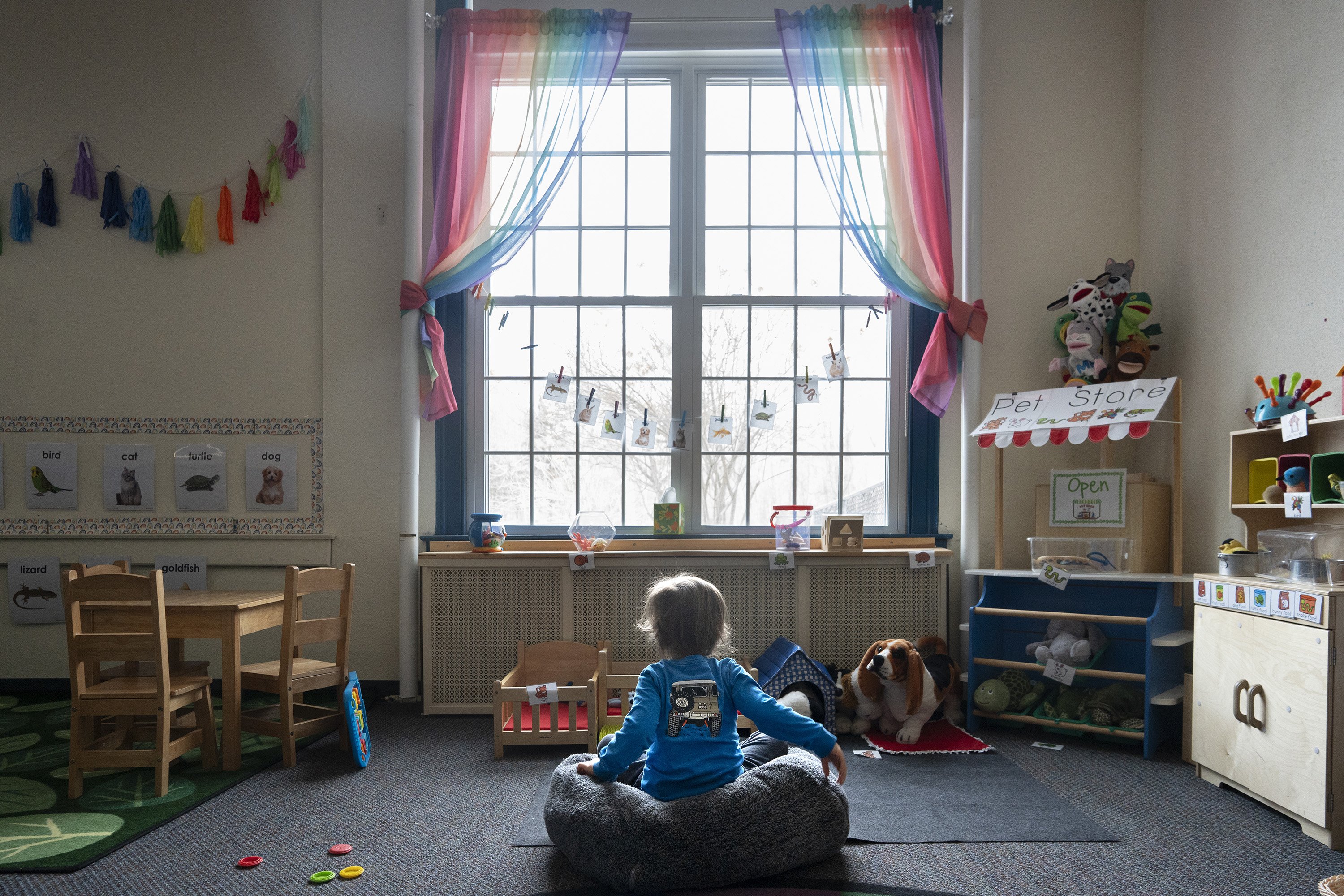
ELIOT — In Carin Sarzynski’s classroom, there’s a tea party set with wooden treats, a mini trampoline and an area for painting.
The setup has all the hallmarks of traditional preschool, but the children there also receive special education services like speech and occupational therapy. Only a few years ago, they would have entered kindergarten at Eliot Elementary School unfamiliar with the space, where to find the cafeteria or how to get to the bathrooms. Before that, many would have sat still on long waitlists for services, sometimes aging out before receiving them.
Now, the transition from preschool is seamless.
“I need my kids entering school age in as best shape as possible,” said Scott Reuning, who directs the special services for Regional School Unit 35, which includes the towns of Eliot and South Berwick near the New Hampshire border. “And I think we’re doing pretty well with that.”
Two years ago, the Maine Department of Education laid out a plan to shift responsibility for helping disabled children from the state agency known as Child Development Services to local school districts. CDS for years had been struggling with long waitlists and concerns about its leadership. Lawmakers called the agency “broken.”
The Legislature supported the DOE’s proposal to move services for 3 and 4-year-old from CDS to individual school districts, and passed a bill requiring that transition to be complete by July 2028. The agency will continue to provide early intervention from birth to age 2 for infants and toddlers with developmental delays or disabilities.
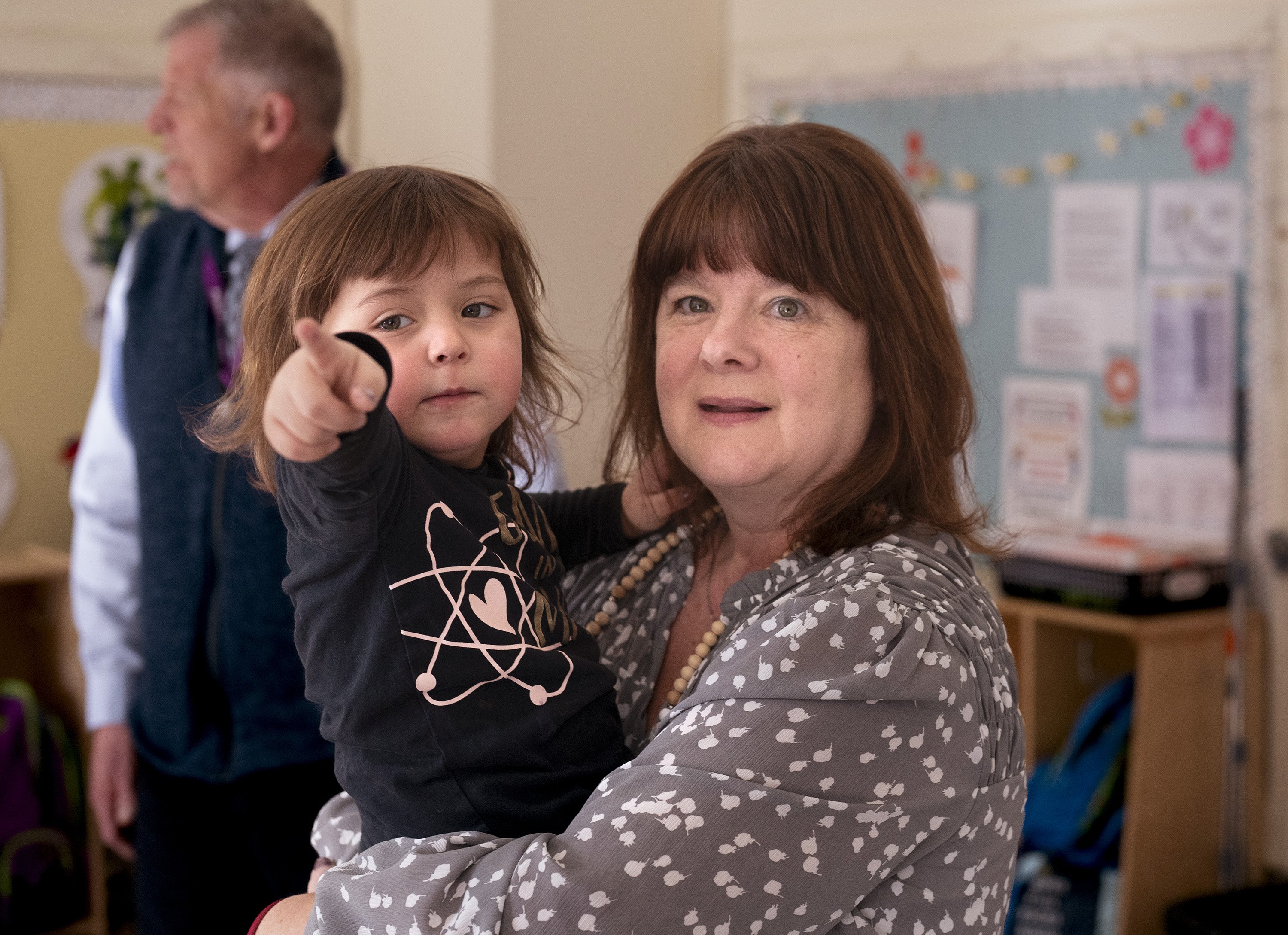
RSU 35 was among the 17 school districts that piloted the change during the 2024-2025 school year. Collectively, they served 314 early childhood special ed students.
There have been some bumps — staffing and transportation, primarily — but district leaders say the benefits of forming early connections with families have been monumental.
During the current school year, more than 30 additional districts are making the transition, while the rest will follow in the 2026-27 and 2027-28 school years.
Sandy Flacke, the DOE’s deputy director of special services, said the transition has been exciting and rewarding.
“Everybody feels like this is a very important mission,” she said.
While superintendents agree that the shift is positive, especially for young special education students, challenges persist, and the undertaking may force some districts to confront difficult decisions about how they allocate resources.
‘THIS ISN’T TOO MUCH OF A JUMP’
When the state was looking for districts to pilot the transition back in 2024, the turnaround time was tight, so it looked to smaller districts that already had public pre-K.
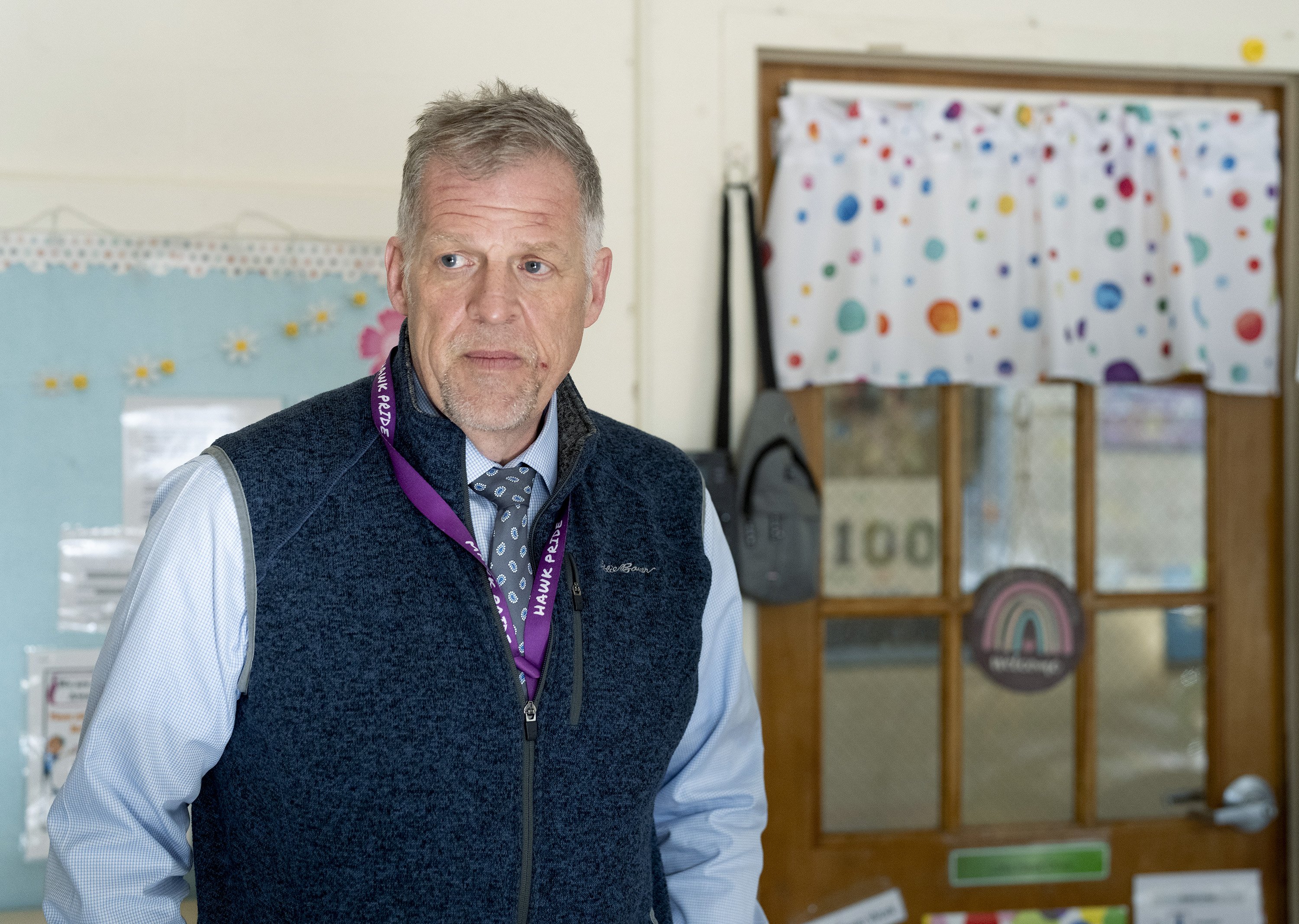
That was the case for RSU 35, which was the first district in Maine to begin offering universal public pre-K back in the early 1970s.
“It was really analyzing everything we already had in place and saying, ‘This isn’t too much of a jump,'” Reuning said.
Now, the district operates five classrooms for 3-year-olds across its two primary schools; they have 45 early childhood special ed students. Leaders said the services they’re able to offer are making a big difference in the lives of young special education students, which include those with autism and intellectual disabilities.
“We get to know these students and build relationships with their families when they’re 3, and we can think long term about what type of programming is going to support these students best as they move through our school system,” said Superintendent Heidi Early-Hersey.
School districts could join whichever phase of the rollout they wanted, but the state tried to incentivize early participation by providing funding up front, along with grants for setting up classrooms and expanding pre-K.
Next door to Eliot, York Superintendent Tim Doak said staffing was one of his big motivations to jump in early, and he was able to hire three new trained employees while they were still available.
York has since taken on 25 new students, and the district collaborates with nearby Kittery, with whom it shares a director.
“Of all the ups and downs of education in Maine, this, to me, is a shining star,” Doak said. “It’s really going to make a difference for kids and families in the schools.”
York ended up taking on more students than it expected, a trend leaders across the first cohort reported last year.
In 2024, when the Legislature made the decision to transfer preschool and pre-K special ed services to districts, state officials had known for years that CDS was not meeting its obligations to students. The commissioner of education pointed to an outdated organizational structure.
Parents reported struggling to even get caseworkers on the phone, and delays of months or years before receiving services. The average CDS caseworker had double the number of children they were expected to handle. The problems were most severe for 3- to 5-year-olds.
Families and advocacy groups said the agency was failing to meet its legal responsibility to disabled children. When students miss out on those early interventions, experts say, they struggle to make up the gaps with peers once they arrive at school, exacerbating the burden on districts.
‘COMFORTABLE WITH BEING UNCOMFORTABLE’
During the current school year, 34 school districts have been serving about 550 kids.
Jay Robinson, superintendent of Fryeburg-based School Administrative District 72, said his district chose to join the second cohort because they wanted to watch others sort out early logistical hurdles first, but also didn’t want to delay for too long.
So far, they have taken on 17 students, some of whom receive out-of-district services. Robinson said his staff have risen to the occasion, and he’s looking forward to improved continuity of service for students.
There are growing pains, though.
“You sort of have to get comfortable with being uncomfortable, making the best decisions you can, and then maybe changing course when you get new information or once (the state) can provide you with an answer,” he said.
Funding for early childhood special education is calculated on a per-pupil basis, with a formula similar to the general statewide school funding formula, but with added weights for students with higher needs. Districts get 100% of their funding from the state, which will continue after the transition period is over in 2028 per state law, Flacke said, despite a misconception from some districts. The larger funding formula for special education is also currently under review by lawmakers.
Eligibility for early childhood special ed also works differently than public school in an important way: Students qualify for services the day they turn 3, rather than based on the Oct. 15 cutoff that schools normally use to determine what grade a student belongs in.
That means that throughout the year, as students age in, they join the program. In other words, a district can start the year with 15 students and end it with 30, which could necessitate new hires throughout the year to accommodate that growth.
Leaders in Eliot, York and Fryeburg also said they had to purchase new vehicles, primarily vans or mini busses with specialized seating for toddlers, often with state funds. Finding new staff to drive those vehicles, they said, has been an additional challenge.
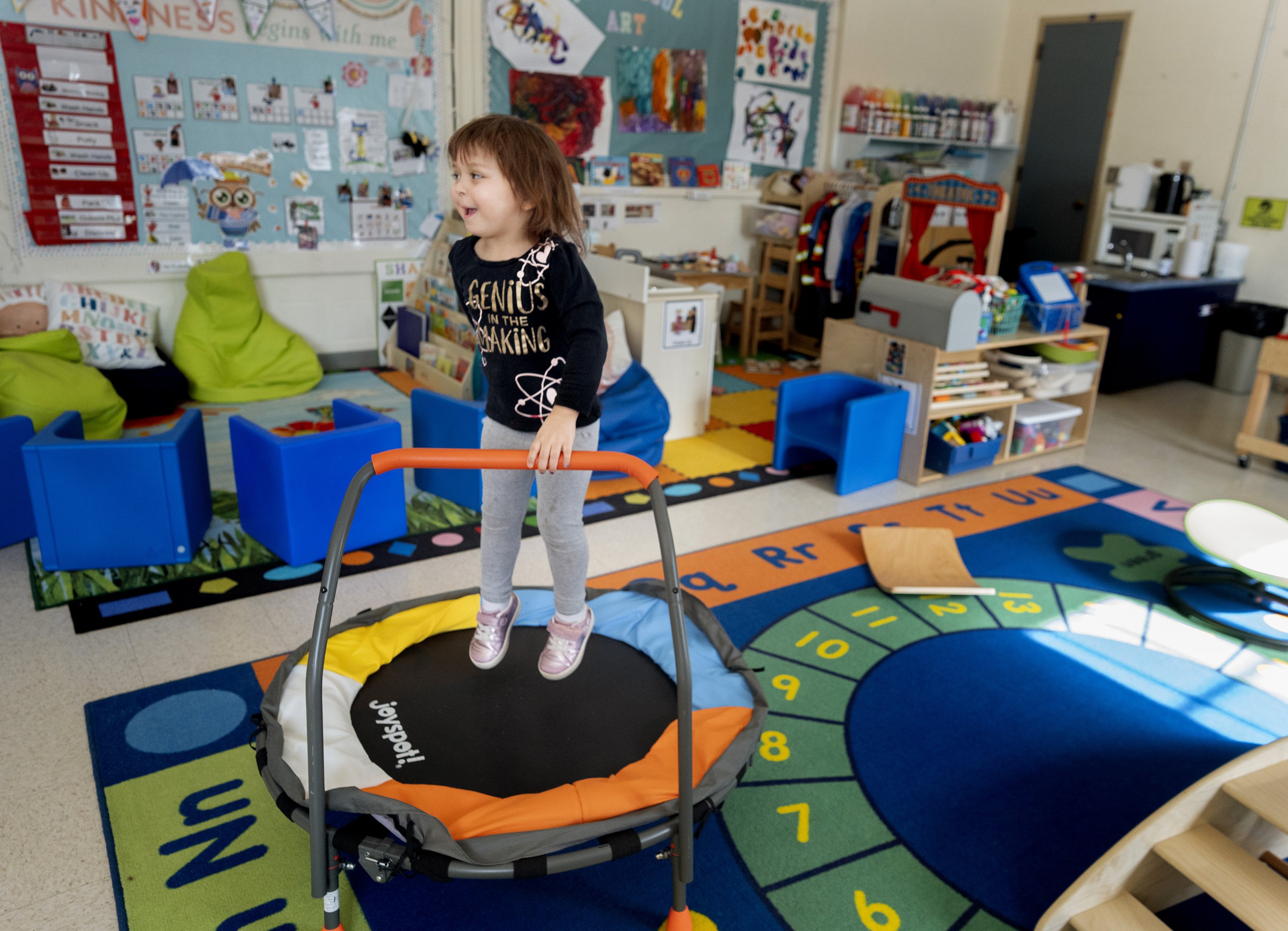
And then, districts have had to redesign classroom spaces for their new, littlest students.
Flacke said the DOE has helped to set up more than 180 classrooms around the state, and offers grants for districts to remodel their spaces into disability-friendly preschools, by adding features like new bathrooms, accessibility compliance or changing tables. The department will furnish classrooms and provide supplies like functional seats or materials directly related to students’ disabilities.
“It’s really been quite amazing to be able to provide equity across the state for pre-K experiences, so that every child that’s going into a pre-K is able to have a beautiful classroom with appropriate furniture and sensory materials,” Flacke said.
In the coming cohorts, when larger and more complex districts begin taking on early special education, the facilities’ needs might be greater.
‘WE DO NOT HAVE A PLACE TO PUT THEM’
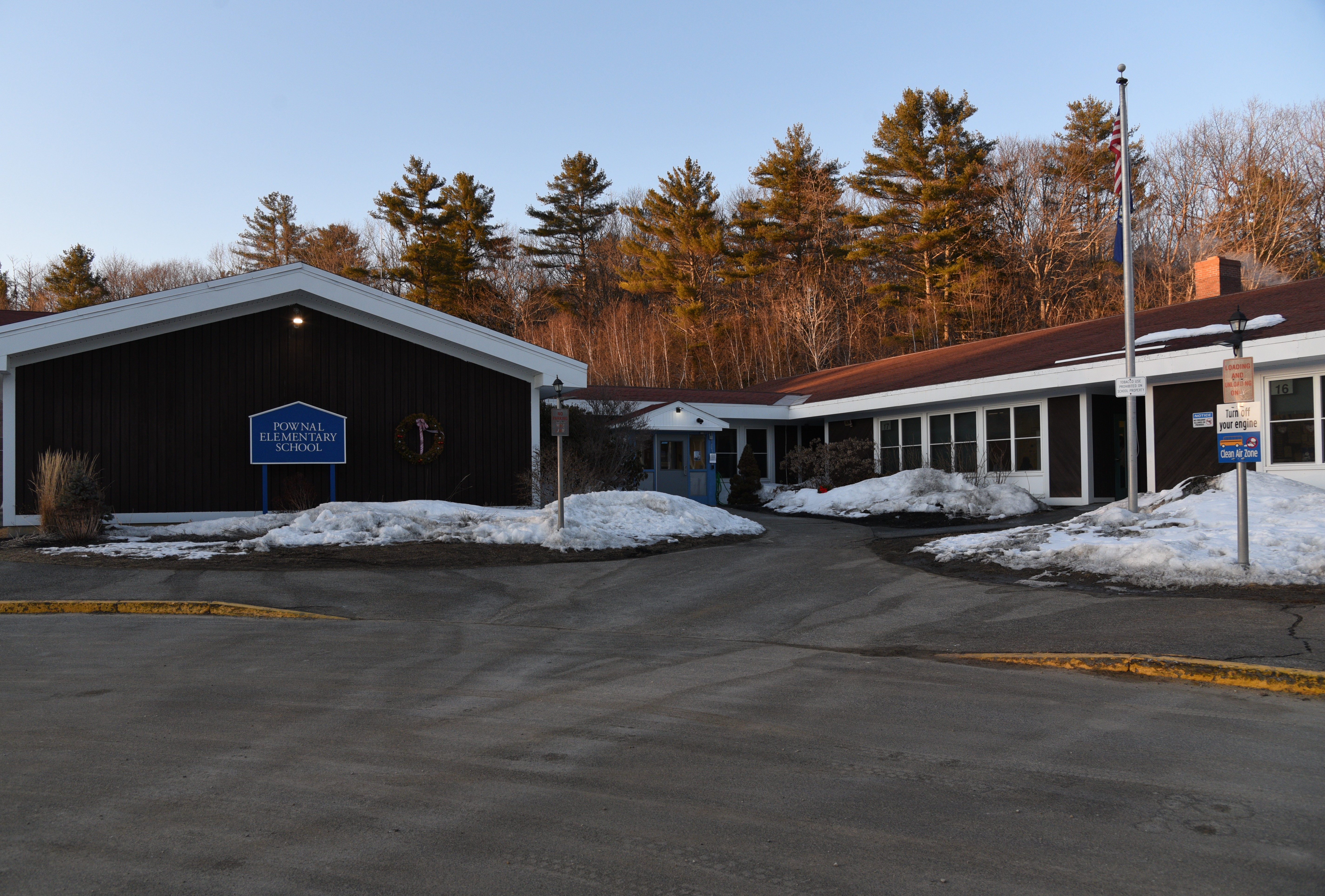
For Freeport-based RSU 5, a proposal to rearrange district facilities to create an early child care center — potentially closing an elementary school in the process — has drawn pushback from the community.
Superintendent Tom Gray didn’t want to come out with a radical proposal during his first year leading the district, which also includes the smaller and more rural towns of Durham and Pownal. But he said he wanted to provide the school board with options for sustainable change amid a tough budget environment and the early childhood mandate.
Closing the elementary school in Pownal to convert it to a center for preschool and pre-K (while shifting around grade levels at several other district schools) was just one of three long-term solutions Gray brought to his school board last month. Pownal families turned out strongly in opposition to the idea at a February board meeting, and an online petition against the proposal garnered more than 1,000 signatures.
Gray said he’s sympathetic to the families who feel like a bombshell has been dropped on them.
“I was genuinely moved by what some of those people expressed, and how could I not be?” he said. “But what I said was: This is a conversation starter. This is not a decision yet.”’
He convened an early childhood task force in October to assess how the district would tackle the transition, and they unanimously agreed to join the third cohort, which will involve 916 students and 94 districts, including some of the state’s largest like Portland and Bangor; the final cohort will take place the following school year and comprise the remaining 106 districts (although that includes some with no schools or students).
RSU 5, like many districts in the third group, will use a phased approach, taking on 4-year-olds next year and 3-year-olds the year after. Gray isn’t too concerned about taking on the older group, because RSU 5 already has pre-K infrastructure and specialized staff.
“That becomes tricky year-after-next when the 3-year-olds come on, because quite frankly, we do not have a place to put them,” Gray said during his February presentation. “And I think it’s really hard to figure out, going on the way we are.”
Even if the board approves the Pownal Early Childhood Center, he’s not counting on that happening in time to take on the new early special ed students. He said some 3-year-olds can be integrated into pre-K classrooms, while the district will have to contract with local day care centers for others, depending on their needs.
Flacke with DOE said overall, progress on the transition has been gratifying to watch, but in many ways, the state is still building the plane as it’s flying it.
“There isn’t a day that goes by that we’re not trying to figure something out,” she said.

We invite you to add your comments. We encourage a thoughtful exchange of ideas and information on this website. By joining the conversation, you are agreeing to our commenting policy and terms of use. More information is found on our FAQs. You can update your screen name on the member's center.
Comments are managed by our staff during regular business hours Monday through Friday as well as limited hours on Saturday and Sunday. Comments held for moderation outside of those hours may take longer to approve.
Join the Conversation
Please sign into your CentralMaine.com account to participate in conversations below. If you do not have an account, you can subscribe here. Questions? Please see our FAQs.