

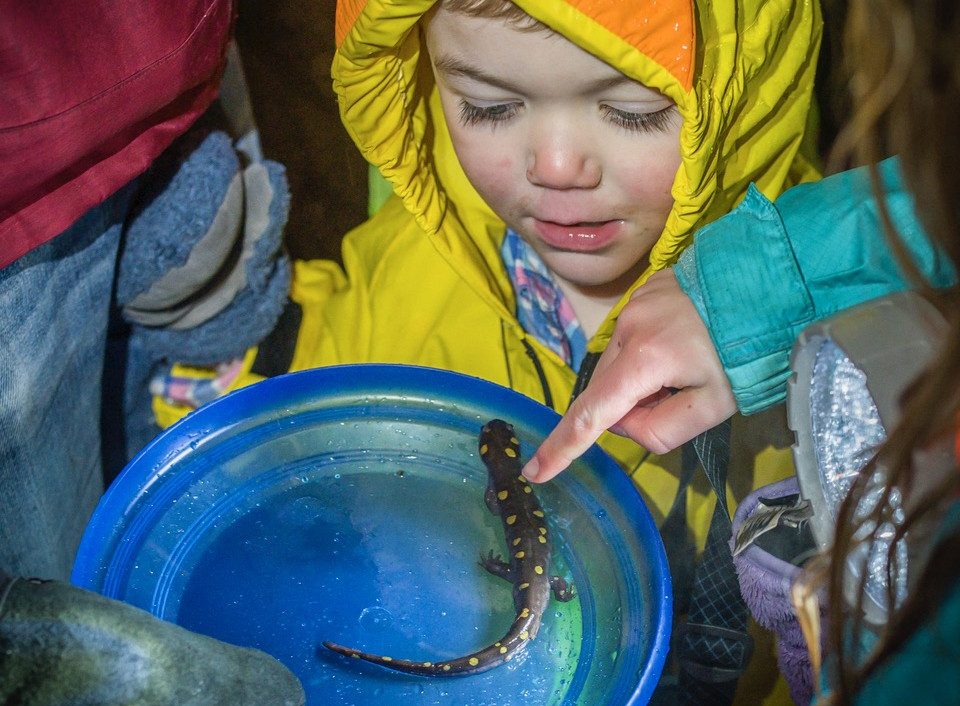
How did the salamander cross the road?
On Big Night, it’s with the help of many Mainers.
Big Night, a herpetological tradition that has hopped into the mainstream, is the special evening when amphibians — including frogs, salamanders and newts — crawl, skitter and hop en masse from their wooded winter shelters to spring breeding grounds.
Seeking the seasonal forest wetlands called vernal pools in which to lay their eggs, many of these amphibians now have to cross Maine roads — and risk getting flattened by cars.
For over a decade, nature lovers and biologists have helped these migrating critters cross roadways by simply picking them up and shuttling them across. Across the country and in Maine, more and more citizens have participated in Big Night, donning rain jackets, scooping up salamanders and lending a helping hand during this natural phenomenon.
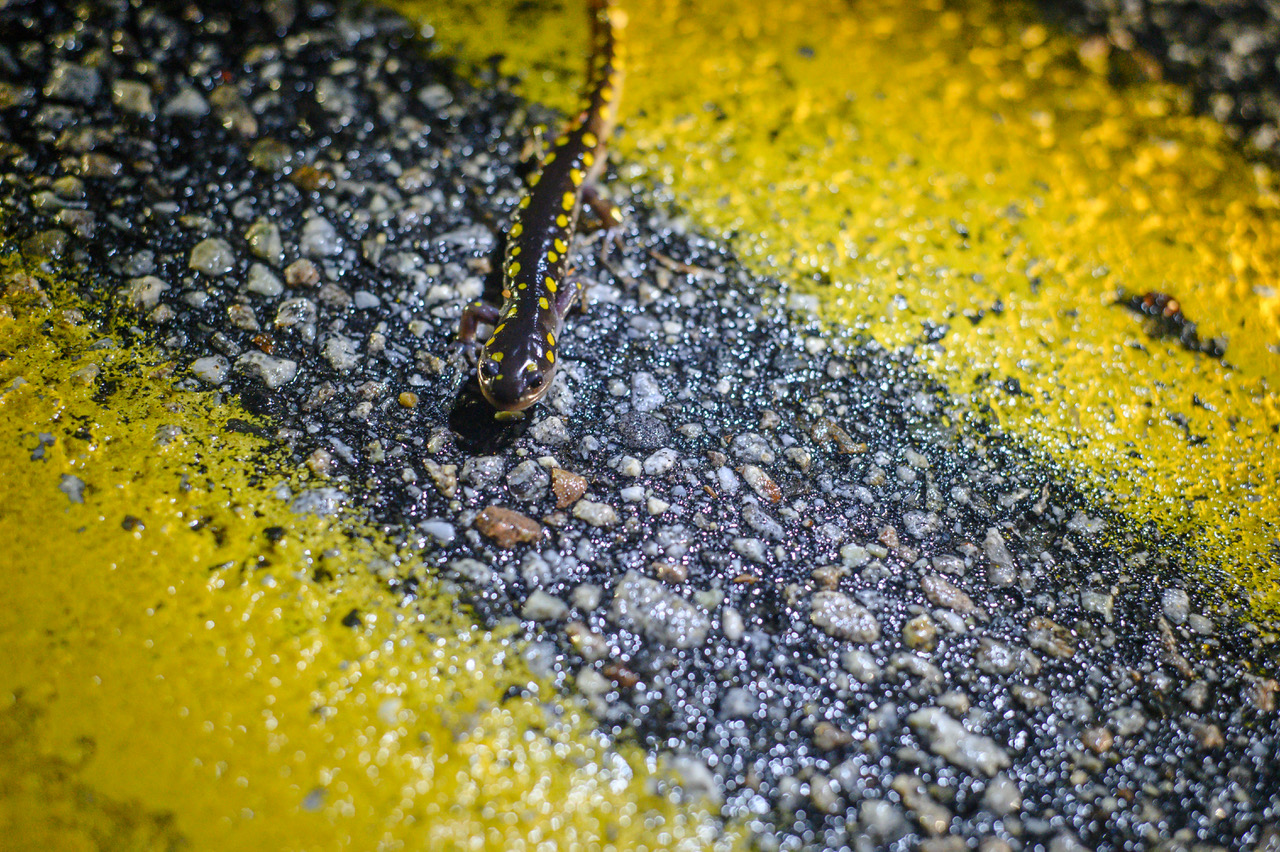
“Sometimes in nature, things happen slowly and things change slowly over time. But this is a real explosive, simultaneous thing,” said Greg LeClair, the executive director of Maine Big Night, a nonprofit community science project.
In one night, participants can witness hundreds of animals on the road simultaneously, including spotted salamanders up to 6 inches long, newts in many shades of orange, spring peepers so small they could sit on a quarter and wood frogs whose call sounds like a quack.
“We’re just completely unaware of what’s hanging around in our yards or in our parks. A great way to get that understanding is being out there on a Big Night,” LeClair said.
Want to witness a migration practically in your backyard and help a spring peeper find safety? Here’s how you can get involved in Big Night:
HOW CAN I PARTICIPATE?
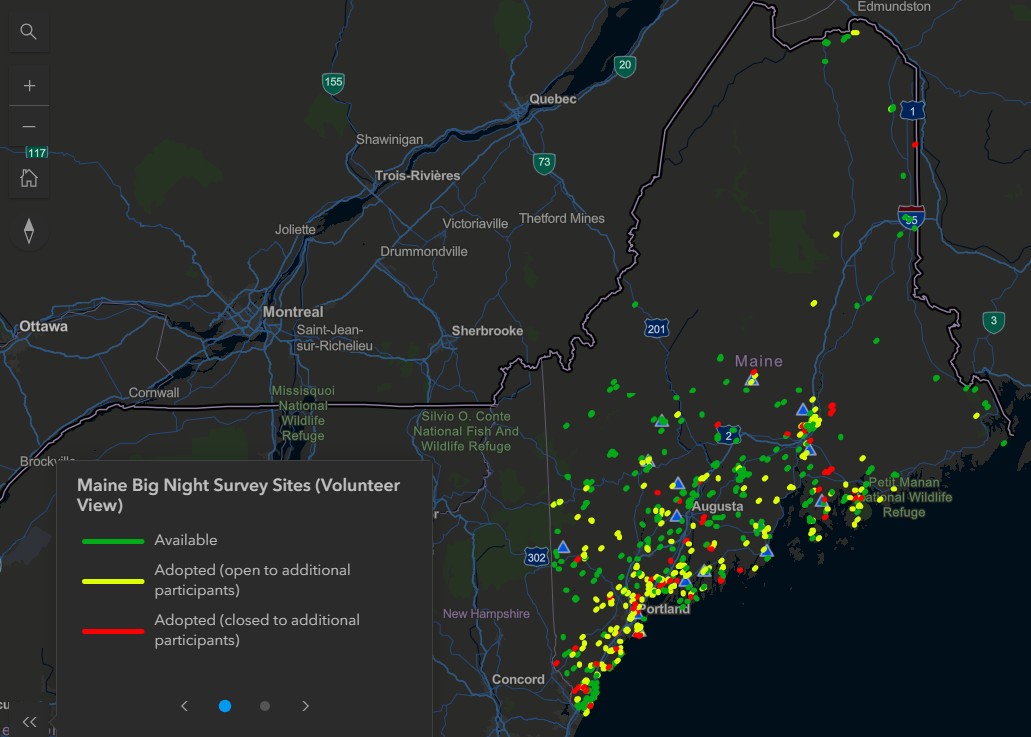
Citizens can get involved through the organization Maine Big Night, which has a map of over 100 sites across the state where volunteers can shepherd amphibians across the road. It’s often a family affair, local naturalists said.
Volunteers can claim an available site after taking an online training and quiz. On Big Night, volunteers not only shuttle frogs but record the number of each species at the site, sharing the data with Maine Big Night.
If someone is hesitant or unable to take the test and just wants to help out someone who is already certified, Maine Big Night’s map also shows road sites that are already claimed by volunteers. If the site is marked yellow on the map, it means the volunteers are open to having others join them, and Maine Big Night can facilitate connecting volunteers with each other.
“That’s our way of introducing folks to the project who either aren’t sure or, of course, you can’t have a 3-year-old take our training,” LeClair said.
Volunteers with Chebeague and Cumberland Land Trust can sign up for a one-hour slot to help spotted salamanders, wood frogs and spring peepers emerging from Rines Forest cross Range Road to CCLT’s Frog Pond and Salamander Swamp on the other side. Last year, volunteers counted 600 creatures attempting the crossing in three hours.
“Kids and adults are kind of enthralled by the fact that there’s hundreds of amphibians moving at night at the same time,” land trust Executive Director Penny Asherman said.
WHEN IS BIG NIGHT?
Frogs and salamanders wait for the right conditions to get moving. The nighttime temperature must be above 40 degrees, preferably up to 45 degrees, and there has to be rain. The amphibians also tend to prefer thawed ground and snow melted, Asherman said.
These conditions vary by Maine geography, though typically Big Night occurs around mid-April.
At individually monitored sites, volunteers watch the weather conditions and check if the critters have made their ways to the roadways. For larger coordinated events, organizations look at the forecast and alert those signed up to the possibility of Big Night occurring soon, Asherman said. Upon confirmation that the amphibians are on the move, the Chebeague and Cumberland Last Trust emails registered participants about 8 p.m. that evening — it’s go time.
“It’s really hard to plan an event around a natural event that you’re not sure when exactly it’s gonna happen,” said Asherman, who recalled rousing her children from their beds on past Big Nights and getting them into their rainboots with their pajamas still on.
Big Night, while singular in name, can occur over multiple evenings of the right conditions as frogs and salamanders stagger their migrations. The first movements in some areas of Maine begin at the end of March, LeClair said.
Photos of crossing salamanders, frogs and newts on social media, particularly on the highly active Maine Big Night Facebook page, generate enthusiastic comments and get more people ready to get out the next evening that the conditions are right.
“It always picks up when the first amphibian photos start getting posted,” LeClair said.
WHAT SHOULD I BRING?
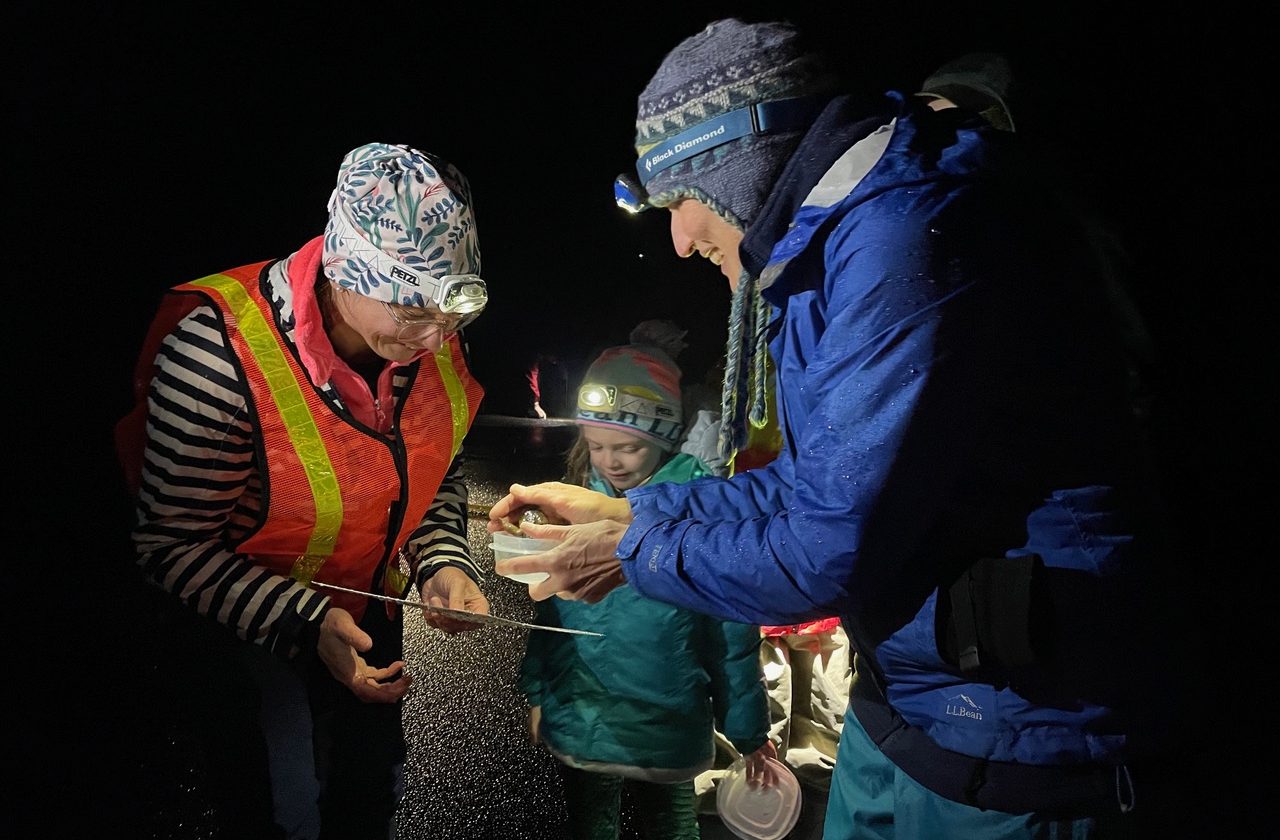
For safety on the roads at night, volunteers must wear high visibility vests and use flashlights or headlamps. Vests, which should have full front and back coverage, can be found at hardware stores, Walmart or Marden’s. Participants should also dress warmly and in rain gear.
For animal-moving and data collection, volunteers need data sheets, a clipboard, pencil, time-keeping device, camera, gloves or a spatula, and hand sanitizer. If you are attending a Big Night event with an organization such as a land trust, these materials will likely be provided.
Going with a smaller group and want to get out there for free? Organizations across Maine lend out vests, headlamps, clipboard, data sheets and ID cards to certified Big Night volunteers, who can also check out supplies for other volunteers joining them. Contact one of the 13 organizations to let them know you would like to check out gear, which is available on a first-come, first-served basis.
WHY SHOULD I GET OUT THERE?
Big Night is always wet, cold and dark. But Asherman says it’s the most fun night of the year.
Families and strangers gather in the drizzle in reflective vests and rainboots, running around wet pavement delighted by each salamander and frog. Typically hidden in the woods, the sudden explosion of amphibian life shows the richness of the ecosystems on either side of the road all year round.
While Big Night can be a frenzy for critters and humans alike, taking a moment to pause and listen in can bring the biggest joy, Asherman said. In the wet, dark night, a chorus of thousands of wood frogs quacking and spring peepers singing surrounds the volunteers.
“We would just say, ‘Everybody stop, just listen to the noise — the noise that they’re creating,'” she said.
“It really is a sign that spring has begun and winter is over.”

We invite you to add your comments. We encourage a thoughtful exchange of ideas and information on this website. By joining the conversation, you are agreeing to our commenting policy and terms of use. More information is found on our FAQs. You can update your screen name on the member's center.
Comments are managed by our staff during regular business hours Monday through Friday as well as limited hours on Saturday and Sunday. Comments held for moderation outside of those hours may take longer to approve.
Join the Conversation
Please sign into your CentralMaine.com account to participate in conversations below. If you do not have an account, you can register or subscribe. Questions? Please see our FAQs.