
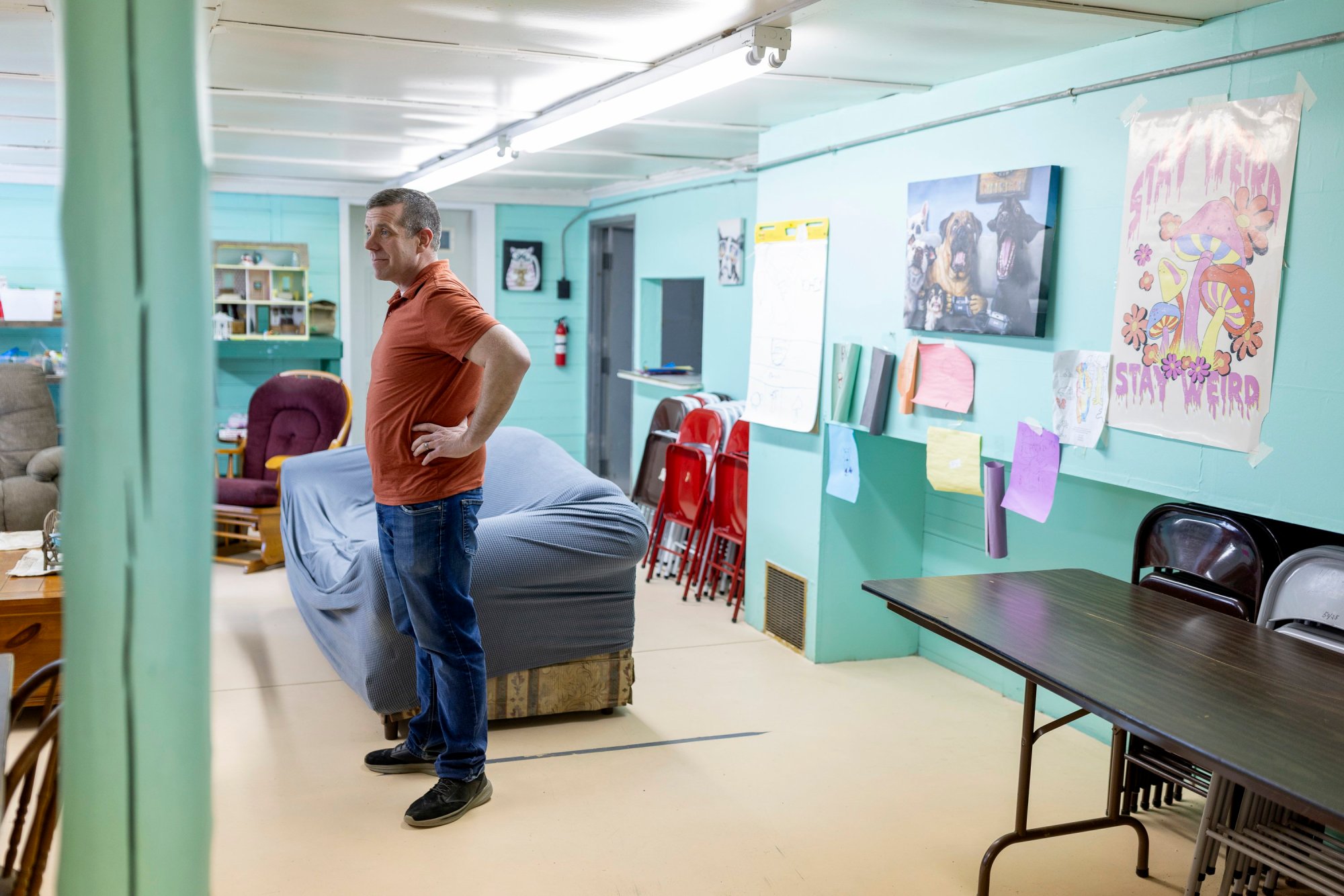


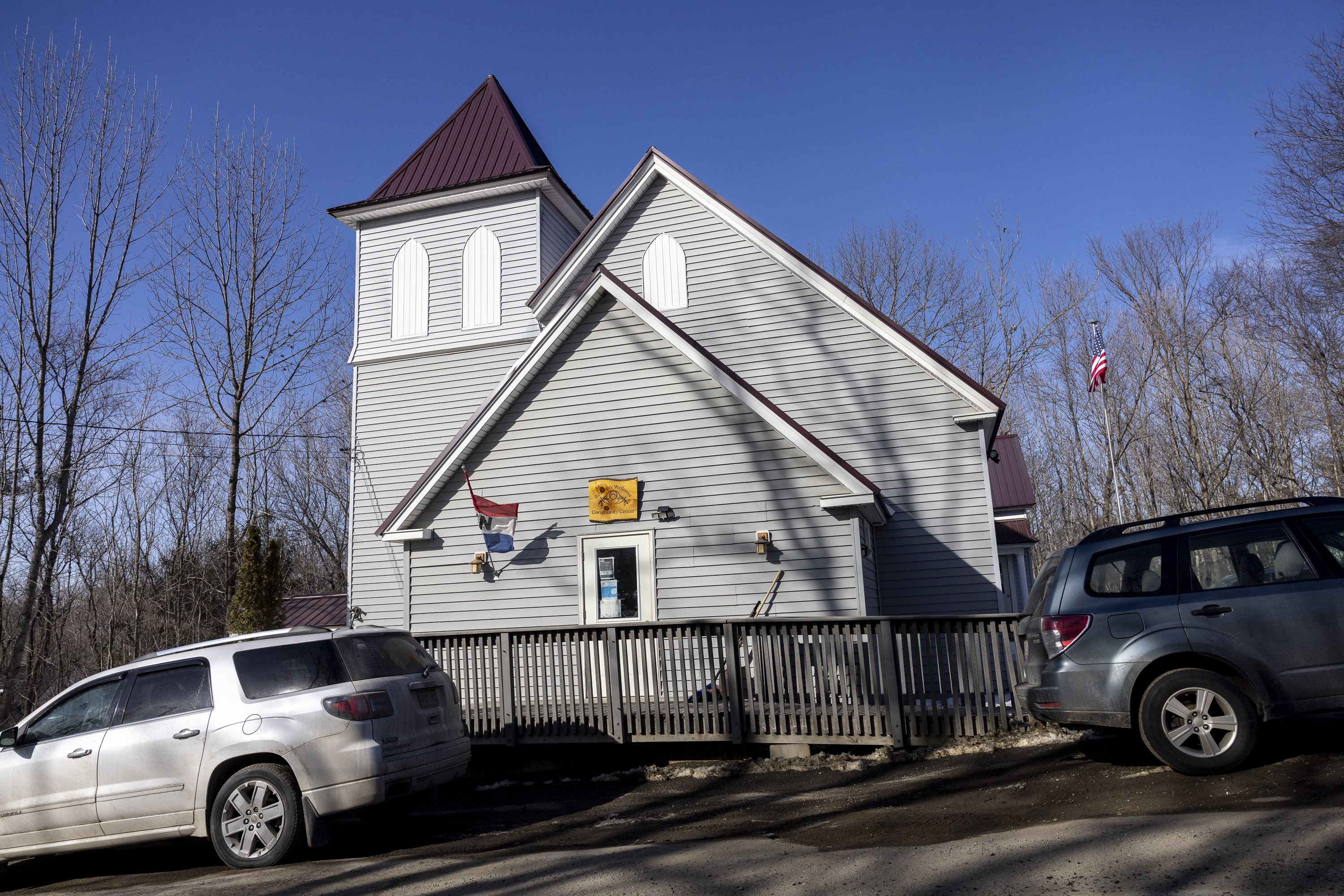
SANGERVILLE — For a couple of hours most days, a small chapel in Piscataquis County becomes an oasis in the north Maine woods.
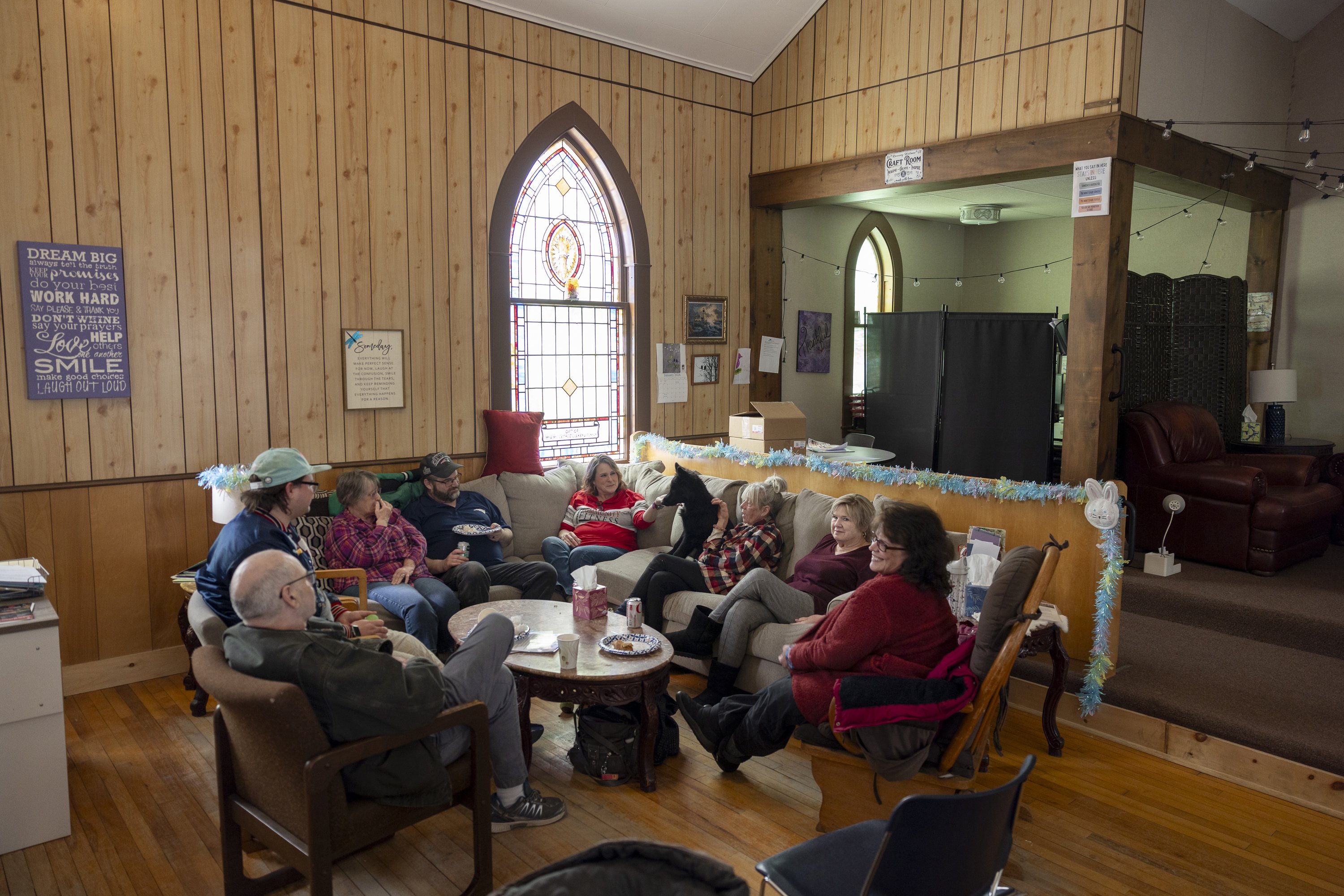
A little after noon, a dozen people trickle into the Recovery Wellness Community Center. They gather in a circle beneath the stained glass windows and gabled roof of the former Catholic church for an “all-recovery” meeting. It’s a chance to talk about the loved ones they’ve lost to addiction. About their own struggles. And sometimes, to laugh and heal alongside one another.
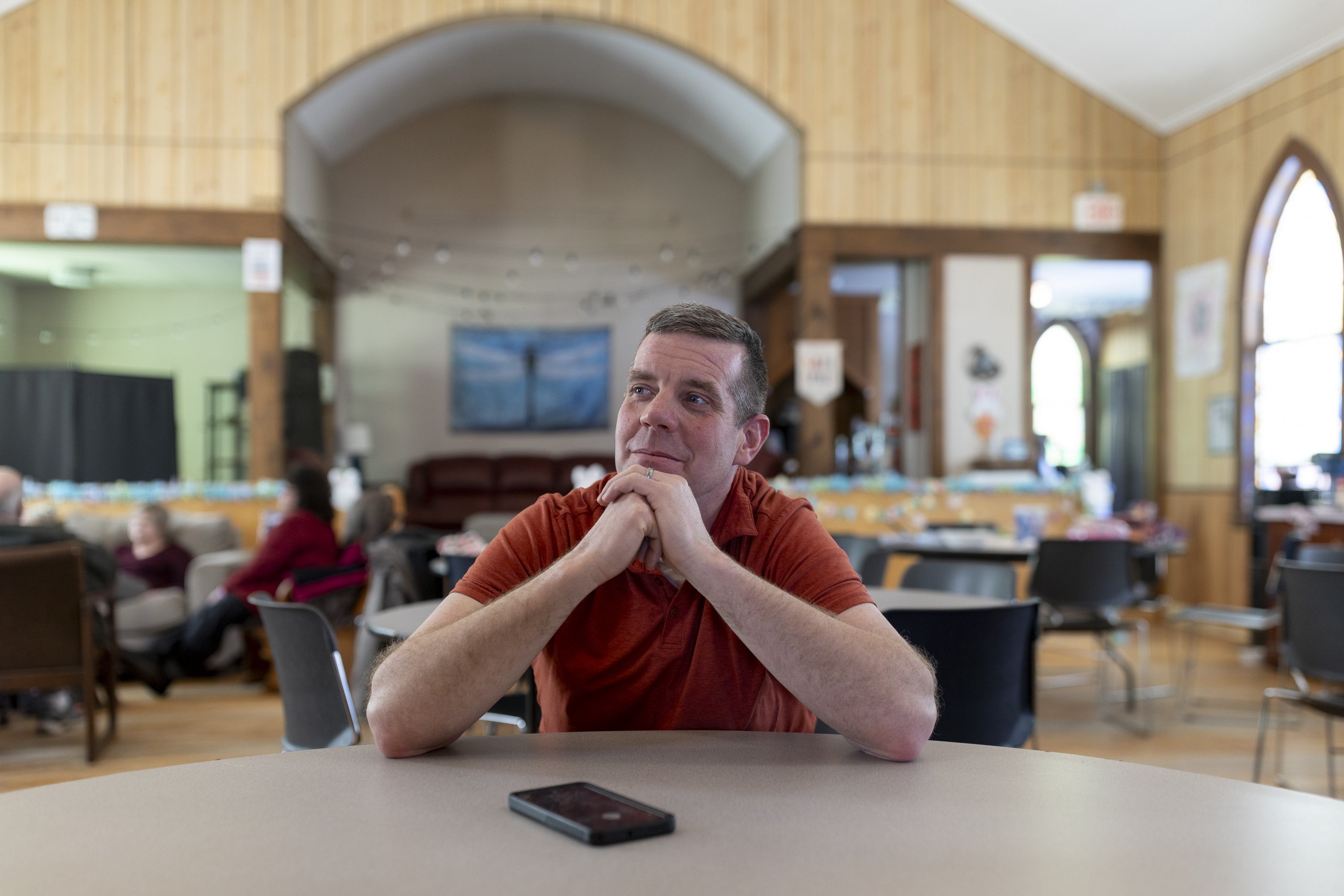
The center, founded in 2024, is the only place in the county with resources to help those struggling with substance use disorder. It hosts everything from teen recovery groups and Alcoholics Anonymous meetings to craft sessions and clothing drives.
Its future, however, is in doubt.
The center was seeded with a small portion of the $230 million Maine is set to receive over the next two decades to fund treatment, prevention and reduce the harms of the opioid epidemic that has claimed more than 6,600 lives here in the last two decades.
The money is part of a series of landmark settlements between state and local governments and opioid manufacturers and distributors, but much of what’s been paid out so far hasn’t been spent.
The Sangerville center’s initial grants from the state’s portion of settlement funds expire this summer. At the same time, Piscataquis County is currently sitting on $200,000 in unspent settlement money. It’s one of 10 counties and municipalities in Maine that did not spend any of their shares last year.
County commissioners did allocate $10,000 annually to the center last month — but that amount makes up less than a 10th of its annual operating budget, co-founder Alan Burgess said.
“We’re not offended,” Burgess said. “We just want to get to work.”
Maine is hardly alone. Local and state governments across the country are sitting on millions of dollars of settlement funds with no plans on how to spend them, according to Kaiser Health News. Massachusetts, for example, spent just 12% of its available funds last year.
Many leaders in Maine say that when deposits started showing up in their bank accounts in 2022, they weren’t sure what to do. A state resource center to provide guidance wouldn’t open until 2024. So local governments, some without public health expertise on staff, suddenly had significant amounts of cash but little clue how to spend it.
They have been deliberative in some cases, indecisive in others, and in at least a few places, officials said they did not feel a pressing need to spend the money. The result is that across the state, local governments have collectively spent less than 15% of the $22 million they’ve received so far.
“That’s still a lot of money sitting there,” said state Sen. Brad Farrin, R-Norridgwock, who tried to pass legislation a few years ago to put more focus on the opioid crisis. “People are still dying.”
Farrin lost his 26-year-old daughter in 2022 when she used cocaine laced with fentanyl.
“If this was traffic accidents or workplace safety violations, we’d have all kinds of uproar and changes,” he said.
Brad Stein, a physician in Pennsylvania and an expert on opioid settlement funds at RAND, a nonprofit research group, said the windfall can help save lives, both now and in the future. So he’d like to see more urgency.
“This is an opportunity that may never come around again in our lifetimes,” he said.
A ‘BEACON OF HOPE’
Although Maine has made progress in reducing the number of annual overdose deaths since peaking at 723 in 2022, the per capita rate is still higher than most states, according to the U.S. Centers for Disease Control and Prevention. The rates are higher still in rural counties where recovery services, health care providers and population centers are scarce or nonexistent.
Piscataquis, Maine’s least populous county, averaged more overdose deaths per capita than anywhere else in the state in 2023 — just over one per 1,000 residents.
At that time, people suffering from substance use disorder had to travel at least 25 miles to Newport or Bangor for help. It’s a trip that Burgess had to make many times since beginning his recovery five years ago. After starting on opioid pills, he eventually turned to heroin. He said the drug “absolutely took over” his life.
“Nobody had ever even heard of recovery,” Burgess said.
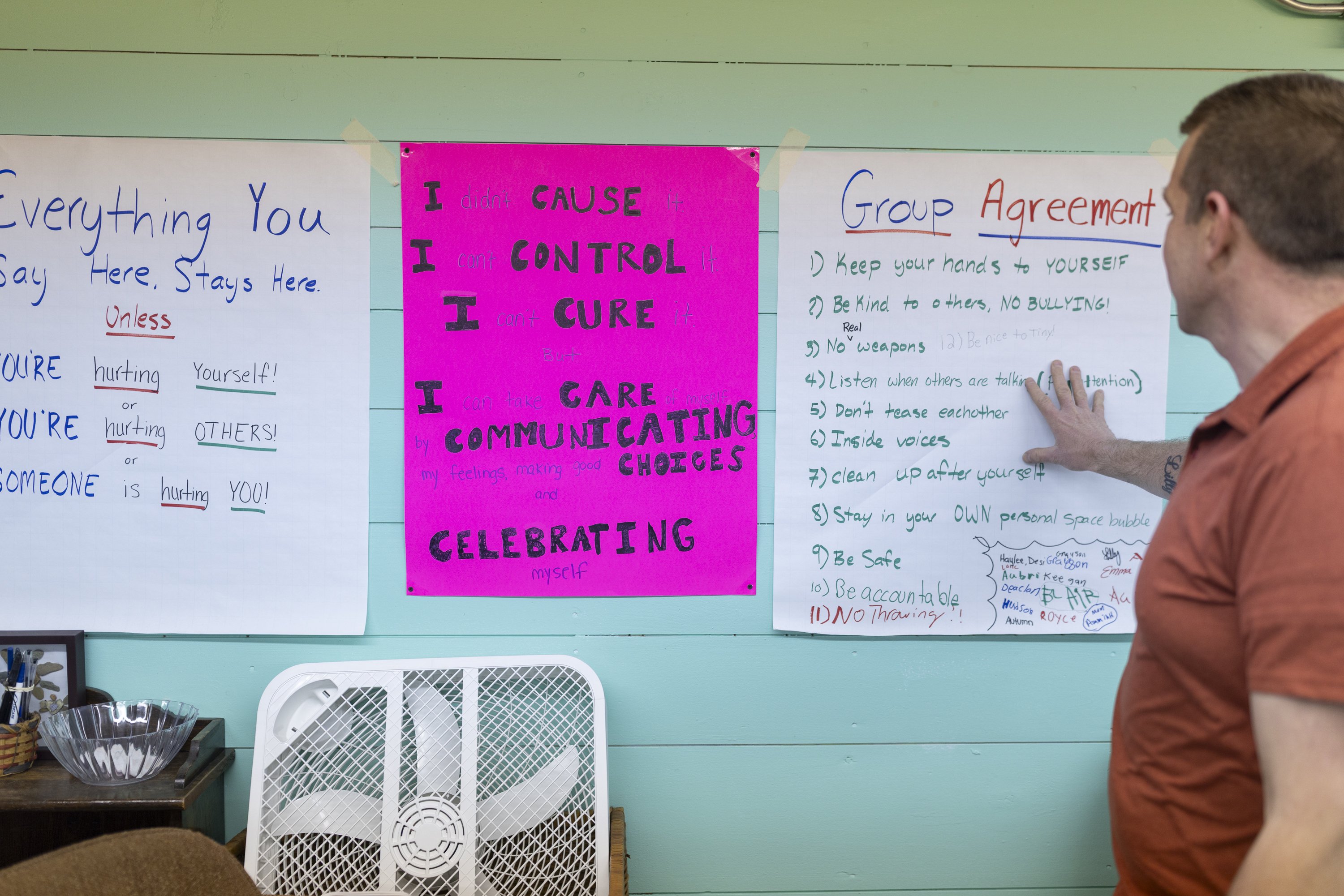
He began hosting 12-step meetings in Sangerville. And as the need for services grew, he and others worked to open the Recovery Wellness Community Center in 2024. That year, Piscataquis County’s overdose death rate dropped 70% and has continued falling.
“I think we became a beacon of hope,” Burgess said.
The state gave the center enough money to stay open for another year. But beyond that, Burgess will have to look to the county for funding. Without it, he worries the trend could reverse.
As the Trump administration has cut funding for harm reduction and behavioral health services, many providers across Maine have turned to settlement funds as an alternative, according to Adam Bloom-Paicopolos, executive director of the Maine Alliance for Addiction and Mental Health Services, an advocacy group for the state’s community behavioral health providers.
“For smaller organizations, they are a true lifeline to keeping critical services running and their doors open to the communities they serve,” he said.
Nick Loscocco, an organizer and advocacy board member with the Maine Recovery Access Project, said declines in fatal overdoses since the settlement money started going out could be obscuring the urgency of the problems that still exist.
He was among those who advocated for the state law that required local governments to report their spending. He hopes they take cues from people like Burgess who have experience using substances and are most familiar with the reasons why treatment may be out of reach.
“When someone needs $500 to get out of a tent and get somewhere safe, and the county’s sitting on $500,000 and can’t figure out how to spend it, it’s like, ‘What are we doing?’” he said.
Three other Maine counties didn’t spend any settlement money last year, all for different reasons. Kennebec County allocated nearly $200,000 for addiction treatment in its jail but didn’t pay out any of it. And in Waldo County, their funding is frozen due to alleged mismanagement by county officials.
Six cities and towns across the state also held off in 2025, including Auburn, where city leaders will soon start to decide how best to use its $740,000.
Glen Holmes, the city’s director of business and community development, acknowledges that there are still far too many overdoses. But in his view, opioid settlement funds are best spent on things that achieve a “next level of impact.”
“I can’t solve homelessness or drug addiction tomorrow, so what can I put in place that, over time, can actually move things forward?” he said.
He wants to use the money intentionally, similarly to how he set up the city’s Drop-In Center, where people with substance use and other issues can get free food and connect to services. Holmes’ staff has been researching best uses for the opioid funds for a year and a half and plans to present to the City Council on April 6 so councilors can consider what to put the money toward.
In York, which hasn’t used any of its funds since 2024 but plans to support a treatment and recovery center under construction, Deputy Town Manager Kathryn Lagasse pointed out there is no deadline to spend the money.
STOPS AND STARTS
In Falmouth, officials have spent $42,000, none of it in 2025, and have more than $300,000 in the bank.
Amanda Methot-Vigue, the town’s policy and strategic initiatives coordinator, said there was no blueprint for how to spend the settlement money once it started showing up in town and county coffers.
“Anyone knows there’s an opioid problem. But knowing how to spend those funds to have the biggest impact — government officials are not the experts there,” Methot-Vigue said.
The town attempted to work collaboratively with other communities, but that effort fell apart. Then it worked on a plan with a company that, after additional vetting, the town decided was not the right partner.
Now on its third attempt, Methot-Vigue hopes to get approval from the Town Council on April 27 to allocate $107,000 to youth prevention efforts in schools.
She said when local governments started to receive the money, state and federal officials sent out messages saying they were in the process of setting up rules, and that likely further delayed some spending decisions because local governments worried they would inadvertently violate rules that hadn’t been fully written yet.
The worst-case scenario would be having to repay money if someone decided it wasn’t spent properly.
“We might just be overthinking it, honestly,” she said.
Other jurisdictions don’t seem to be thinking about it much at all. In Piscataquis County, commission chairman Paul Davis said simply, “We just haven’t discussed it.”
“But we will,” Davis said in March. “You can ask all the questions you want, but I can’t answer it any better than that.”
Likewise in Saco, which has a much smaller amount of money available than other cities and counties, City Administrator Ryan Pelletier said the $30,000 on hand has not been a big topic of conversation.
“There’s been other pressing issues in the city,” he said. “This hasn’t gotten the attention that it probably should have gotten.”
Pelletier came to Saco in January; before that he oversaw the distribution of hundreds of thousands of opioid settlement dollars in Aroostook County as county administrator. There, he said he felt compelled to spend the money when he was driving down the street and saw people who needed help.
“Law enforcement doesn’t want to be arresting people that are in crisis like that,” he said. “So another big push was from our sheriff’s department saying, ‘We have to reduce the number of people in jail.'”
‘GET STARTED. PEOPLE ARE STILL DYING.’
Loscocco, the Maine Recovery Access Project organizer, understands the many considerations local governments are making and he wants them to be transparent and fair in their decision making. But he said the typical processes to spend money may not be applicable in this case.
“It’s not like their normal tax money,” he said. “If a bunch of people didn’t die, this money wouldn’t exist.”
“This is our blood money,” he said.
He and others advocating for more urgency in spending do not necessarily want local governments to spend all the money immediately, though.
Bloom-Paicopolos, with the health providers’ advocacy group, has three pieces of advice: Stop waiting, consult people who know what they’re doing and make an impact that will last.
A portion of the money could be used to address immediate, life-saving needs, like Narcan or test strips, while leaders decide on a comprehensive approach, he said.
“I think often about how we can get to folks earlier on to prevent unnecessary emergency department visits or encounters with the criminal justice system,” Bloom-Paicopolos said.
Some communities have gotten hung up on deciding whether to allocate money to law enforcement or recovery groups. Bloom-Paicopolos doesn’t think it needs to be one or the other.
Still, he believes if money is going to criminal justice agencies, equal amounts should be going to service providers. “And looking at the numbers, we haven’t quite seen that,” he said.
Something as small as paying for people’s transportation from prison to a sober house would be a meaningful way to use some of the money, Loscocco said.
Even though there is a lot of money flowing right now, it can’t solve all of the problems created by drugs, RAND’s Stein said. He encourages communities to consider how they can set up the infrastructure to prepare for future crises, given this kind of opportunity to spend these large sums of money may not come around again.
Whatever they do, Stein urges communities to take action.
“Get started,” he said. “People are still dying. People are still being harmed.”


We invite you to add your comments. We encourage a thoughtful exchange of ideas and information on this website. By joining the conversation, you are agreeing to our commenting policy and terms of use. More information is found on our FAQs. You can update your screen name on the member's center.
Comments are managed by our staff during regular business hours Monday through Friday as well as limited hours on Saturday and Sunday. Comments held for moderation outside of those hours may take longer to approve.
Join the Conversation
Please sign into your CentralMaine.com account to participate in conversations below. If you do not have an account, you can subscribe here. Questions? Please see our FAQs.