

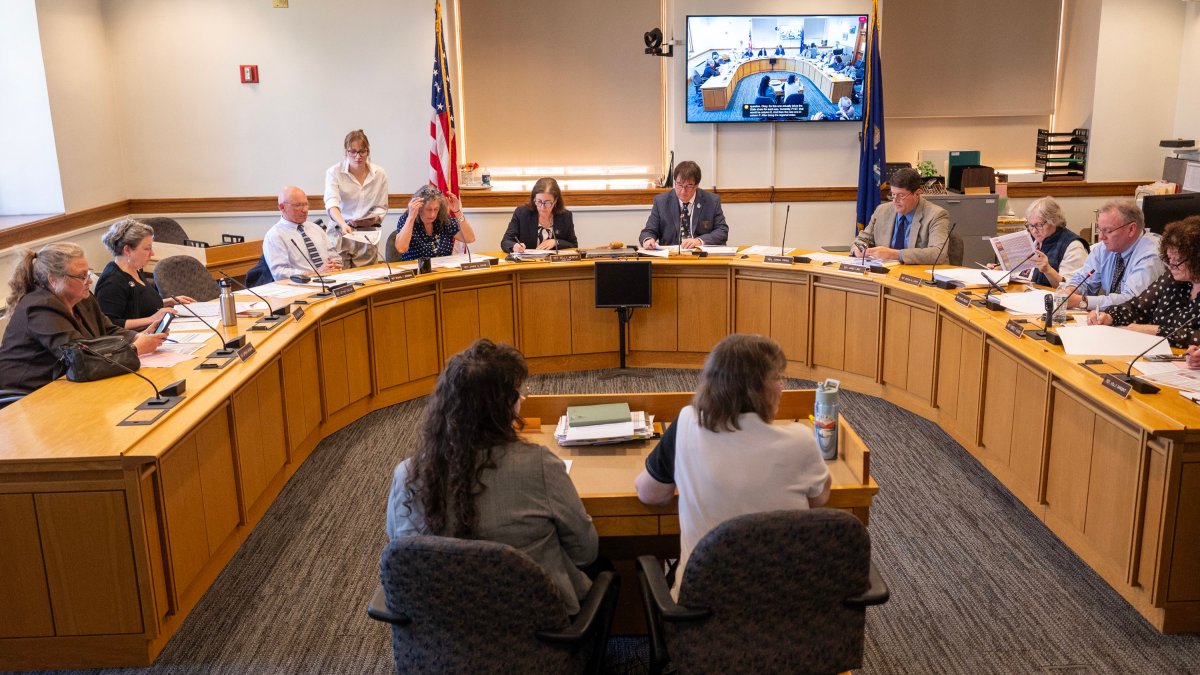
Maine lawmakers this week passed the first reform of the state’s widely criticized school funding formula since it was created in 2005.
The bill now heads to Gov. Janet Mills’ desk, and a spokesperson confirmed Tuesday that she will sign it.
The legislation is two years in the making, and began when the Education and Cultural Affairs Committee asked for a study on the formula in 2024. A nonpartisan research group delivered a report over the summer outlining potential reforms, which the committee adapted into a bill this session.
The bill is responsive to persistent concerns from school district leaders that the funding formula relies too heavily on property tax valuations to determine how much money districts receive, and does not reflect household income or poverty rates in a district.
LD 2226 passed the House of Representatives early Monday afternoon in a 122-23 vote, and was unanimously enacted by the Senate on Tuesday without a roll call.
“The governor believes that every child in Maine deserves a high-quality education, regardless of their zip code. She applauds the Legislature for taking this action on the school funding formula,” spokesperson Ben Goodman said.
The changes outlined in the bill will not take effect until the 2027-28 school year.
During a public hearing on the bill in March, school district leaders from regions across the state spoke in support, calling it an overdue first step to fixing an inequitable, inadequate funding formula.
The final version of the bill makes two significant changes to the Essential Programs and Services, or EPS, formula.
First, it would weigh a district’s economically disadvantaged student rate (derived from the number of students eligible for free and reduced lunch) in the calculation used to determine how much funding a district receives from the state, which is currently based on property tax valuation. Second, it would update an old system of making regional salary adjustments, tying them to a cost-of-living index, rather than a labor market model that has not been updated since 2005.
During debate in the House, several representatives from both sides of the aisle spoke in support of the bill, calling it long overdue and a good step in the right direction.
“It’s something we Down East have been fighting for for well over 20 years. It’s not all we had hoped for, but it’s a recognition that income and economics play a role in the school funding formula, and need to,” said Rep. Will Tuell, R-East Machias. “And I think that alone is cause for celebration.”
However, Barbara Bagshaw, a Republican from Windham and one of two members of the education committee who opposed the bill, said the process had been rushed and that the final bill was missing several of the most important components.
“Yes, it removes some of the more problematic ideas, but it also leaves out meaningful reforms that would have improved fiscal discipline, and it moves forward with structural changes without evidence we need to justify them,” she said.
LD 2226 was created by lawmakers as a committee bill in March, and several components of the bill — including any changes to the special education funding model — were removed as the committee worked the bill and heard public comment.
The committee passed the bill on March 19, but lawmakers brought it back late last week for a language review when the fiscal note came back $30 million higher than expected. After removing some of the provisions driving up the cost, it passed an amended version of the bill 10-2.
The state subsidy and regional adjustment changes will not go into effect for two years, and for the small number of districts that will see a reduction in state funding under the bill, those changes won’t begin until 2031, at which point the subsidy will be reduced gradually over a three-year transition period.
The bill also directs the Maine Education Policy Research Institute, the nonpartisan research group that wrote the report on EPS, to continue studying the formula and provide an update to the Legislature by January 15, 2027.

We invite you to add your comments. We encourage a thoughtful exchange of ideas and information on this website. By joining the conversation, you are agreeing to our commenting policy and terms of use. More information is found on our FAQs. You can update your screen name on the member's center.
Comments are managed by our staff during regular business hours Monday through Friday as well as limited hours on Saturday and Sunday. Comments held for moderation outside of those hours may take longer to approve.
Join the Conversation
Please sign into your CentralMaine.com account to participate in conversations below. If you do not have an account, you can subscribe here. Questions? Please see our FAQs.